
Add ₹999 more to unlock FREE SHIPPING!
Your sacred cart is currently empty.
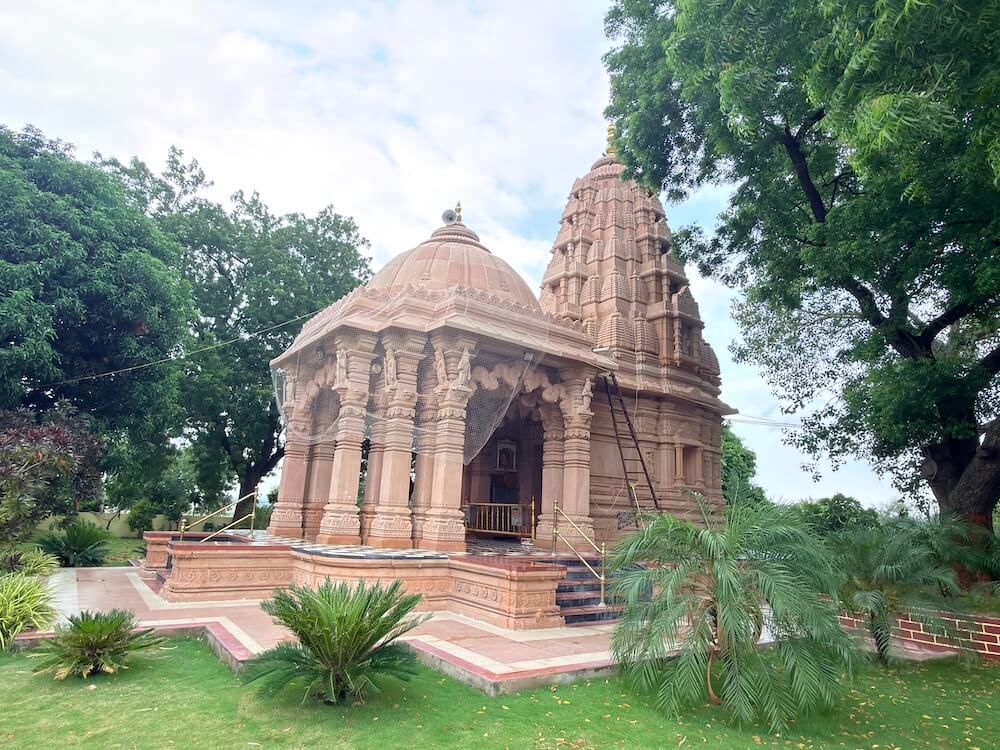
Shop Photo FramesThe Pancheshwar Mahadev Temple, tracing its mythological origins back to the era of the Mahabharata, is situated in the village of Handod within the Sankheda taluka of Chhota Udepur district. Nestled near the sacred confluence of the Orsang and Uchch rivers, this ancient shrine was recently meticulously restored under the aegis of the Vadtal Gadi of the Swaminarayan Sampradaya. Constructed in the classical Nagara style of temple architecture, this sanctuary features a highly spiritually active shivling that draws a multitude of devotees daily. During the holy month of Shravan, the temple becomes especially densely thronged with pilgrims arriving to perform Jalabhisheka and Dugdhabhisheka upon the sacred deity.
The region of Chhota Udepur, which possesses a substantial indigenous population, is endowed with a rich and ancient historical inheritance. In the fifteenth century, this territory—historically known as Rath—was governed by the tribal king Kaliya Bhil. Subsequently, following 1484 AD, the influence of the Chauhan Rajputs flourished across this landscape. When the forces of Mahmud Begada, the sixth Sultan of Gujarat, launched a devastating assault on Champaner–Pavagadh, the descendants of King Patai Rawal, who had died a heroic death during the conflict, migrated eastwards. Among them, Rawal Ude Singhji established a new capital along the banks of the Orsang River at Chhota Udepur in 1743 AD, thereby founding the princely state. Thereafter, successive rulers of the Chauhan dynasty governed this state until the dawn of Indian independence. Ultimately, on 10 March 1948, the princely state of Chhota Udepur was formally integrated into the Union of India. Initially, Chhota Udepur functioned as an administrative taluka within the larger Vadodara district. In 2013, the Vadodara district was bifurcated to create the independent Chhota Udepur district, which currently comprises six administrative talukas : Chhota Udepur, Jetpur Pavi, Kawant, Naswadi, Sankheda and Bodeli. Among these, the Sankheda taluka has acquired global renown for its exquisite lacquer-painted wooden furniture and traditional handicrafts.
The appellation ‘Pancheshwar Mahadev’ holds profound theological significance within classical Hindu scriptures and Puranas. Derived from the Sanskrit words ‘Pancha’ and ‘Ishvara’, the term translates literally to the Sovereign Lord of the five divine forms or cosmic elements. Scriptural treatises such as the Shiva Purana, Linga Purana and Skanda Purana extol Lord Shiva as Panchabrahma or Panchavaktra (the five-faced lord). According to these sacred texts, the five primary manifestations of Shiva are Sadyojata, Vamadeva, Aghora, Tatpurusha and Ishana. These five forms structurally represent the five primordial elements of nature (Pancha-Mahabhutas) : Earth, Water, Fire, Air and Space. Consequently, any sacred site where Shiva is adored as the supreme ruler of these five cosmic elements is designated as a Pancheshwar pilgrimage. A comprehensive geographical and spiritual account of the Pancheshwar tirtha is preserved within the Manaskhand section of the Skanda Purana. Local sacred lore affirms that during their period of forest exile (vanavas), the Pandava brothers arrived at the banks of the Uchch and Orsang rivers, where they ceremonially consecrated and worshipped the Pancheshwar Mahadev shivling.
As the structural framework of this ancient temple had grown weathered with the passage of centuries, a comprehensive restoration project was undertaken by the Vadtal Gadi of the Swaminarayan Sampradaya. Following the completion of this grand architectural revival, a majestic inauguration and dedication ceremony (Lokarpan Sohala) was celebrated with immense religious fervour. The pre-eminent presence of Acharya Rakeshprasad of the Swaminarayan institution, Jagadguru Shankaracharya Swami Sadanand Saraswati of the Dwarka Sharda Peeth in Devbhumi Dwarka district and Peethadhishwar Acharya Mahamandaleshwar Vishokhanand Bharti graced the historic event. To commemorate this grand consecration, the temple trust organised a multitude of sacred rituals, including the Bhaktachintamani Yajna, the Atirudra Mahayajna, the Maruti Yajna, the ceremonial investiture of the spiritual seat (Gadipattabhishek), a unique silver-weighing charity ceremony (Rajat-tula) of the holy text Bhaktachintamani and the continuous chanting of the Swaminarayan mahamantra.
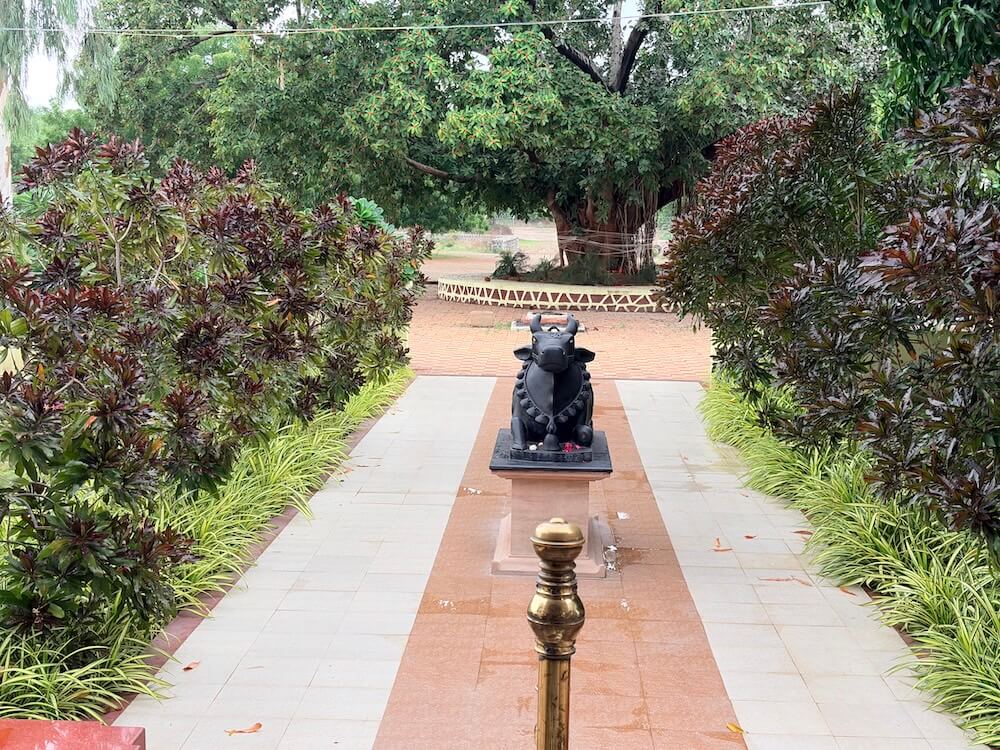
The Pancheshwar Mahadev Temple is nestled within a serene, tranquil enclosure running immediately adjacent to the main thoroughfare of Handod village. A spacious clearing fronting the road provides convenient vehicular parking facilities for visiting pilgrims. A robust perimeter wall encloses the entire sacred precinct. Passing through the primary gateway set into this boundary wall, visitors are welcomed by a neatly paved arterial pathway flanked on either side by a meticulously manicured green lawn and ornamental flora. Elevated upon a high stone plinth along this pathway stands a idol of Nandi, masterfully sculpted from premium black marble. The entire architectural monument has been painstakingly realised in strict accordance with traditional Nagara stylistic principles. From the courtyard, an ascent of five steps leads directly into the front portico (mukhamandap) of the temple, which rests upon an elevated foundation.
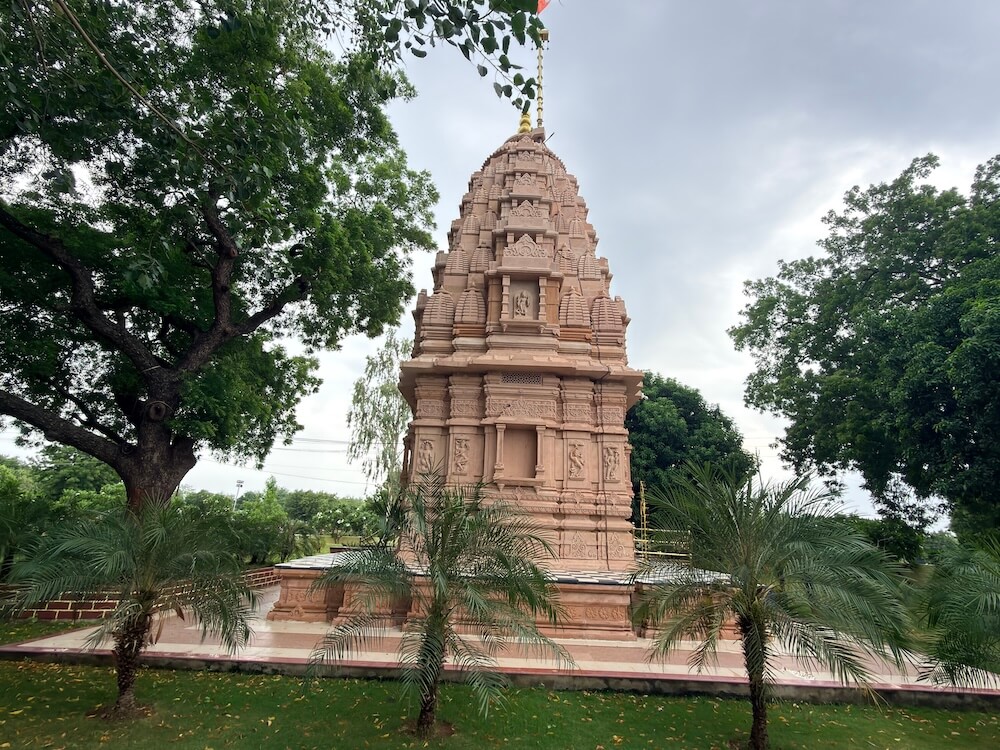
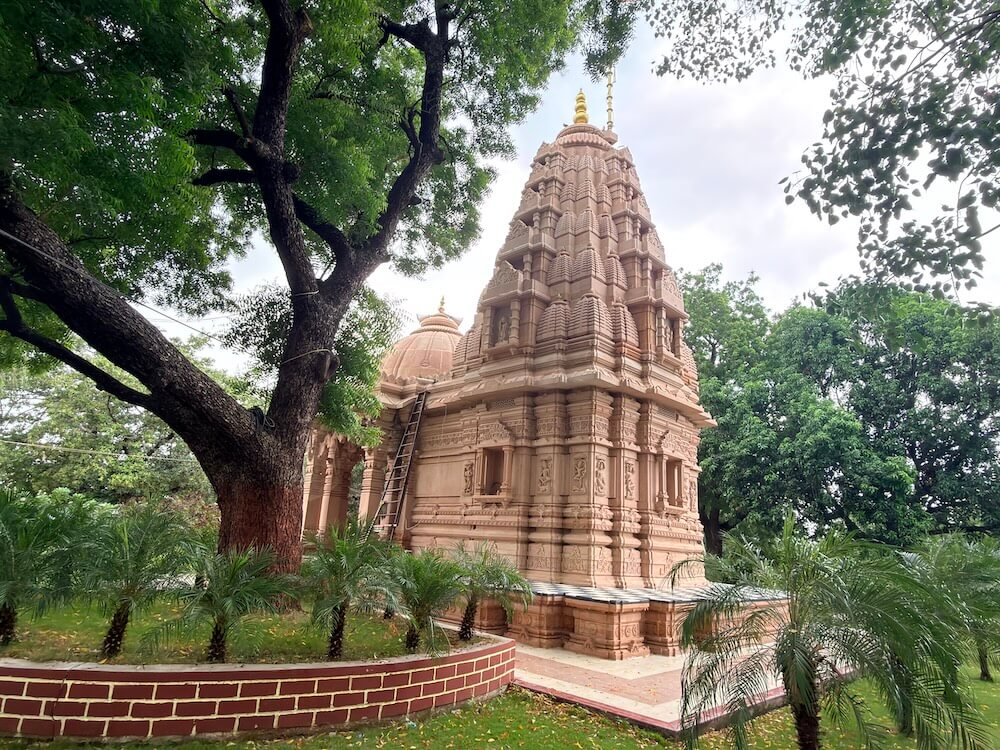
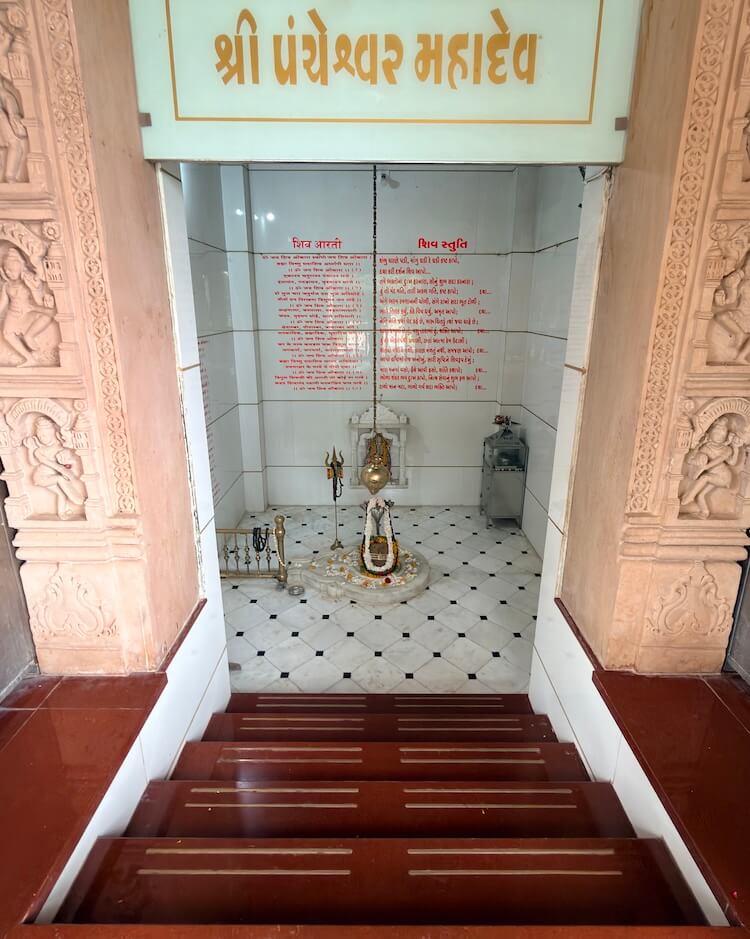
Structurally, the sanctuary comprises a front portico, a central assembly hall, an antechamber and the inner sanctum sanctorum. The columns supporting the semi-open assembly hall (sabhamandap) feature intricate relief carvings and are adorned at their capitals with numerous small and large divine sculptures. The front facade of the temple features an exquisitely detailed, ornamental archway (bashinga torana). Positioned immediately beyond the assembly hall, the sanctum sanctorum occupies a sunken chamber. A short descent of a few steps through the antechamber leads into the heart of the sanctum.
The door jambs of the sanctum entrance are elaborately carved with depictions of various Hindu deities. Consecrated at the exact geometric centre of the sanctum sanctorum, within a large marble base (shalunka), is the sacred lingam of Lord Pancheshwar Mahadev. A massive serpent hood cast from five sacred metals (panchadhatu) forms a protective canopy over the shivling. The interior of the shalunka features an elegantly carved serpent motif, while its right external surface displays a sacred conch shell relief. Enshrined within a beautifully sculpted niche on the rear wall behind the main deity is a white marble idol of Mother Parvati. The superstructure surmounting the sanctum rises into a towering primary spire (shikhara) built in the traditional multi-turreted urushringa style. The apex of this soaring Nagara spire is completed by a distinctive two-tiered ribbed stone disk (amalka) and a glittering golden finial (kalasa).
Worship services and formal aarti ceremonies are meticulously performed at the temple twice daily, every morning and evening. The temple stands as a vital institutional bastion of faith for the local indigenous tribal communities. The festival of Mahashivratri is celebrated here annually with immense public enthusiasm, alongside a rich calendar of traditional religious events observed throughout the year. During the holy month of Shravan, the shivling is adorned with special multi-faceted worship rituals (shodashopachara puja). Throughout this auspicious month, the temple trust organises Laghurudra, Harikirtan and various sacred rites, drawing a vast multitude of pilgrims on Shravan Mondays. Alongside these religious activities, the Swaminarayan Sampradaya actively leverages the temple premises to conduct extensive anti-addiction awareness campaigns, alongside numerous public welfare initiatives and charitable projects. Furthermore, the fraternity hosts regular spiritual assemblies (Satsang) for the moral development of the community. The temple doors remain open to welcome devotees daily from 6:00 am until 9:00 pm.
Navratri, Maha Shivratri, Annual Temple Jatra & Deepotsav
Compare and book flights, secure top-rated local hotels near the temple, hire reliable guides, and rent cars instantly.
Extend your pilgrimage by visiting other highly sacred temples located nearby.


Add ₹999 more to unlock FREE SHIPPING!
Your sacred cart is currently empty.
Shop Photo FramesFill in your delivery details below to place your order.
Add comment