
Add ₹999 more to unlock FREE SHIPPING!
Your sacred cart is currently empty.
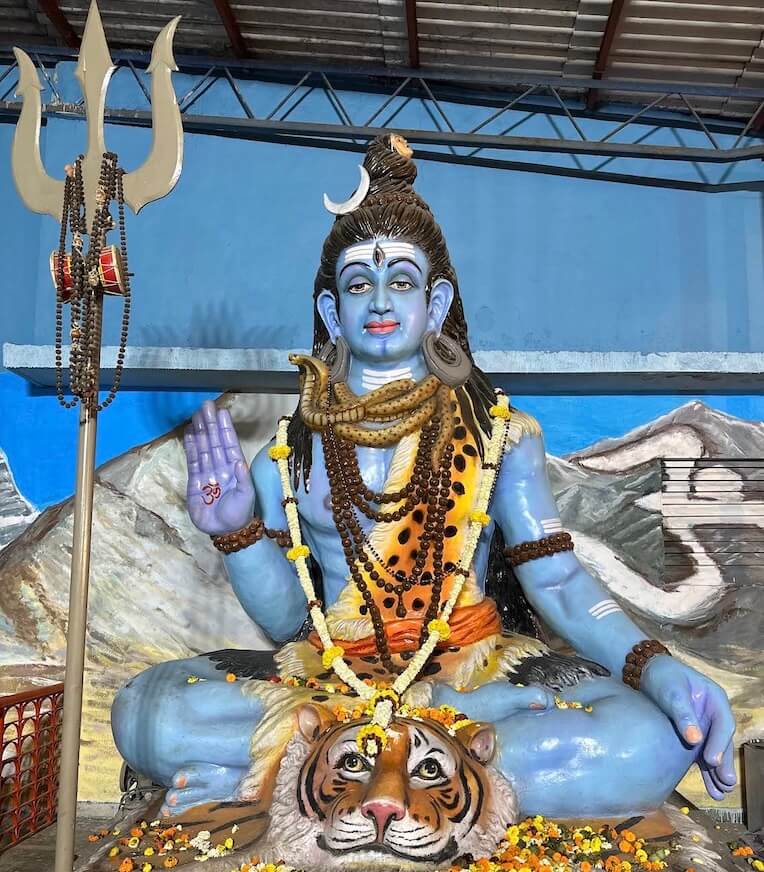
Shop Photo FramesThe Jangaleshwar Mahadev Temple is situated in the densely populated area of Asalpha, a suburb in Ghatkopar on the Central Railway line of Mumbai. The surrounding lush greenery creates an atmosphere that is extremely peaceful and serene. The Asalpha area, nestled on the slopes of the hills in Ghatkopar, was once covered in a dense forest. The Mahadev residing in that forest came to be known as ‘Jangaleshwar’ (Lord of the Forest). It is said that the Shiva Linga here dates back to ancient times. A few years ago, the temple was renovated and given its present beautiful form. This temple is an important center of faith for thousands of Shiva devotees in the region. Thousands of devotees visit for darshan during Mahashivratri and the holy month of Shravan.
At the beginning of the 20th century, many wealthy Gujarati, Parsi, Bhatia, and Marwari families built their residences in Ghatkopar. Due to the textile mills in Mumbai and the factories established in the Kurla area, many workers and middle-class families settled here as well. Asalpha is one such area. There are many stories regarding the names Asalpha and Ghatkopar. In the past, ‘Ghate’ and ‘Kopar’ were two separate villages in the Ghatkopar area, and the name Ghatkopar is derived from them. These villages have existed since at least the 12th century. The text ‘Mahikavatichi Bakhar’, which chronicles the history of Pratap Bimb, the first king of Mumbai who established his capital at Mahim in 1142 AD, and later Bimbdev Yadav, son of the Yadava King Ramdevray who came to power in 1295 AD, clearly mentions both Ghate and Kopar villages. Similarly, the ‘Mahikavatichi Bakhar’ and ‘Bimbakhyan’ mention a village named ‘Asanpe’. According to scholars, the name Asanpe gradually evolved through linguistic changes into Asalpe, then Asalphe, and finally Asalpha.
The legend regarding the Jangaleshwar Mahadev Temple states that this was once a hilly, forested region. About 300 years ago, some sages were passing through when they saw a self-manifested (Swayambhu) stone Linga coiled by a serpent king. Witnessing this miracle, they consecrated the Shiva Linga there. It is said that this event took place during the British rule. Charles Boone was the Governor of Mumbai, and in 1720, the work of closing the ‘Great Breach’ at Worli had begun. As efforts were made to make the city habitable and cultivable by filling in the marshy areas of Mumbai, the strict religious restrictions imposed by the Portuguese were completely relaxed. Consequently, the Hindu community began to fearlessly re-consecrate their deities. The legend suggests that the foundation of this temple was laid around this time.
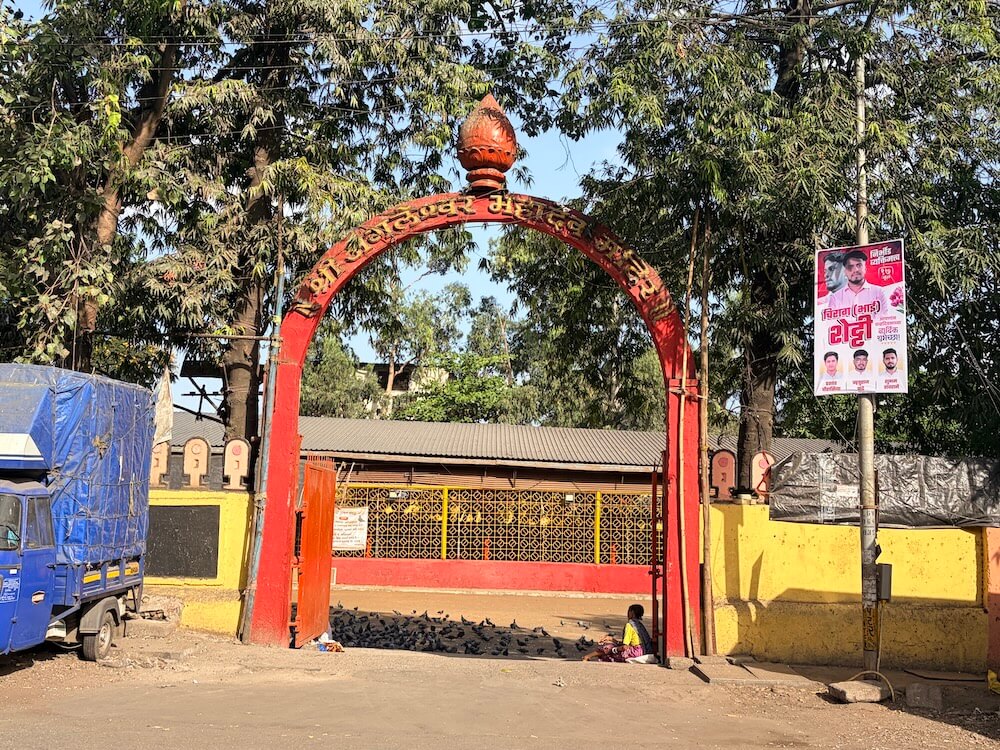
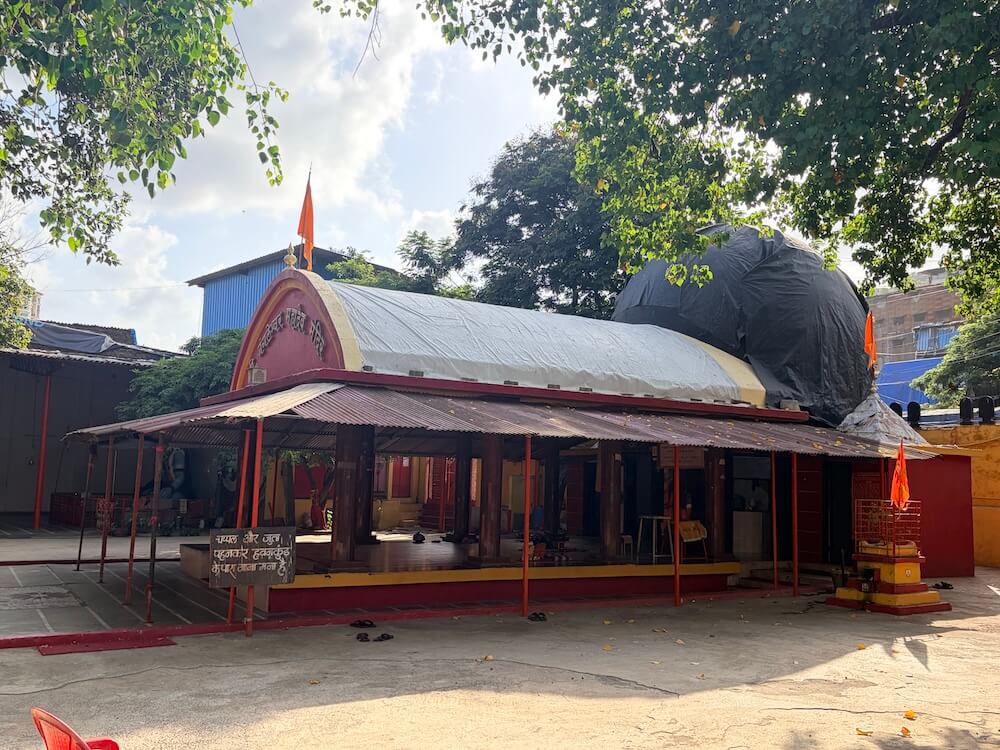
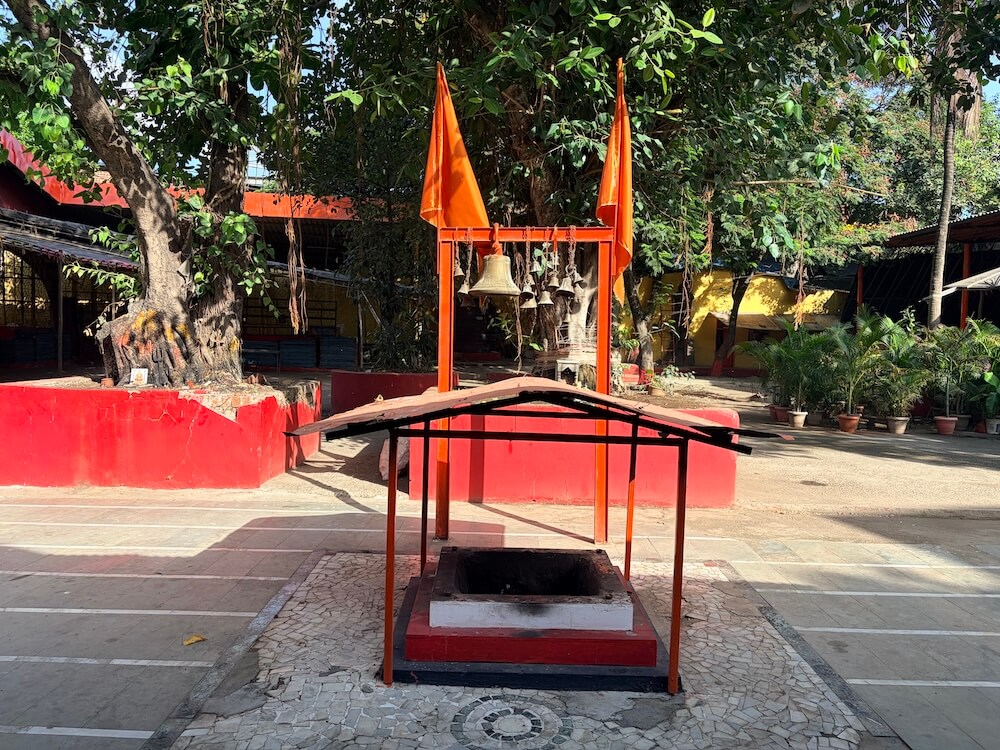
Previously, a small temple stood amidst the dense thickets. Local citizens would come there regularly for worship, and some Shaiva sages also resided there. Over time, around the year 1994, the temple was renovated, giving it its current appearance. There is a large open space around the temple, which is enclosed by a secure boundary wall. A large arched gateway with a grand kalash (finial) is built into this wall. Large platforms have been constructed around the trees in the courtyard, which is well-paved. In front of the temple is a large Homa-kund (sacrificial fire pit), and large bells are hung from an iron frame nearby.
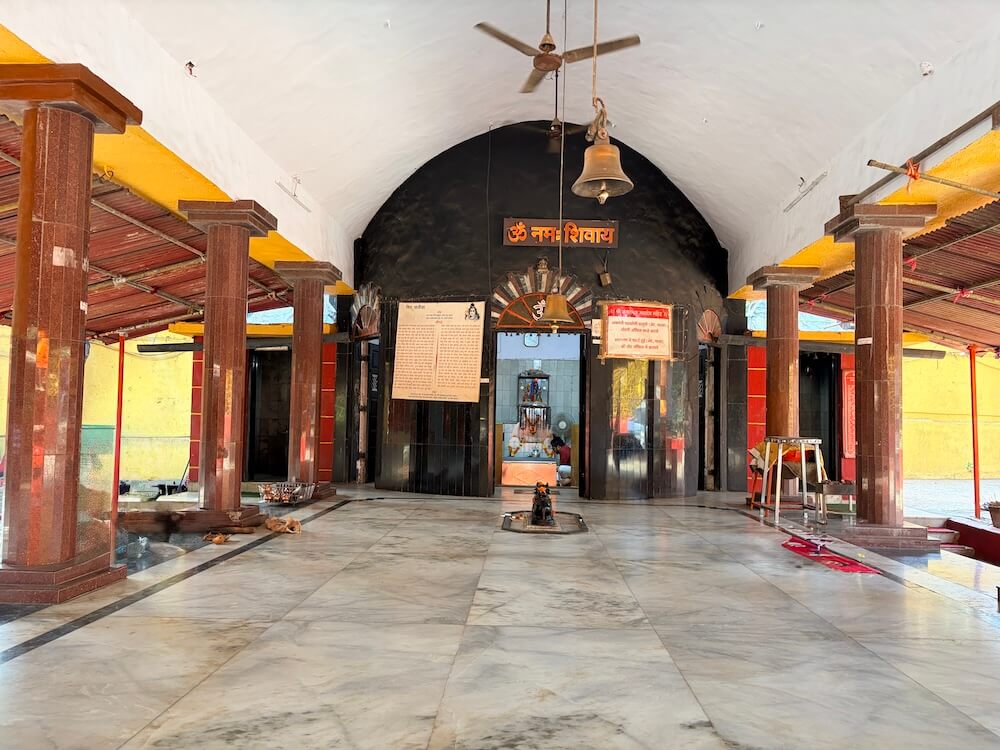
Located on Khairani Road near Asalpha-Sakinaka, the architecture of this temple is quite unique. Currently, the Mumbai Metro Line 1 runs very close to the temple, and the ‘Asalpha Metro Station’ is just a stone’s throw away. The temple structure consists of a Sabhamandap (assembly hall) and a Garbhagriha (sanctum sanctorum). The Sabhamandap is built on a high plinth and is of an open design. It features a beautiful barrel-vaulted roof, which resembles the ‘pranala’ (the water-channeling part) of a Shiva Linga. The Garbhagriha is topped by a large dome-shaped Shikhara that resembles a Shiva Linga; thus, when viewed from a distance, the temple structure itself looks like a Shiva Linga. Inside the Sabhamandap, which has circular pillars and marble flooring, a stone Nandi sits in the center. In front of it are a lamp stand (Deepdan) and a marble Kurma (tortoise) statue. The circular Garbhagriha is adorned with marble tiles and houses the stone Linga of Jangaleshwar Mahadev on the floor. A silver serpent hood forms a canopy over the Linga. The niches in the sanctum contain idols of Lord Ganesha and Goddess Parvati. To the right of the Garbhagriha is a small shrine housing a brass idol of Goddess Durga mounted on a lion. Near this small shrine is a Tulsi Vrindavan.
Near the temple entrance, there is a large pigeon house (Kabutarkhana). Due to the local Jain community feeding the birds, there is a large population of pigeons here. The temple complex also includes a large hall where auspicious ceremonies and religious programs are organized.
Devotees begin visiting the temple daily from 6:30 AM. Jalabhishek (water offering) can be performed by devotees between 7:00 AM and 1:00 PM. Mahashivratri is the biggest festival celebrated at this temple. On this day, the entire temple premises take on the atmosphere of a fair. The temple is decorated with electric lights, and special worship of Jangaleshwar Mahadev is organized. There is a huge crowd of devotees from dawn till night. The temple committee also organizes a Bhandara (community feast). During the month of Shravan, long queues of devotees form every Monday. Other festivals are also celebrated here with various religious programs.
On regular days, the temple is open to devotees from 6:00 AM to 1:00 PM and from 4:00 PM to 9:00 PM. The temple remains open all day for darshan on Mahashivratri and all Mondays during the month of Shravan.
This sacred temple stands as a testament to deep spiritual devotion, ancient architectural grandeur, and rich local cultural traditions.
The sanctum sanctorum houses the divine idol consecrated according to ancient Vedic traditions, surrounded by serene courtyards and traditional temple architecture.

Navratri, Maha Shivratri, Annual Temple Jatra & Deepotsav
Compare and book flights, secure top-rated local hotels near the temple, hire reliable guides, and rent cars instantly.
Extend your pilgrimage by visiting other highly sacred temples located nearby.


Add ₹999 more to unlock FREE SHIPPING!
Your sacred cart is currently empty.
Shop Photo FramesFill in your delivery details below to place your order.
Add comment