
Add ₹999 more to unlock FREE SHIPPING!
Your sacred cart is currently empty.
Shop Photo FramesIn Bhatwadi, a locality in the suburb of Ghatkopar—which is home to a large population of Marathi and Gujarati speakers and is often referred to as “Mini Junnar-Ambegaon”—stands a magnificent temple dedicated to Siddhi Ganesh. Over the past three decades, this Ganesh temple in the suburbs of Mumbai has become a center of religious faith for countless devotees. It is the firm belief of the devotees that, much like the Lord Ganesha at the Siddhivinayak Temple in Prabhadevi, the Ganesha here is also a granter of wishes. There is also a popular belief that having darshan of the Ganesha in this temple bestows the same spiritual merit as having darshan of the Siddhivinayak of Prabhadevi. Consequently, there is a large influx of devotees for darshan every morning and evening.
Ghatkopar is a bustling station and suburb on the Central Railway line of Mumbai. There are many etymological theories regarding how it received the name Ghatkopar. One popular theory suggests that in the past, there were many small and large hills here, which were known as ‘ghats’. There were also many salt pans in this area. When people wanted to go there, they would say “Ghat ke paar” (beyond the ghat). From this, the area came to be known as Ghatkopar. Another story of its origin is that the hills of Powai are clearly visible from Ghatkopar. Since it was situated at the corner (kopara) of these hills, the place began to be called Ghatkopar. According to historians, while these stories are popular, they are merely wordplay.
In the past, there were two villages named Ghate and Kopar in the Ghatkopar area, from which it derived its name. This practice of combining names is also seen in names like Vile Parle or Nalasopara. The compound name Vile Parle came from the names of two hamlets, Ile or Irle and Padle, while the name Nalasopara came from the villages of Nala and Sopara. The villages of Ghate and Kopar have existed here since at least the twelfth century. Both villages are mentioned in the text ‘Mahikavatichi Bakhar’, which chronicles the history of Pratap Bimb, the first king of Mumbai who established his capital at Mahim in the year 1142, and Bimbdev Yadav, the son of the Yadava king Ramdevray who came to power in 1295. This indicates that these villages have a history of at least 900 years.
In ancient times, Ghatkopar, which was part of the Salsette islands, was a hilly region with salt pans. After the Sion Causeway was built during the tenure of British Governor Jonathan Duncan in January 1805, the area comprising Kurle (Kurla), Kirol (Vidyavihar), and the villages of Ghate and Kopar beyond them was connected to the island of Mumbai. On 16 April 1853, the first train ran between Mumbai and Thane, making travel in Mumbai easier. In his book ‘Lokhandi Rastyache Sankshipta Varnan’ published in 1854, Krishnashastri Bhatwadekar recorded that 21,922 passengers traveled by this train in the first 13 days (18 to 30 April). The railway station at Ghatkopar was opened in the year 1877. Around this time, due to the healthy climate, the attention of wealthy merchants and industrialists of Mumbai turned towards the Ghatkopar area. Many Gujarati, Parsi, Bhatia, and Marwari wealthy individuals built their residences here. It is said that the Bhatia community dominated the cloth market in South Mumbai. Therefore, the trains departing from Ghatkopar at specific times were heavily crowded with passengers from the Bhatia community. Because of this, people began calling it the ‘Bhatia Local’. The area with a large population of this Bhatia community came to be known as Bhatia Wadi, which eventually corrupted into the name Bhatwadi. It is also said that this Bhatwadi was previously surrounded by high hills shaped like a horseshoe, which is why this area was referred to as ‘Horse Shoe Valley’. Today, Bhatwadi is characterized by a dense cluster of towering buildings and low-rise chawls. It is here that this temple of Siddhi Ganesh is situated.
The exact history of the installation of the Ganesha here is unavailable. According to local experts, there was a large open ground where the temple currently stands. Children from the neighborhood used to come to this ground to play. In the 1970s, some Ganesh devotees gathered and established a temple for Ganesha. In the year 1969, the ‘Akhil Bhatwadi Sarvajanik Utsav Mandal’ was established, and a public Ganesh festival was started here by this mandal. A few years later, a small temple for Ganesha and Sai Baba was built here. Gradually, the glory of this Siddhi Ganesh grew. Around 1990, the members of the mandal began considering the construction of a grand temple for Siddhi Ganesh, and finally, on 19 October 1996, the foundation stone for the new Ganesh temple was laid by Gagangiri Maharaj.
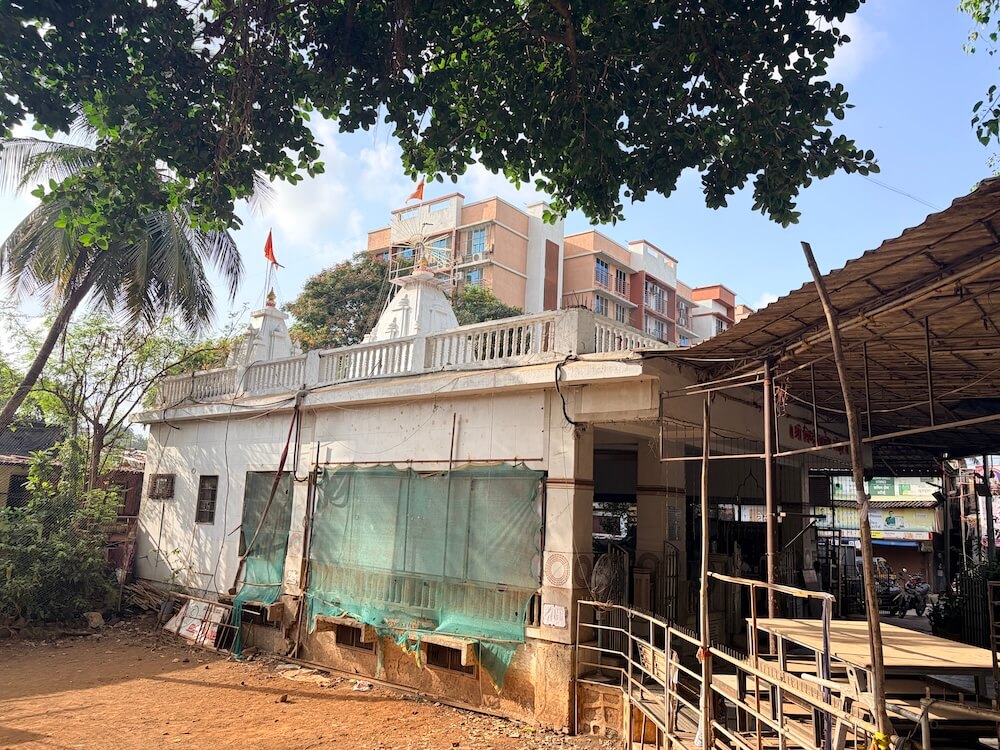
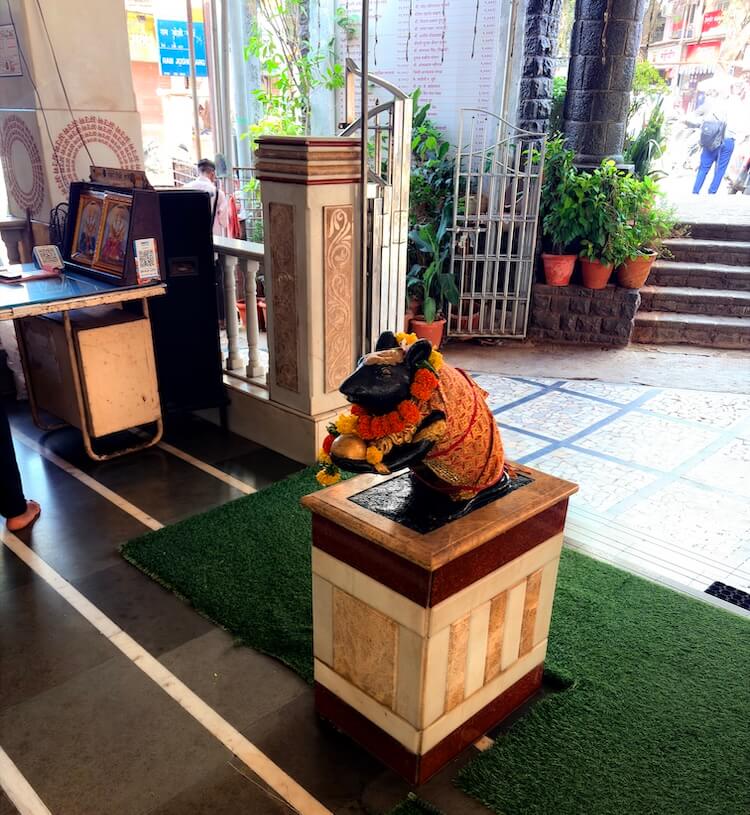
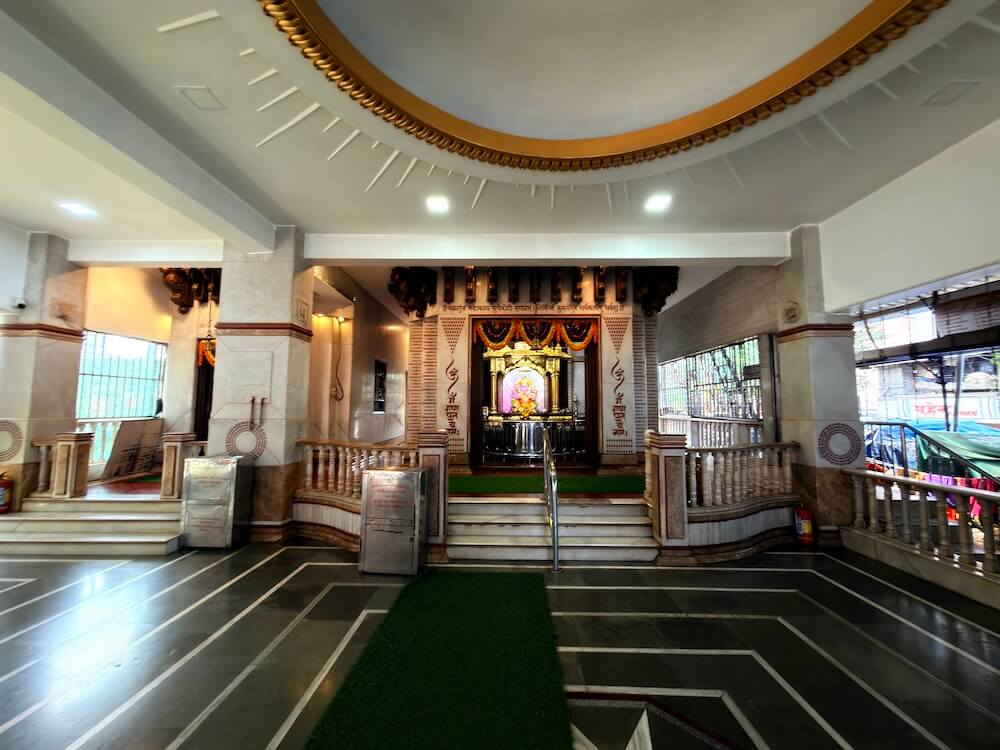
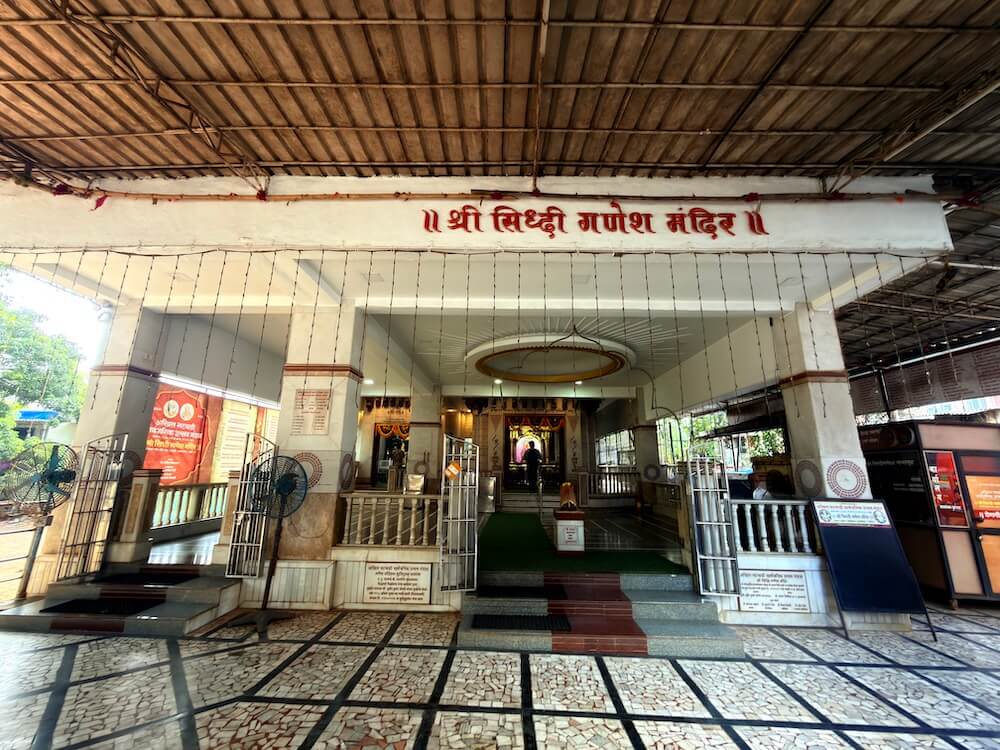
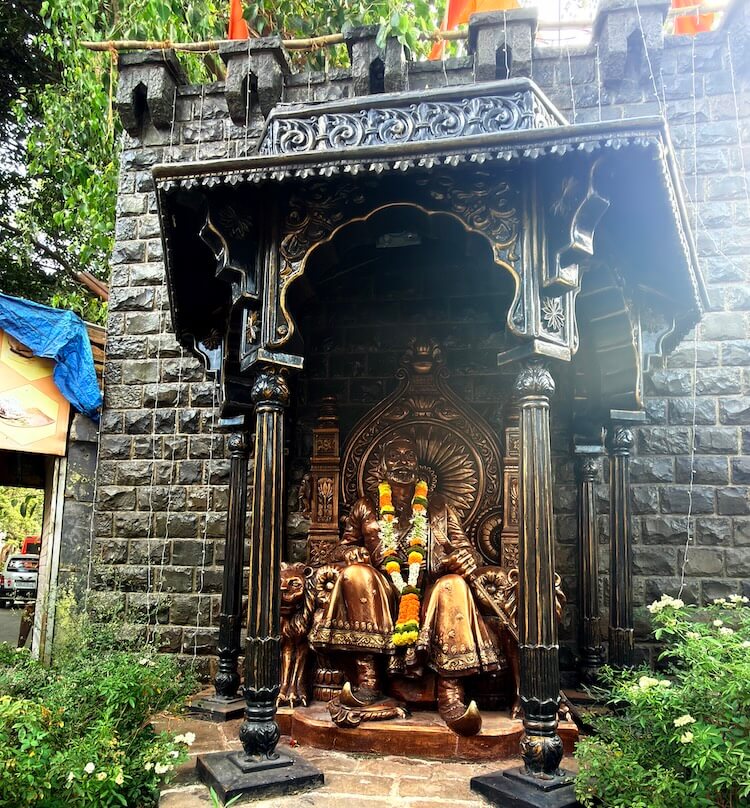
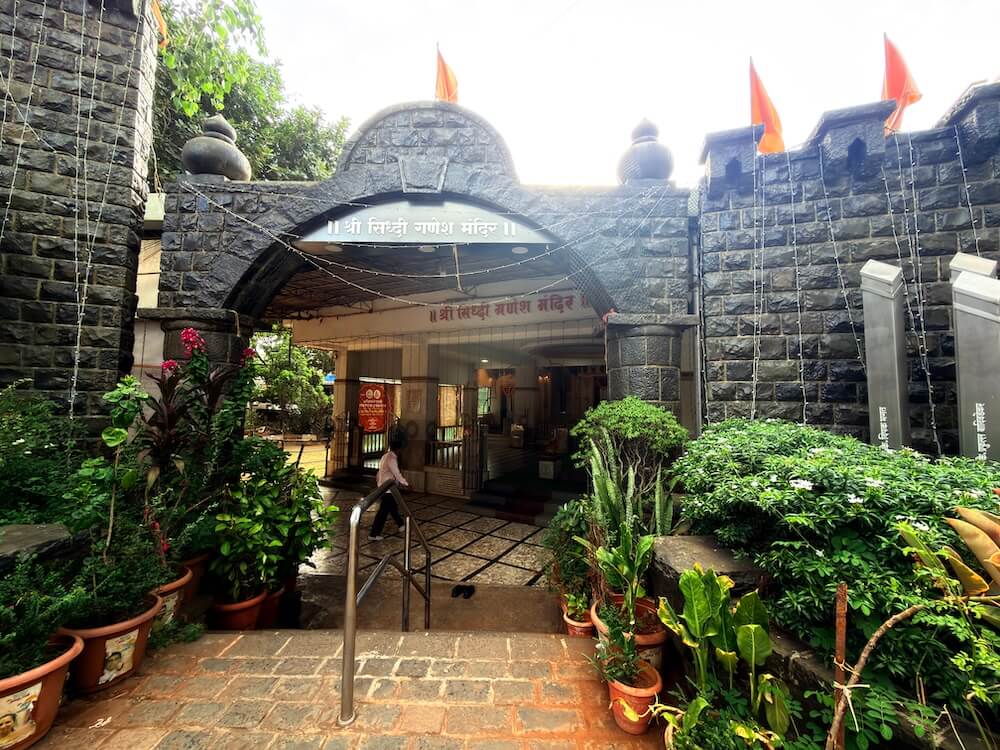
Situated on a ground at a busy junction in Bhatwadi, the temple premises feature a fortification wall resembling a fort and a large entrance arch. Near this arch, on the left, is a tall stone canopy housing an enthroned statue of Chhatrapati Shivaji Maharaj, the revered deity of Maharashtra. A large shed has been built in the courtyard in front of the temple for the convenience of devotees. The entire courtyard is paved. The temple is built in a modern architectural style. Constructed on a high plinth, the temple follows the traditional layout of a sabhamandap (assembly hall) and a garbhagriha (sanctum sanctorum). The sabhamandap has large square pillars and a flat roof. It is an open-style structure with railings on the sides. The marble-paved sabhamandap is accessed by three steps. Directly in front, on a high pedestal, sits the idol of the Mushaka, the vehicle of Ganesha. From the sabhamandap, one ascends three steps to enter the sanctum. Adorned with Ganesh mantras and various names of Ganaraya, this sanctum houses a golden arch on a high altar, where the idol of Siddhi Ganesh is installed. Carved in marble, the idol is decorated with garments, ornaments, and garlands of flowers. Above the head of the idol is a golden umbrella. A metal idol of Ganaraya is seated in front of the main idol. One can perform circumambulation (pradakshina) around the pedestal of this sanctum. To the left of the Siddhi Ganesh sanctum is the sub-sanctum of the temple. It houses a marble idol of Shirdi Sai Baba seated on a silver throne upon a marble pedestal. It is said that countless young people in the Bhatwadi area are devotees of Sai Baba, and many of them have a tradition of walking to Shirdi once a year. Both these sanctums are topped with modern-style ‘Urushringa’ type shikhars (spires), which are crowned with golden kalashas.
Devotees can avail the benefit of Darshan at this temple from 6 in the morning until 9 at night. There is a large influx of devotees here every morning and evening for Darshan. On the days of Sankashti and Angarki Chaturthi, long queues form here for Darshan. Various religious, cultural, and social programs are organized in this temple throughout the year. Guru Purnima is one of the important festivals among these. The biggest festival at this temple, which was established by the Sarvajanik Ganeshotsav Mandal, is naturally the Ganeshotsav in the month of Bhadrapada. During the 10-day period from Bhadrapada Shuddha Chaturthi to Anant Chaturdashi, the area takes on the appearance of a fair. Devotees from various suburbs of Mumbai also come here for Darshan.
This sacred temple stands as a testament to deep spiritual devotion, ancient architectural grandeur, and rich local cultural traditions.
The sanctum sanctorum houses the divine idol consecrated according to ancient Vedic traditions, surrounded by serene courtyards and traditional temple architecture.
Navratri, Maha Shivratri, Annual Temple Jatra & Deepotsav
Compare and book flights, secure top-rated local hotels near the temple, hire reliable guides, and rent cars instantly.
Extend your pilgrimage by visiting other highly sacred temples located nearby.


Add ₹999 more to unlock FREE SHIPPING!
Your sacred cart is currently empty.
Shop Photo FramesFill in your delivery details below to place your order.
Add comment