
Add ₹999 more to unlock FREE SHIPPING!
Your sacred cart is currently empty.
Shop Photo FramesVazur is a historic village situated on the northern bank of the Godavari River in Purna Taluka of Parbhani District. The Rameshwar Mahadev Temple located here is an excellent example of ancient temple architecture. It is a popular legend that Lord Ramchandra himself consecrated the Shiva Linga here during the Treta Yuga. This is how the temple received the name ‘Rameshwar Temple’. This historic temple was constructed in the 12th century in the Hemadpanti architectural style. An inscription in the Devanagari script carved on one of the pillars of the temple bears witness to its antiquity. Countless devotees believe that the Shiva Linga of Rameshwar here is extremely vibrant and grants the wishes of those who pray with faith.
Many significant legends are famous regarding this ancient temple. It is said that during his exile in the Treta Yuga, Lord Ramchandra resided in Dandakaranya along with his wife Sita and brother Lakshman. At that time, he consecrated this Shiva Linga on the northern bank of the Godavari River. Another local story is associated with this temple. Many years ago, a married woman from a nearby village was an ardent devotee of Lord Shiva. Every midnight, without telling anyone, she would come to have darshan of the Shiva Linga in this temple. Her husband was of a suspicious nature. One day, he followed her to see where she went every midnight. He carried a sharp weapon in his hand. While returning after having darshan of the Shiva Linga, she realized that her husband had followed her there. Seeing the weapon in her husband’s hand, she prayed to Lord Shiva for her protection. Hearing the call of his devotee, the ground suddenly split open, and Lord Shiva took her into the earth alive. As she was going into the ground, her husband ran and pulled the end of her saree, but it was of no use. It is said that a piece of that woman’s saree pallu is still kept for devotees to see in the palanquin taken out during festivals here.
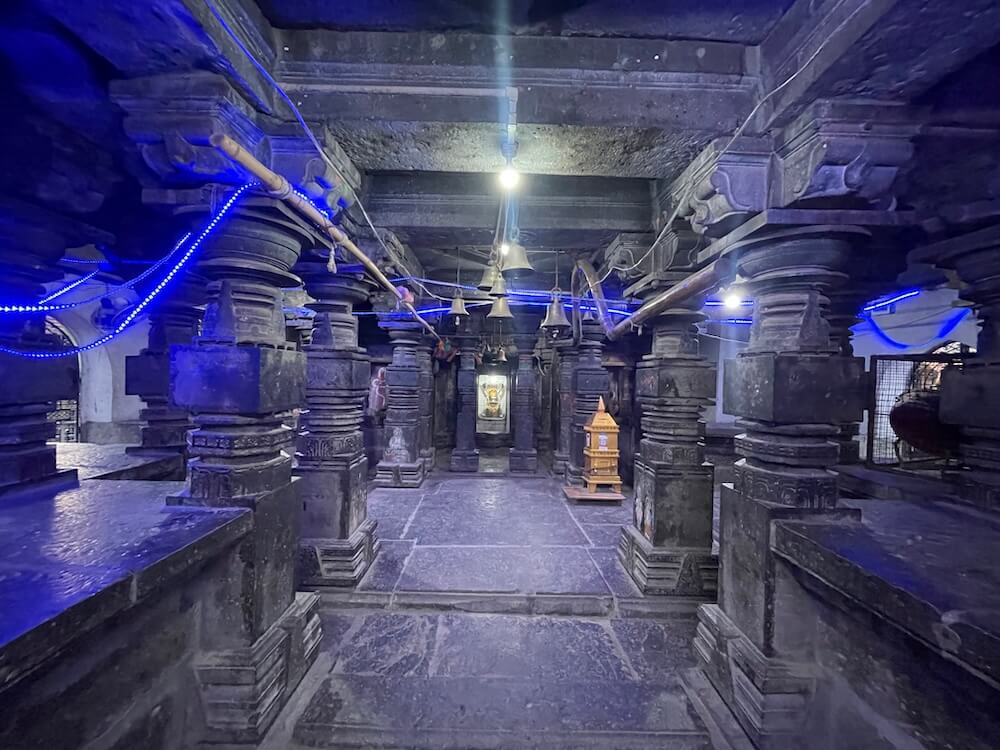
This temple was built in the 12th century in the Hemadpanti architectural style. There is an inscription in the Devanagari script on one of the pillars of this temple. This two-line inscription is in the old Marathi language. The first line of this inscription reads, “Swasti Shri Madhavba Sutarcha Lenku Hemo. Tayacha Sanghedi Songaia” (Hail, the son of the carpenter Madhavba, Hemo. His companion Songaia). The second line reads, “Doghi Melouni. Samigri Shambha Ghandiela. Aivam Ya Shambheyasi Gadd 10” (Together, both of them crafted the materials and the pillars. For these pillars, 10 Gaddanaks were spent). This inscription is still in good condition and can be read easily. The inscription begins with the auspicious word ‘Swasti Shri’. The meaning of this inscription is that Hemo, the son of the carpenter Madhavba, and his companion Songaia together crafted the materials and the pillars. A total of 10 Gaddanaks were spent to prepare these pillars. A Gaddanak was a gold coin weighing 48 gunjas during the Yadava period, and it is primarily mentioned in the inscriptions of that era. Since there is no mention of a date in this inscription, there is no definitive means to determine the time of its writing. However, historian Brahmanand Deshpande has discussed in depth how it belongs to the Yadava period based on the linguistic features of this inscription in his independent article ‘Yadava-era Pillar Inscription at Vazur’ in his book ‘Shodhmudra Volume 4’.
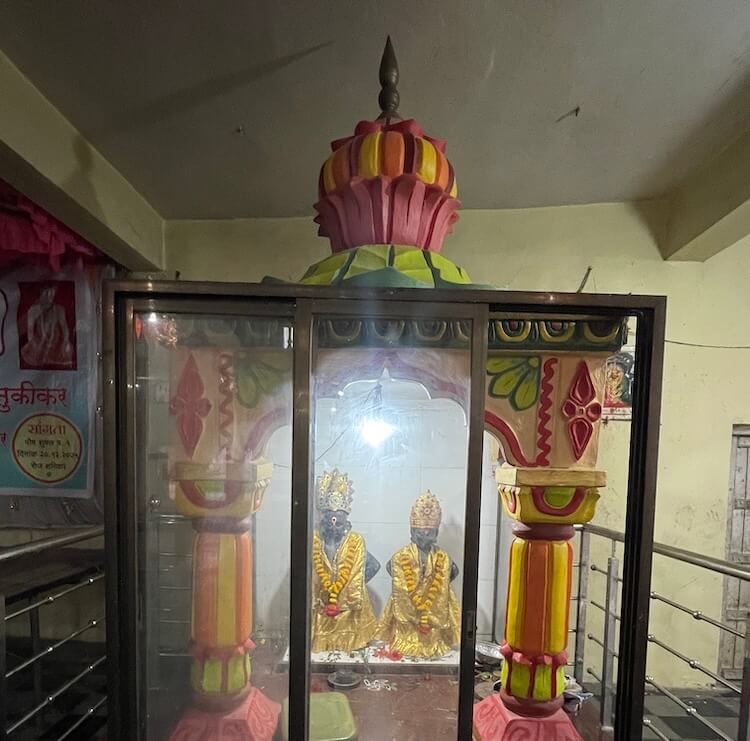
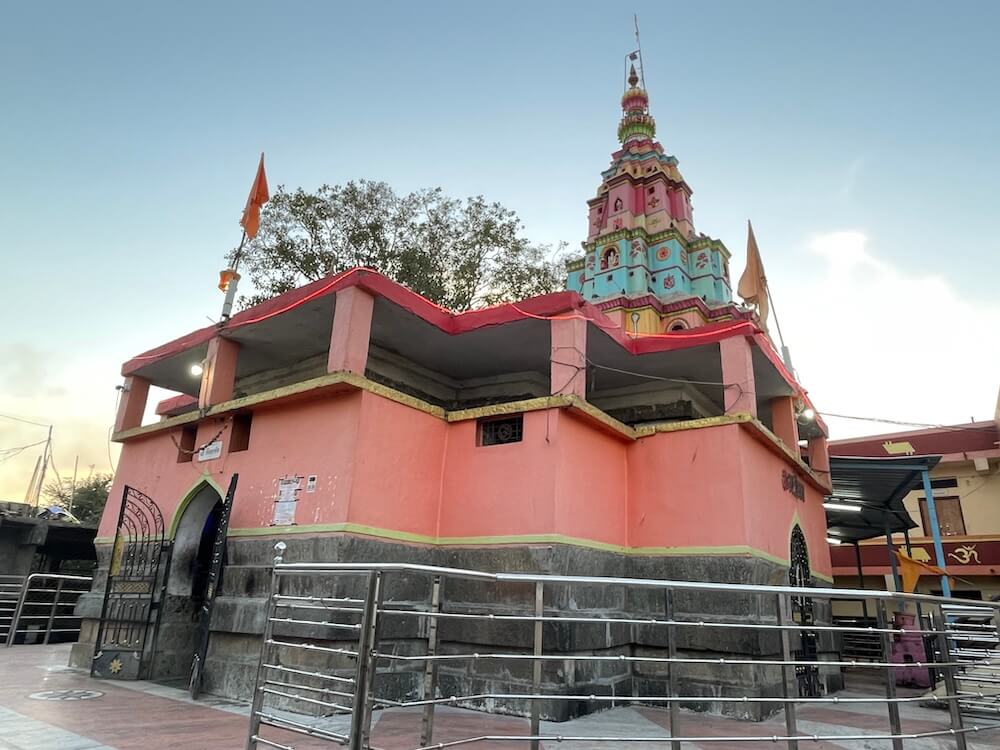
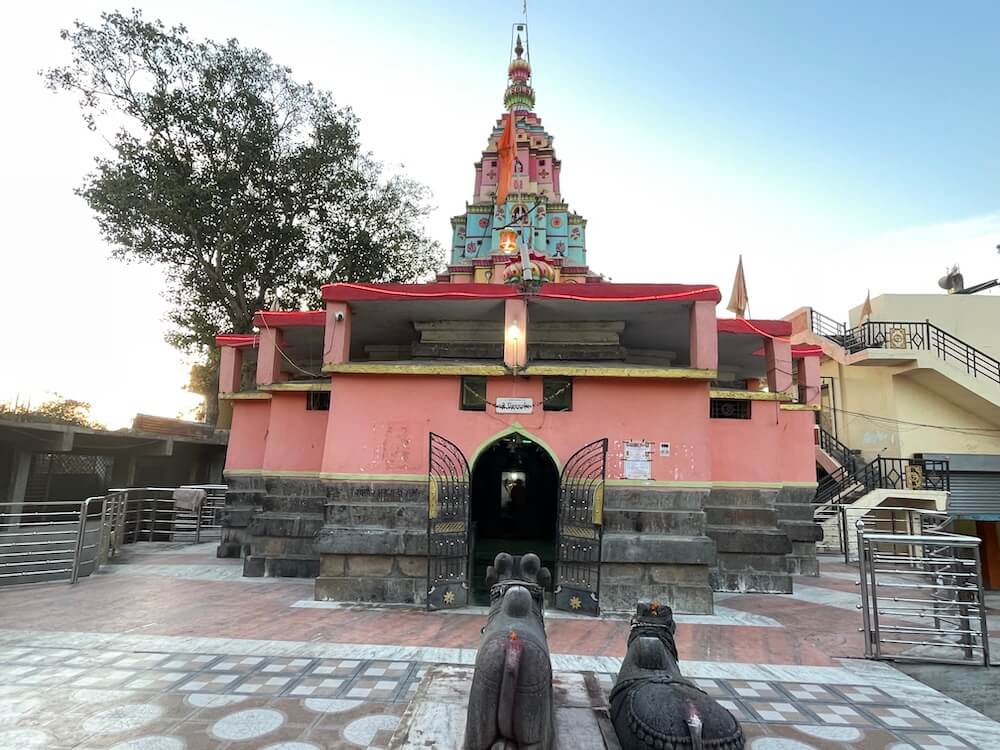
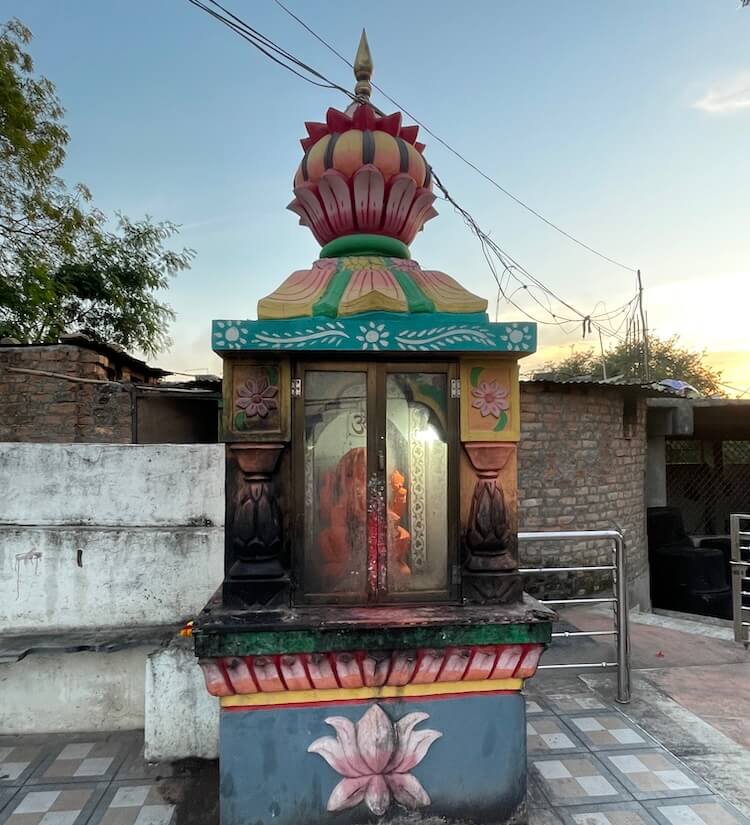
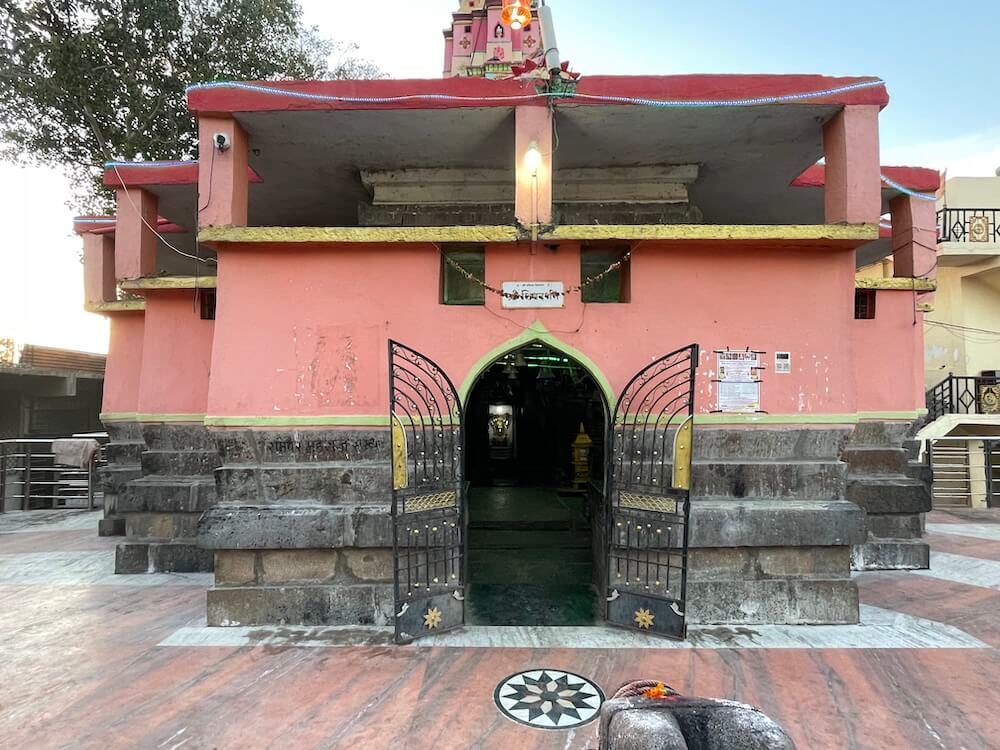
There are many ancient temples in the village of Vazur. Ancient inscriptions, old mansions (wadas), valuable idols, and underground passages are also found here. Countless devotees have faith in the Shiva Linga residing in the Rameshwar Temple here. The Godavari River flows to the west of the temple. Many people perform Dashkriya rituals on the ghat near the riverbed. It is said that many saints resided in the temple premises in the past. Among them, the sacred samadhis of Narayanatirtha Swami, Ranganathatirtha Swami, Purushottamatirtha Swami, and Hari Maharaj can be seen in the riverbed. The temple is surrounded by a stone wall. The temple is built on a high plinth (chautara) in a stone-paved courtyard. There are two stone idols of Nandi in front of the temple. One of these idols is currently in a dilapidated state. The structure of the temple consists of a Sabha Mandap (assembly hall), Antarala (vestibule), and Garbhagriha (sanctum sanctorum). There are a total of 24 pillars in the Sabha Mandap. All these pillars stand on pillar bases and have various shapes carved on them. There are two niches (devkosthas) in the Sabha Mandap. They contain idols of the serpent deity and Narasimha. The entrance to the sanctum sanctorum is of the Panchashakhiya style. Some sculptures are carved on it. Kirtimukhas are carved at the base of the entrance. An image of Ganpati is carved on the lintel (lalatbimba) in the center of the door frame. The Rameshwar Linga is installed in a large Shalunka in the sanctum sanctorum. A serpent-adorned Shiva mask is kept in the niche at the back. During festivals, this mask is placed on the Linga, and the Mahapuja of the deity is performed. The Shikhara (spire) over the sanctum sanctorum has been newly constructed in recent times. After leaving the temple, while going towards the riverbed from the west, one comes across a small temple of the Goddess. An ancient hero stone (virgal) stands right outside this temple. Some remains of ancient stones and a Gadhegal (donkey stone) are safely kept on the riverbank.
Thousands of devotees from neighboring districts like Parbhani, Hingoli, Jalna, and Nanded come to the Rameshwar Temple for darshan. Various religious programs are organized here throughout the year. In this temple, the main puja and abhishek of the deity are performed daily at 5 in the morning. Following this, the Aarti is performed around 6 in the evening. On every Monday of the Shravan month, a large gathering of devotees can be seen here. Countless devotees travel long distances on foot and perform Jalabhishek on the Pindi with water brought in Kawads. Mahashivratri is considered the biggest festival at this temple. On the day of Mahashivratri, long queues of devotees form for Darshan from early morning. On this day, after the Abhishek-Puja of the Shivling at 5 in the morning, a grand Maha-Aarti is performed, after which public Darshan begins. A Hari-Kirtan program is held between 11 in the morning and 1 in the afternoon. After the Kirtan concludes, refreshments are distributed to all the devotees. Around 9 at night, the Palkhi of Rameshwar is taken out from the temple for a procession through the village. Villagers draw beautiful Rangolis along the path of the Palkhi, and the streets are decorated with colorful buntings. Along the way, the Palkhi is worshipped by married women. On the occasion of this festival, lamps are lit in front of every house in the village to illuminate the surroundings. The Palkhi returns to the temple around 2 in the middle of the night. A fair is also held here on the day of Chaitra Purnima. During this festival as well, the Palkhi procession of Rameshwar and the traditional program of pulling the chariot through the village are carried out with great enthusiasm. On the occasion of the Yatra, wrestling competitions are organized in the temple premises. Arrangements for the accommodation and refreshments of all visiting devotees are made by the temple trust board. A small Dharamshala and two halls have been built in the temple premises for the devotees. Devotees can have Darshan here every day from 5 in the morning until late at night.
This sacred temple stands as a testament to deep spiritual devotion, ancient architectural grandeur, and rich local cultural traditions.
The sanctum sanctorum houses the divine idol consecrated according to ancient Vedic traditions, surrounded by serene courtyards and traditional temple architecture.
Navratri, Maha Shivratri, Annual Temple Jatra & Deepotsav
Compare and book flights, secure top-rated local hotels near the temple, hire reliable guides, and rent cars instantly.
Extend your pilgrimage by visiting other highly sacred temples located nearby.


Add ₹999 more to unlock FREE SHIPPING!
Your sacred cart is currently empty.
Shop Photo FramesFill in your delivery details below to place your order.
Add comment