
Add ₹999 more to unlock FREE SHIPPING!
Your sacred cart is currently empty.
Shop Photo FramesThe Jogeshwari Devi Temple in Ambajogai and the Vaijnath Temple in Parli, one of the twelve Jyotirlingas, are particularly famous in Beed district. Apart from these, there are more than fifty ancient and renowned Mahadev temples in the district. Beed district was a major center for powers such as the Chalukyas, Yadavas, Bahamanis, Mughals, Marathas, and the Nizamshahi. Consequently, this region holds great historical and religious significance. Majalgaon is a taluka headquarters in Beed district. The temple of the village deity, Siddheshwar, is especially famous here.
Beed district is a historically and culturally rich region situated in the central part of Maharashtra. The city of Majalgaon, located in the northeastern part of this district, is nestled on the banks of the Sindphana River. The Sindphana River is a major tributary of the Godavari. It originates in the Balaghat mountain ranges of Beed district and flows through Majalgaon taluka to join the Godavari at Manjarath. Due to this geographical location, Majalgaon has held importance as a center of agriculture and trade since ancient times. The Siddheshwar Temple is a site that bears witness to the antiquity of this city and serves as the focal point of its spiritual consciousness. Situated in the old part of the city on the banks of the Sindphana River, this temple is a major center of the Shaiva tradition that has continued for centuries. According to available historical references and archaeological remains, this is considered the most ancient temple in Majalgaon city.
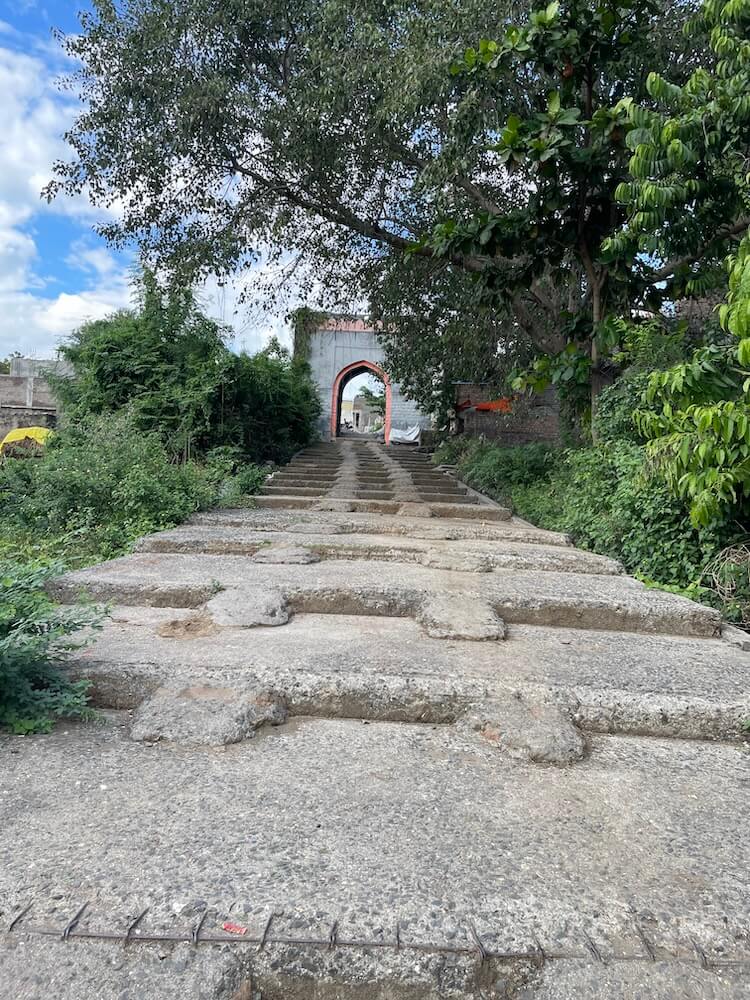
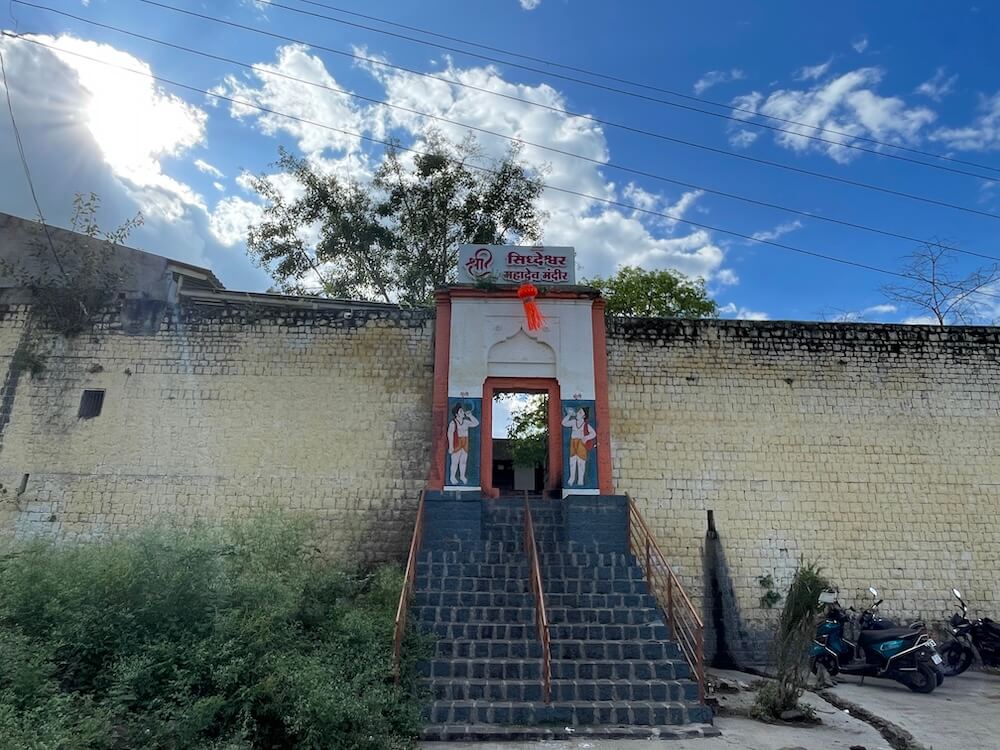
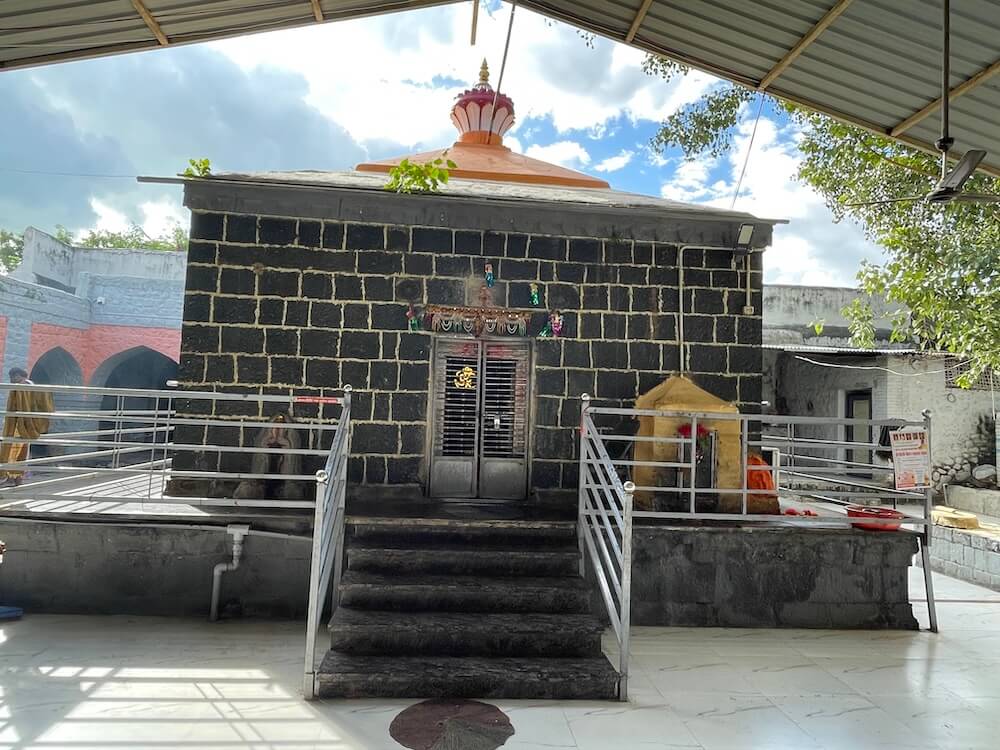
This temple is located at a short distance from the village. There are also small temples dedicated to Maruti and Shriram near the main temple. The Siddheshwar Temple is surrounded by a sturdy fortification wall about fifteen feet high. The main entrance is located within this fortification. Since it is about eight feet higher than the road, there are ten steps leading to the entrance. There are iron safety railings on both sides of these carved stone steps. In front of the entrance, there are platforms on both sides, and images of the gatekeepers Jai and Vijay are painted on the walls. The door frames of the entrance feature vertical linear carvings, and there is a sculpture of Ganpati on the lintel. The entrance has an arched toran, above which are circular motifs on both sides. The entrance has ornate wooden shutters. After entering through the gateway, one climbs a few more steps to enter the temple courtyard, which is covered with paver blocks. In the courtyard, there is a Tulsi Vrindavan in front of the temple. On the left side of the courtyard, there is a spacious pavilion on a raised platform, which is used as an Annachhatra (free food distribution center). There is a hall in the courtyard for cultural programs and wedding ceremonies. Along the fortification wall, there are stone-built cloisters constructed in ancient times. These are used as resting places for devotees and as a Bhaktaniwas (pilgrim lodging). Local villagers state that the ancient samadhis seen in the courtyard belong to saints and sages.
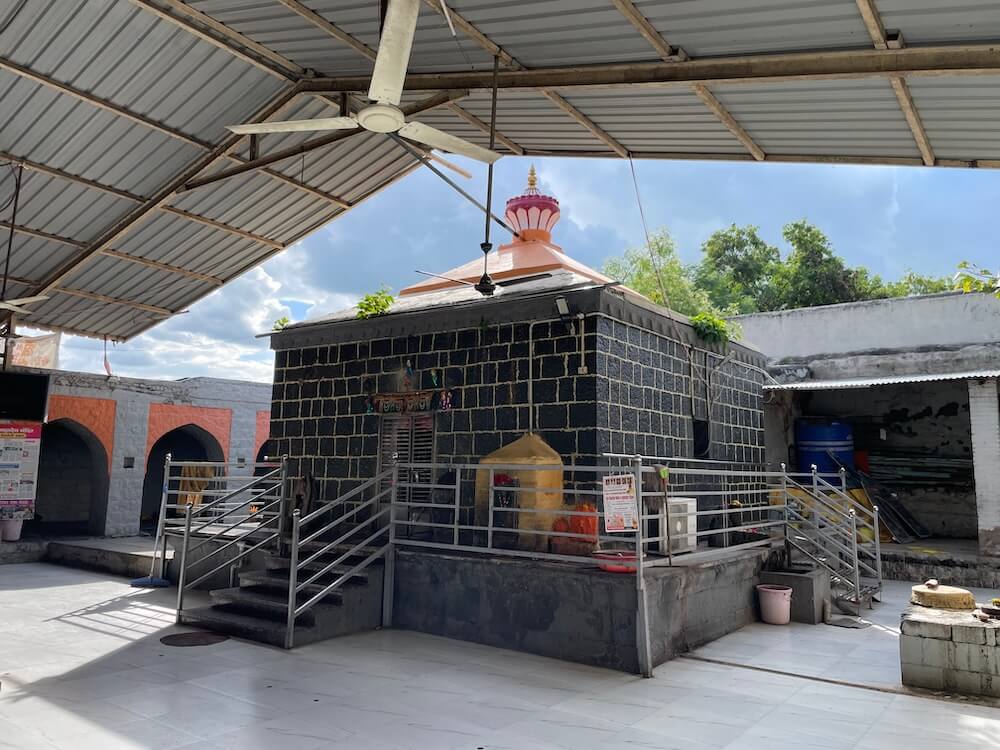
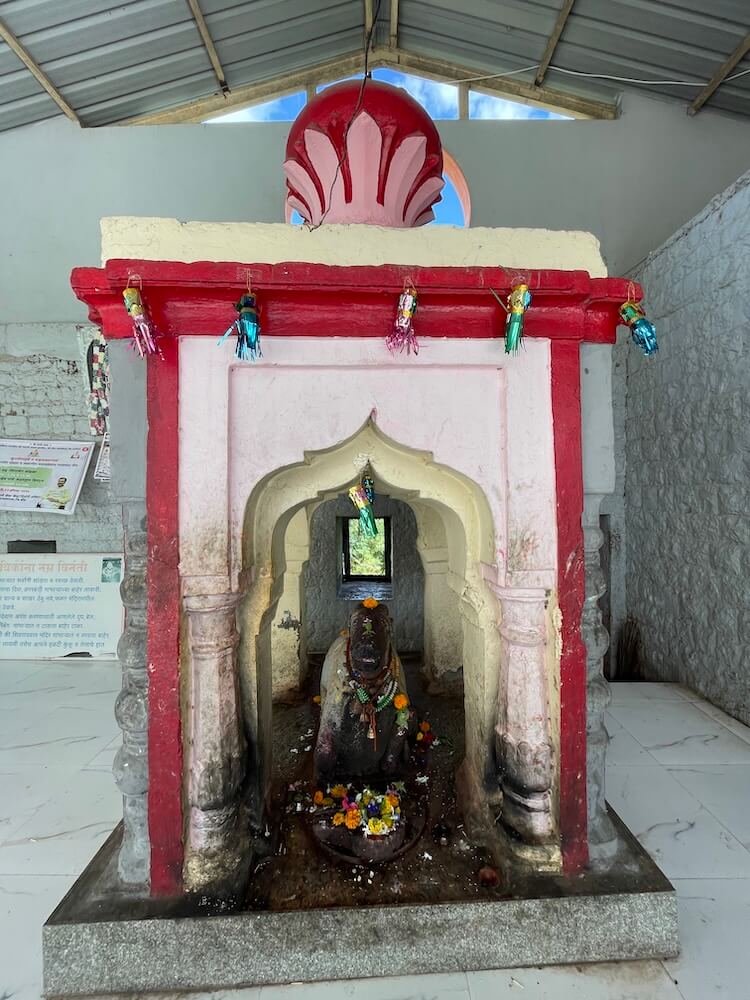
In front of the temple is the Nandi Mandap. It has a platform about three feet high, with pillars at all four corners supporting a roof. There is a shikhara (spire) atop the roof. Inside the Nandi Mandap, there is an ancient idol of Nandi on a Vajra-pitha, and a Shivlinga in front of the Nandi. There is a circumambulation path around the Nandi Mandap. On a side platform, there are ancient Nagshila (serpent stones). The Siddheshwar Temple is structured with a Sabha Mandap (assembly hall) and a Garbhagriha (sanctum sanctorum). In front of the temple, there is an open Sabha Mandap with a tin roof supported by iron pillars. In the center of this hall, there is a tortoise sculpture on the floor. Beyond this is the Garbhagriha, built of ancient stone masonry on a platform about three feet high. There are five steps in front of the entrance to the Garbhagriha. There are ancient stone idols on both sides of the entrance. The door frames feature vertical linear carvings, and there is a Ganpati sculpture on the lintel. On the lintel strip, there are sculptures of the Moon and the Sun. The presence of such Moon-Sun sculptures is considered unique and rare. The entrance has ornate wooden shutters.
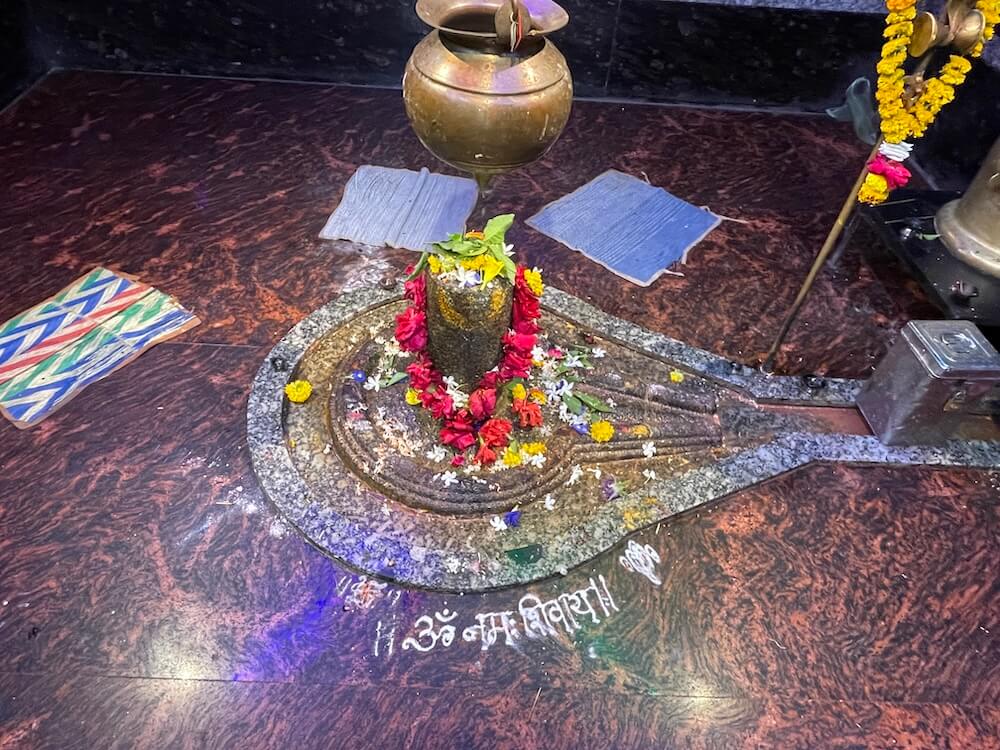
In the center of the Garbhagriha floor, there is a Swayambhu (self-manifested) Shivlinga. The Shalunka of the Shivlinga is at ground level, while the Linga stone is about one foot high. A copper Abhishek pot, which drips water onto the Shivlinga, is suspended from the ceiling. Beside the Shivlinga is a brass trident. There is also a brass mask of Mahadev on a pedestal, used during festival periods. The ceiling of the Garbhagriha is supported by the walls. The twelve-sided ceiling features circular carvings.
There is a circumambulation path on the platform outside the Garbhagriha. Along this path, there are some ancient idols and Shivlingas. Sculptures of animals, birds, wheels, and lotuses are carved on the outer walls of the temple. The roof of the Garbhagriha has a dome-shaped shikhara. At its apex are the Amalaka and the Kalash. It is said that the shikhara over the Garbhagriha was built at a later period.
Mahashivratri is the main annual fair celebrated here with great enthusiasm. During this time, thousands of devotees from the surrounding areas come for the darshan of the deity and to fulfill their vows. On this day, programs such as Maha-Abhishek, Bhajans, Kirtans, discourses, music, and Mahaprasad are organized at the temple. A huge crowd of devotees gathers at the temple on all Mondays of the Shravan month. Festivals and celebrations such as Chaitra Padwa, Dussehra, Diwali, Makar Sankranti, Kojagiri Purnima, and Kartik Purnima are also observed at the temple. The number of devotees visiting for darshan is high on Mondays, full moon days, new moon days, Pradosh, and Ekadashi.
This sacred temple stands as a testament to deep spiritual devotion, ancient architectural grandeur, and rich local cultural traditions.
The sanctum sanctorum houses the divine idol consecrated according to ancient Vedic traditions, surrounded by serene courtyards and traditional temple architecture.
Navratri, Maha Shivratri, Annual Temple Jatra & Deepotsav
Compare and book flights, secure top-rated local hotels near the temple, hire reliable guides, and rent cars instantly.
Extend your pilgrimage by visiting other highly sacred temples located nearby.


Add ₹999 more to unlock FREE SHIPPING!
Your sacred cart is currently empty.
Shop Photo FramesFill in your delivery details below to place your order.
Add comment