
Add ₹999 more to unlock FREE SHIPPING!
Your sacred cart is currently empty.
Shop Photo FramesThe village of Ranisawargaon is situated in the Gangakhed taluka of Parbhani district in Maharashtra. The temple of Mother Renuka in this village is built in the Hemadpanti architectural style and is recognized as a sub-shrine of the main Renuka temple at Mahur. The original abode of the Goddess is located on a picturesque hill about one kilometer away from the main village. This hill is known as the ‘Mulapitha’. It is believed that this Mulapitha was established by Lord Parashurama, the son of Mother Renuka. This Goddess is considered the family deity (Kuladevata) of many families in the Parbhani district. A large fair known as the ‘Teladhuni Jatra’ is held here every year in the month of Chaitra, and a grand festival is also celebrated during the Sharadiya Navaratri.
Several legends regarding the establishment of this temple and the arrival of the Goddess are narrated at the local level. According to these, the original seat of Renuka Devi is Mahur. It is said that Renuka Devi of Mahur and Tulja Bhavani of Tuljapur, both sisters, used to come to this Sawargaon to meet each other and play dice on the vast meadows here. The original seat of Renuka Devi is situated on the hill to the east of the main village temple, and stone steps have been built to reach the temple on this hill. A legend is also famous regarding how the Goddess came from this hill into the village itself. Many years ago, a girl from the Chambhar community living in this village was a devotee of this Goddess. She used to go to the temple on the hill for worship with daily regularity. One day, as usual, she went to the hill for worship, but became so engrossed in her prayers that she lost track of time. Since it had become night, she had to stay at the temple on the hill that night. Pleased by her unique devotion, the Goddess appeared before her in person. The Goddess told her, “You do not need to come here for my darshan anymore; I will come to your house with you myself.” However, the Goddess placed a condition before her: “Do not look back while walking; if you do so, I will vanish at that very spot.” Accordingly, the girl started walking ahead and the Goddess followed her. While walking, the girl looked back to see if the Goddess was truly following her. At that moment, she had a divine vision of the Goddess adorned with garments and ornaments, but as per the condition, the Goddess disappeared into the ground at that very spot. Only the face of the Goddess remained above the ground, and the girl also breathed her last at that same place. Over time, the current main temple was built on that sacred spot where the Goddess had vanished. Due to this presence of Mother Renuka, the village was formerly named ‘Ranumaichi Sawargaon’, which later transformed into ‘Rani Sawargaon’. The Gomati River flows through the village, dividing it into two parts. The western part of the river is called Sawargaon Peth, and the eastern part is called Renukadevi Peth. The main temple is situated in this eastern part.
The traditional rights to perform worship and rituals in this temple belong to the Galakatu family. According to available information about this family, about ten generations ago, their ancestor Govind Deshpande was a staunch devotee of Mother Renuka. Legend has it that, distressed by extreme poverty, he offered his own head at the feet of the Goddess. Moved by this sacrifice, the Goddess blessed him, and since then, he and his descendants have carried the surname ‘Galakatu’. Later, by the grace of the Goddess, they received the Jagirdari of Rani Sawargaon. After receiving the Jagirdari, they renovated this temple. Even today, the Galakatu descendants possess old official documents granting rights regarding the temple and the Jagirdari from the Bahmani kings, Aurangzeb, and the Nizam. These include various firmans, sanads, mahzarnamas, and inams, as recorded in the government gazetteer. Recognizing the importance of this temple, the state government has granted this site the status of a ‘B’ class pilgrimage center.
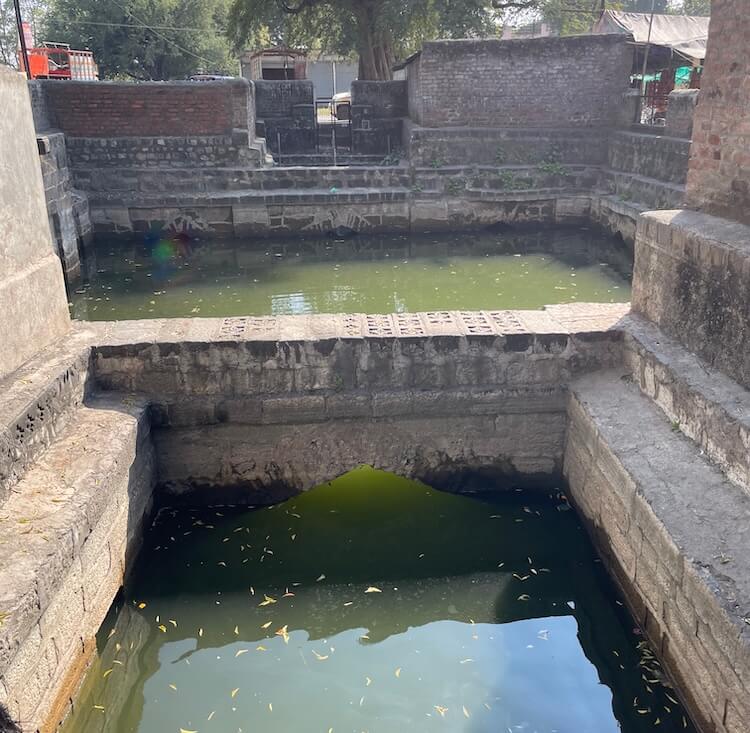
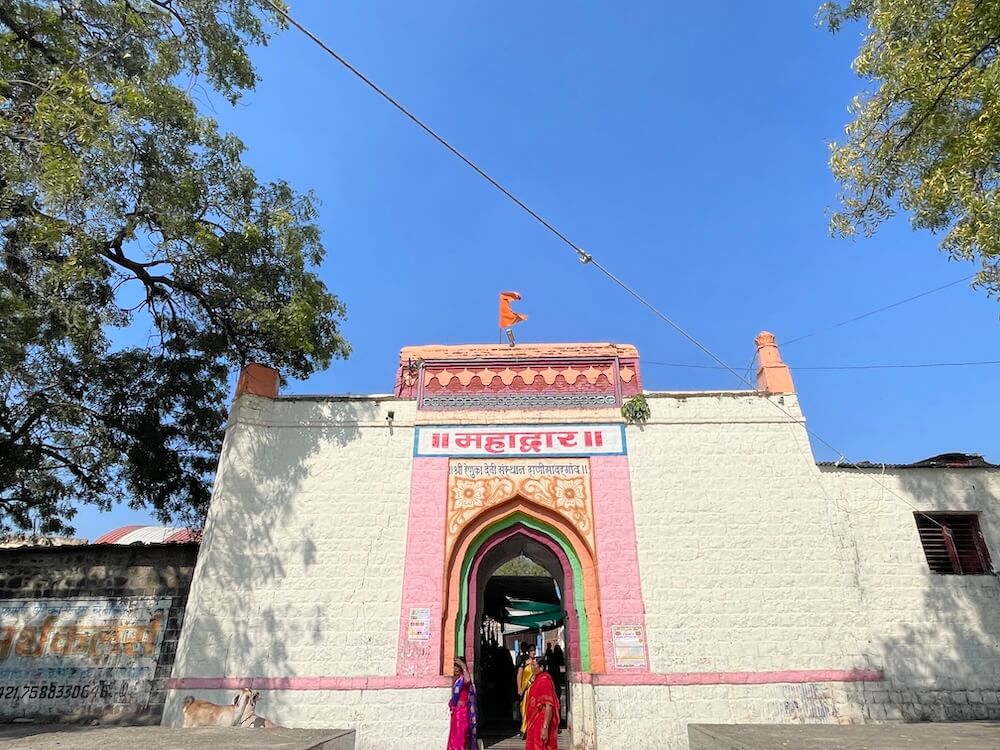
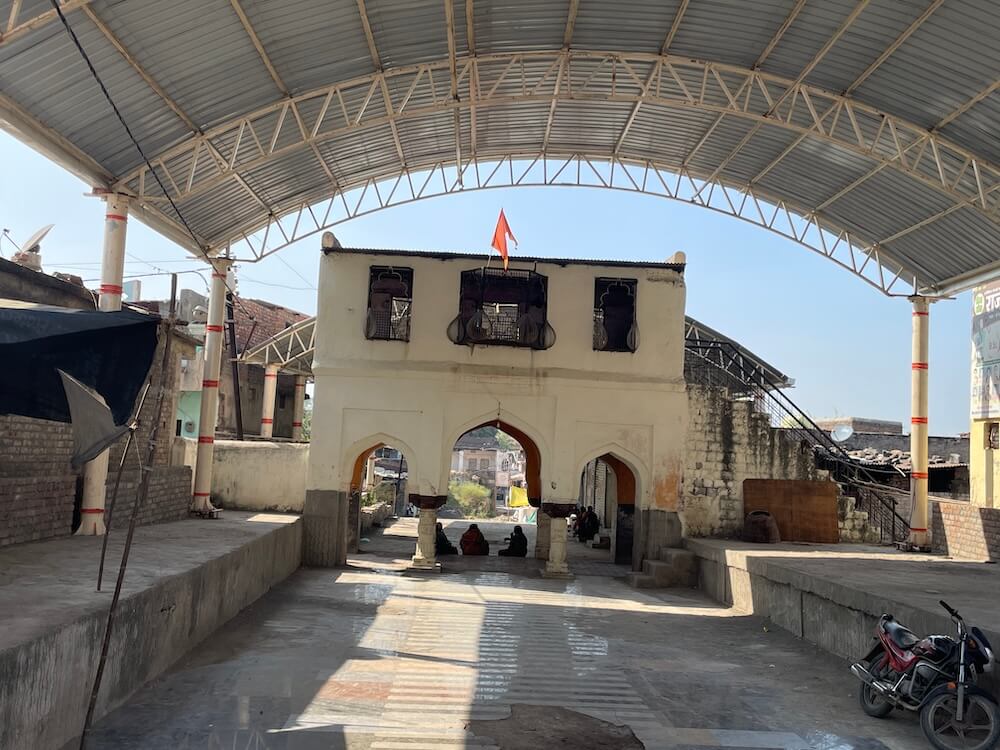
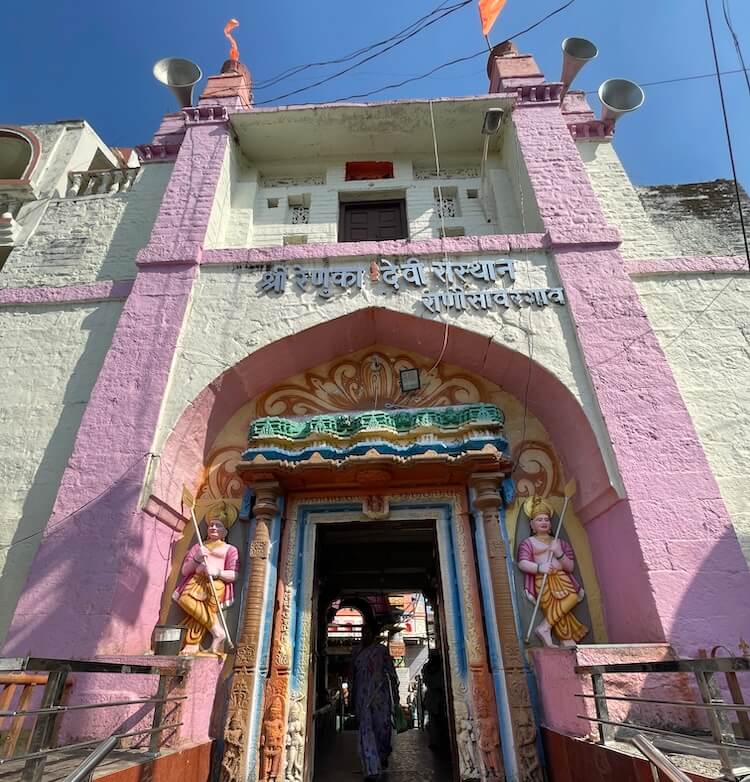
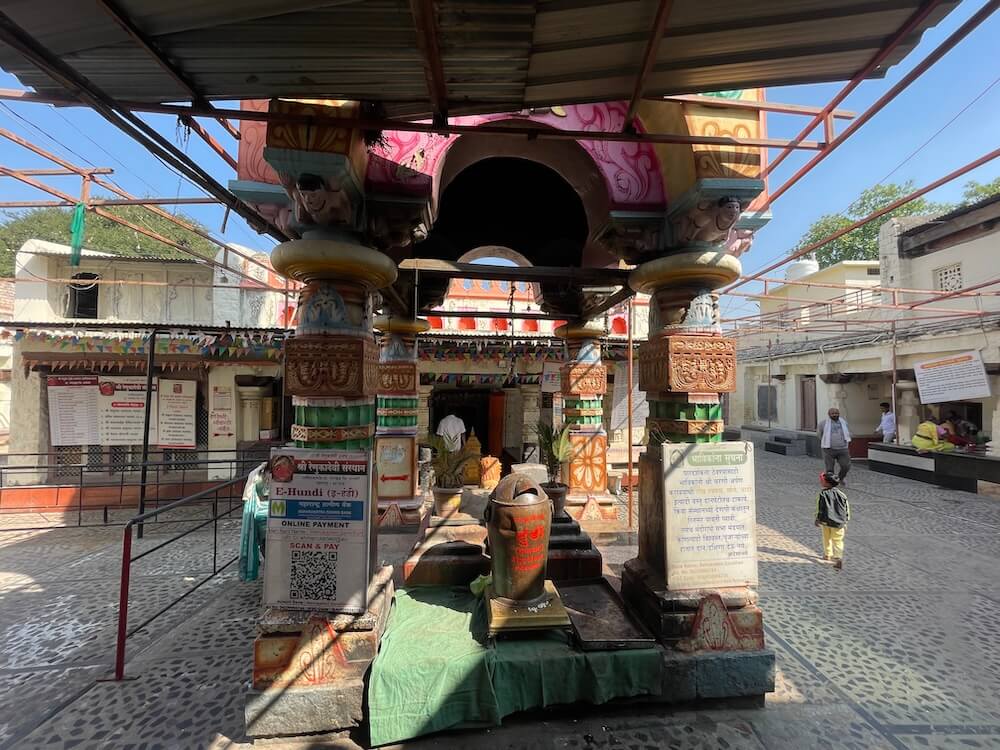
A grand entrance gate (Mahadwar) is built on the south side of the main temple. To the right of this entrance is a small temple of Neelakantheshwar Mahadeva. Directly in front of the entrance is a stone well built in the Hemadpanti architectural style. This well is named ‘Kallol Tirth’, and some local people also call it ‘Deviche Tirth’ or ‘Barva Tirth’. Near this sacred water body is an ancient idol of Khajurai Devi. Adjacent to the Kallol Tirth are the samadhis of saints like Govind Maharaj Galakatu, Kidas Maharaj, Palekar Maharaj, Shambuva Maharaj, Kerkarbuwa, and Pardeshi Baba. Two lamp towers (Deepmalas) stand in the temple courtyard. Additionally, there are two lamp towers on both sides of the main entrance of the temple. On both sides of the temple entrance are sculptures of lions, the vehicle of the Goddess. Two gatekeepers (Dwarpalas) are seen on both sides of the entrance, and some sculptures are carved in the lower section. This triple-branched entrance is intricately carved. There is a sculpture of Ganesha on the lintel of the doorway. After entering through this main gate, there are cloisters, or stone rooms, built on all four sides for the rest of the pilgrims. In the front part of the temple, there is a sacrificial altar (Homakunda). A stone roof is built over this Homakunda. It looks like a spire (Shikhara) and this roof is supported by four sturdy pillars in the Hemadpanti architectural style. Adjacent to this Homakunda is a sculpture of a lion, the vehicle of the Goddess.
This main temple of Mother Renuka faces west. The influence of Islamic architecture is visible on the facade, or the outer structure, of the temple. The structure of the temple consists of a Sabha Mandap (assembly hall) and a Garbhagriha (sanctum sanctorum). A Ganesha sculpture is carved on the lintel of the entrance to the sanctum sanctorum. Inside the sanctum sanctorum, the approximately four-foot-tall stone idol of Goddess Renuka is enshrined. On this vermilion-anointed idol, the Goddess’s eyes, eyebrows, nose, and lips are carved. There is a large vermilion mark on the Goddess’s forehead and a gold nose ring in her nose. A silver crown rests on the Goddess’s head, and a silver halo is positioned behind her. To the right of the Goddess is the place of her son, Lord Parashurama. In the main temple, in front of the Goddess, there is a square stone measuring two by two feet. Here, devotees offer animal sacrifices to fulfill their vows. Within the temple premises, idols of other deities, including Vitthal-Rukhumai, are installed. To the east of the temple is the Ganesha temple, to the north is the Jogai temple, and to the south is the Dattatreya temple. A Shiva Linga is installed in front of the idol of Dattatreya in this temple, which is built in the Hemadpanti architectural style. Every year, a festival is celebrated here on Dattajayanti. A pilgrims’ rest house has also been built here to provide accommodation for devotees coming from afar. Many devotees visit this awakened deity throughout the year for darshan. It is a tradition here to offer silver ears and noses to the Goddess as a gesture of gratitude after a vow is fulfilled.
Many religious festivals and celebrations are observed with great enthusiasm in the temple throughout the year. Every year, during the month of Chaitra, from Hanuman Jayanti until Ekadashi, a large fair called the ‘Teldhuni Jatra’ is held here. During this period, the Goddess is mounted on different vehicles each day. For the ten days of the fair, a procession of the Goddess’s palanquin is taken out every night. During this time, bhajan and kirtan programs are organized daily. On the day of Ashtami, a special Homa-Havan is performed in the temple. Apart from this, a fair is also held during the Sharadiya Navratri festival, that is, from the first day of the bright fortnight of Ashwin to Ekadashi. On the first day of Navratri, Ghatasthapana is performed in the temple. Following the Ghatasthapana here, Ghats are installed in every household in the village. Many villagers observe a strict fast for nine days. Every evening, a Maha-Aarti is performed in the temple. On the day of Ashtami, the Homa-Havan ceremony takes place in the temple. On the day of Dussehra, the Goddess’s palanquin procession is taken out from the temple, and the idol of Lord Parashurama is placed in this palanquin. The honor of carrying this palanquin belongs to the Bhoi community of the village. All the villagers gather along with this palanquin at the hill where the original temple of the Goddess is located, known as the Moolpitha, for the crossing of the village boundary. After the burning of Ravana on the plateau on the hill, this palanquin comes to the Kedareshwar temple in the village. Thereafter, the palanquin is taken on a procession around the village. Along the way, married women worship this palanquin with devotion at various places. Then the palanquin arrives at the Shani temple in the village, and the procession concludes upon returning to the main temple. On the day after Dussehra, a Gondhal program is organized in the temple. During this festival period, the palanquin of the great saint Chudamani Maharaj arrives at this temple from Ahmadpur. About five thousand devotees walk on foot along with this palanquin. During this entire festival period, thousands of devotees from Marathwada, Vidarbha, as well as the neighboring states of Andhra Pradesh, Telangana, and Karnataka flock here for darshan. Devotees can visit this temple for darshan from early morning until late at night every day.
This sacred temple stands as a testament to deep spiritual devotion, ancient architectural grandeur, and rich local cultural traditions.
The sanctum sanctorum houses the divine idol consecrated according to ancient Vedic traditions, surrounded by serene courtyards and traditional temple architecture.

Navratri, Maha Shivratri, Annual Temple Jatra & Deepotsav
Compare and book flights, secure top-rated local hotels near the temple, hire reliable guides, and rent cars instantly.
Extend your pilgrimage by visiting other highly sacred temples located nearby.


Add ₹999 more to unlock FREE SHIPPING!
Your sacred cart is currently empty.
Shop Photo FramesFill in your delivery details below to place your order.
Add comment