
Add ₹999 more to unlock FREE SHIPPING!
Your sacred cart is currently empty.
Shop Photo FramesThe village of Isad is situated on the banks of the Masuli River in the Gangakhed taluka of Parbhani district. There are forty-seven temples in this village, among which the Vishwanath Devasthan is considered the primary site. Geographically, this entire region is recognized as a sacred area on the southern bank of the Godavari River. Devotees believe that during the Ramayana era, while traveling towards Lanka in search of Mother Sita, Lord Shri Ram crossed the main Godavari River and journeyed through the Dandakaranya forest in this region. This temple on the riverbank is considered a significant foundation of the cultural and ancient Hemadpanti architectural heritage of the area.
Regarding the spiritual significance of this place, it is believed that Maharishi Vishwamitra began a yajna at the Siddhashram in this very region. According to references in the Valmiki Ramayana and the Brahmanda Purana, the demoness Tadaka, daughter of the Yaksha Suketu and wife of the demon Sunda, along with her associates, created great obstacles to disrupt this yajna. To protect the sages’ yajna and destroy the demons, Vishwamitra requested King Dasharatha of Ayodhya to send Lord Shri Ram and Lakshman to this place. Following the advice of the family preceptor, Sage Vashistha, King Dasharatha sent both his sons with Vishwamitra. As described in the Bala Kanda of the Valmiki Ramayana, at the command of Maharishi Vishwamitra, Lord Shri Ram slew the demoness Tadaka, who was tormenting the yajna and terrorizing the Dandakaranya forest. A separate temple dedicated to the demoness Tadaka still exists in the village today. This temple serves as direct evidence of the events of the Ramayana era.
While protecting the yajna that lasted for six days and six nights in this same area, Lord Shri Ram slew a demon named Subahu. As clarified in the thirtieth sarga of the Bala Kanda of the Valmiki Ramayana, Lord Shri Ram struck the demon Maricha with a ‘Sheeteshu’ (a human-specific weapon) and sent him flying a hundred yojanas away into the sea. Local legends state that the slaying of the demon Maricha took place on this very land. After the conclusion of this yajna, Sage Vishwamitra took Ram and Lakshman via Nashik to King Janaka’s city of Mithilapuri. There, the swayamvara ceremony of Mother Sita was organized. Ravana and other kings failed to lift the ‘Tryambaka bow’ of Lord Shiva at Sita’s swayamvara. The bow had fallen upon Ravana. Subsequently, Lord Shri Ram lifted that heavy Shiva bow and broke it. Following this, Mother Sita placed the garland around Shri Ram’s neck, and the wedding ceremony was solemnized. According to locals, traces of this yajna can still be seen in Isad village today. For this reason, no wedding ceremonies or auspicious rituals are held within the main temple premises of the village. This ancient tradition is followed to this day.
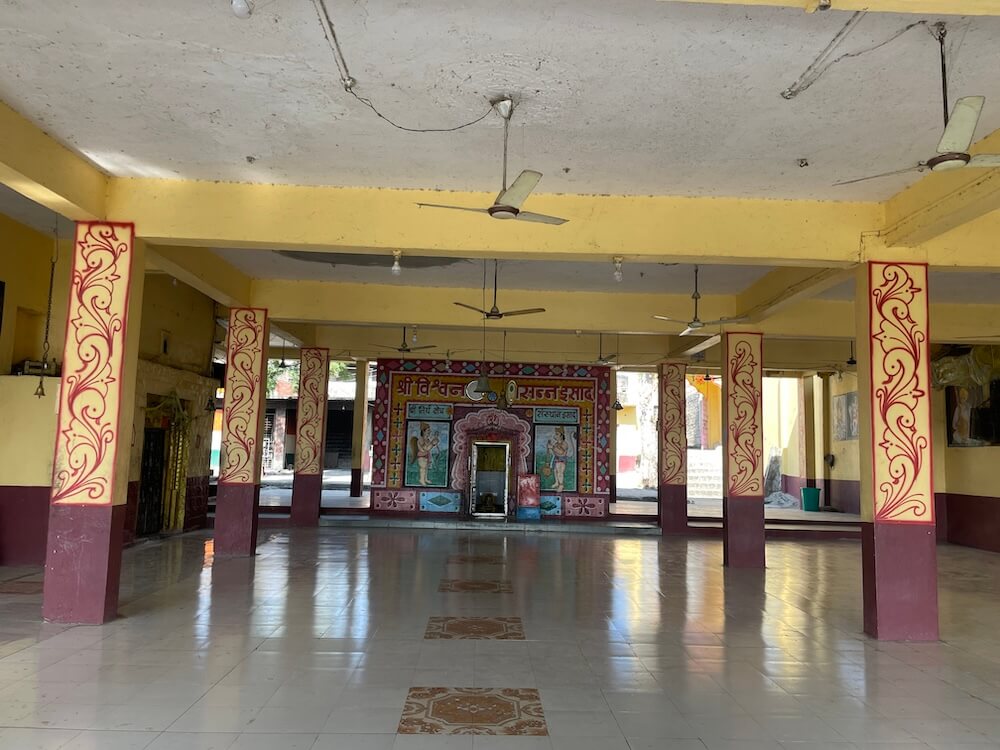
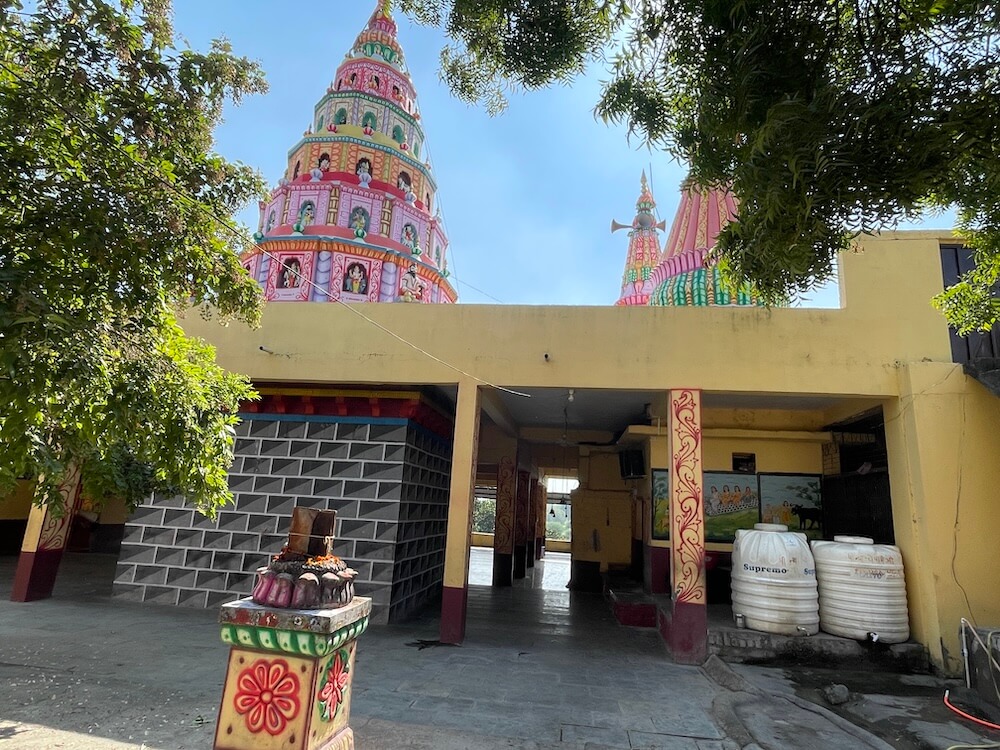
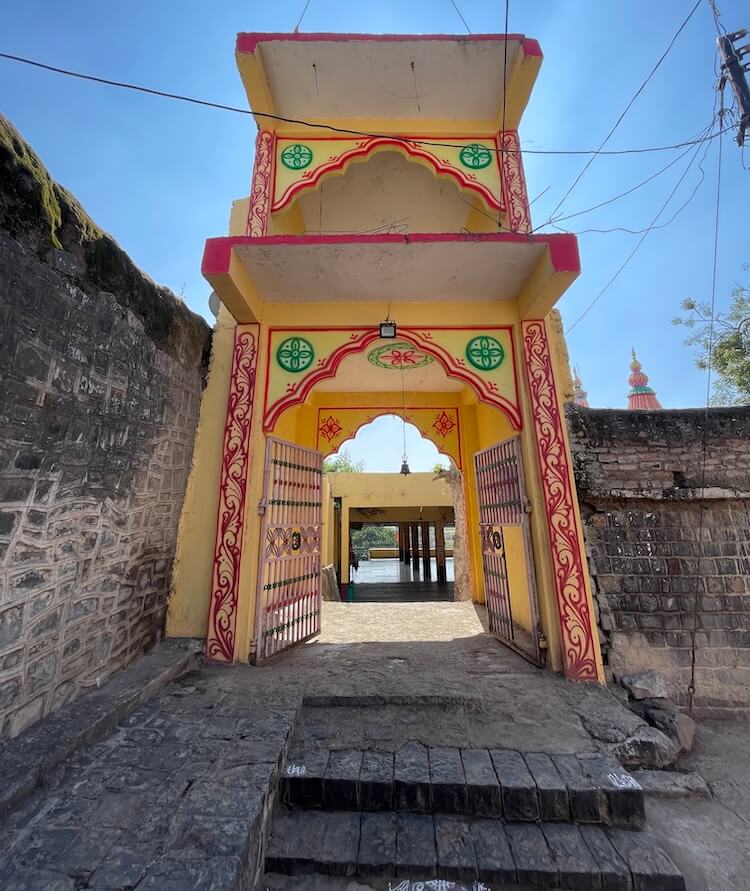
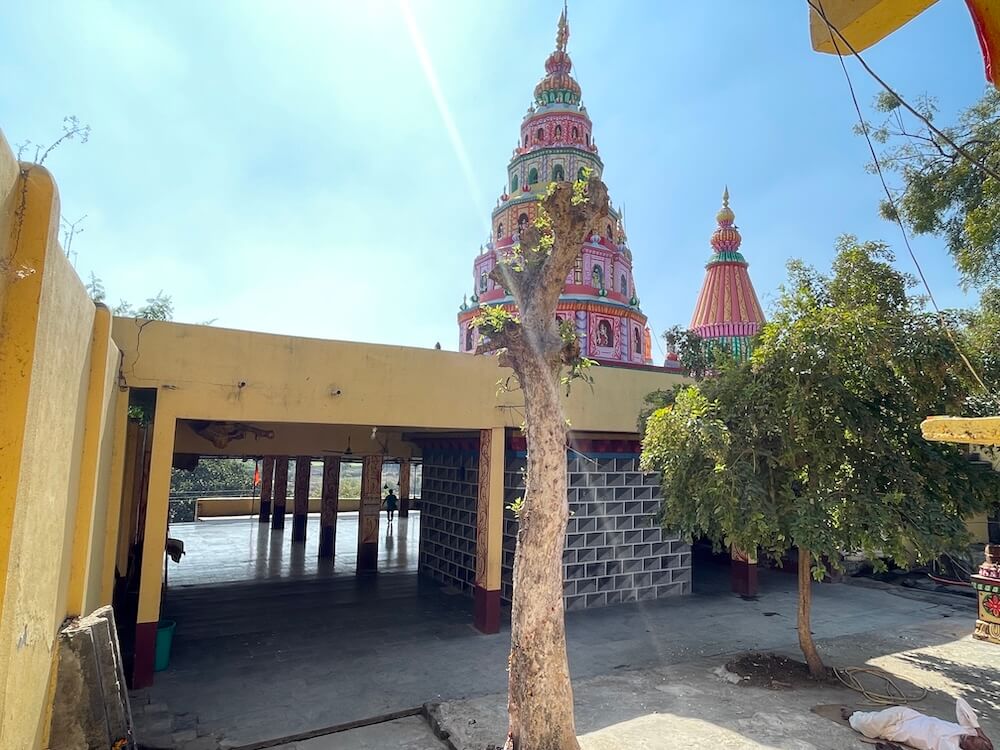
The main temple at Isad is known as the Vishwanath Devasthan or Vishweshwar Temple. The architecture of this temple follows the ancient Hemadpanti style. A large stone fortification is built around this temple located on the riverbank. One enters the temple courtyard through a two-storied entrance gate in this fortification. The sanctum sanctorum of the Vishwanath temple is established in the center of the assembly hall (sabhamandapa) located in the courtyard. The walls of the assembly hall feature colorful paintings and sketches of Lord Shri Ram, Lakshman, Hanuman, Shri Krishna, Ganesha, and various other deities. These include a depiction of Hanuman carrying the Dronagiri mountain through the sky, along with various other scenes. On both sides of the entrance to the sanctum sanctorum, images of Garuda and Hanuman are depicted.
Inside the sanctum sanctorum, a self-manifested (swayambhu) stone Shiva Linga, similar to the Kashi Vishwanath temple, is installed, with a stone statue of Nandi in front of it. This Shiva Linga extends deep into the ground. According to Shaiva philosophy in the Shiva Purana, the root meaning of the word ‘Vishwanath’ is ‘Lord of the Universe’. Just like the original Jyotirlinga in Kashi, because the lower end of the Shiva Linga here extends infinitely deep beneath the earth’s surface, this stone Linga has acquired the name ‘Kashi Vishwanath’ or ‘Vishweshwar’. Furthermore, as this region is the site of Maharishi Vishwamitra’s penance, the term ‘Vishwa’ from his name and ‘Nath’ representing the form of Shiva are combined, leading to this Shiva temple being addressed as ‘Vishwanath Temple’ in local tradition. The legend regarding this Shiva Linga is that in ancient times, some people thought of removing this Shiva Linga from the riverbank, taking it inside the village, and building a temple there. They began digging deep around the Shiva Linga. Even after digging for many days, the lower end of this Shiva Linga could not be found. At that time, everyone became exhausted. That very night, Lord Vishwanath appeared in a dream to a devout person in the village and gave a vision. He said, “Do not try to move me from this place, otherwise a great calamity will befall the entire village.” Following this sign, the villagers stopped the excavation and built the temple at this very spot.
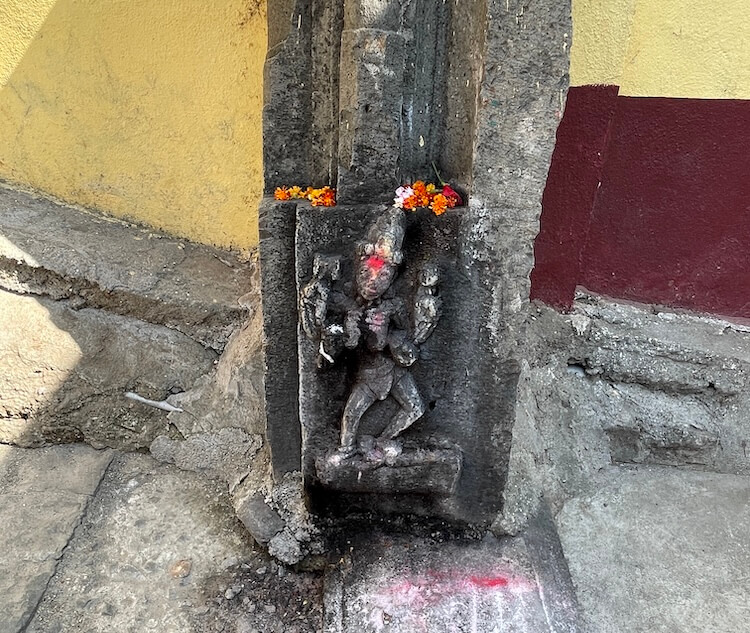
Adjacent to the Vishwanath temple is a sub-temple of Keshavnath Maharaj, also of Hemadpanti construction. In this temple, there is a distinct black stone idol of Keshavnath. Above this idol, a five-hooded serpent king is carved. Beside the main temple, there are some smaller temples. These contain idols of Kalbhairavnath, Vitthal-Rukmini, and other local deities. Ancient stone idols and remnants of deities are scattered throughout the temple premises. Some of these idols are broken. Historians and locals say that these idols were vandalized during the era of Mughal invaders. The remnants that survived serve as evidence of the temple’s antiquity.
Various festivals and religious celebrations are held throughout the year at this temple. Every month, on the Ekadashi and Dwadashi tithis, a large-scale food donation program (annadan) is organized for devotees. The farmers and citizens of the village have unwavering faith in Vishwamitra and Lord Vishwanath. The main fair festival is held here on Mahashivratri. During this period, an unbroken Harinam Saptah and programs of Bhajans and Kirtans are organized for eight to ten consecutive days. In this festival, Kakada Aarti is performed at dawn, followed by Vishnu Sahasranama recitation, Puran reading, Bhagavata Katha, and Ramayana discourse in the afternoon. Kirtans by renowned Kirtankars take place between 9 and 11 at night. On Mahashivratri, thousands of citizens from Isad village and the surrounding areas gather here. They bring the holy water of the Masuli River in Kavads or Kalashas. Throughout the day, Jalabhishek and Dugdhabhishek are performed on the Shiva Linga of Lord Vishwanath. On Mahashivratri, a Nagar Pradakshina of the deities and a Palkhi procession are taken out through the village. Devotees, Bhajan groups, singers, musicians, and Taalkaris participate in this procession with great enthusiasm. On the last day of the Saptah, that is, on Navami, Mahaprasad is organized for the devotees. People who have moved out of the village for jobs or businesses make it a point to visit the village during this festival to seek the blessings of the deity. Devotees can have Darshan here every day from six in the morning until ten at night.
This sacred temple stands as a testament to deep spiritual devotion, ancient architectural grandeur, and rich local cultural traditions.
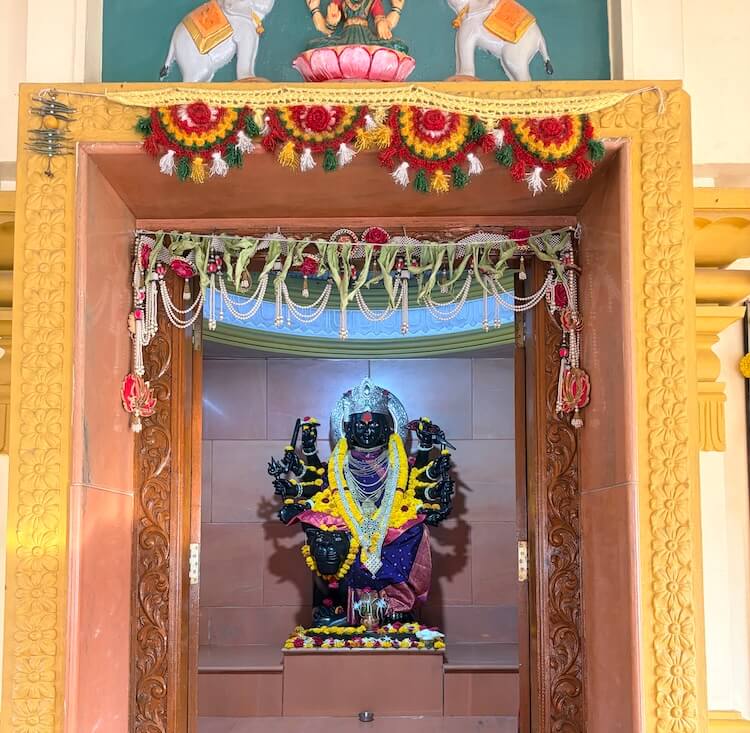
The sanctum sanctorum houses the divine idol consecrated according to ancient Vedic traditions, surrounded by serene courtyards and traditional temple architecture.
Navratri, Maha Shivratri, Annual Temple Jatra & Deepotsav
Compare and book flights, secure top-rated local hotels near the temple, hire reliable guides, and rent cars instantly.
Extend your pilgrimage by visiting other highly sacred temples located nearby.


Add ₹999 more to unlock FREE SHIPPING!
Your sacred cart is currently empty.
Shop Photo FramesFill in your delivery details below to place your order.
Add comment