
Add ₹999 more to unlock FREE SHIPPING!
Your sacred cart is currently empty.
Shop Photo FramesWorshipped by many names such as Maruti, Bajrang, Balbhim, Ramdoot, Kesarinandan, Anjaneya, Vayuputra, Pavansut, Vajrang, Sankatmochan, Mahavir, Maharudra, and Hanumant, Lord Hanuman is the revered deity of countless devotees. Devotees have lovingly bestowed innumerable names upon this deity; Albela Hanuman is one such renowned name. An ancient and famous temple dedicated to this Hanuman is located in Wadala. Previously, this Hanuman was also known as ‘Gunya Hanuman’. Every year, on the auspicious day of Hanuman Jayanti, thousands of devotees throng this temple for Darshan.
Hanuman is regarded as the epitome of strength, devotion, and wisdom. According to religious belief, He is one of the Saptachiranjivas (seven immortals). Hanuman, as depicted in the Ramayana and Mahabharata, is endowed with extraordinary virtues such as mastery of scriptures, statesmanship, valor, intelligence, celibacy (Brahmacharya), devotion to Lord Rama (Ramabhakti), and eloquence. In the ‘Hanuman Chalisa’ hymn composed by Saint Tulsidas in the sixteenth century, Hanuman is described with epithets like ‘Gyan Gunasagar’ (ocean of knowledge and virtues), ‘Mahavir’ (great hero), and ‘Tej Pratap’ (radiant glory). It is also said that Hanuman is the deity who delivers one from all troubles, and by chanting His name, evil spirits flee. Hanuman is considered the original deity of the non-Aryans. Scholars believe that He was later adopted by the Vedic Aryans. Hanuman is regarded as an incarnation of Rudra (Rudravatar) and is also referred to as ‘Bhimarupi Maharudra’ (the mighty form of the great Rudra). Notably, the scripture ‘Anjaneyasamhita’ (Hanumatsamhita) is attributed to Him. He is also considered a pioneer of musicology.
In the ‘Valmiki Ramayana’, a legend regarding His name ‘Hanuman’ is recounted. It states that once, as a child, Hanuman saw the newly risen sun. He mistook the fiery red sun disc for a fruit and leaped to seize it. Witnessing this, Indra struck Him with his Vajra (thunderbolt), which broke His left Hanu (jaw/chin). From then on, He came to be known as ‘Hanuman’. According to the renowned orientalist Frederick Eden Pargiter (1852-1927), the word ‘Hanuman’ is derived from ‘Hanumant’. ‘Hanumant’ is the Sanskritized form of an original Tamil word. It is customary to prefix a ‘Ha’ sound when Sanskritizing Dravidian words. Therefore, scholars like Pargiter and Suniti Kumar Chatterji suggest that the Tamil word ‘Aṇmandi’ (Aṇ = ape, Mandi = male) might have been Sanskritized as ‘Hanumant’.
In the ‘Hindavi Shabdkosh’ (Hindavi Dictionary), the word ‘Albela’ is defined as unique, extraordinary, charming, or beautiful. In the context of this temple, the word appears to be used in the sense of ‘Hathila’ (stubborn or resolute). The legend of this temple states that in ancient times, a ruler on this island of Mumbai found an idol of Hanuman at the very spot where the temple now stands. At that time, this entire area was a dense forest. The ruler decided to move the idol from there and relocate it elsewhere. However, despite repeated attempts, the idol could not be moved. Understanding this to be the divine will, he cleared the forest and constructed a temple for Hanuman there. It is said that seeing Hanuman’s idol resolutely remain there, it was named ‘Albela’.
It is said that Wadala, the area where this temple is located, derives its name from the ‘Vad’ (Banyan) trees found there. In 1138 AD, King Pratap Bimb established his capital on the island previously known as ‘Baradbet’. He named this capital ‘Mahikavati’, which is today’s Mahim in Mumbai. The region from Walkeshwar to Vasai was part of his kingdom. A century later, another Bimb king, named Bimbdev Yadav, ruled here. He was the fourth son of Emperor Ramdevrai Yadav of Devgiri. Muslim historians (in their chronicles) referred to him as Bhimdev. He established his capital here in 1295. According to the ‘Greater Bombay Gazetteer’, his court was located in the area between Wadala and Parel. Hence, that area was called ‘Nyaygram’, which later became ‘Naygaon’. Until the twentieth century, a place here was known as ‘Bhimrajachi Wadi’. Gazetteer writers state that Bhimraja had a palace there. This temple is situated in ‘Varela’ or Wadala, close to this Nyaygram. Although the exact history of the temple’s establishment is unknown, local priests state that it is about one hundred and fifty to two hundred years old. This period predates the 1857 War of Independence by a few years. Devotees believe that the idol within the temple is even more ancient.
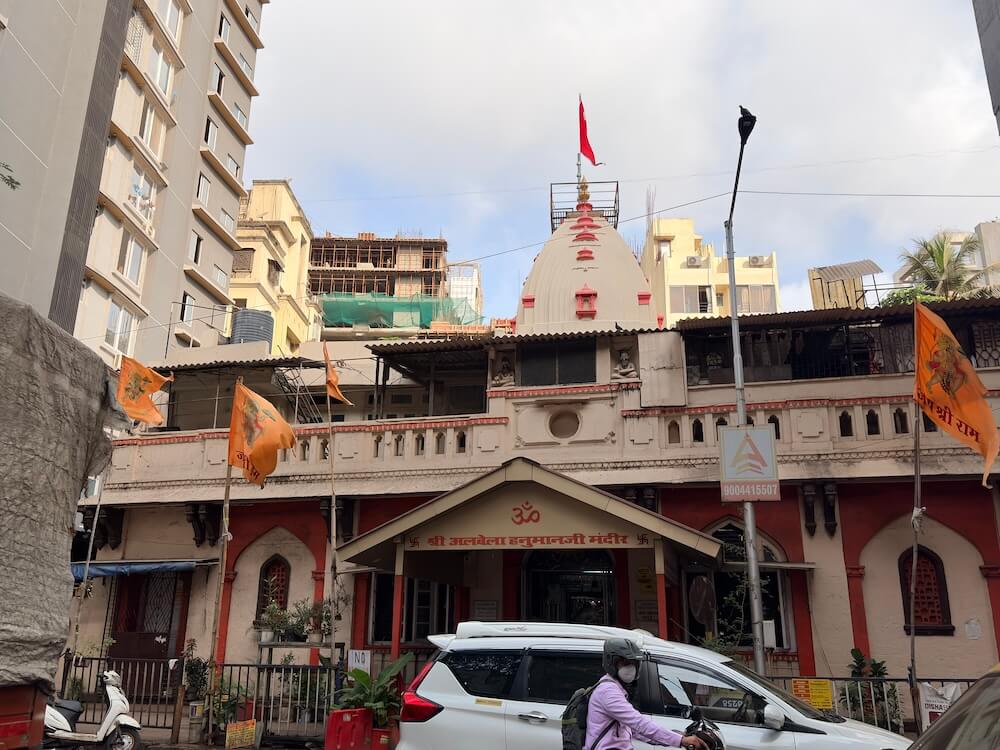
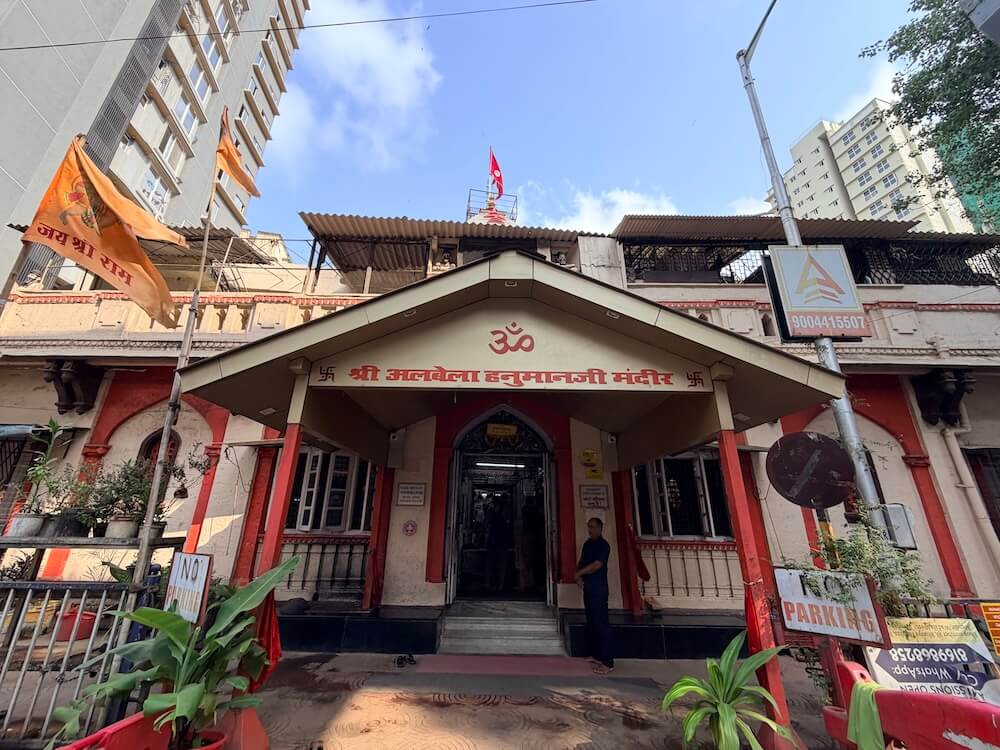
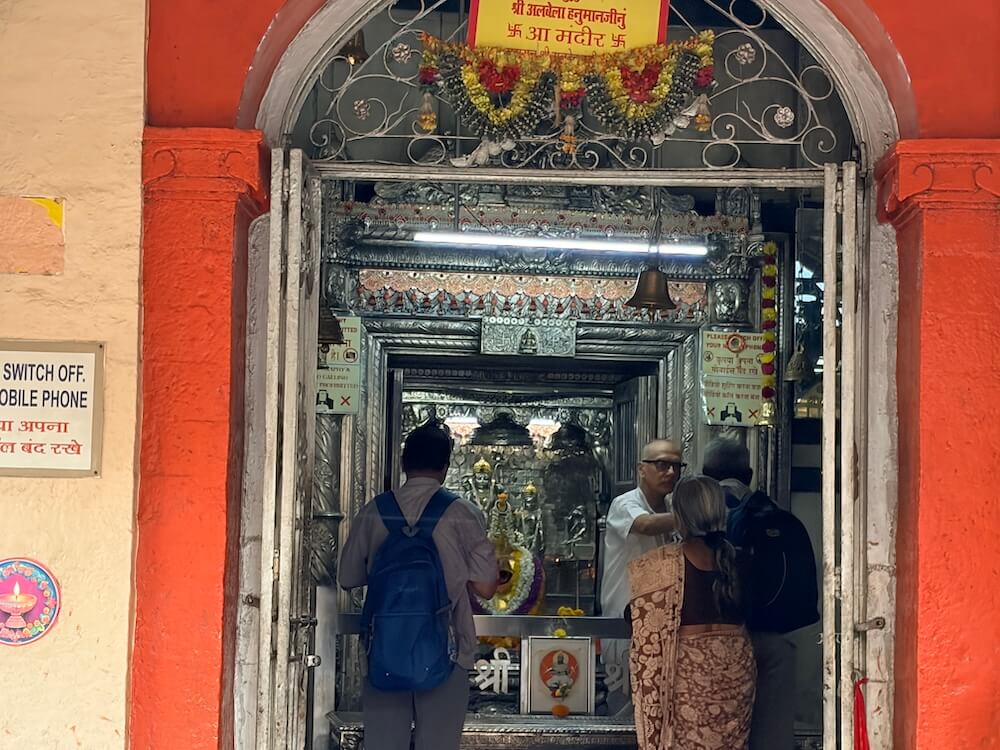
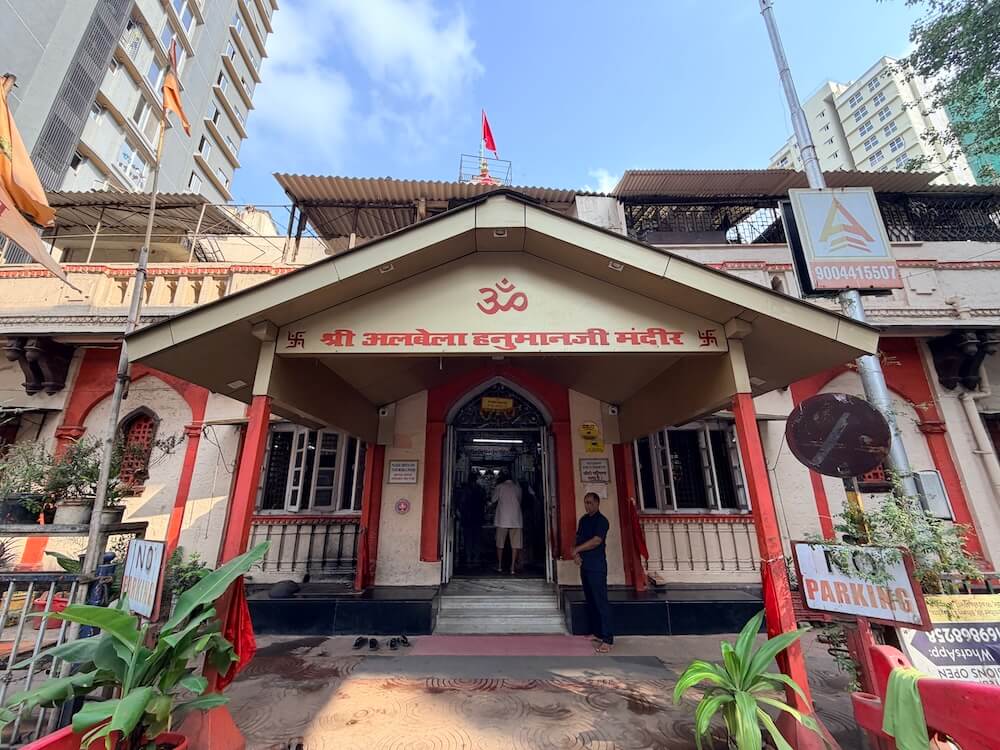
This temple of Rama’s devotee Hanuman is located directly opposite the renowned Ram Mandir of Wadala. The structure of this temple, resembling an old, low-rise mansion, comprises a Mukhmandap (entrance hall), a Sabhamandap (assembly hall), and a Garbhagriha (sanctum sanctorum). This wooden Mukhmandap has sloping roofs on both sides. The temple’s Sabhamandap is built on a raised Jagati (platform). A parapet is built on the flat roof of the Sabhamandap, where idols of two ascetics are enshrined. The Sabhamandap has an arched entrance. Upon entering from here, one immediately sees the stone Garbhagriha of Albela Hanuman. There is a Pradakshina Marg (circumambulation path) around this Garbhagriha from the Sabhamandap. Within the Sabhamandap are idols of Dattatreya and Santoshi Mata. On the right wall, there is a large image of Salasar Hanuman. The original abode of Salasar Balaji is in Churu district, Rajasthan. Pleased by the devotion of a great devotee named Mohandas from that region, Hanuman promised him to manifest in the form of an idol with a beard and mustache. In 1754, a Jat farmer in Nagaur district found an idol of Hanuman while plowing his field. That very night, Hanuman appeared in a vision to a Thakur from Osota village and instructed him to take the idol to Salasar. At the same time, Hanuman also appeared in a vision to Mohandas, instructing him, ‘I am coming to Salasar in a bullock cart, and a temple should be built wherever this bullock cart stops’. Accordingly, a temple was constructed at the spot where the bullock cart halted. It is also said that over time, Anjani Mata (Hanuman’s mother) also arrived at Salasar.
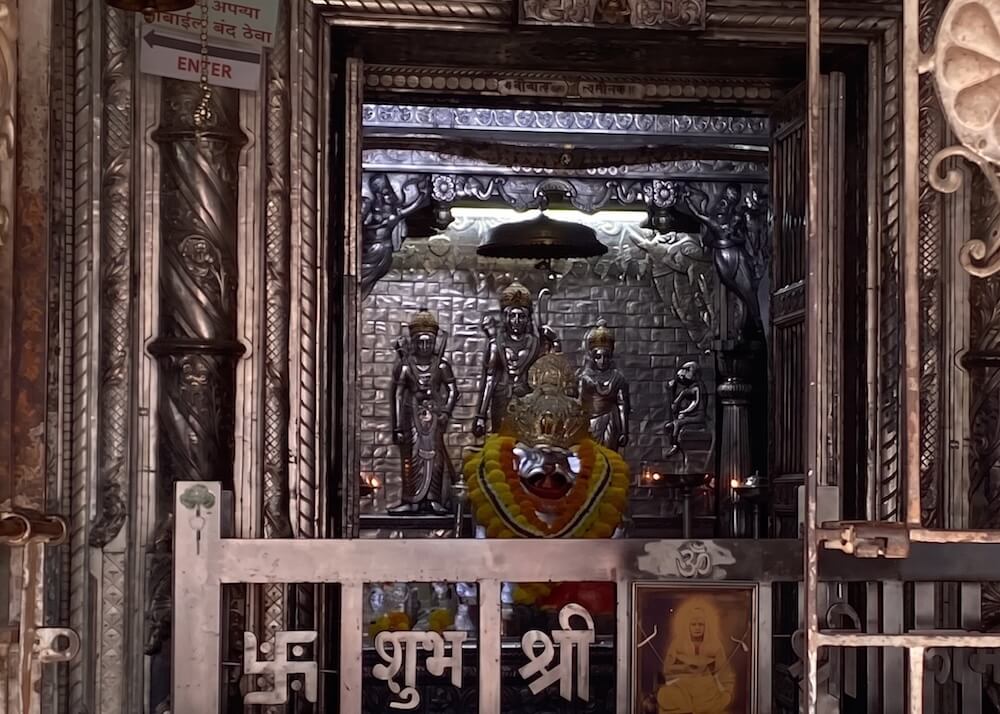
अलबेला हनुमान मंदिराच्या गर्भगृहास कोरीव नक्षीकाम असलेल्या चंदेरी पत्र्याने मढवलेले आहे. गर्भगृहातील एका वज्रपिठावर हनुमानाची शेंदूरचर्चित पाषाणमूर्ती विराजमान आहे. ही मूर्ती स्वयंभू असल्याची भाविकांची श्रद्धा आहे. सालासर हनुमानाप्रमाणेच अलबेला हनुमानासही मिशा आहेत. या मूर्तीच्या मागे उंच वेदीवरील चांदीच्या देव्हाऱ्यामध्ये श्रीराम, सीता आणि लक्ष्मण यांच्या मूर्ती विराजमान आहेत. या मूर्तींच्या बाजूला हनुमानाचे सेवक असलेल्या वानरांच्या दोन मूर्ती आहेत. या मंदिरास दोन शिखरे आहेत. त्यातील एक शिखर गर्भगृहावर असून त्यास चांदीच्या पत्र्याने मढवलेले आहे. तर दुसरे शिखर मंदिरावर आहे. चारही बाजूंनी वर निमुळत्या होत गेलेल्या या उरुशृंग पद्धतीच्या शिखरावर छोटा आमलक आणि त्यावर द्विस्तरीय सोनेरी कळस आहे.
Darshan (sacred viewing) at this temple is available from Sunday to Friday, from 7:00 AM to 11:30 AM and from 4:30 PM to 8:30 PM. On Saturdays, darshan is available from 6:00 AM to 2:00 PM and from 4:00 PM to 9:30 PM. Many devotees visit here daily, both in the morning and evening, for darshan. Hanuman Jayanti and Ram Navami are two festivals celebrated here with great enthusiasm. On these days, a long queue of devotees forms from early morning. In earlier times, on these days, people would offer sacks full of coconuts to Hanuman, due to which this Hanuman is also known as ‘Gunnya Hanuman’.
This sacred temple stands as a testament to deep spiritual devotion, ancient architectural grandeur, and rich local cultural traditions.
The sanctum sanctorum houses the divine idol consecrated according to ancient Vedic traditions, surrounded by serene courtyards and traditional temple architecture.
Navratri, Maha Shivratri, Annual Temple Jatra & Deepotsav
Compare and book flights, secure top-rated local hotels near the temple, hire reliable guides, and rent cars instantly.
Extend your pilgrimage by visiting other highly sacred temples located nearby.


Add ₹999 more to unlock FREE SHIPPING!
Your sacred cart is currently empty.
Shop Photo FramesFill in your delivery details below to place your order.
Add comment