
Add ₹999 more to unlock FREE SHIPPING!
Your sacred cart is currently empty.
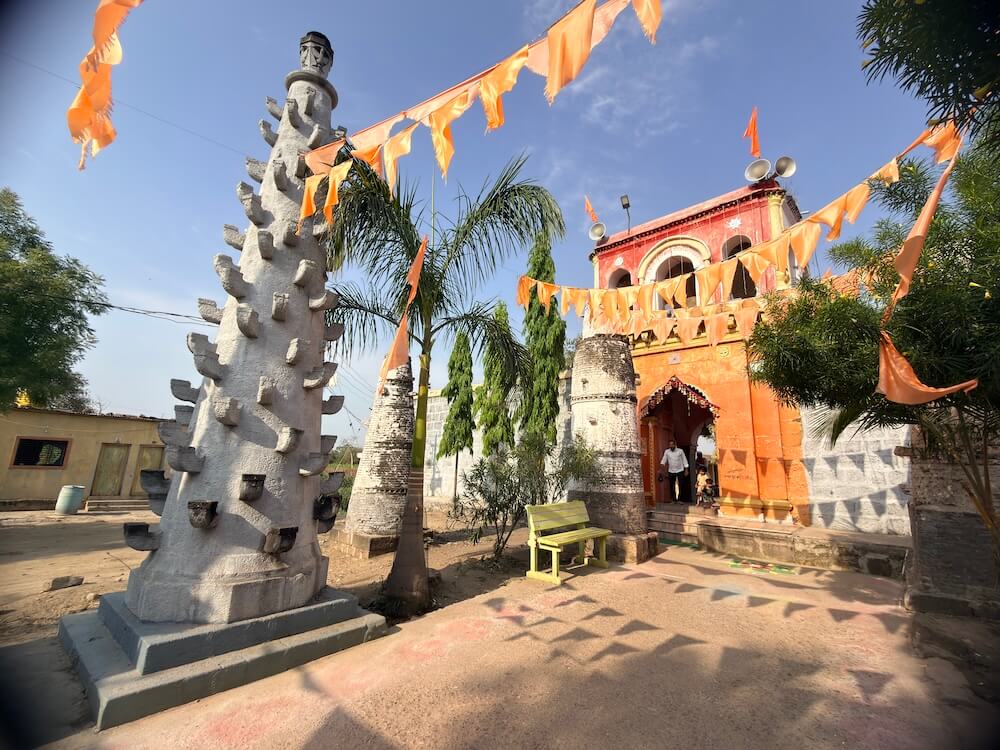
Shop Photo FramesIt is the firm belief of devotees that when the Dindi of Warkaris departs from the Dnyaneshwar Maharaj Temple in Alandi for Pandharpur, the temple’s pinnacle (Kalash) sways. To witness this spectacle, millions of devotees from across the country and abroad gather in Alandi. Another ancient temple famous for a similar unique feature is located in Paradgaon, in the Jalna district. The Jogeshwari Kalbhairavnath Temple here is particularly renowned for its swaying lamp pillars (Deepmalas). Devotees believe that during the annual Palkhi festival, one of the stone lamp pillars in front of the temple sways slightly. Thousands of devotees gather here during this time to witness this ceremony.
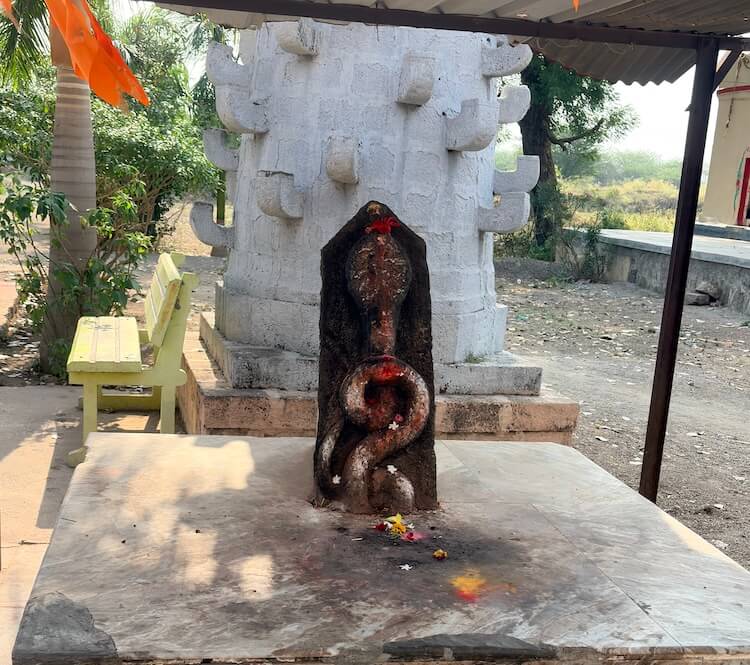
According to mythological references, Bhairavnath, an intense and fierce form of Lord Shiva, is considered a significant folk deity. Bhairav is a prominent Gana (attendant) of Lord Shiva. The southern face of the Panchamukhi Shiva is also referred to as Bhairav. According to Shaiva Agamas, there are eight forms of Bhairav, known collectively as the Ashtabhairav. In villages across Maharashtra, this deity is worshipped under various names such as Kalbhairavnath, Kalbhairi, Bahirinath, Bhairi, Bhairoba, and Siddhanath. Mata Jogeshwari, the daughter of the Serpent King (Nagraj), is considered the consort of Kalbhairavnath. For this reason, a separate shrine for the Serpent Deity (Nagdevta) has been established outside the entrance of this temple.
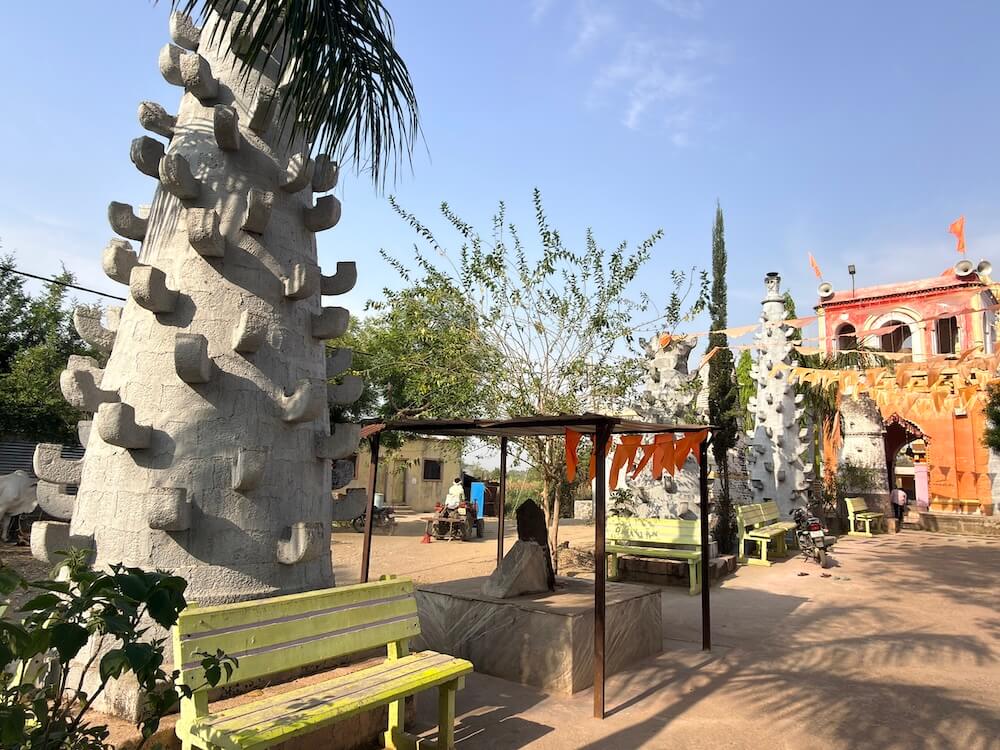
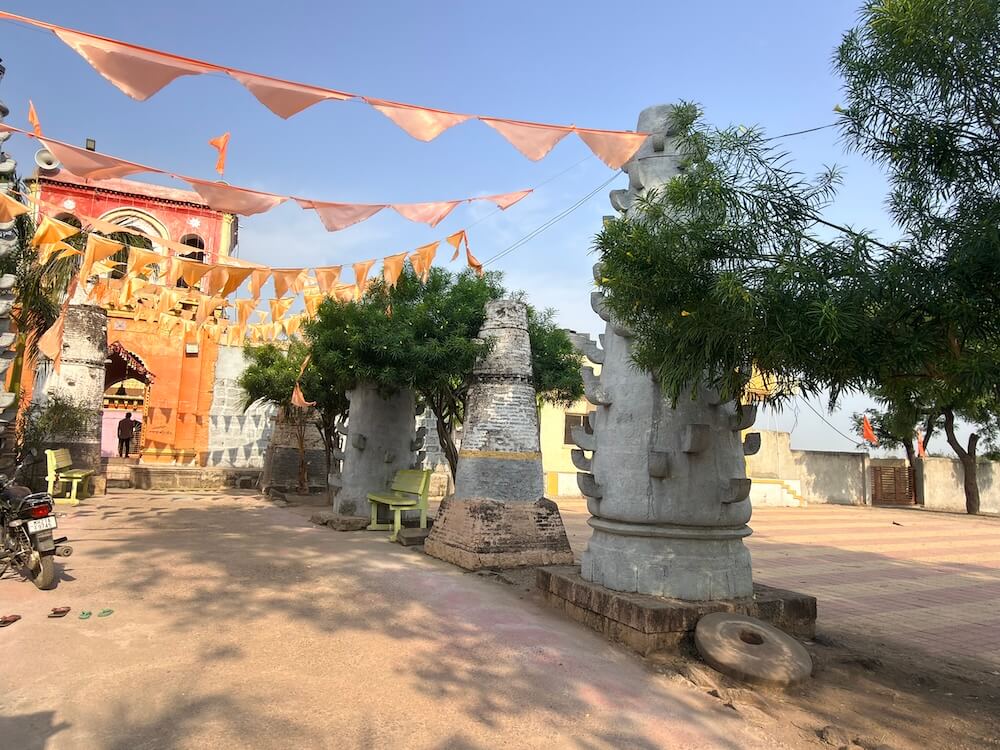
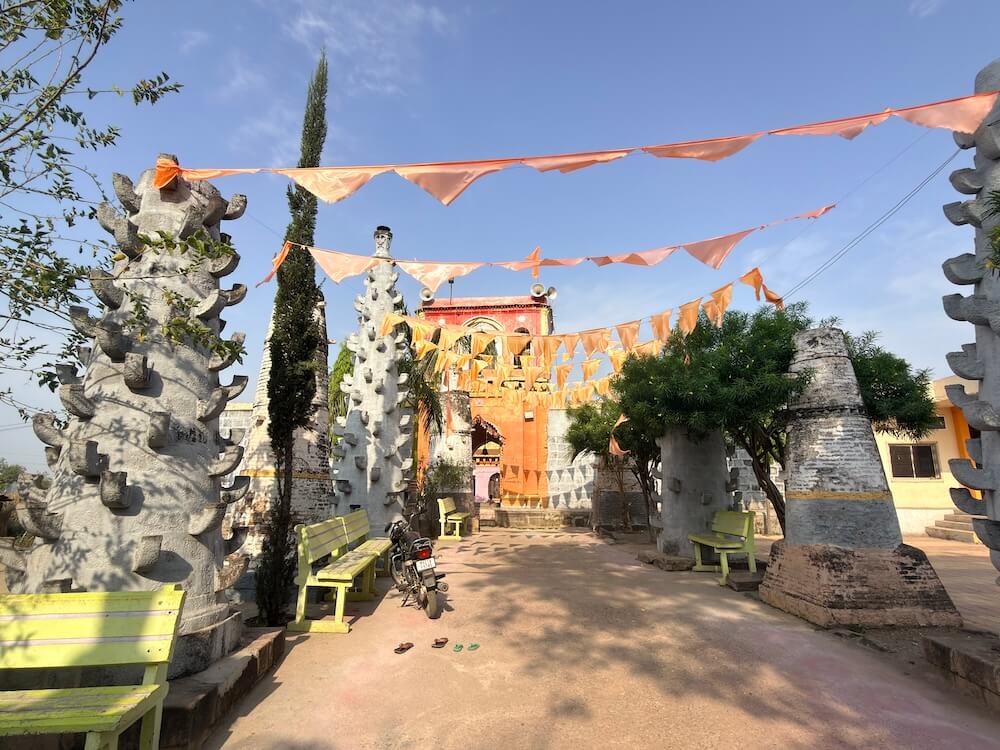
This temple of Jogeshwari Kalbhairavnath is situated on the outskirts of Paradgaon. A sturdy stone fortification wall surrounds the temple. Near the two-story entrance gate within this wall, there is a small temple of Jivaji Baba and the shrine of the Nagdevta. It is customary to first seek the blessings of the Nagdevta before proceeding to the main deity, Bhairavnath. Outside the entrance gate, a total of nine grand lamp pillars have been erected. Of these, five are built in traditional dressed stone masonry, while the remaining four are made of brick and cement. The main feature of these lamp pillars is the Tulsi Vrindavan atop each one. Known as the Navdeepmalas, these pillars are illuminated with hundreds of lamps during festivals.
The main entrance of the temple is grand, wide, and built with dressed stone, resembling a fortress. On the upper floor of this entrance is the Nagarkhana (drum house). Even today, drums are played here every morning and evening. Upon entering through the gate, one sees the spacious courtyard of the temple. Inside the fortification walls, there are stone-built cloisters (Ovaris) all around. Within these cloisters, near the entrance, are vermilion-smeared idols of Maruti, Garuda, and guardian deities. The wall behind the Nagarkhana is carved with symbols of the Navagraha and intricate patterns.
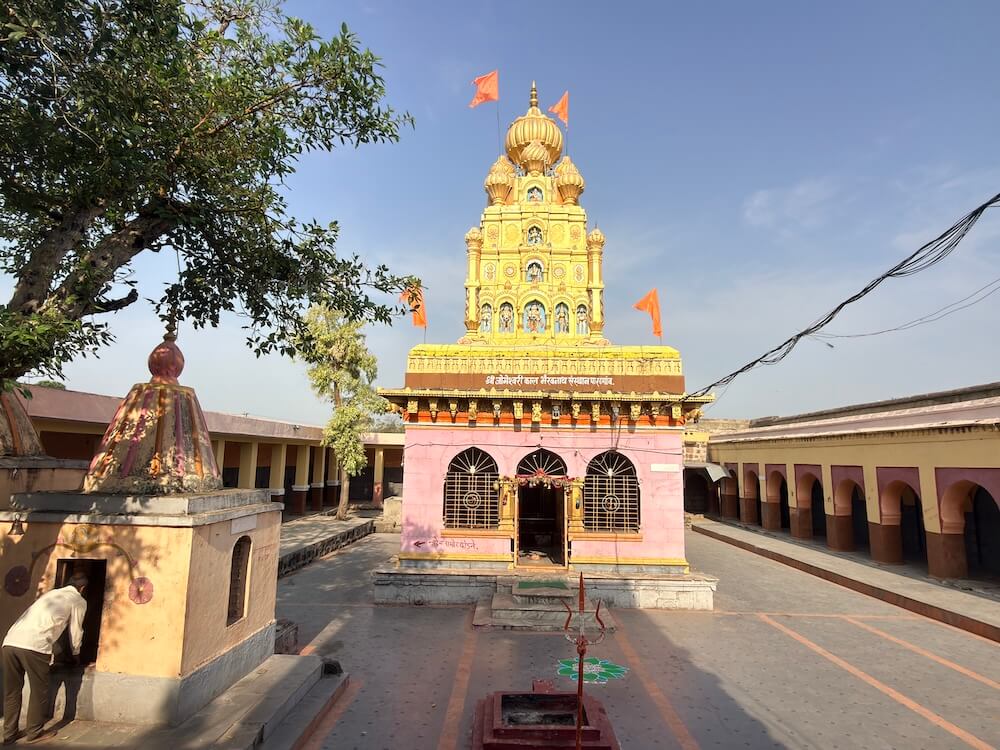
In the courtyard, in front of the main temple, stands a large metal trident (Trishul). The trident is considered the primary symbol of the deity Bhairavnath. Beyond it lies the sacrificial fire pit (Homkund), and further ahead, on a high plinth, stands the temple. This temple represents the architectural style of the late medieval period, specifically the Maratha era. The structure of the temple is divided into two main parts. The foundation and the walls of the sanctum sanctorum (Garbhagriha) are of sturdy stone construction, while the upper spire (Shikhara) is fashioned from brick and lime. This construction is predominantly found in Maratha-era temples in Maharashtra. The temple stands on a high and solid stone plinth, known as the Jagati. This construction is simple and elegant, made of dressed stone without any excessive ornamentation. The outer walls of the temple are made of stone, and in the upper section, below the roof, there are stone cornices (Kapota). These cornices are carved with sculptures of various deities and their vehicles (Vahanas).
From the courtyard, one climbs four steps to enter the assembly hall (Sabhamandap) of the temple, which sits on the high plinth. The temple consists of an assembly hall and a sanctum sanctorum. The ceiling of the assembly hall is adorned with intricate carvings. The main doorway of the sanctum is decorated with carvings of floral creepers and vines. Inside the sanctum, on a high pedestal, is a grand, vermilion-smeared idol of Lord Bhairavnath. During worship, this idol is adorned with a traditional turban (Pheta) and a silk garment (Sowale). To the right of the main idol is a small idol of Batuk Bhairavnath, and to the left are the idols of Mata Jogeshwari and Bhairavnath’s sister, Bageshwari. Due to years of continuous application of vermilion, the original stone form of these idols is no longer clearly visible. Apart from these main idols, there is a separate processional idol (Utsavmurti) kept for the Palkhi during festivals.
The outer walls of the temple are carved with Sharabha sculptures. The Sharabha is a powerful mythical creature depicted as carrying four elephants in its four feet, one in its trunk, and another lifted by its tail. The main feature of this temple is its multi-layered spire. This spire is considered a blend of the Nagara style of Maratha architecture and Deccan Sultanate influences. The spire rises in several horizontal tiers. Each tier features small arched niches containing idols of various deities. Small minaret-like pillars are erected at the corners of the spire. On one of the corner pillars of the spire, a climbing serpent sculpture is clearly visible. At the top of the spire is a dome-shaped Amalaka, crowned with a pinnacle. In the temple premises, there are small shrines dedicated to Mahadeva and Shri Dattatreya, as well as an ancient Audumbar tree. Behind the temple, there is an old stone stepwell (Barav).
Chaitra Navratri is celebrated here as the main festival. During these nine days, an uninterrupted recitation of the Shiva Purana takes place in the temple. The main ceremony of the fair takes place on the last Sunday of the month of Chaitra. Following this, during the Sharadiya Navratri in the month of Ashwin, the festival of Mata Jogeshwari is celebrated, and Ghatasthapana is performed.
During this time, many married women observe strict vows and stay within the temple premises. On the eighth day (Ashtami) of the dark fortnight of the month of Kartik, the birth anniversary of Kalbhairav is celebrated with great enthusiasm. Apart from these major festivals, devotees flock to seek the blessings of Jogeshwari Devi and Bhairavnath every Sunday and on the day of the Amavasya (new moon). During these various festival periods, the processional idol of Bhairavnath is taken out in a Palkhi procession.
It is said about this Palkhi procession that the palanquin becomes heavy as it leaves the temple. Initially, only two people carry the palanquin, but as it reaches the main entrance, its weight increases, requiring eight devotees to exert their strength to lift it. As the palanquin moves from the main entrance into the outer courtyard, the stone lamp pillar (Deepmal) in front begins to sway slightly. Thousands of devotees gather here to witness this miracle. Devotees can visit the temple for Darshan daily from 5:00 AM to 9:00 PM.
This sacred temple stands as a testament to deep spiritual devotion, ancient architectural grandeur, and rich local cultural traditions.
The sanctum sanctorum houses the divine idol consecrated according to ancient Vedic traditions, surrounded by serene courtyards and traditional temple architecture.
Navratri, Maha Shivratri, Annual Temple Jatra & Deepotsav
Compare and book flights, secure top-rated local hotels near the temple, hire reliable guides, and rent cars instantly.
Extend your pilgrimage by visiting other highly sacred temples located nearby.


Add ₹999 more to unlock FREE SHIPPING!
Your sacred cart is currently empty.
Shop Photo FramesFill in your delivery details below to place your order.
Add comment