
Add ₹999 more to unlock FREE SHIPPING!
Your sacred cart is currently empty.
Shop Photo FramesThe fourth avatar of Lord Vishnu, the Narasimha avatar, in His Dashavatara, is considered unique and immensely significant. According to mythology, Lord Brahma had granted a special boon to Hiranyakashipu: “You shall not be killed by a human or a beast; you shall not die during the day or at night, inside the house or outside, on the earth or in the sky.” Despite possessing such a boon akin to immortality, when his atrocities multiplied and reached their peak, Lord Vishnu took the fierce Narasimha avatar and vanquished him. There are many renowned temples of Lord Narasimha across India. One such ancient temple is situated near the town of Ghansawangi in the Jalna district. This temple in the Marathwada region is regarded as a primary focal point of faith for devotees.
Temple trustees state that this historic temple is approximately 400 to 500 years old. A legend associated with this temple recounts that in ancient times, a devout worshipper of Lord Narasimha lived in the village and performed regular worship of the Lord. Pleased with his devotion, the Lord appeared to him in a dream and gave a divine command: “I am present in the riverbed. Take Me out of the water, place Me on a wooden cart, take Me toward the village, and enshrine Me at the very spot where the wheel of the cart breaks.” In accordance with this divine vision, the idol found in the riverbed was placed on a cart, and a procession was led toward the village. When the procession reached this location, the wheel of the cart suddenly broke. Accepting this as a divine sign, the idol was consecrated here, and the temple was built. Subsequently, the temple was scientifically renovated and restored on 05 May 2002.
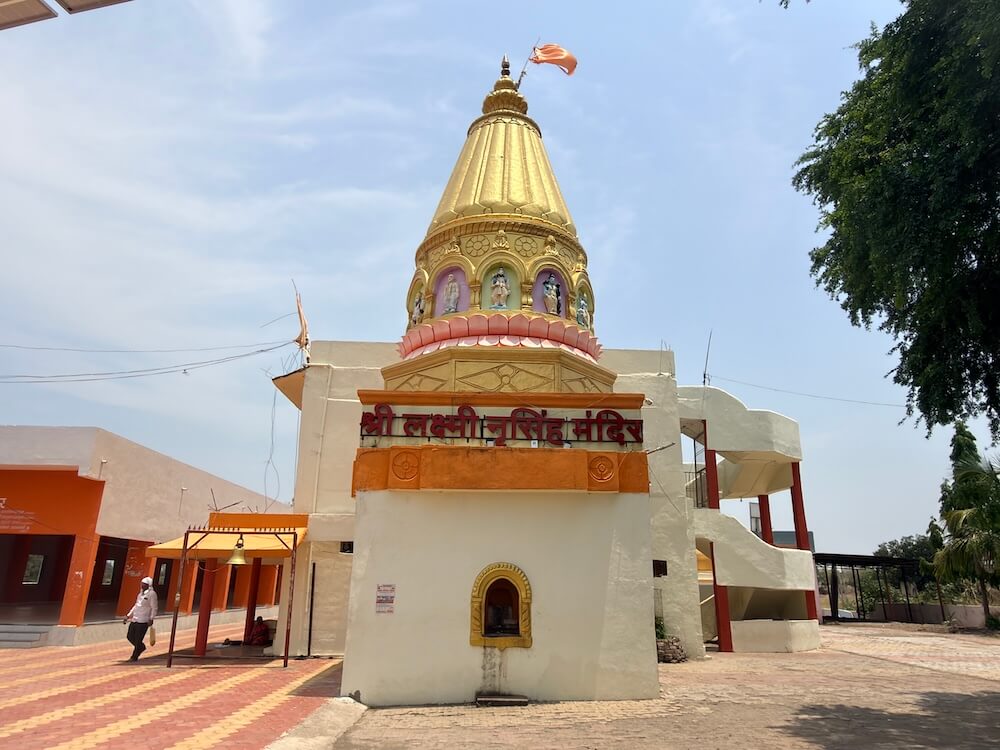
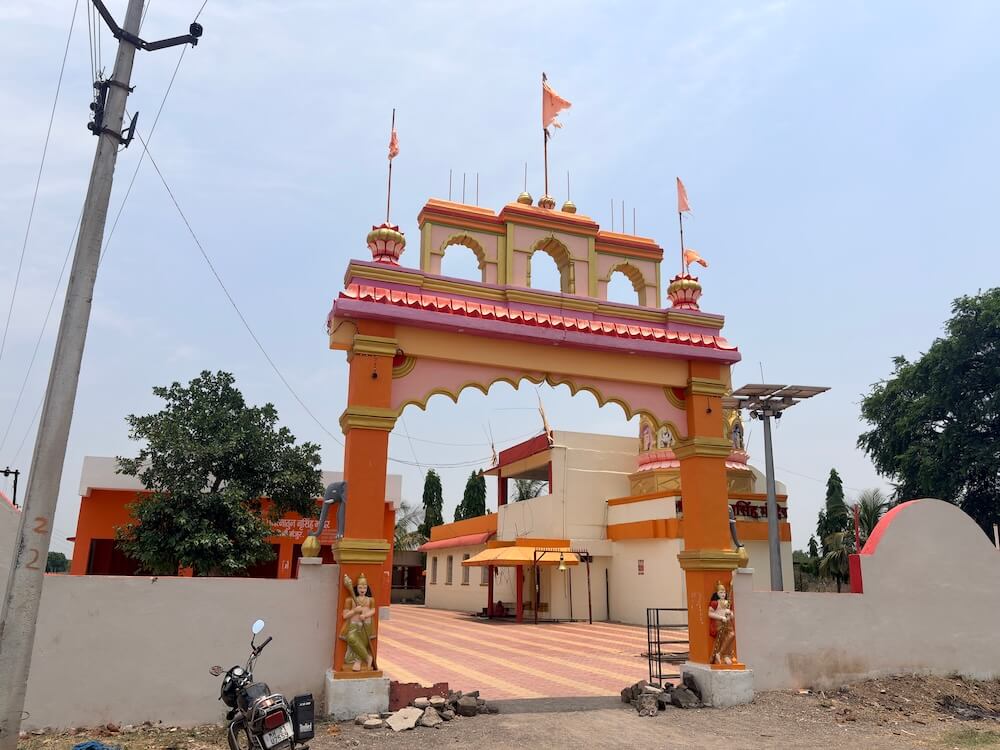
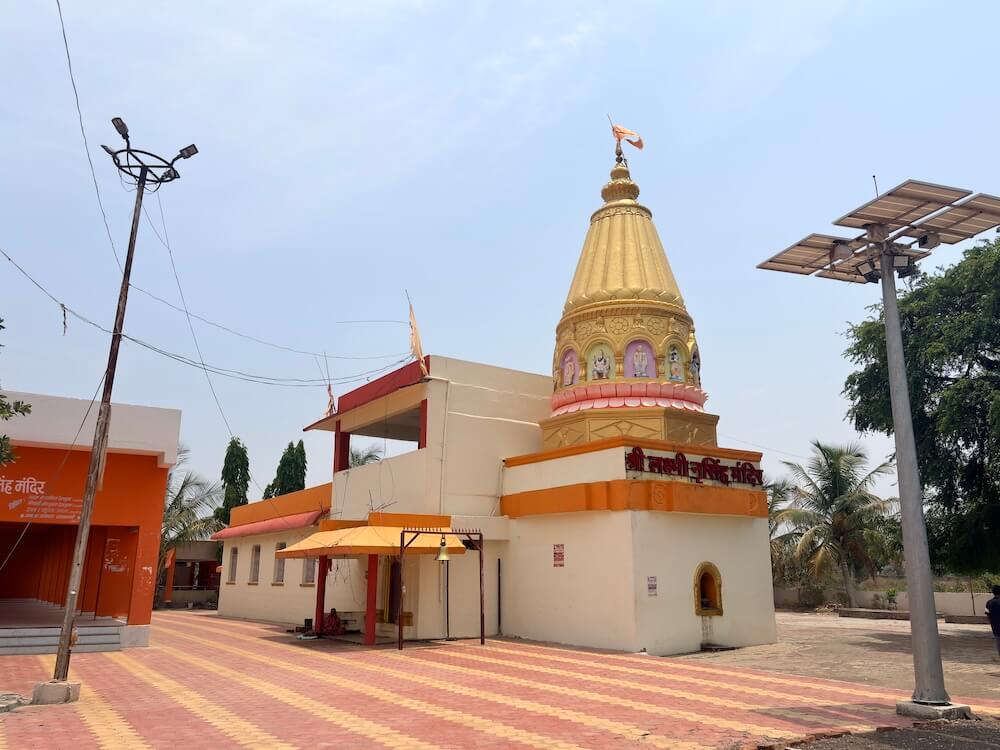
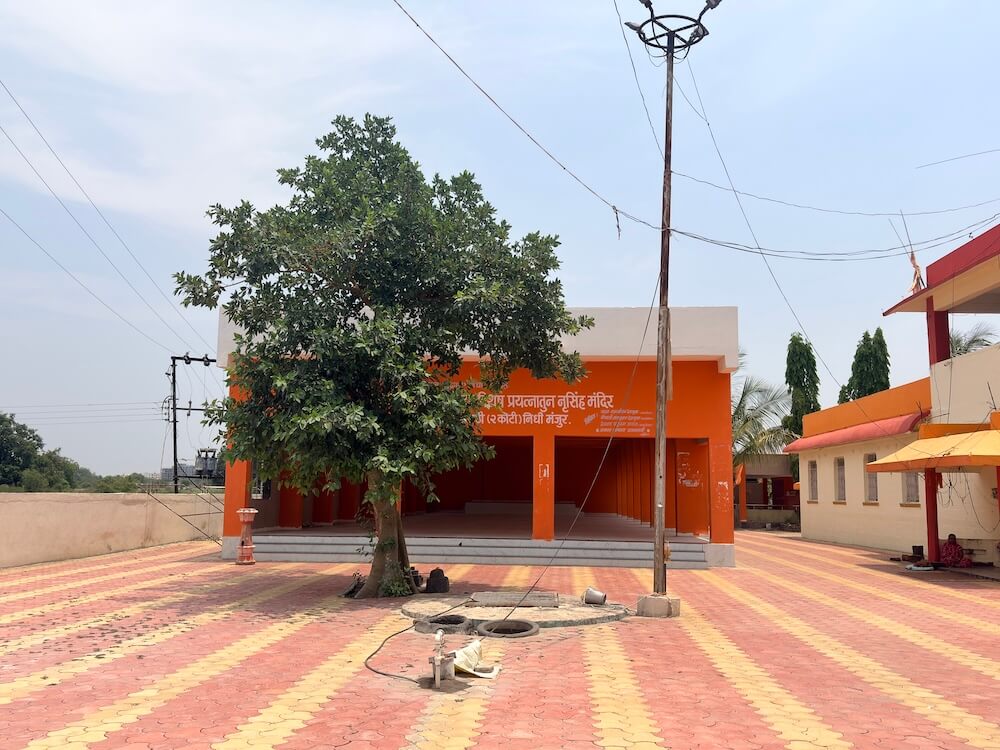
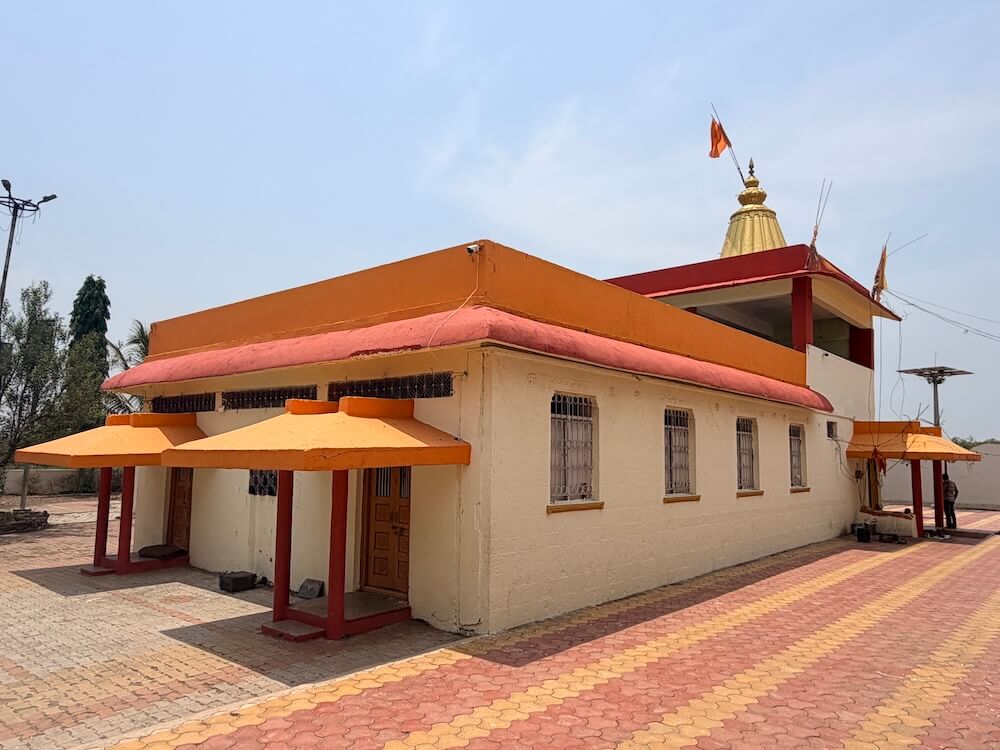
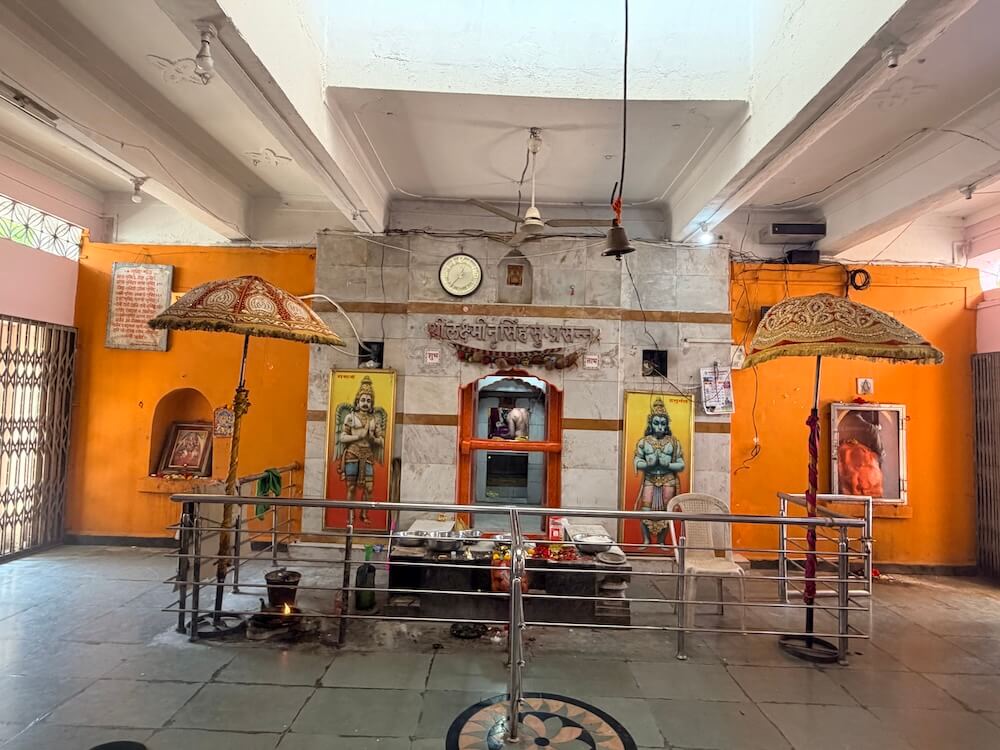
The temple is situated on the banks of the Ghevarsali River to the north of Ghansawangi town. A sturdy fortification has been constructed in recent times for the security of the temple, featuring a simple entrance gate. This entrance leads into the spacious courtyard of the temple. Architecturally, the temple comprises a Mukhamandapa (porch), a Sabhamandapa (assembly hall), an Antarala (vestibule), and a Garbhagriha (sanctum sanctorum). The Sabhamandapa has two entrances at the front, with two Mukhamandapas situated in front of both these entrances. These main entrances are fitted with wooden shutters. To enter the temple further, there are two additional doors on the right and left sides of the Antarala, which also have Mukhamandapas in front of them. The doorjambs of all these entrances are adorned with floral and foliate carvings, and the Lalatabimba (center of the lintel) bears a Ganesha sculpture. Additionally, the date of renovation is inscribed on the lintel beam. In the Sabhamandapa, between the two entrances, an ancient stone beam from the old temple is placed on a Vajrapitha (pedestal), bearing a carved sculpture of child Prahlada. In the Antarala, on the left wall facing inward, there is a Devakoshtaka (wall niche) housing a vermilion-anointed stone idol of Lord Ganesha. There is a raised platform in front of the Garbhagriha entrance. Paintings of Lord Garuda and Lord Hanuman are depicted on the walls to the left and right of the Garbhagriha. The main entrance of the Garbhagriha features floral and foliate carvings on the doorjambs and a Ganesha sculpture on the Lalatabimba, fitted with wooden shutters. Inside the Garbhagriha, upon a Vajrapitha, stands an artistic black stone idol of Bhagwan Narasimha. Adorned with various garments and ornaments, the idol wears a silver crown on its head. A Pradakshinamarga (circumambulation path) runs along the exterior of the Garbhagriha for devotees to perform parikrama. On the outer wall (Mandovara) of the temple, there is a Devakoshtaka housing a black stone idol of Goddess Lakshmi; hence, this shrine is also referred to as the Narasimha Lakshmi Temple. Above the roof of the Garbhagriha rises a three-tiered Sikhara (spire). The lower first tier of the Sikhara is hexagonal and flat. Its second octagonal tier features eight Devakoshtaka niches containing enshrined idols of various deities. The third circular tier of the Sikhara tapers upwards, crowned with an Amalaka and a Kalasha.
Adjacent to the main temple is an ancient Navagraha Temple. This temple has a simple structure consisting solely of a sanctum with two entrances. Sculptures of the Navagrahas carved in black stone are installed along all three interior walls of the temple. In the center of the temple stands a Shivlinga. The priests explain that this linga is a symbolic representation of the planet Shani (Saturn). A dome-shaped Sikhara is built atop the temple roof, topped with a Kalasha. Next to this temple stands a Maharudra Hanuman Temple. Its Sabhamandapa contains twelve Shivlingas symbolizing the twelve Jyotirlingas. The sanctum houses vermilion-anointed stone idols of Lord Hanuman and Lord Ganesha. A circumambulation path runs around the exterior of the Garbhagriha. Along this path at the back, a tortoise sculpture rests on the floor, while in the front, on a Vajrapitha, lies a black stone idol of Lord Vishnu in His Sheshashayi form (reclining on the serpent Shesha), with Goddess Lakshmi seated at His feet.
Narasimha Jayanti is the primary annual festival celebrated here. On this occasion, a nine-day Navratrotsav is observed annually from Vaishakha Shukla Shasthi to Chaturdashi. The ritual fast is broken on Vaishakha Purnima. During this period, renowned kirtankars from the district are invited to perform kirtans, and esteemed bhajan mandalis offer devotional singing services at the temple for nine consecutive days. Mahaprasad (Annachhatra) is organized for all visiting devotees on the full moon day (Purnima). Special religious programs are also arranged during festivals such as Dussehra, Diwali, the holy month of Shravana, Krishna Janmashtami, the holy month of Margashirsha, and Sharad Navaratri. Furthermore, a large gathering of visiting devotees is witnessed every week on Thursdays, as well as on Ekadashi, Purnima, and Amavasya. Devotees can have darshan here daily from six o’clock in the morning to twelve o’clock in the afternoon, and from four o’clock in the evening to nine o’clock at night.
This sacred temple stands as a testament to deep spiritual devotion, ancient architectural grandeur, and rich local cultural traditions.
The sanctum sanctorum houses the divine idol consecrated according to ancient Vedic traditions, surrounded by serene courtyards and traditional temple architecture.
Navratri, Maha Shivratri, Annual Temple Jatra & Deepotsav
Compare and book flights, secure top-rated local hotels near the temple, hire reliable guides, and rent cars instantly.
Extend your pilgrimage by visiting other highly sacred temples located nearby.


Add ₹999 more to unlock FREE SHIPPING!
Your sacred cart is currently empty.
Shop Photo FramesFill in your delivery details below to place your order.
Add comment