
Add ₹999 more to unlock FREE SHIPPING!
Your sacred cart is currently empty.
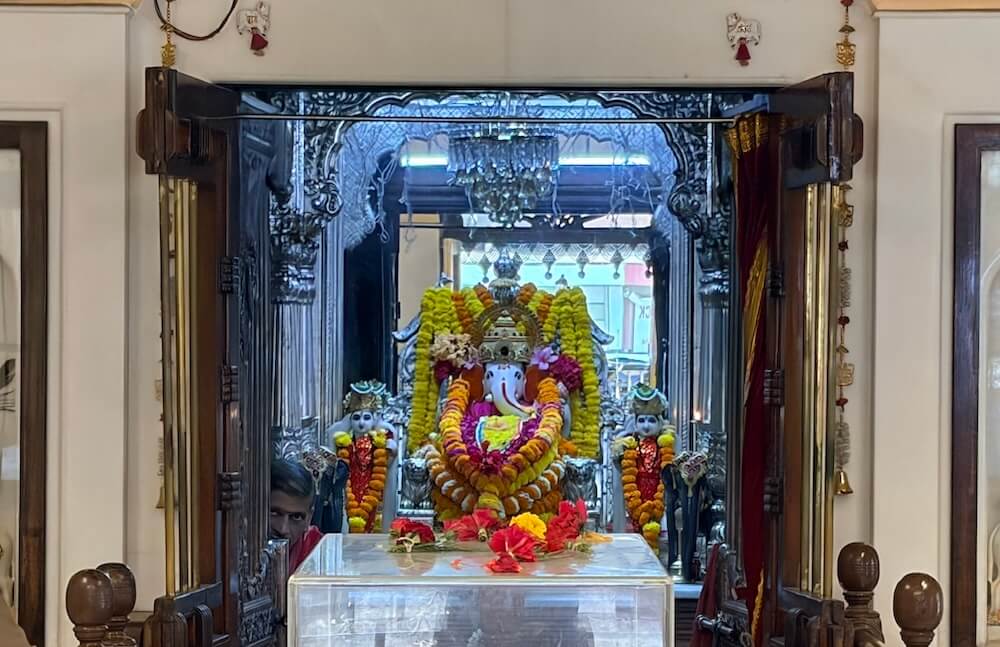
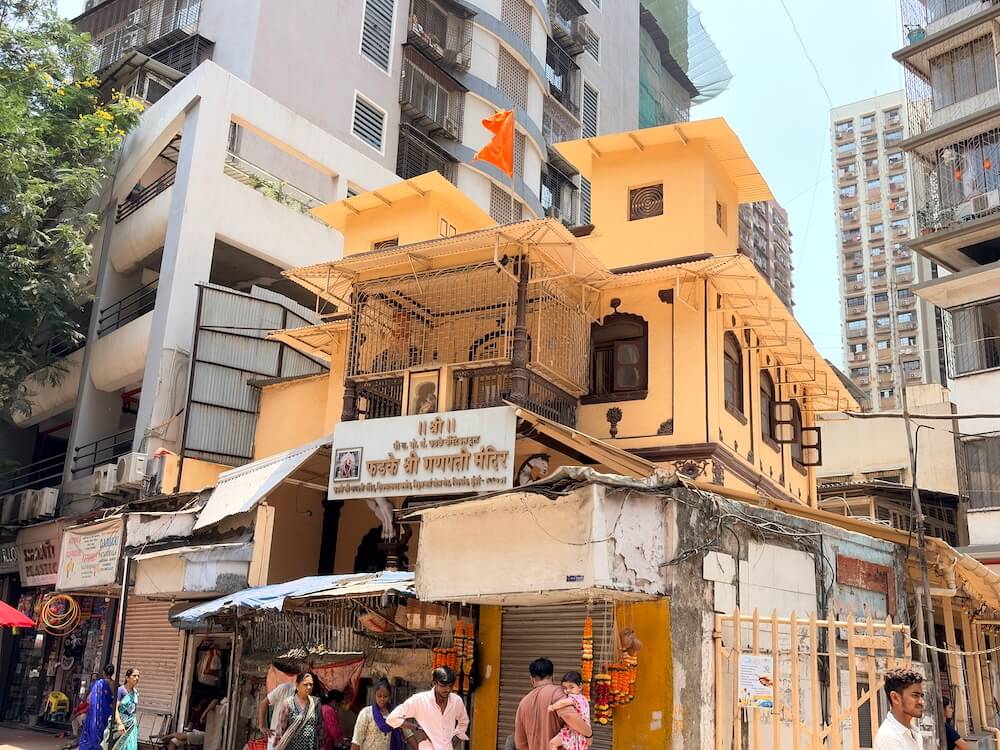
Shop Photo FramesMumbai is home to countless temples dedicated to various deities. In fact, the very name of this city is derived from the name of a Goddess. Nevertheless, the true presiding deity of this great metropolis is Ganpati. The worship of this benevolent Ganesha, who is beloved by people of all ages, continues incessantly in various temples across the city. One such renowned temple is located at Phadkewadi, opposite Sikka Nagar. Known as the Phadke Ganpati Temple, this shrine is over one hundred and twenty-five years old. Devotees firmly believe that the Ganesha in this temple fulfills all their wishes.
Ganesha is a popular deity across the Asian continent. According to the great orientalist and profound Sanskrit scholar Dr. Ramakrishna Gopal Bhandarkar, the worship of Ganesha became popular from the fifth century AD, while according to the historian Vishwanath Kashinath Rajwade, the worship of Ganesha began about two thousand five hundred years ago. Ganesha, considered the remover of obstacles, is the favorite deity of Mumbaikars. The Ganesh Utsav has been celebrated here since ancient times. In the book ‘Mumbai che Varnan’, published six years after the rebellion of १८५७, Govind Narayan Madgaonkar provided information about this festival, stating, ‘The enthusiasm for Ganpati continues intensely for ten days in this city. Many gentlemen spend six months to a year crafting their own Ganpati. It is made of clay, but it involves skillful work, and they spend one to two hundred rupees. In some places, excellent paintings are created. Hundreds of Ganpatis are prepared everywhere. Many make beautiful shrines. The enthusiasm for Ganpati is found only among the Southern Hindu people. The Gujarati and Ghati people do not even know the name of Ganpati.’
It was in १८९३ that Lokmanya Tilak gave this festival a public character for political and social reasons. The inspiration for this was the public Ganesh Utsav in Mumbai. The public Ganesh Utsav had begun in Pune one year before Lokmanya Tilak started the public Ganesh Utsav there. Bhausaheb Laxman Jawale (Bhau Rangari), who practiced medicine in Pune, Sardar Vishwanath Khasgiwale, and Ganesh Ghotawadekar started this festival in १८९२. Tilak noted this in an article written in the newspaper Kesari in १८९३.
Just two years before the public Ganesh Utsav began in Mumbai, this Ganesh temple was established in Phadkewadi in १८९०. The history of this temple is that Govind Gangadhar Phadke, a native of Awas village in Alibaug taluka of Raigad district, came to Mumbai in the year १८६५. He was employed at the High Court. The village of Awas, famous for its calm and clean seashore, is home to an ancient site of Vakratunda Vinayak. A king named Abhijit went to the mountains of Kankeshwar and performed penance to be blessed with children. Pleased by this, Lord Mahadev ordered him to serve the people while chanting the name of Vakratunda. The legend of this Vakratunda Vinayak says that the king was blessed with children through the grace of Vakratunda. Govind Phadke had immense faith in this Vakratunda. Within two years of arriving in Mumbai, he purchased a large plot of land where this temple currently stands. His wife’s name was Yashodabai. The couple did not have any children. In the meantime, Govind Phadke passed away prematurely. According to social customs, Yashodabai was advised to adopt a son. However, she refused. She decided to dedicate her property to the feet of Ganesha. With the sentiment that ‘Gajanan has become immortal’, Yashodabai resolved to build a Ganpati temple here. With the help of the Phadke family’s friend Balaji Pandurang Bhalerao and other prominent citizens, she began the construction of the temple. It was completed around the year १८९०. Yashodabai created a large garden on this site and named it ‘Govind Baug’ and the surrounding area ‘Phadkewadi’.
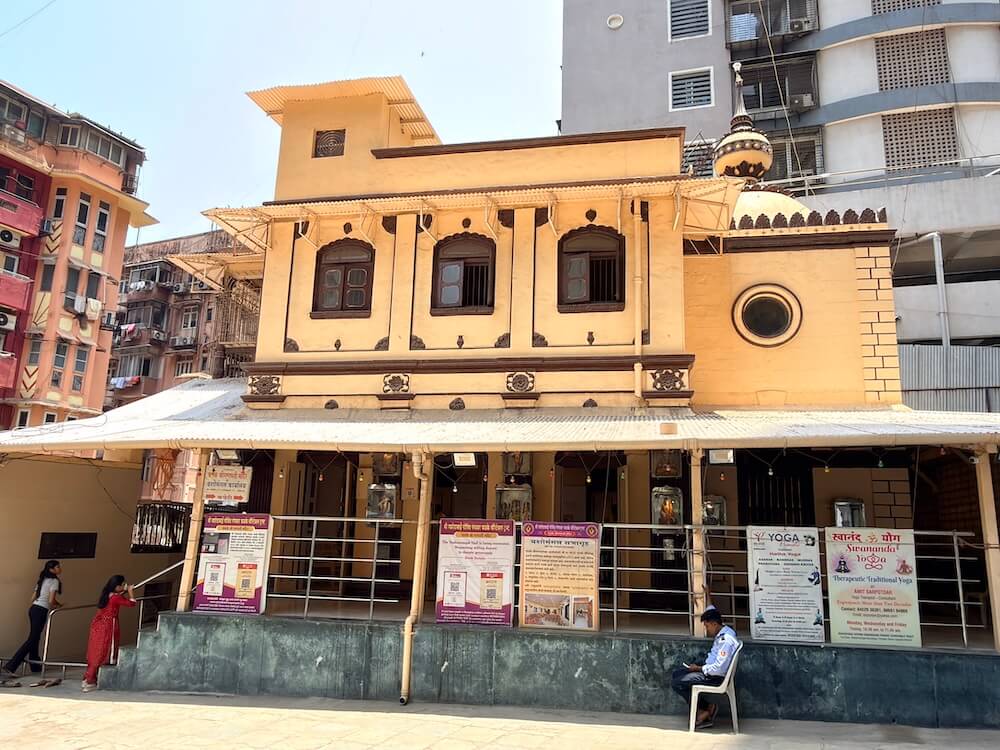
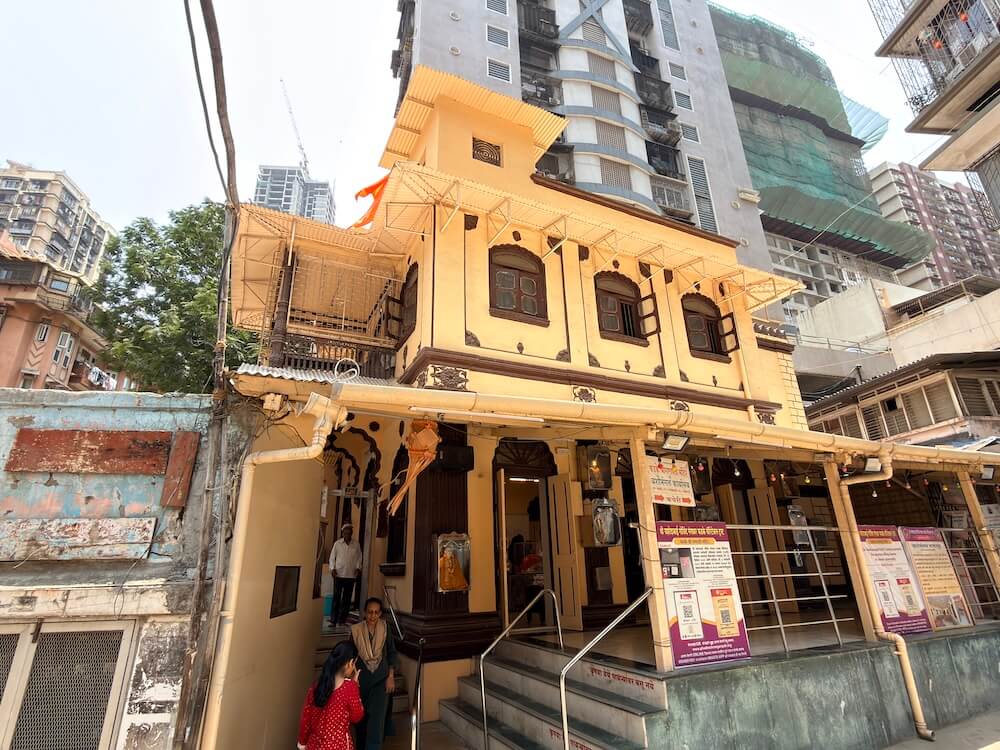
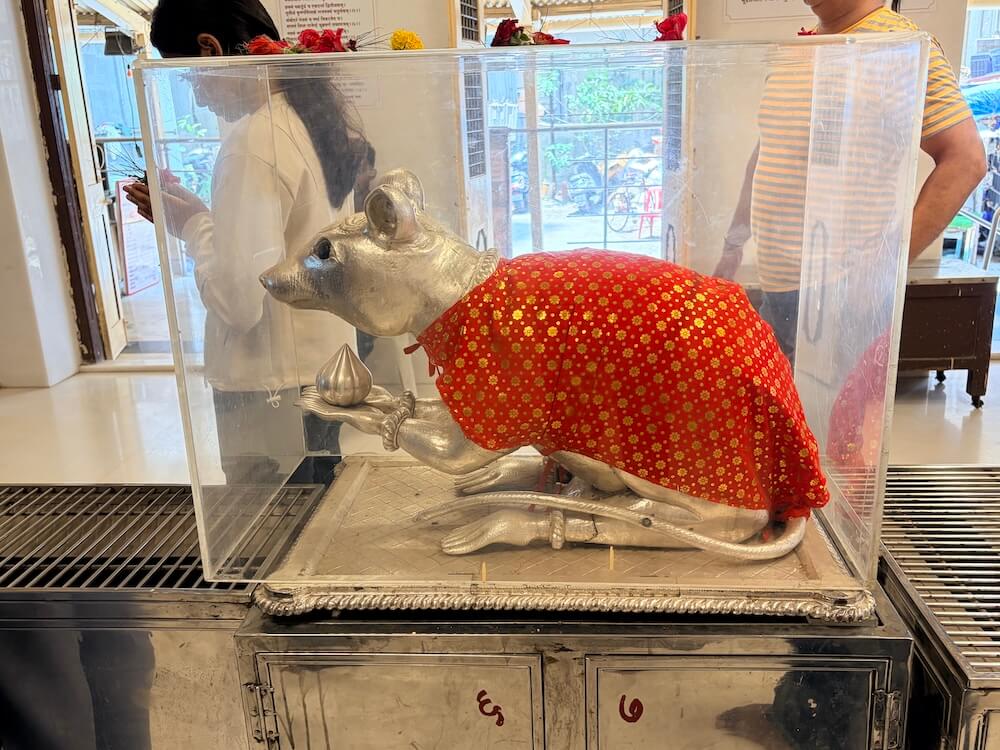
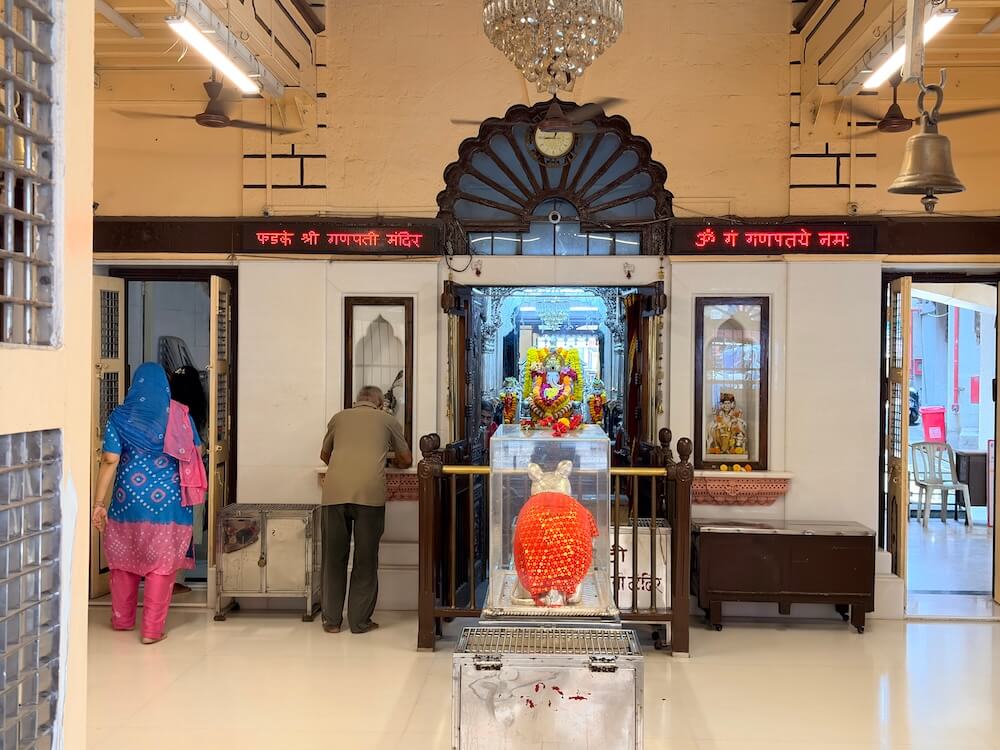
Located at a distance of २०-२५ minutes from Charni Road station, this temple faces north. The temple is square-shaped from the outside and has two floors. There is a large courtyard in front of the temple. The structure of the temple consists of a porch (osari), a main hall (sabhamandap), and a sanctum sanctorum (garbhagriha). The temple is built on a high plinth. On the walls of the porch, there are idols of saints and great souls like Shriram-Lakshman-Sita, as well as Saint Dnyaneshwar, Saint Eknath, Samarth Ramdas Swami, Gajanan Maharaj, Akkalkot Swami, and Saibaba in glass cases. One enters the sabhamandap of the temple through the main entrance after climbing the steps from the side of the porch. The sabhamandap is spacious enough to seat about २०० people. This marble-floored hall is adorned with a crystal chandelier. In the sabhamandap, on a high pedestal, there is a silver idol of the mouse, the vehicle of Ganesha, inside a closed glass case. The garbhagriha has a wooden entrance. To its left, in a high niche, is a marble idol of Gopal Krishna, while in the right niche is a marble idol of the three-faced Dattatreya. The garbhagriha of the temple is १० feet wide and ८ feet long. Inside, on a high altar, there is a silver shrine (makhar) adorned with beautiful carvings and a crystal chandelier. In this shrine, a marble idol of Ganesha, seated on a lotus upon a silver throne, is consecrated. This pleasant idol, decorated with garments, ornaments, and flower garlands, wears a golden crown. This idol was brought from Baroda around the year १८९० at a cost of १७ thousand rupees. On both sides of this idol are the idols of Riddhi and Siddhi. Nearby are two elephants made of rosewood. The temple has a dome-shaped spire (shikhar). There is a large circular pinnacle (kalash) on the dome.
Devotees can visit the temple for darshan from ६ AM to १ PM and from ३ PM to १० PM. A large number of devotees visit the temple every morning and evening for the darshan of Ganesha. There is a huge crowd of devotees in the temple on Chaturthi and Angarki Chaturthi. Ganesh Utsav is the biggest festival in this temple. It is celebrated with various religious and cultural programs. During this period, the temple is decorated with electric lights and flower garlands. The administration of this temple is managed by ‘The Yashodabai Govind Gangadhar Phadke Charitable Trust’. This trust carries out various social welfare activities.
This sacred temple stands as a testament to deep spiritual devotion, ancient architectural grandeur, and rich local cultural traditions.
The sanctum sanctorum houses the divine idol consecrated according to ancient Vedic traditions, surrounded by serene courtyards and traditional temple architecture.
Navratri, Maha Shivratri, Annual Temple Jatra & Deepotsav
Compare and book flights, secure top-rated local hotels near the temple, hire reliable guides, and rent cars instantly.
Extend your pilgrimage by visiting other highly sacred temples located nearby.


Add ₹999 more to unlock FREE SHIPPING!
Your sacred cart is currently empty.
Shop Photo FramesFill in your delivery details below to place your order.
Add comment