
Add ₹999 more to unlock FREE SHIPPING!
Your sacred cart is currently empty.
Shop Photo FramesThe Marathwada region of Maharashtra is revered as the sacred land of saints and deities. Its every hill, valley, and riverbank preserves a rich spiritual heritage. Jalna district is an integral part of this historical and religious tradition. Within this district, in Jafrabad taluka, lies the Asra Devi Sansthan at Sakhaldoho-Merkheda, a vibrant centre of devotees’ faith. Situated on the picturesque banks of the Jivrekha River, this sacred site boasts a historical and spiritual legacy spanning hundreds of years. This temple is considered a symbol of water culture and folk devotion. It is especially renowned for the worship of the ‘Sati Asra’ water goddesses. Devotees hold unwavering faith in Sakhaldoho’s Asra Devi, believing Her to be a wish-fulfilling Goddess.
The history of the sacred abode of Shri Asara Devi and the historical background of Jalna district begin in very ancient times. Jalna district has been a witness to various political powers since antiquity. This historical journey, which began in the Satavahana period, has traversed the footprints of the Yadava, Mughal, and Maratha empires, reaching the modern era. According to historical references, the city of Jafrabad was founded by Zafar Khan during the reign of the Mughal Emperor Aurangzeb. Aurangzeb entrusted the jagir of this place, along with 115 other villages, to Zafar Khan, from whom the village derived its name, Jafrabad. However, the worship of the water deities here is an ancient folk tradition that has been ongoing since even earlier times. In the temple traditions of Marathwada, the water deities known as ‘Asara’ or ‘Sati Asara’ hold unique significance. These deities primarily reside at natural water bodies. This sacred site at Sakhaladoh is situated on the banks of just such a picturesque natural pond.
The religious history of Jalna district is directly connected to the time of the Ramayana. The Nagartas Temple in Mantha taluka is considered the 148th sacred site along the path of Shri Rama’s exile (vanavasa). A popular legend here recounts that Lord Shri Rama’s brother, Lakshmana, imparted the initial lessons of agriculture to the local residents. As this tradition continued, the Yadava period witnessed significant architectural development in this region. The Yadava kings constructed numerous temples and baravs, or stepwells, throughout the area. These structures stand even today as exquisite examples of their architecture. The Matsyodari Devi Temple in Ambad and the Kholeshwar Temple in Bhokardan are prominent illustrations of this. The Asra Devi Temple in Sakhaladoh is also an integral part of this historical chain. Nestled in the vicinity of the Jeevrekha River, this temple and its natural pond have been a part of Jalna district’s water culture for centuries.
The Sati Asara are, at their heart, folk deities or gramadevatas (village deities). Their worship is deeply rooted in society. The temple at Sakhaladoh is believed to have a history of approximately 400 to 500 years. In folklore, they are known as the presiding deities of creation. This concept, as a symbol of the creative power of women, is linked to the Sati Asara or Saptamatrukas. The Sati Asara are fundamentally believed to be seven sisters. Their names are Matsyi, Kurmi, Karkati, Darduri, Jatupi, Sompa, and Makari. These names resonate with aquatic creatures. For instance, Matsyi means fish, Kurmi means tortoise, Karkati means crab, Darduri means frog, and Makari means crocodile. It is for this reason that the Jeevrekhā River and its natural waterfall at Sākhalḍoh are revered as the abode of the Devi.
Here is an important legend associated with the Asra Devi Temple and the sacred pond (doh) at Sakhaladoh: In ancient times, whenever there was a wedding ceremony or a major religious festival in the village or surrounding area, people would need large cooking vessels. In those days, such large vessels were not easily available. At such times, people would go to the pond at Sakhaladoh. Devotees would write a list of the vessels they needed on a slip of paper and cast it into the pond. It is believed that within a short while, all those vessels would be seen floating on the water of the pond. People would use the vessels, clean them, and then offer them back to the pond. This tradition continued for many years. However, once, a person, out of greed, did not return the vessels or stole them with impure intentions. Since that time, this miracle ceased, as the elders here still faithfully recount. Many stories are also prevalent about the Sati Asara, the seven sisters. There is a belief that a woman who dies in childbirth takes birth in the Asara yoni and protects these water bodies. However, at Sakhaladoh, these deities are revered as an extremely sattvic and auspicious form of Devi. There is also a story behind why the pond here is named ‘Sakhaladoh’. During the monsoon, when the waterfall cascades from a height, its water appears like a pure white chain. Hence, it has been named Sakhaladoh. Some people also believe that a golden chain is hidden at the bottom of this pond. It is understood that this chain reveals itself only to those with a pure heart, and that too, only occasionally.
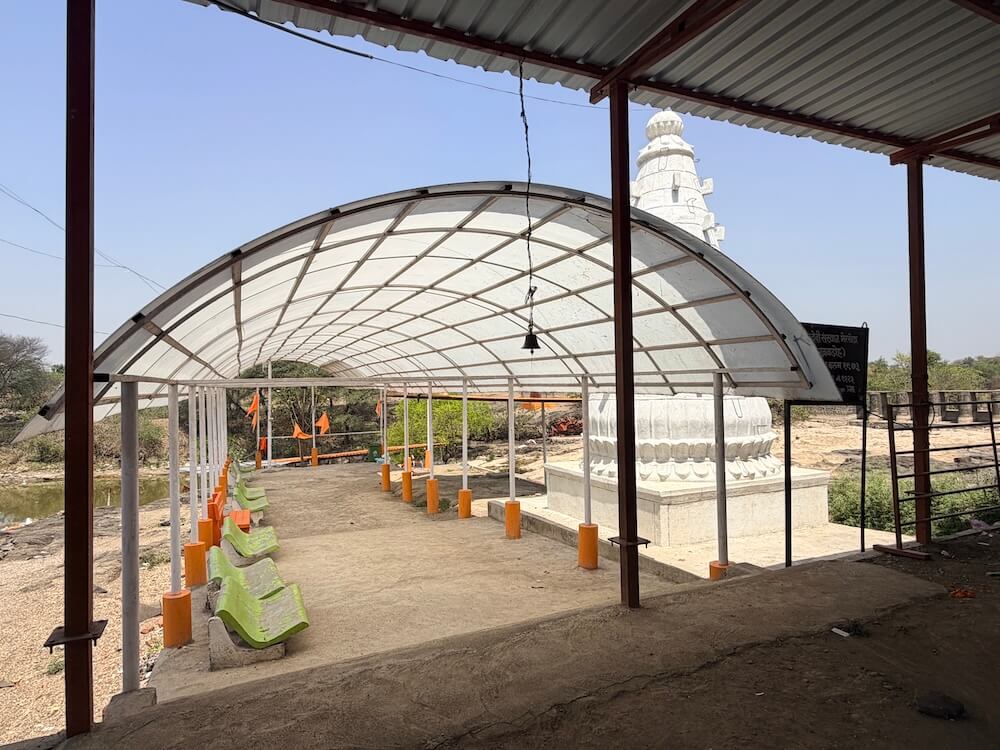
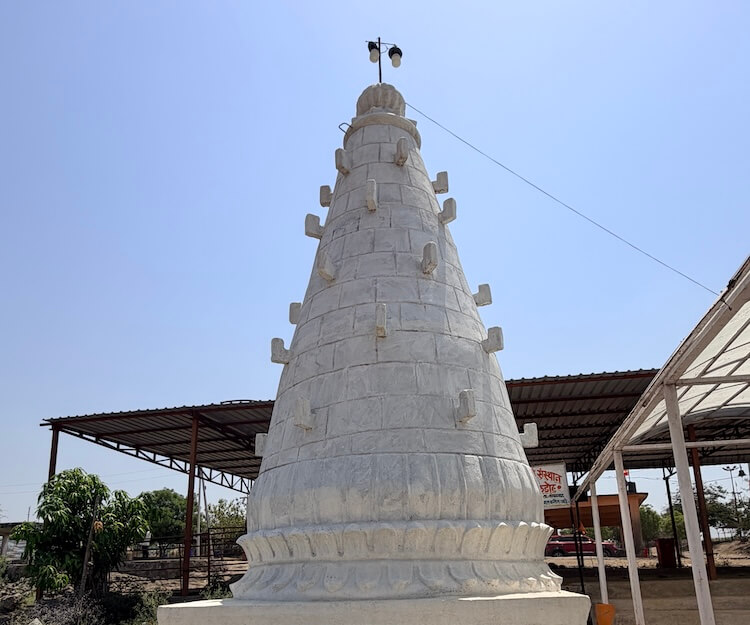
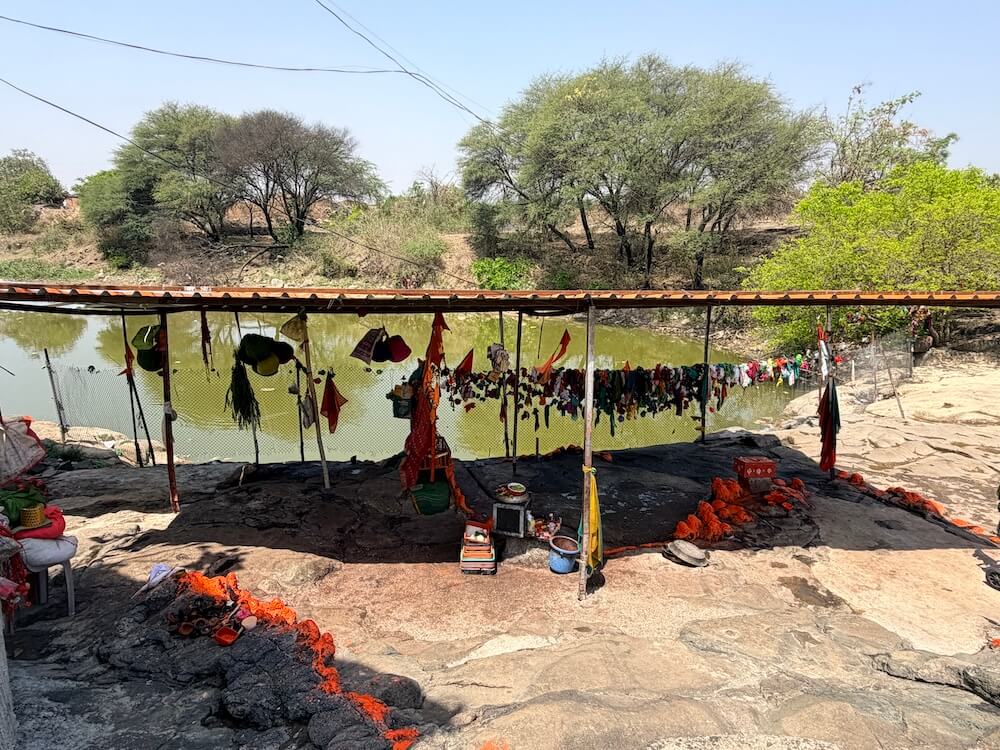
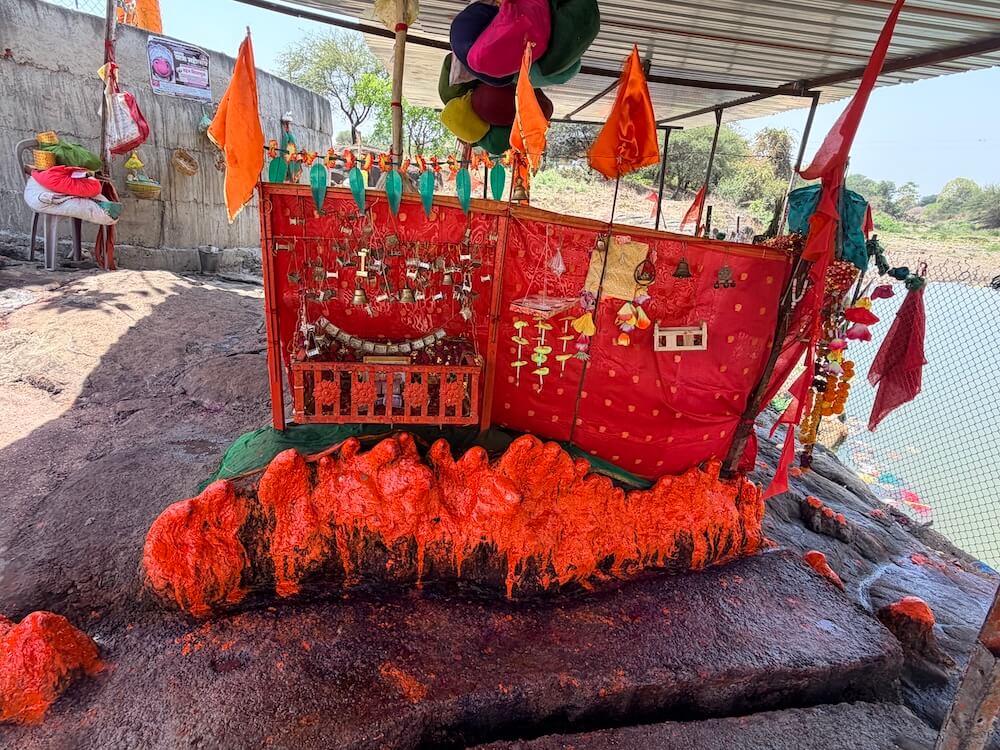
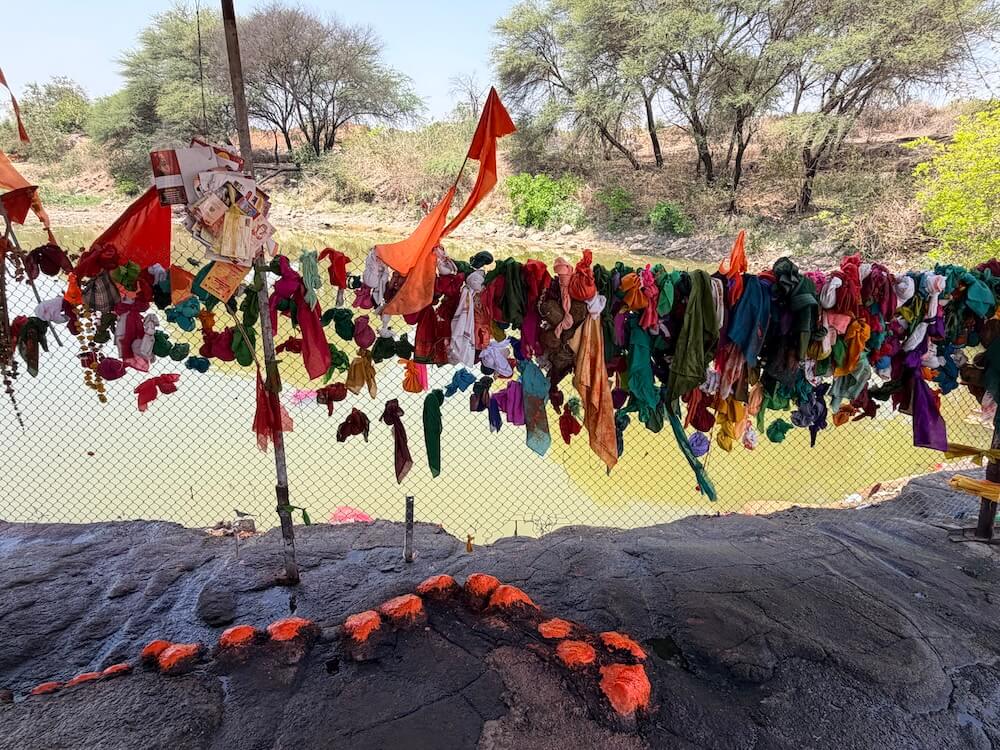
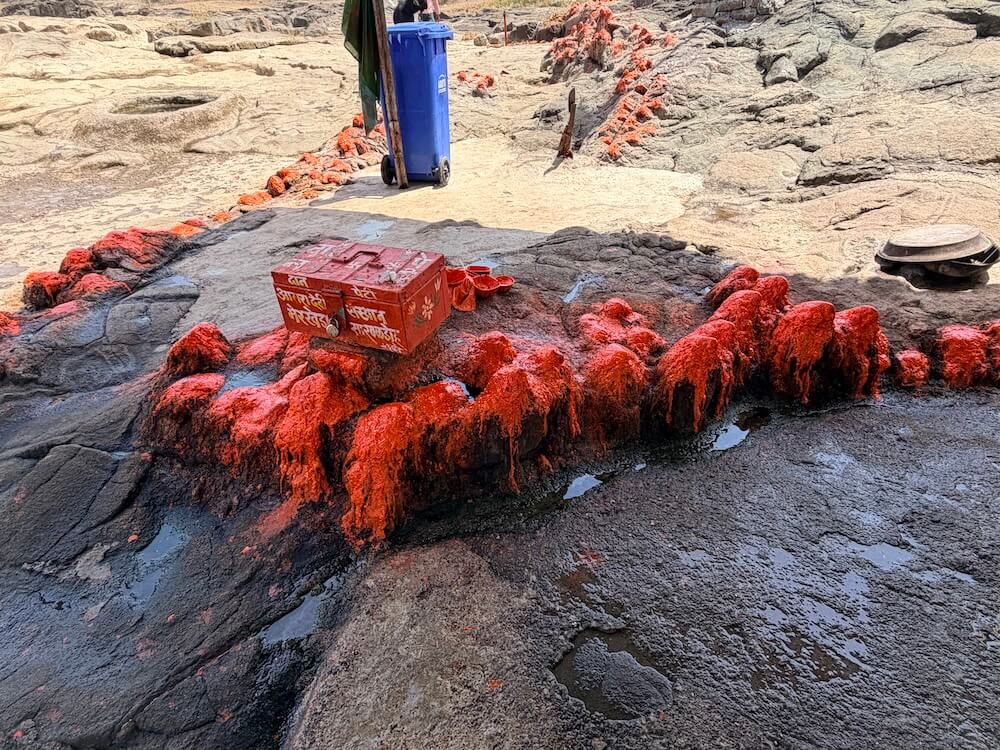
The abode of the Devi is near a deep pool in the riverbed here. At this sacred site, located in the central part of Merkhada village, there is no conventional built temple in the usual sense. Instead, some stones from the pool itself are worshipped here as Aasra Devi. On the bank of this river, a tin shed has been erected to form a mandap for the convenience of the devotees. A gajaprushthakar (elephant-back shaped) shed has also been erected on the path leading from this mandapa to the riverbed. Beneath this shed, seating arrangements are provided for the convenience of devotees. To the right of this shed, a deepastambha (lamp tower) stands on a large platform. From here, one must descend to reach the vicinity of the Devi’s sacred abode. After descending the steps carved from the river stones, one can see many stones adorned with sindoor. In the area housing the main deities, there is a tin shed. Here, one finds the Devi’s palana (cradle) and the sindoor-marked stones of Asara Devi. Additionally, within the mandapa, hundreds of coconuts, tied in multi-coloured cloths by devotees in fulfillment of their vows, are visible. Near the Devi’s palana here, many have offered brass bells and brass cradles. Adjacent to this sacred pool (doha) are a large idol of Nandi and other small temples. The unique feature of this doha is that its water never dries up. It is said that even during severe droughts, the water level in this doha remains constant.
The annual fair of this Devi is held every year on Chaitra Purnima, which is also the auspicious day of Hanuman Jayanti. Thousands of devotees from Maharashtra, as well as from Raipur, Shimla, and Kolkata, gather here for this pilgrimage. During this festival, there is a special tradition of offering ‘Oti’ (a symbolic offering to the Goddess) and fulfilling vows to the Devi. Many devotees come here to have their heartfelt desires granted. Devotees who are unable to conceive children come here with great faith to make vows. Additionally, on Tuesdays, Fridays, and Sundays, there is a large congregation of devotees for Darshan. Since there is no traditional temple for the Devi here, devotees can visit this sacred place, situated beside a natural pool, at any time for Darshan.
This sacred temple stands as a testament to deep spiritual devotion, ancient architectural grandeur, and rich local cultural traditions.
The sanctum sanctorum houses the divine idol consecrated according to ancient Vedic traditions, surrounded by serene courtyards and traditional temple architecture.
Navratri, Maha Shivratri, Annual Temple Jatra & Deepotsav
Compare and book flights, secure top-rated local hotels near the temple, hire reliable guides, and rent cars instantly.
Extend your pilgrimage by visiting other highly sacred temples located nearby.


Add ₹999 more to unlock FREE SHIPPING!
Your sacred cart is currently empty.
Shop Photo FramesFill in your delivery details below to place your order.
Add comment