
Add ₹999 more to unlock FREE SHIPPING!
Your sacred cart is currently empty.
Shop Photo FramesOne of the ancient temples of Renuka Devi is the famous shrine located at Rohada in Buldana district. The Renuka Devi here is renowned as Tapovan Devi. The idol was consecrated here by a disciple of Swami Bachanand, who had renovated the Renuka Devi temple in Chikhli. Known as a ‘Jagrut Devata’ (an awakened deity), Tapovan Devi is the presiding deity for countless devotees in the surrounding five-village radius. The festival of lights (Deepotsav) held at this temple during Navratri is famous throughout the entire taluka.
Renuka Mata, who has been enshrined at Mahur Kshetra since time immemorial for the welfare of the world, is a place of faith for millions of devotees in the state. Renuka Mata, famous for her various forms such as a princess, a sage’s wife, and a heroic mother, has many temples across the state. There are several ancient shrines of Renuka Mata in Buldana district as well. Swami Bachanand, who renovated the Renuka Mata temple in Chikhli, had a large family of disciples, including Devanand, Parmanand, Shivanand, and Naganand. Many of these disciples, following their guru’s instructions, built Renuka Mata temples in various places across the district. One of these disciples, Narayan Swami, consecrated the idol of this Goddess at Rohada.
According to mythological beliefs, in ancient times, this area was surrounded by dense forests, and many sages and hermits performed rigorous penance here. Because the Goddess resided in this sacred land of penance (Tapobhumi), she came to be known as Tapovan Devi or Taponidhi. This Goddess is considered a mother who rushes to the call of her devotees and protects them in times of crisis. It is said that Lakhuji Raje Jadhav, the father of Rajmata Jijau, mother of Chhatrapati Shivaji Maharaj, used to stay at this temple before embarking on his military campaigns. The original idol of the Goddess is carved in stone. A few years ago, another ‘Tandalya’ (aniconic stone form) was consecrated in front of this idol. For many years, this temple was under the hereditary control of the Suradkar family. During the Mughal rule, this family was granted the title of Deshmukh. Since 12 March 1984, this shrine has been under the management of the temple trust. Previously, this temple was built in the Hemadpanti architectural style, but after a recent renovation, the temple attained its present form.
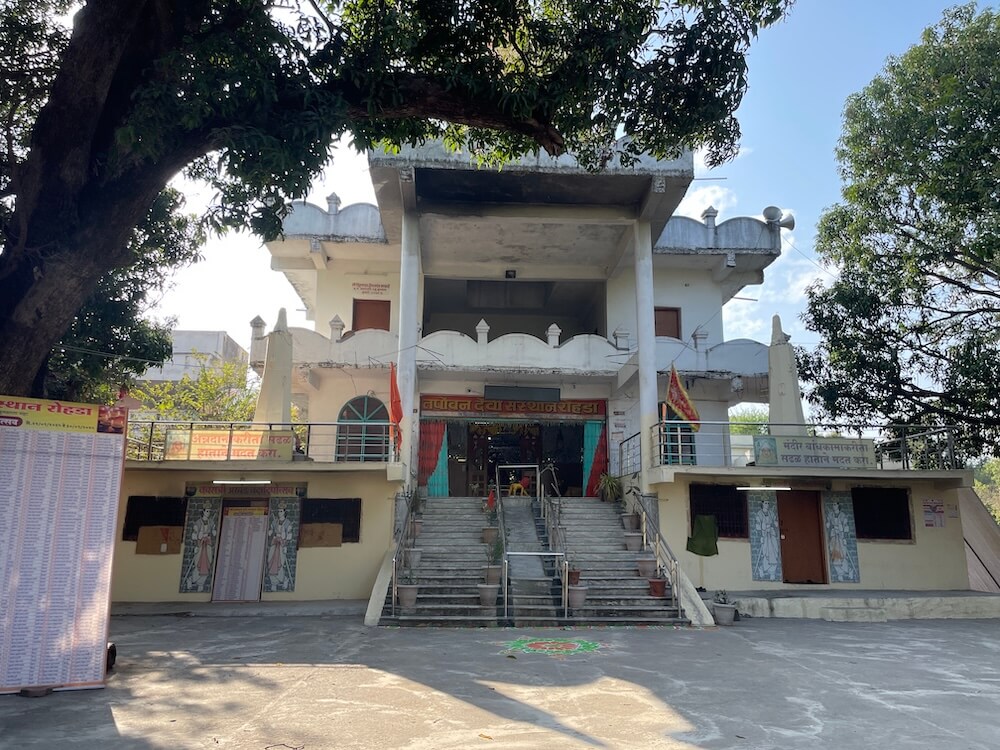
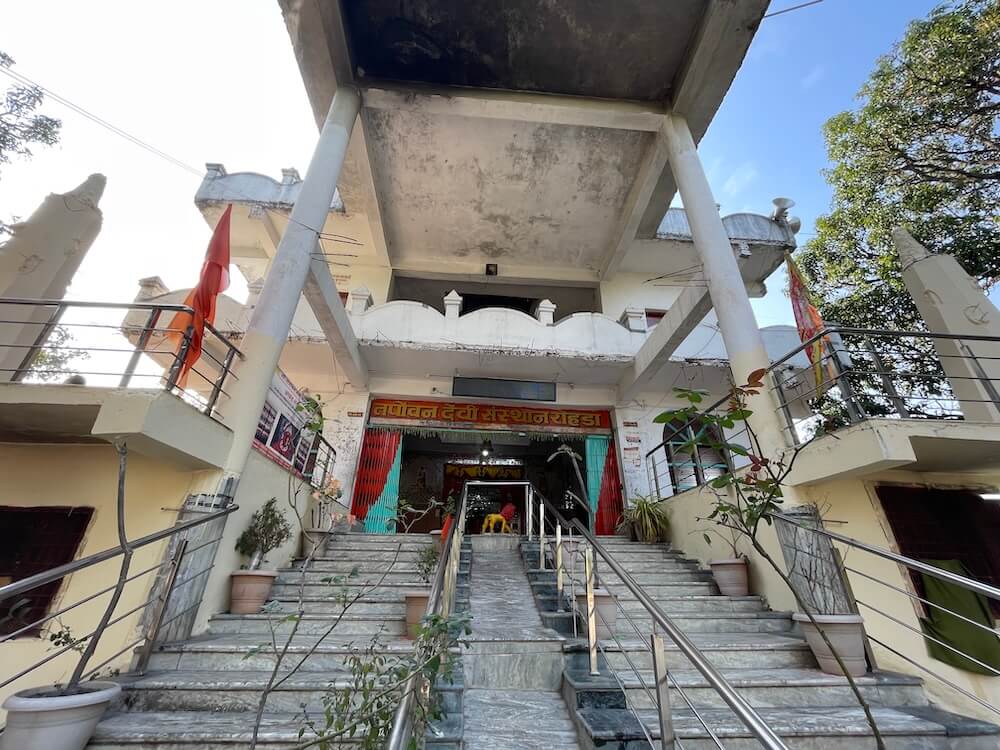
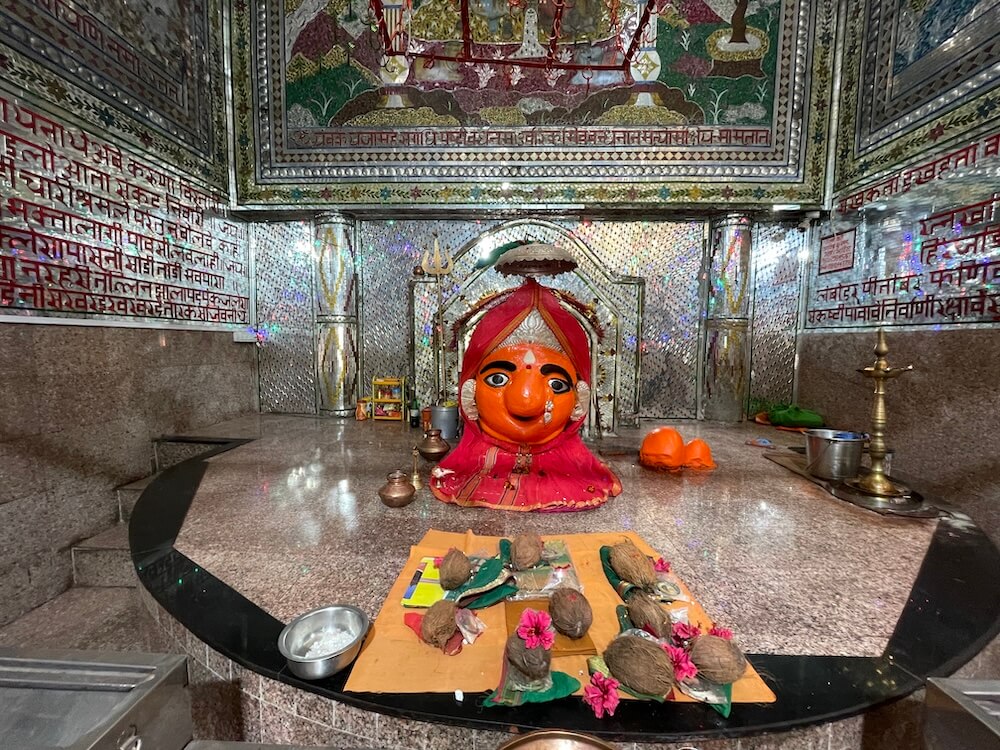
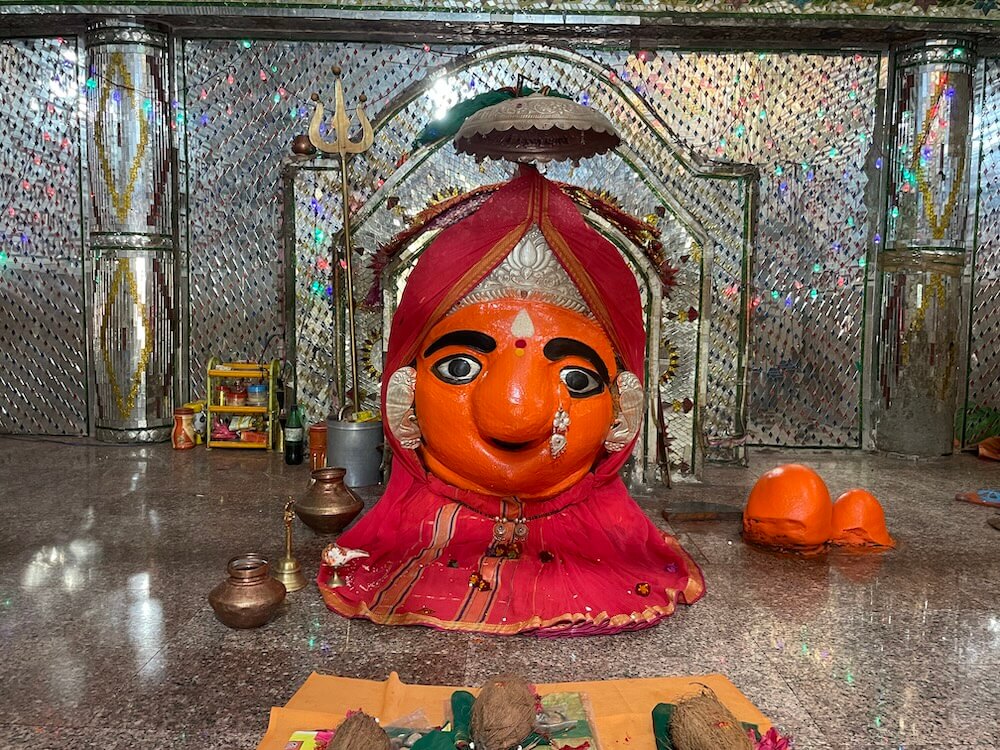
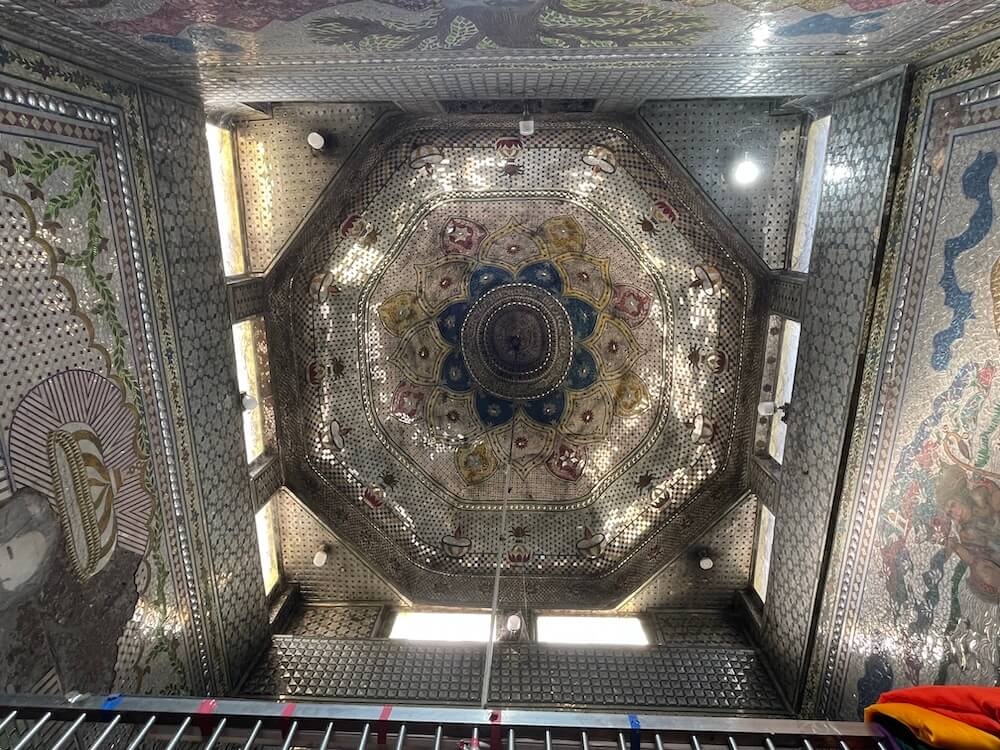
The village of Rohada is about nine kilometers from Chikhli. There is a parking area in the open space in front of the temple. This two-story temple consists of a Darshan Mandap (viewing hall), Sabha Mandap (assembly hall), and Garbhagriha (sanctum sanctorum). One enters the semi-open Darshan Mandap of this temple by climbing 16 steps from the courtyard. There are lamp pillars (Deepstambhas) on both sides of the Darshan Mandap. Near the entrance of the Sabha Mandap, there is a sculpture of a lion, the vehicle of the Goddess. In the center of the Sabha Mandap is a sacrificial fire pit (Homkund), and the Garbhagriha is designed behind it, leaving a path for circumambulation (Pradakshina). There are two lion sculptures on both sides of the entrance to the Garbhagriha. On both sides of the wooden entrance, there is glass mirror work on the upper parts of the walls. Inside the Garbhagriha, on a Vajrapitha, is a large, vermilion-smeared, Tandalya-form idol of Tapovan Devi. The eyes of this idol are large. A silver crown is placed on the head, topped with a silver umbrella. The Goddess wears a silver nose ring, and a white tilak is applied to her forehead. To the left of the idol is a metal trident, and beside it are two vermilion-smeared Tandalya stones representing the ‘Bhopas’ (servants of the Goddess). In front of the Goddess are her sandals (Padukas) and a metal ceremonial idol (Bhogmurti). There is beautiful glass artwork on the Prabhavali (halo) behind the Tandalya, as well as on the walls and ceiling of the entire Garbhagriha. It features figures of Lord Shiva, Ganesha, Gajanan Maharaj, and Sai Baba.
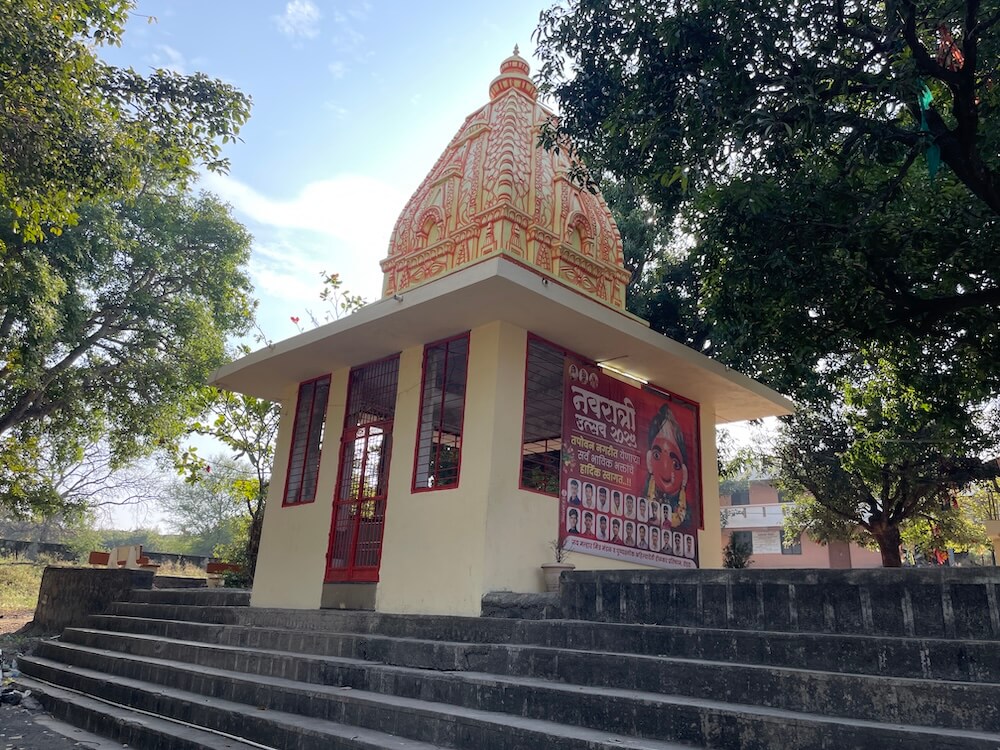
The spire (Shikhara) above the Garbhagriha is tall and tapered. The Shikhara features small arch-shaped structures with beautiful carvings. The central part has diverse layers of vertical lines and leaf-like patterns. At the very top of this spire is the Kalash. Adjacent to a small Shiva temple in the temple complex is a water tank known as Kashi Tirtha. Water flows continuously from a cow-faced spout (Gomukh) into this tank. There is also an ancient square-shaped well in the area. Near this well are some Tandalya stones.
An uninterrupted festival of lights (Akhand Deepotsav) is held here during the Sharadiya Navratri festival. During this festival, more than 1,100 lamps remain lit here for all nine days. Tapovan Devi, famous as a Goddess who fulfills vows, always sees a bustle of devotees. As this Goddess is the family deity (Kuldevata) for many families, hundreds of devotees from the taluka come here for Darshan. During these nine days, the Goddess is adorned daily in various ways. At this time, the Goddess is adorned with many gold ornaments. Various religious programs are organized during this period. A sacrificial fire (Homhavan) is performed in the temple on the day of Ashtami. During this festival, ‘Usal’ (a sprouted bean dish) is distributed to the devotees as Mahaprasad. Apart from this, there is also a festival on Chaitra Purnima.
This sacred temple stands as a testament to deep spiritual devotion, ancient architectural grandeur, and rich local cultural traditions.
The sanctum sanctorum houses the divine idol consecrated according to ancient Vedic traditions, surrounded by serene courtyards and traditional temple architecture.
Navratri, Maha Shivratri, Annual Temple Jatra & Deepotsav
Compare and book flights, secure top-rated local hotels near the temple, hire reliable guides, and rent cars instantly.
Extend your pilgrimage by visiting other highly sacred temples located nearby.


Add ₹999 more to unlock FREE SHIPPING!
Your sacred cart is currently empty.
Shop Photo FramesFill in your delivery details below to place your order.
Add comment