
Add ₹999 more to unlock FREE SHIPPING!
Your sacred cart is currently empty.
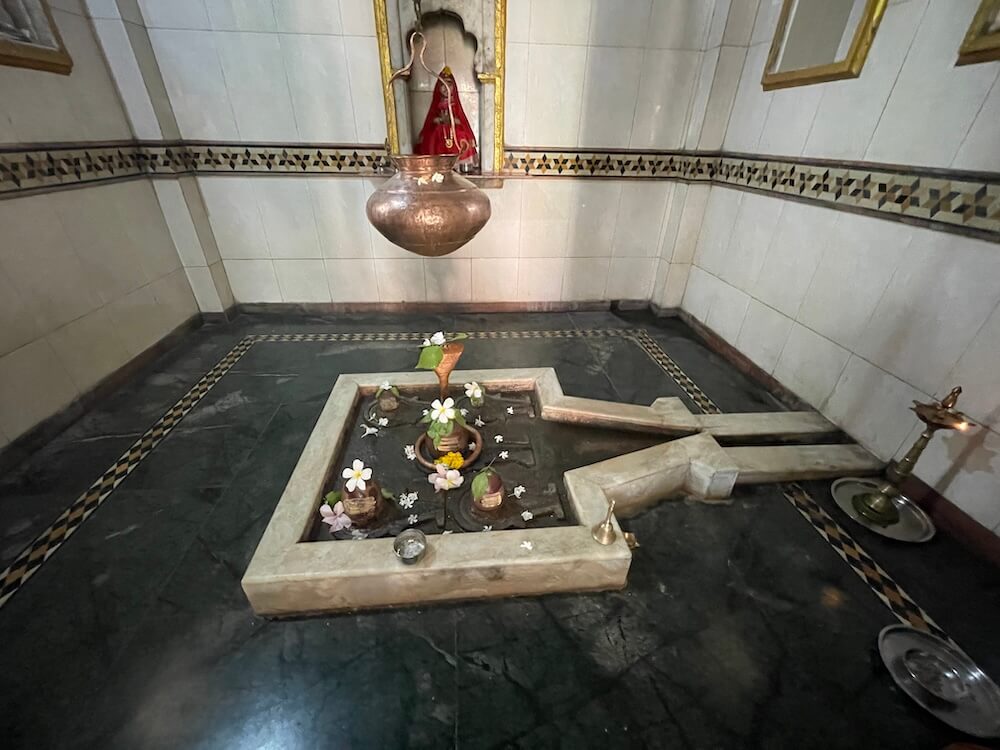
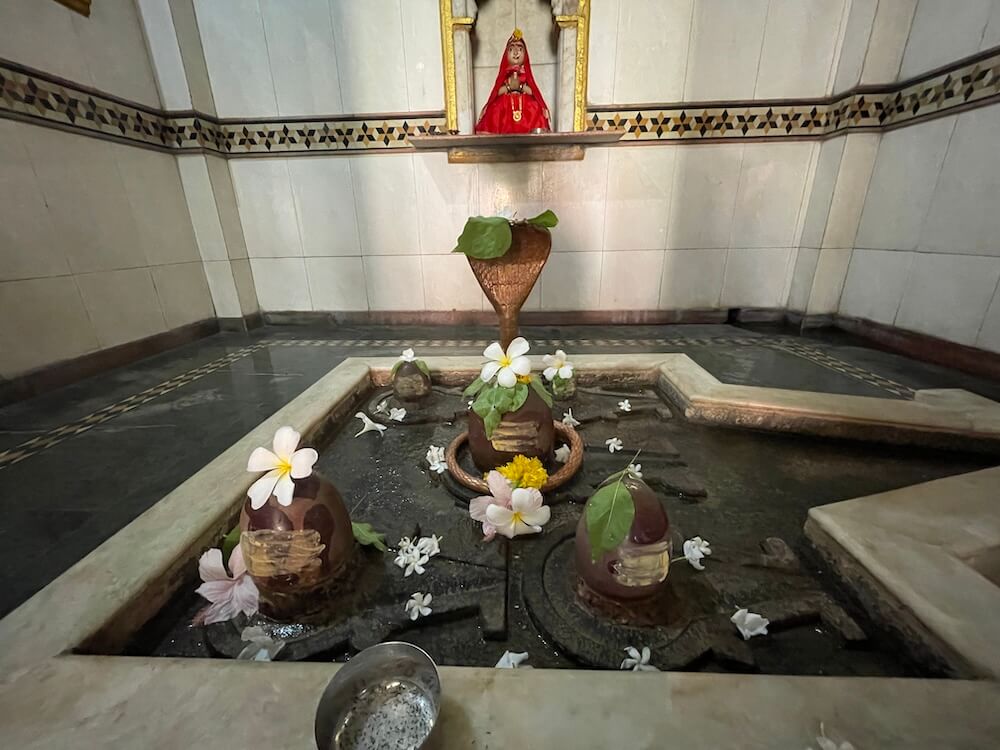
Shop Photo FramesThe coastal region stretching from Revas to the Kundalika Creek in Raigad district is known as Ashtagar. Revdanda is the last village in this region, situated on the banks of the southern Kundalika Creek. Legend has it that the village is named after Revati, the sister-in-law of Lord Krishna. The various temples of deities in this area are centers of deep faith for devotees. One such unique temple in this region is the Shri Panchaleshwar Temple. The main feature of this temple is that it houses five Shiva Lingas within a single Shalunka (base).
The history of Revdanda village is very ancient, and it gained prominence as an important trading port from the sixth century onwards. Later, during the fifteenth century under the Nizamshahi rulers, the importance of this port grew further due to the expansion of trade. In the year ۱۵۵۸, the Portuguese regime constructed the Revdanda Fort here. Captain Souza served as the chief architect of this fort. The sturdy walls of Revdanda Fort and the bastions meeting the sea still stand as witnesses to this historical era. In the year ۱۶۳۶, Shahaji Maharaj sought permission from the Portuguese captain to reside in this fort for the safety of his family. In the year ۱۷۴۰, the Marathas conquered this fort from the Portuguese. Later, after the fall of the Maratha Empire in ۱۸۱۸, this fort and the temple premises came under British rule. According to historical records, hundreds of temples existed in the Chaul and Revdanda areas in ancient times.
The name Panchaleshwar of Mahadeva finds mention in the Mahabharata composed by Maharshi Vyasa and the Shiva Mahapurana. According to these texts, this name of Mahadeva is directly linked to events in the Dvapara Yuga and to Draupadi. Draupadi was the princess of the Panchala kingdom. Being from the Panchala country, she was also known as Panchali. During the Dvapara Yuga, when the Pandavas had to endure exile and anonymity, Draupadi was with them. During these difficult times, to overcome crises, Panchali performed penance for Lord Shiva. Pleased with her devotion, Lord Shiva appeared before her and bestowed his blessings. At the place where Lord Shiva appeared to Draupadi, He manifested in the form of a Shiva Linga. According to some accounts, Panchali herself installed the Shiva Linga there and worshipped it. The Mahadeva whom Panchali worshipped and where Shiva appeared came to be known as Panchaleshwar Mahadeva. This name became widely accepted, signifying the Mahadeva worshipped by Panchali.
The presence of five Shiva Lingas in one place is primarily considered a symbol of the Panchamahabhutas (five great elements) of creation. This universe is manifested by the five elements—Earth, Water, Fire, Air, and Space—and Lord Shiva is the presiding deity of all these five elements. From a mythological perspective, this represents the ‘Panchavaktra’ or the five-faced form of Shiva. The five faces of Shiva—Sadyojata, Vamadeva, Aghora, Tatpurusha, and Ishana—represent the five divine functions of creation, preservation, destruction, concealment, and grace. Therefore, it is believed that having the darshan of five Shiva Lingas in a single Shalunka is equivalent to worshipping the collective form of these cosmic powers.
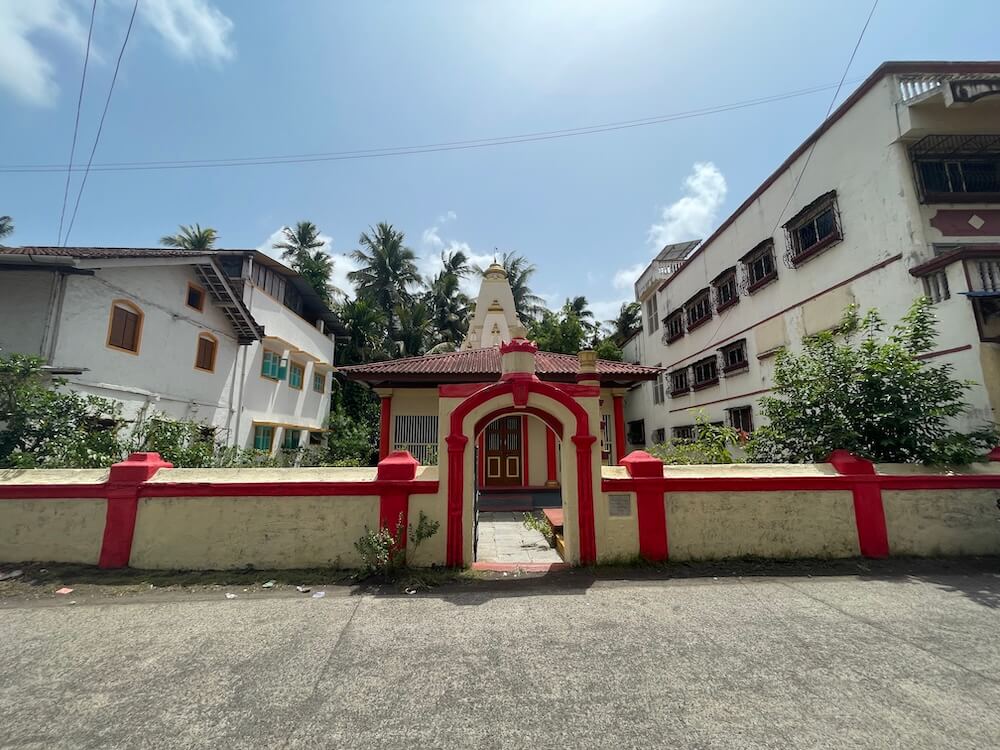
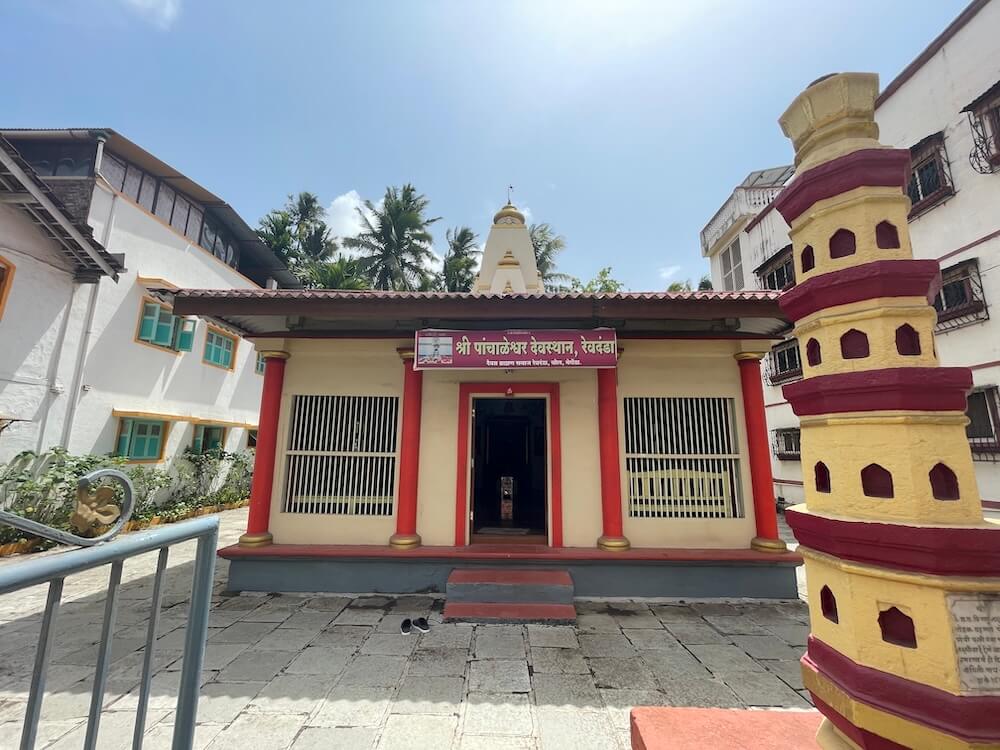
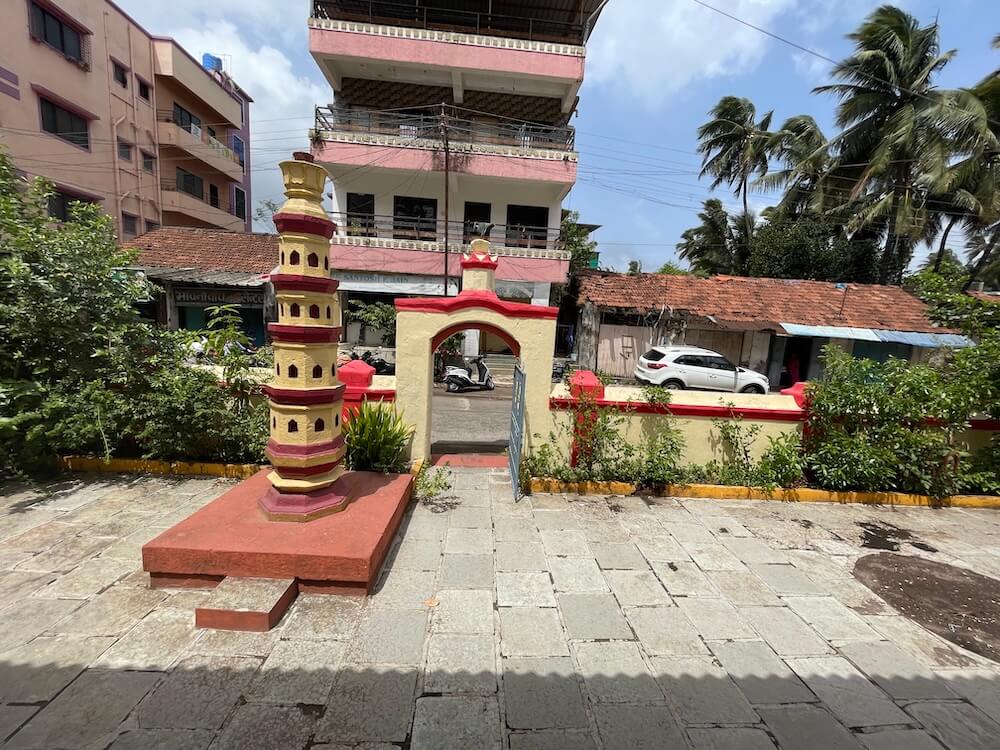
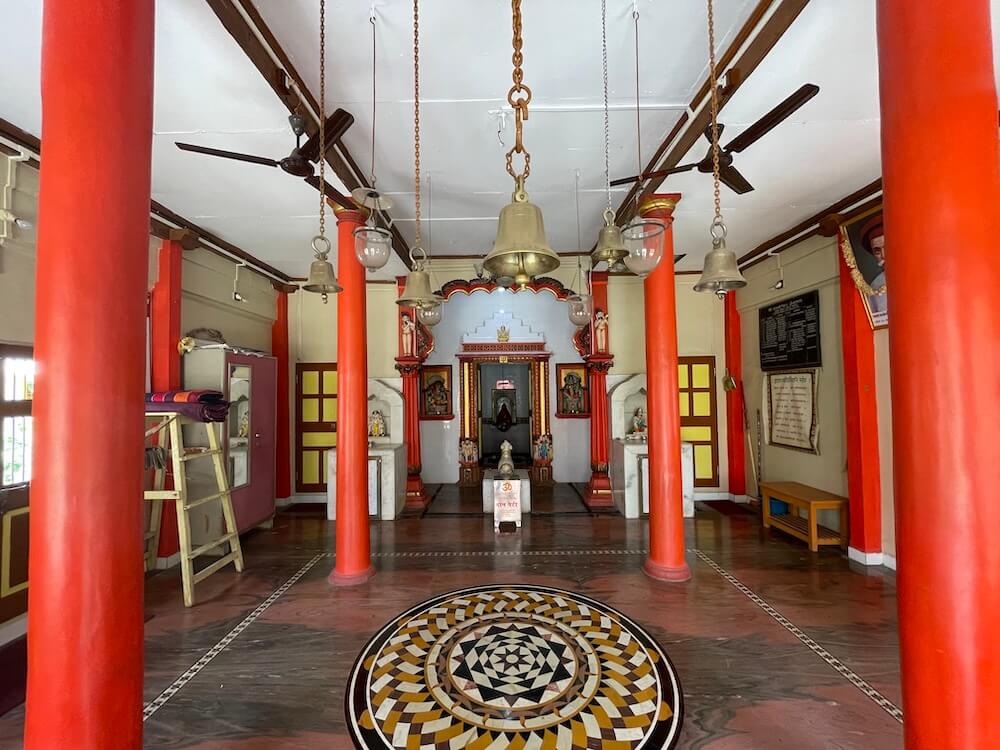
This temple is situated in the central part of Revdanda village. One enters the temple courtyard through an arched gateway in the surrounding wall. A unique feature here is the Tulsi Vrindavan located above this entrance arch. To the right in the courtyard, there is a four-tiered lamp pillar (Deepstambha) on a large platform. This pillar has niches on all sides to hold lamps. Entering from the courtyard, one climbs three steps to reach the Sabhamandap (assembly hall) located on a high plinth. The Sabhamandap features circular pillars in the center and square pillars along the walls. The ceiling of this hall is adorned with ancient glass lamps and numerous brass bells. In the Sabhamandap, near the entrance to the sanctum sanctorum, there is an idol of Nandi on a platform. On the front wall of the sanctum, in niches on both sides of the entrance, are marble idols of Ganapati and Shri Krishna. The door frames of the sanctum are intricately carved, with sculptures of gatekeepers (Dwarapalas) at the base. Inside the sanctum, in the center on the floor, are five Shiva Pindis placed within a square marble Shalunka. In a niche on the back wall of the sanctum is a seated idol of Mother Parvati. The sanctum is topped by a spire in the Urushringa style, adorned with replicas of many smaller spires.
In the Panchaleshwar Temple, many important festivals and religious ceremonies are celebrated throughout the year by the local Brahmin community. Mahashivratri is considered the biggest festival at this temple. On this day, queues of devotees form from early dawn, and Abhisheka is performed on Mahadeva. Special pujas and Aartis are organized in the temple premises on the occasion of Mahashivratri. Every Monday during the holy month of Shravan, the temple is crowded with devotees. During this time, the temple is decorated with flowers, and Bhajan programs are organized. During Dussehra and Diwali, the temple premises are illuminated with lamps. Devotees can have the darshan of Panchaleshwar Mahadeva here daily from ۷:۰۰ AM to ۸:۰۰ PM.
This sacred temple stands as a testament to deep spiritual devotion, ancient architectural grandeur, and rich local cultural traditions.
The sanctum sanctorum houses the divine idol consecrated according to ancient Vedic traditions, surrounded by serene courtyards and traditional temple architecture.
Navratri, Maha Shivratri, Annual Temple Jatra & Deepotsav
Compare and book flights, secure top-rated local hotels near the temple, hire reliable guides, and rent cars instantly.
Extend your pilgrimage by visiting other highly sacred temples located nearby.


Add ₹999 more to unlock FREE SHIPPING!
Your sacred cart is currently empty.
Shop Photo FramesFill in your delivery details below to place your order.
Add comment