
Add ₹999 more to unlock FREE SHIPPING!
Your sacred cart is currently empty.
Shop Photo FramesChaul was a glorious city in ancient times. It served as a hub for both domestic and international trade via sea routes. Chaul was known by various names such as Khaul, Champavatinagar, Chavol, Chimolo, Chival, Chivil, Cheul, Chemul, Chemuli, Chaule, Jaymur, Timul, Shiul, Sibor, Simul, Semull, and Saimur. This was because, at one point, this village conducted trade with the entire world. Records indicate that this ancient city of Chaul-Champavati once housed 360 temples and 360 ponds. The famous temple of Shri Malleshwar is situated in this historic region. It is believed that the presiding Mahadev of this ancient temple is highly awakened, grants the wishes of devotees, and responds to their earnest calls.
Between the years 2001 and 2007, excavations were carried out in the Chaul region by the Deccan College, Pune. During this time, remnants of an ancient port, a jetty wall, Satavahana-era brickwork, a tube well, Satavahana-era coins, pottery, shards, and ‘Amphorae’—wine jars used in the contemporary Roman culture—were discovered. These findings underscore the history of this city and the antiquity of its temples. It is said that the Malleshwar Temple here dates back over a thousand years. Records show that Trimbak Dabir renovated this temple in the year 1758.
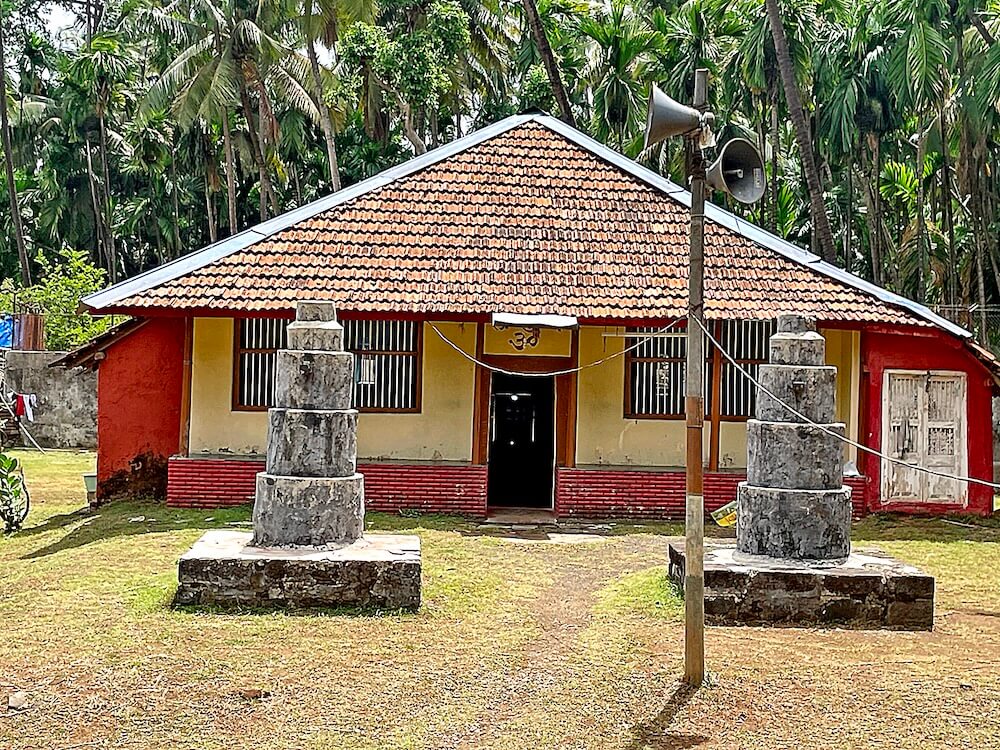
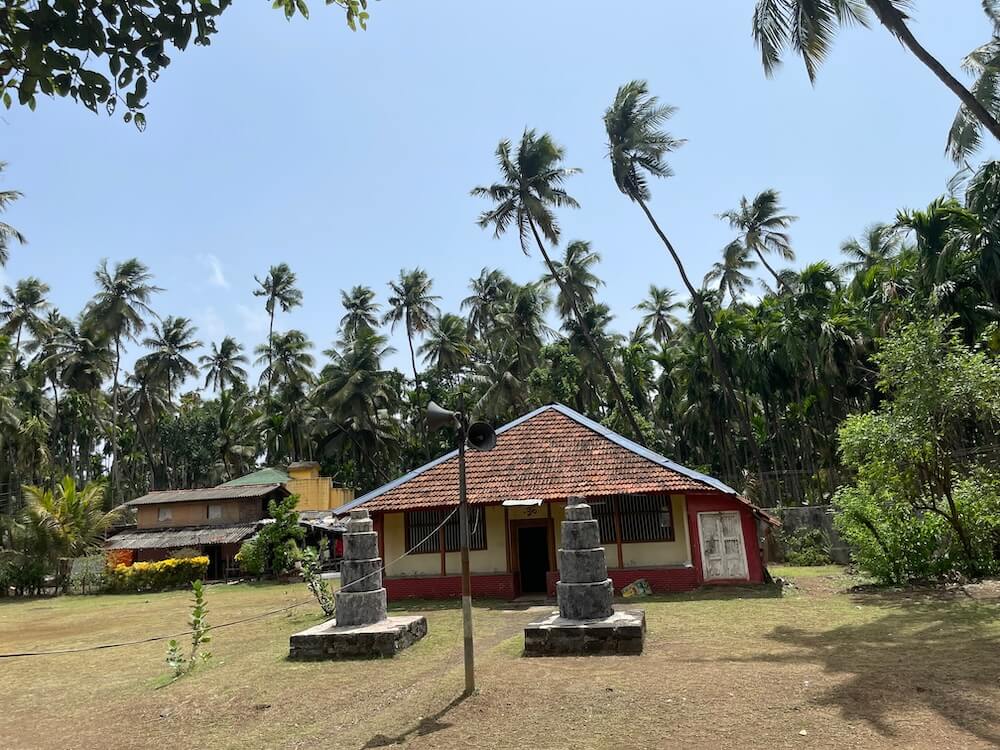
The temple is located adjacent to the main road. The spacious courtyard in front of the temple is surrounded by coconut and areca nut groves, as well as many mango and cashew trees. In front of the Konkani-style tiled temple with its four-sloped roof, there are two platforms on either side, each featuring five-tiered lamp pillars (Deepstambhas) that taper like pyramids. In recent times, these lamp pillars have been plastered with cement and painted. There is a stepped water tank (Pushkarani) built of carved stone in the courtyard.
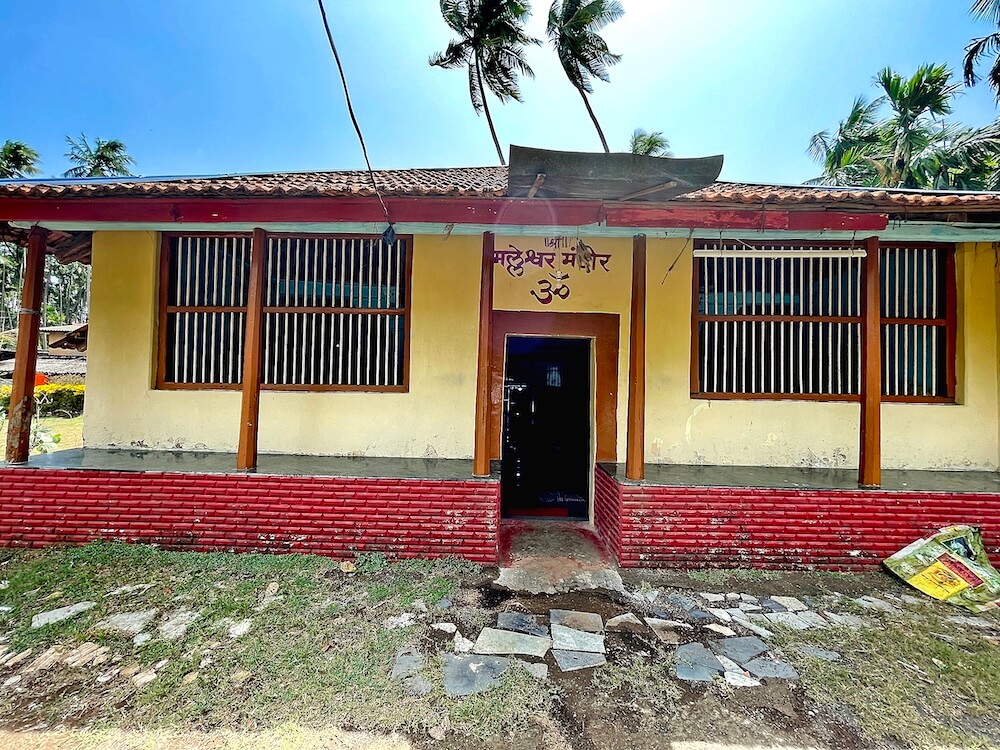
Further ahead is the entrance to the assembly hall (Sabhamandap). On both sides of the entrance, along the front wall of the assembly hall, there are seats for devotees. These seats are tiled. This arrangement of seats on the outer side of the assembly hall is unique. In the seats on both sides of the entrance, there are two circular wooden pillars each, and the front side of the temple’s tiled roof is supported by the beam above them. The beauty of the roof is enhanced by decorative wooden strips attached to the beams. The wooden door frames of the entrance feature vertical fluted carvings.
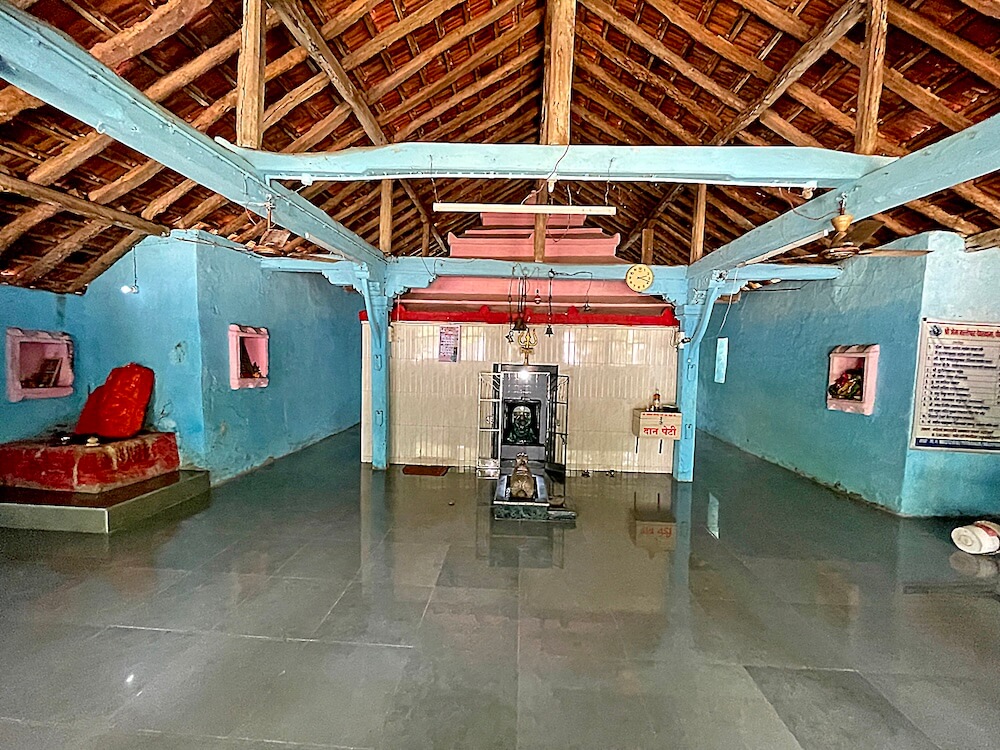
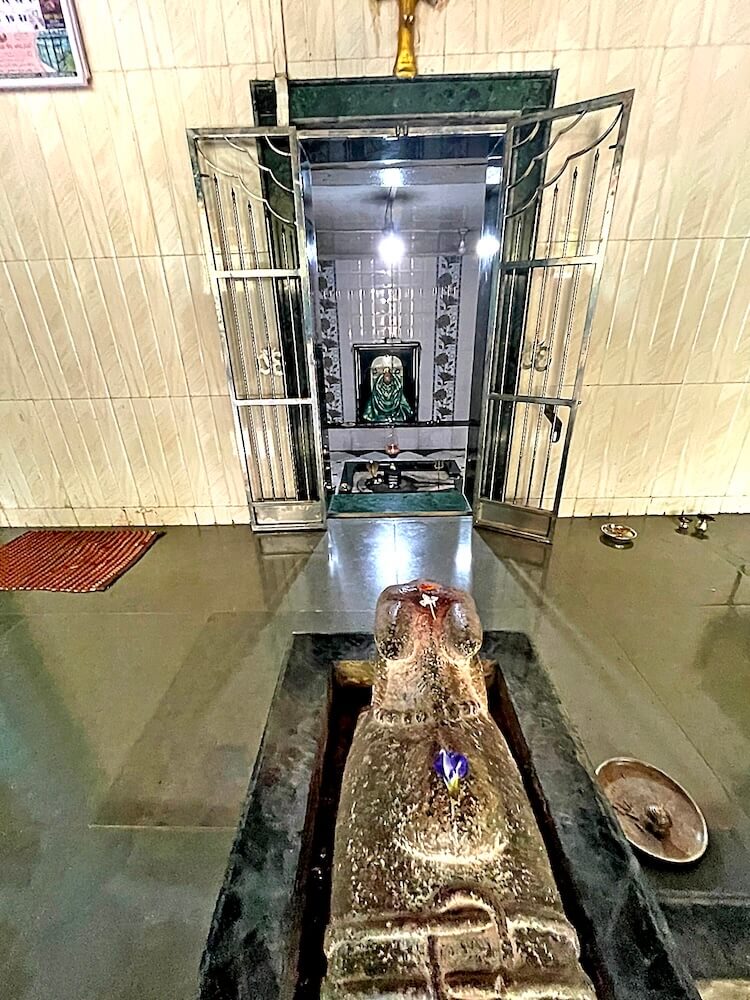
The enclosed assembly hall is ventilated and lit by windows. Inside the assembly hall, there are four decorative square wooden pillars. At the top of these pillars are brackets (Kani) and above them are corbels (Hasta). Along the right wall in the assembly hall, there are idols of Ganpati and a local deity smeared with vermilion. In the assembly hall, in front of the sanctum entrance, there is a black stone idol of Nandi on a pedestal (Vajrapitha). The niches in the walls of the assembly hall contain images and some idols of various deities.
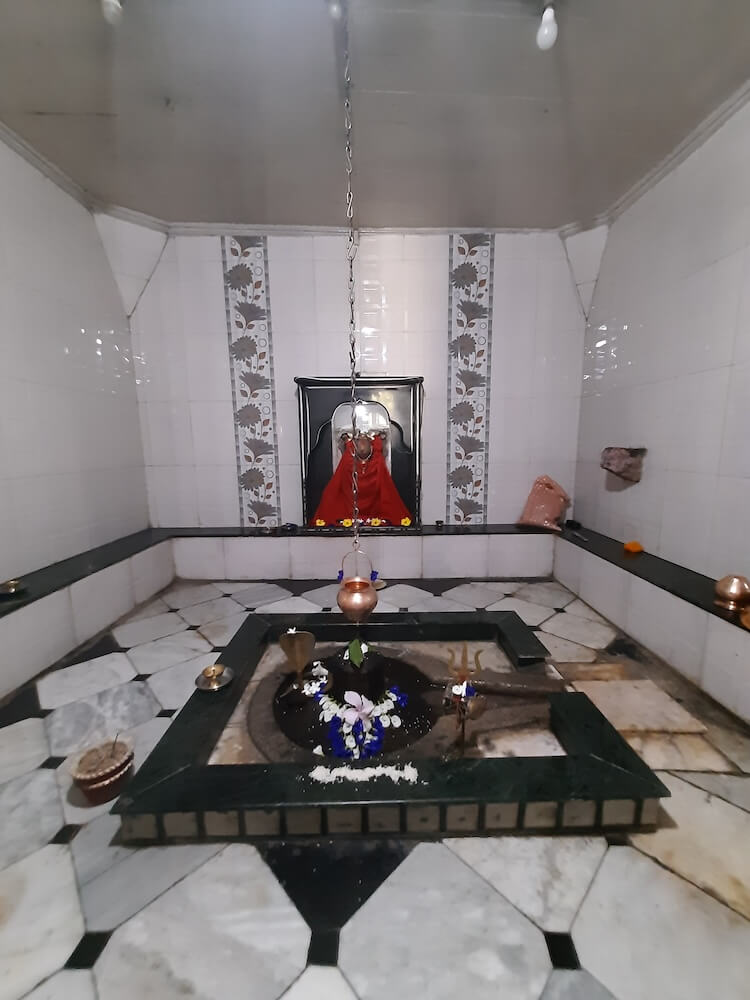
In the sanctum sanctorum, there is a Shiva Linga in the center of the floor. Around the Shiva Linga, there is a marble platform a few inches high. A brass cobra holds a canopy over the Shiva Linga, and a copper vessel for ritual bathing (Abhishek) is hung from the ceiling. In a niche on the back wall of the sanctum, there is an ancient idol of Mother Parvati. There are stone benches (Kakshasanas) built into the walls on all three sides of the sanctum. The roof of the sanctum features a spire (Shikhara) and a finial (Kalash). The sanctum is situated under the roof of the assembly hall. There is a circumambulation path (Pradakshina Marg) around the sanctum.
Mahashivratri is the main annual festival celebrated here with great enthusiasm. During this time, thousands of devotees from the surrounding areas come to seek the blessings of the deity and fulfill their vows. Programs such as Bhajans, Kirtans, and Mahaprasad are organized in the temple during this period. The planning of the worship and rituals at this temple is managed by the local villagers of the area. Shri Malleshwar Temple sees a large influx of devotees on full moon days (Purnima), new moon days (Amavasya), and every Monday. During all the Mondays of the month of Shravan, the temple premises are filled with devotees.
This sacred temple stands as a testament to deep spiritual devotion, ancient architectural grandeur, and rich local cultural traditions.
The sanctum sanctorum houses the divine idol consecrated according to ancient Vedic traditions, surrounded by serene courtyards and traditional temple architecture.
Navratri, Maha Shivratri, Annual Temple Jatra & Deepotsav
Compare and book flights, secure top-rated local hotels near the temple, hire reliable guides, and rent cars instantly.
Extend your pilgrimage by visiting other highly sacred temples located nearby.


Add ₹999 more to unlock FREE SHIPPING!
Your sacred cart is currently empty.
Shop Photo FramesFill in your delivery details below to place your order.
Add comment