
Add ₹999 more to unlock FREE SHIPPING!
Your sacred cart is currently empty.
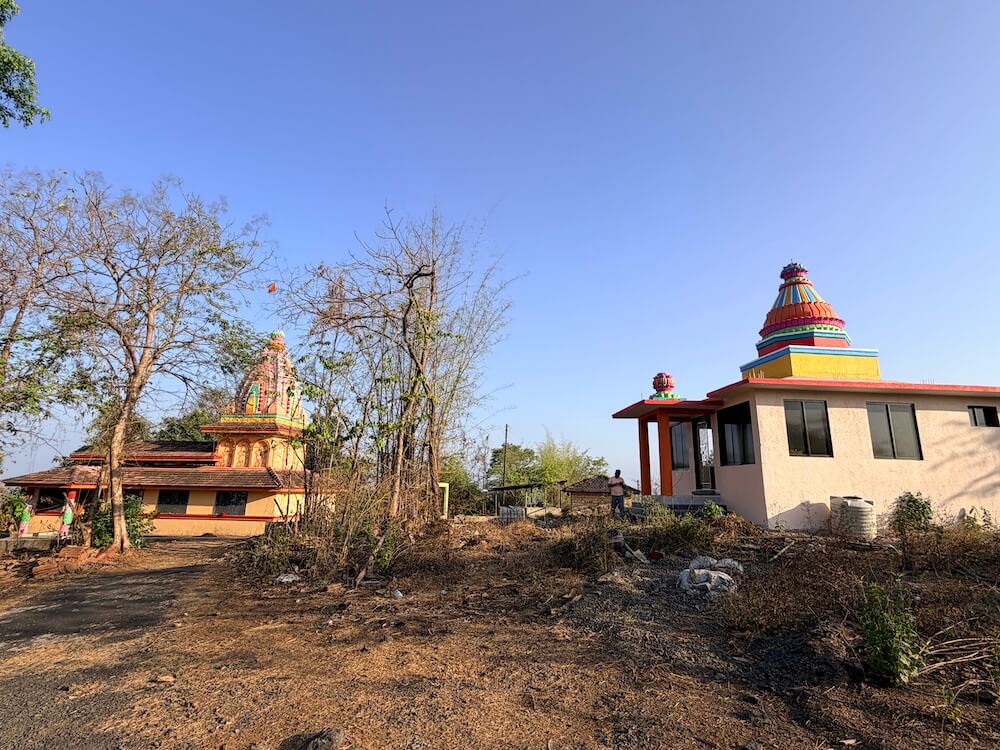
Shop Photo FramesKhandoba is the family deity (Kuldaivat) of the eighteen communities and the twelve Balutedars of Maharashtra. Khandoba is worshipped in the household shrine of every Marathi family. The connection of this deity extends beyond Maharashtra to Mailapur in Andhra Pradesh. From there, the deity reached the villages of Maharashtra via Naldurg, Pali, and Jejuri. The Jain, Lingayat, and merchant communities played a major role in this propagation. In this same tradition, the Khandoba temple at Tilore in Mangaon taluka of Raigad district is very ancient and famous. Situated on a hilltop, this temple is considered an important center of faith. The Khandoba here is known as ‘Prati Jejuri’ (the replica of Jejuri).
It is said that the location of this temple dates back about four to five hundred years. This ancient temple was originally built of stone in the Hemadpanti architectural style. Traces of this can still be seen today in the form of carved and ornate stones lying in the vicinity. In recent times, the temple has been renovated and is now built of cement concrete. A legend is told that Khandoba of Jejuri came and settled here at the request of his devotees. For this very reason, this village is referred to as ‘Prati Jejuri’. On January 25, 1864, the British government granted a sanad (decree) to this temple for the provision of oil lamps, which remains in effect to this day. In the past, there was a settlement of the Teli community and oil mills (teli ghane) near this temple, which is why the village was named ‘Tilore’.
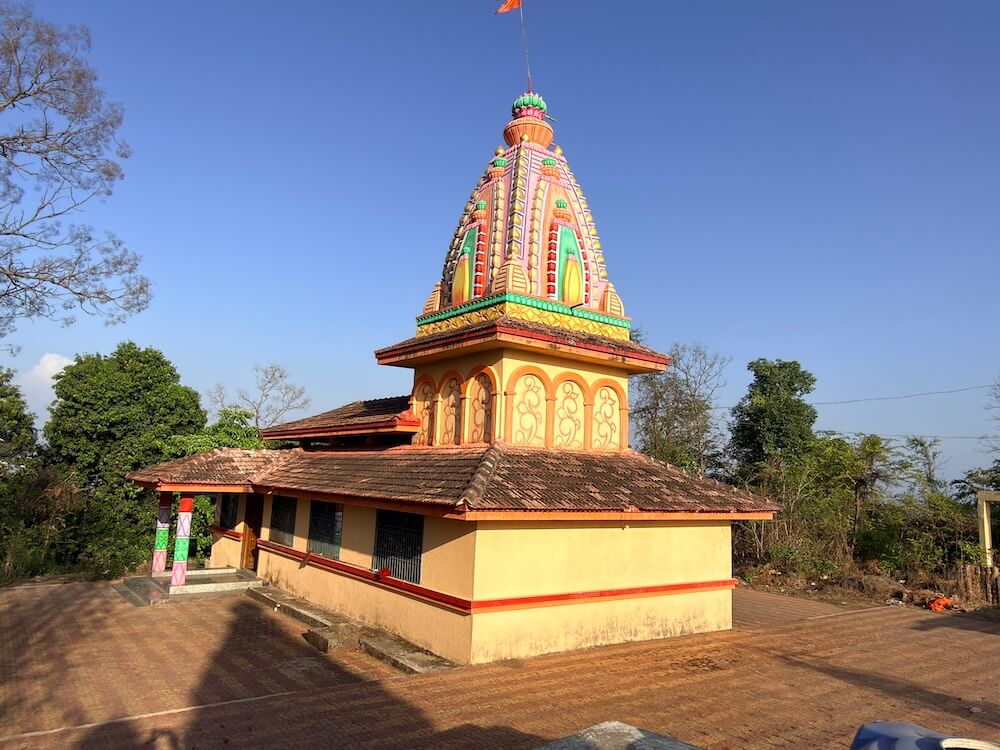
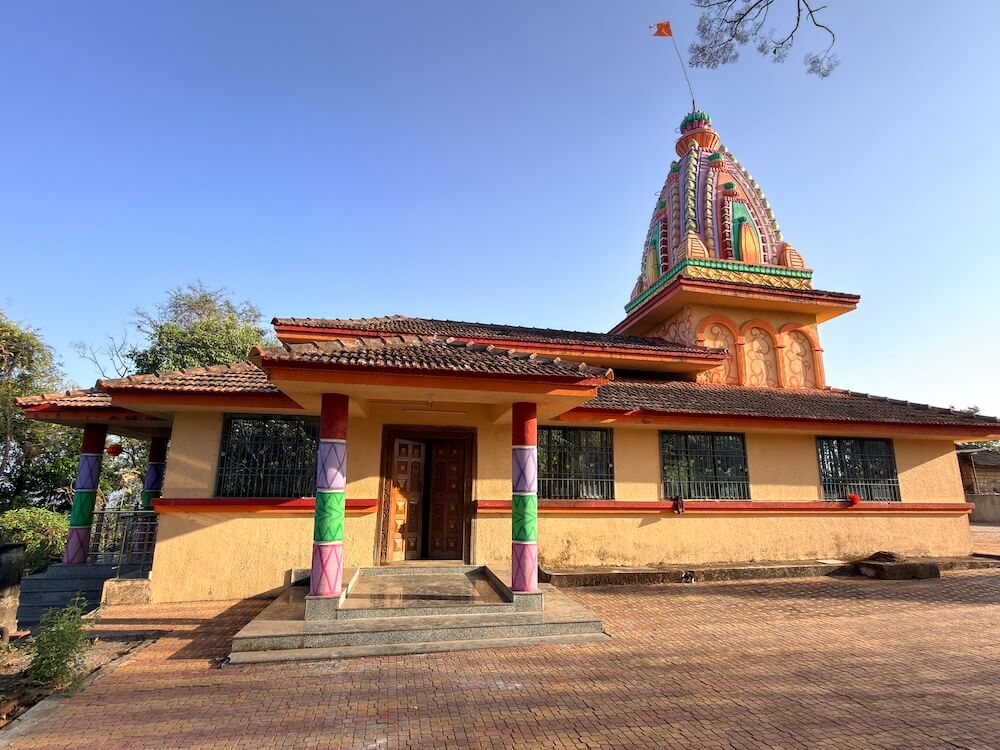
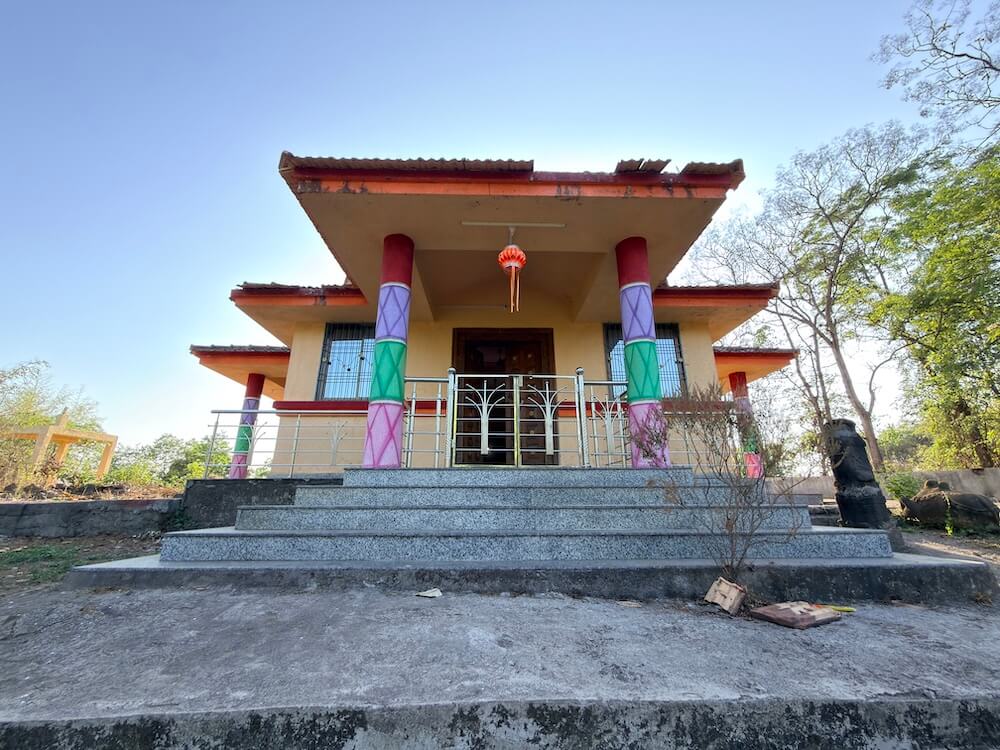
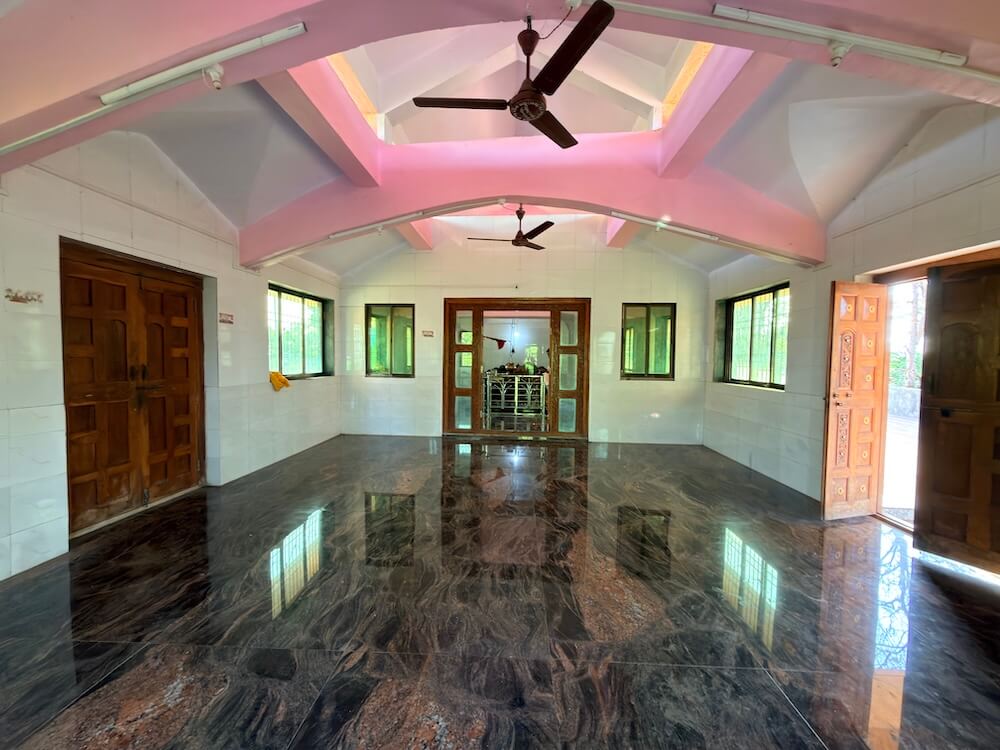
This temple is situated on a high hill about one and a half kilometers from Tilore village near Mangaon. There is parking space in front of the temple. The structure of the temple consists of a Mukhamandapa (entrance hall), Sabhamandapa (main hall), and Garbhagriha (sanctum sanctorum). The temple has three Mukhamandapas and three doors in total, located at the front, left, and right sides. Outside the front Mukhamandapa, there is a Tulsi Vrindavan, a stone lamp stand (samai), and a broken statue of Nandi. This Mukhamandapa has four steps, and its roof is supported by two circular pillars. The door frames of the Sabhamandapa are carved, and the door has ornate wooden shutters. The enclosed Sabhamandapa has windows for light and ventilation. Further ahead is the entrance to the Garbhagriha. Its wooden frame and shutters are beautifully carved. In the center of the Garbhagriha, on the floor, is the Swayambhu (self-manifested) Tandala of Khandoba. A copper Abhishek vessel is hung from the ceiling to pour a continuous stream of water over it. There is a platform around the Tandala, on which a stone lamp stand and a brass tortoise are placed. On the back wall adjacent to the platform, Khandoba’s throne is placed on a Vajrapitha. Brass idols of Khandoba, Mhalsa, Banai, and the Prime Minister are installed on this throne. Beside the throne on the Vajrapitha is a copper Shiva Linga, with a copper serpent holding a canopy over it. An ancient stone idol of Khandoba can also be seen near the wall of the Garbhagriha.
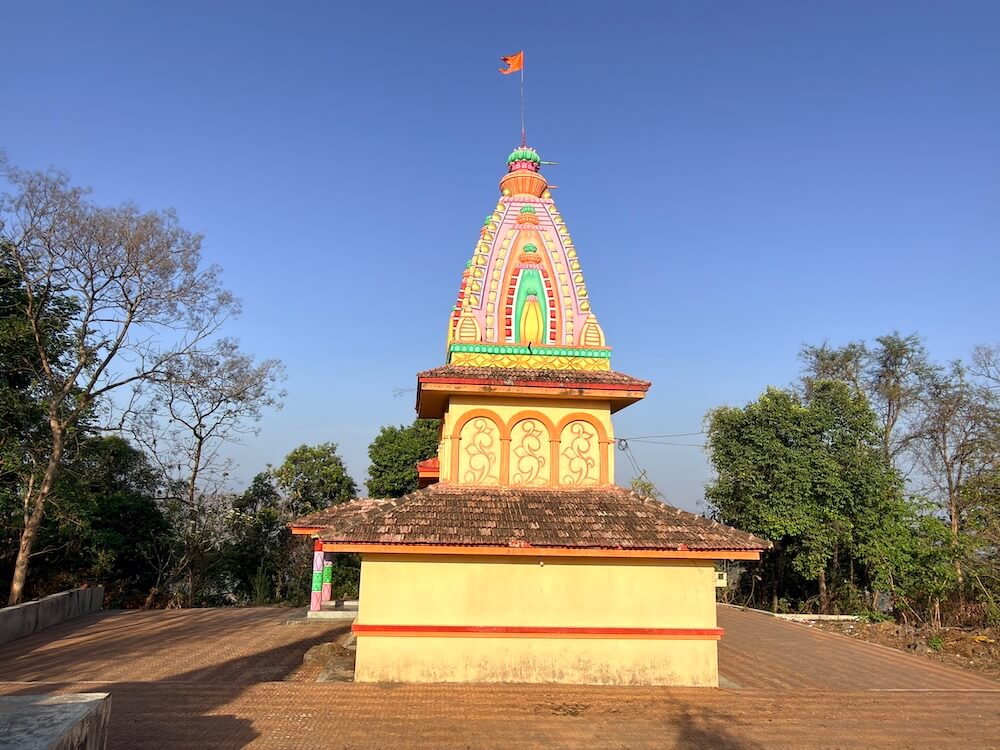
All three Mukhamandapas of the temple have sloping tiled roofs. The Sabhamandapa has a tiled roof divided into two levels, upper and lower. On the roof of the Garbhagriha, there is a two-tiered square Shikhara (spire) in the center. The lower part of the Shikhara has straight walls with arched carvings. The upper, tapering part has three small sub-spires on each side, topped with Amalakas. There are miniature spires at all four corners of the Shikhara and Kumbhathars (pot-shaped moldings) on all four sides. At the top of the Shikhara are two Amalakas stacked one above the other, a Kalash, and a flagstaff. Behind the temple, there is a courtyard paved with paver blocks.
In the courtyard, at the back, there is a tiled temple of Mahishasura Mardini and Bhavani Mata. In front of this temple, there is an open Sabhamandapa with a tin roof supported by iron pillars. The Garbhagriha here is made of stone masonry. On the Vajrapitha, there is an ancient idol of the eight-armed Bhavani Devi and a Nandi nearby. There is also a Shiva temple in the courtyard. In this temple, there is a Shiva Linga on the ground surrounded by a natural anthill. There is a brass serpent and a copper Abhishek vessel over the Linga. Beside the temple is the Bagad Mandapa with a circular rotating Bagad pole. This pole is brought from the village of Nagrol. Devotees make vows to perform the ‘Bagad’ ritual here, which is fulfilled during the festival period. There are some old stone statues and Nandi sculptures in the courtyard. On the slope of the hill to the east, there is a water tank. It is said that the water in it never runs dry.
The main annual festivals here are celebrated on Chaitra Purnima and Champashasthi in the month of Margashirsha. The first invitation for this festival is given to the Jadhav family of the Teli community in Mangaon. During the festival, thousands of devotees from the surrounding areas come for Darshan and to fulfill their vows. Long queues of devotees form to perform the Bagad ritual. Apart from this, festivals like Chaitra Padwa, Navratri, Dussehra, and Diwali are also celebrated with great enthusiasm. During these times, Bhajans, Kirtans, discourses, Jagran-Gondhal, and Mahaprasad are organized. The temple is crowded with devotees on Sundays, Purnima, and Amavasya.
This sacred temple stands as a testament to deep spiritual devotion, ancient architectural grandeur, and rich local cultural traditions.
The sanctum sanctorum houses the divine idol consecrated according to ancient Vedic traditions, surrounded by serene courtyards and traditional temple architecture.
Navratri, Maha Shivratri, Annual Temple Jatra & Deepotsav
Compare and book flights, secure top-rated local hotels near the temple, hire reliable guides, and rent cars instantly.
Extend your pilgrimage by visiting other highly sacred temples located nearby.


Add ₹999 more to unlock FREE SHIPPING!
Your sacred cart is currently empty.
Shop Photo FramesFill in your delivery details below to place your order.
Add comment