
Add ₹999 more to unlock FREE SHIPPING!
Your sacred cart is currently empty.
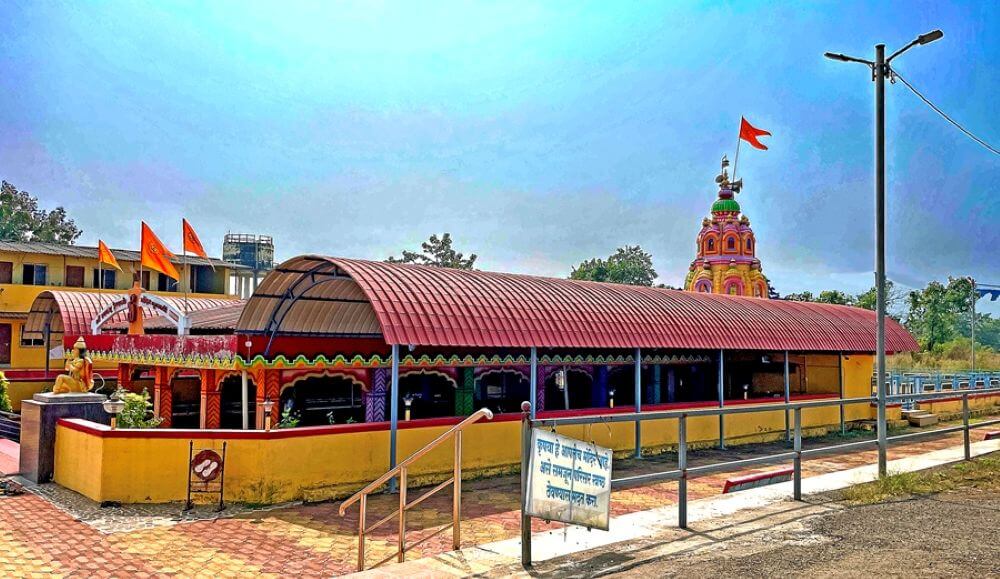
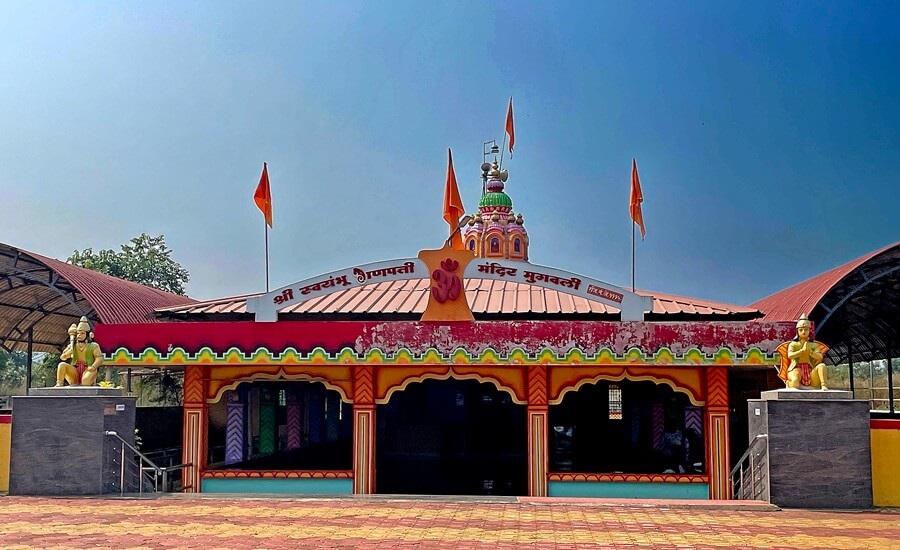
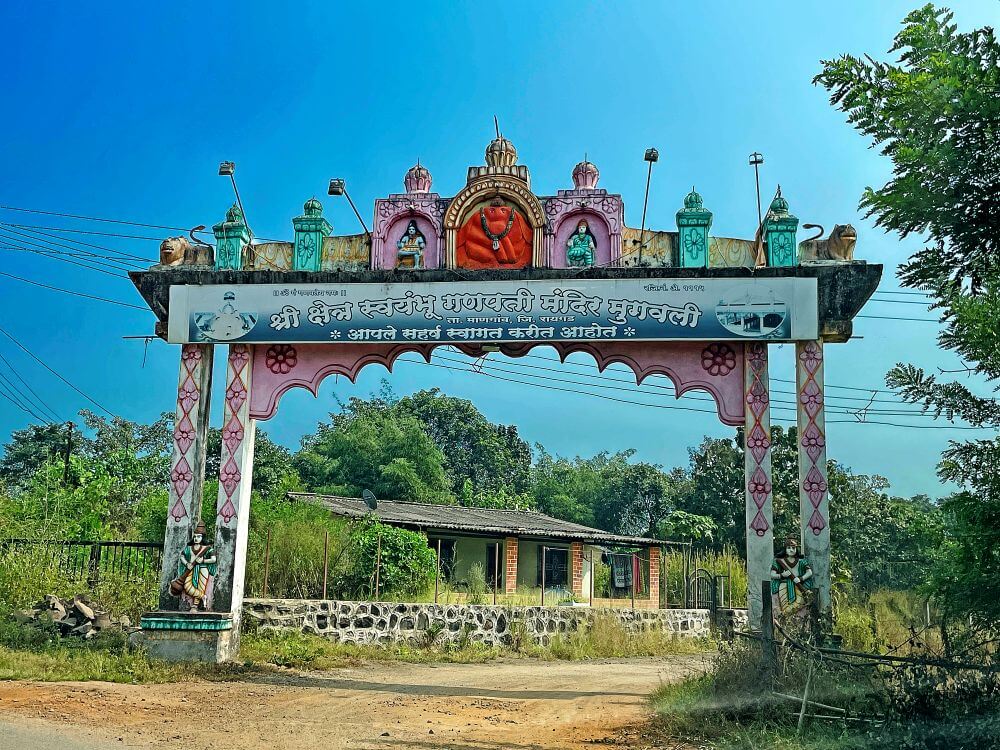
Shop Photo FramesWhile traveling from Mumbai towards Mahad, the village of Mugavali is reached about three kilometers before Mangaon. Located approximately one and a half kilometers inside from the main road, in a nature-rich area, stands a beautiful and spacious temple of the Swayambhu Ganesha. Although Mugavali is a small village, its fame has spread everywhere due to this Swayambhu Ganapati shrine. This Ganesha, a place of faith for many devotees in the district, is included among the Ashtavinayakas of Konkan. Every Tuesday and on Sankashti Chaturthi, there is a large influx of devotees here.
The legend of this temple states that about 325 years ago, the site where the temple currently stands was farmland. While a farmer named Tukaram Abaji Mhaske was ploughing the field, his ploughshare suddenly struck a stone, and blood began to ooze from it. Terrified by this sight, the farmer ran to the village and narrated the incident to the villagers. When the villagers arrived and cleared the soil around the stone, they were blessed with the vision of a Swayambhu Ganesha. Following this, the villagers cleaned the area around the stone and resolved to build a small temple around the Swayambhu Ganesha. Accordingly, a temple was constructed here after a few days. The temple attained its present form after the renovation that took place a few years ago.
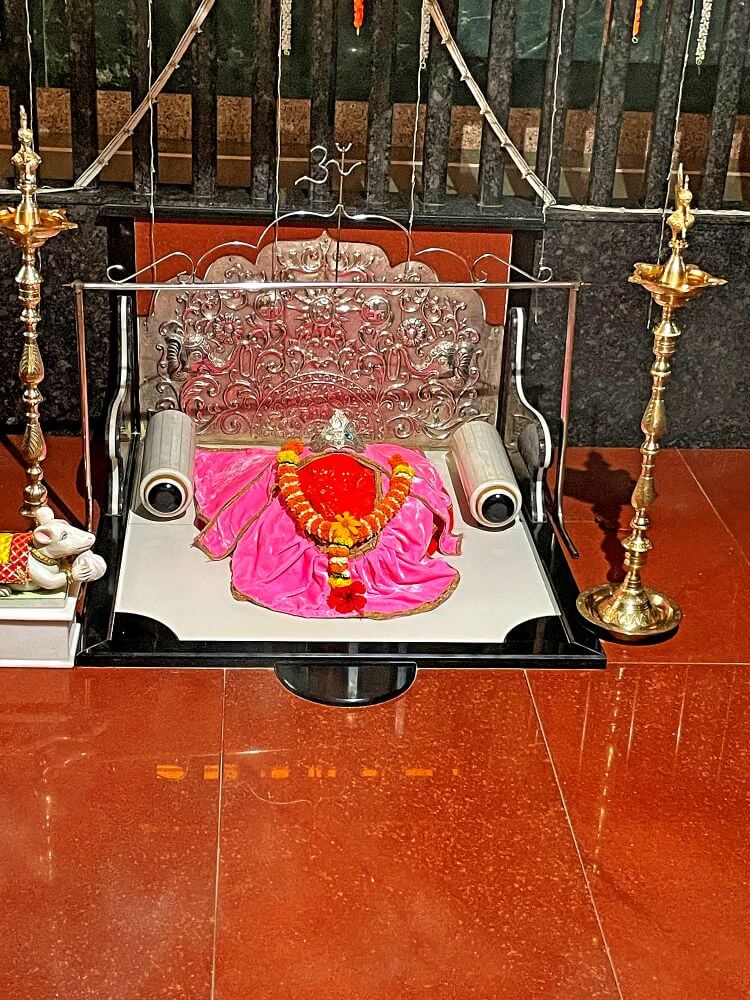
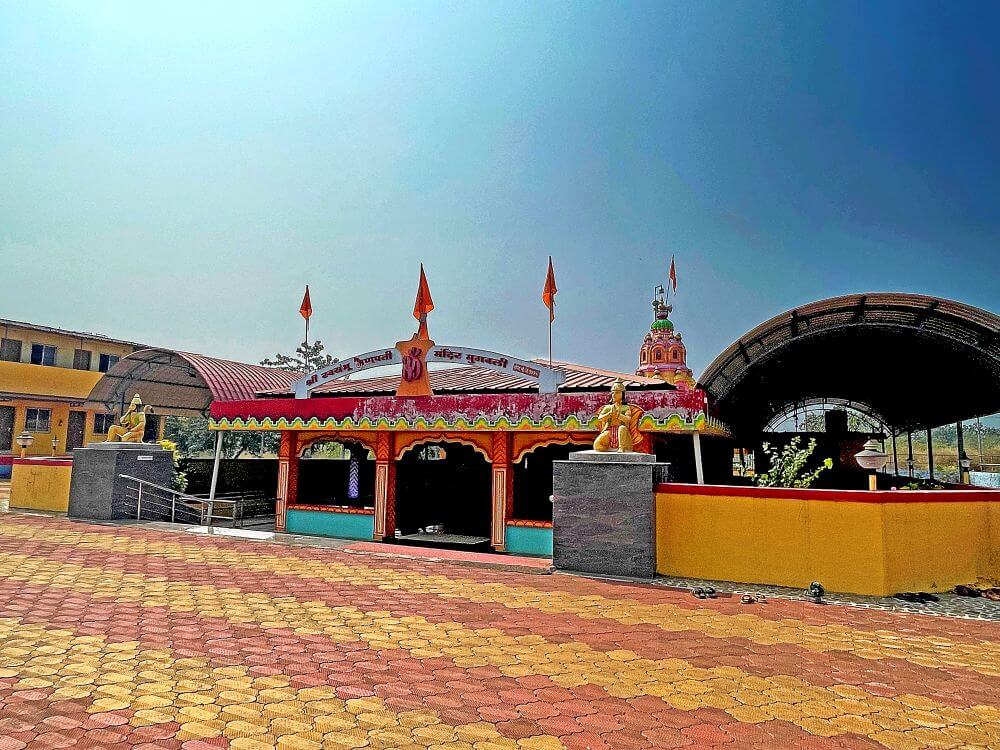
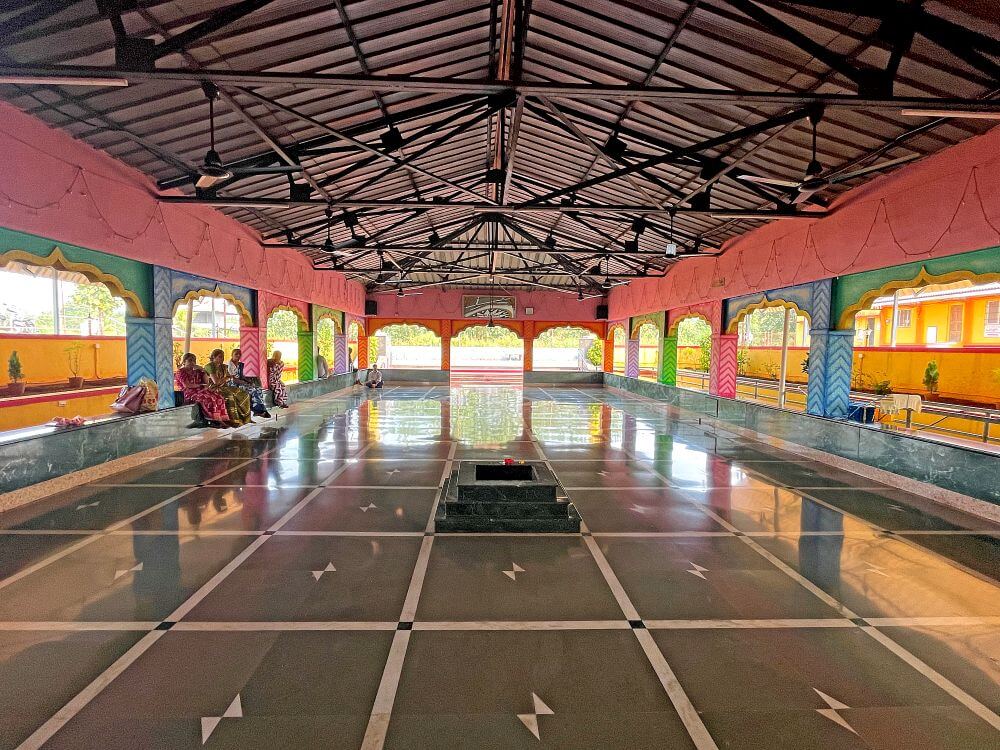
The temple premises are spacious, and the courtyard is paved with paver blocks. The temple structure consists of a assembly hall (Sabhamandap), an intermediate chamber (Antaral), and a sanctum sanctorum (Garbhagriha) located at a lower level from the ground. There are high platforms on both sides of the temple. On the platform to the right, there is a large idol of Lord Hanuman holding a mace, and on the left, there is a large idol of Lord Garuda. After descending a few steps from the courtyard, one enters the spacious assembly hall of the temple through the main entrance. This assembly hall is open in nature and on the sides There are seating arrangements for devotees. One thousand to twelve hundred devotees can sit in this assembly hall at once. The sacrificial fire pit (Homakunda) and the queue for darshan are also arranged here. The assembly hall is covered with roof tiles. From here, one enters the Antarala (vestibule). In the Antarala, there is a deep, square-shaped section. In its center is the seat of Lord Ganesha. This idol is in its natural state on a stone measuring two feet in length and width that emerged from the ground. The head, the trunk curved upwards, and the belly are clearly visible. This Ganesha idol is seated on a throne with its legs hanging down. It is said that this idol is 325 years old. Since the temple faces east, the morning sun rays fall directly on the idol for a few days of the year. This Kiranotsav is celebrated here with great enthusiasm. There is a spire (Shikhara) above the sanctum sanctorum, and in its niches are idols of many deities, including the Ashtavinayaka.
Devotees and villagers believe that this awakened and self-manifested Ganesha fulfills all prayers. Every year, a grand fair is held here on Maghi Ganesha Jayanti. At this Thousands of devotees attend the festival here. During this time, rangoli is drawn in front of every house and lights are decorated. The festival begins in the morning with the Ganesh Mahapuja. The celebration of Ganesh Janmadina takes place at noon, and the Mahanivedya is offered at midnight.
The midnight Maha-Naivedya is considered a special ceremony here. It is said to have begun in the year 1984. There is a tradition of preparing this Maha-Naivedya in a state of ritual purity. It is served before Bappa on a banana leaf. Around twelve o’clock at night, Bappa is invited to partake in the meal. After that, everyone leaves the temple. It is the firm belief of the devotees that when the temple doors are opened again after half an hour, the mound of rice in the Naivedya is found broken, the laddus are crumbled, a portion of the modaks has been eaten, and the other items on the banana leaf appear disturbed. Devotees queue up until four o’clock in the morning to catch a glimpse of this Maha-Naivedya, which is believed to have been accepted by Bappa. A Bhakta Niwas facility has been provided for devotees within the temple premises. Apart from this, many options for accommodation and breakfast are available in nearby Mangaon.
This sacred temple stands as a testament to deep spiritual devotion, ancient architectural grandeur, and rich local cultural traditions.
The sanctum sanctorum houses the divine idol consecrated according to ancient Vedic traditions, surrounded by serene courtyards and traditional temple architecture.
Navratri, Maha Shivratri, Annual Temple Jatra & Deepotsav
Compare and book flights, secure top-rated local hotels near the temple, hire reliable guides, and rent cars instantly.
Extend your pilgrimage by visiting other highly sacred temples located nearby.


Add ₹999 more to unlock FREE SHIPPING!
Your sacred cart is currently empty.
Shop Photo FramesFill in your delivery details below to place your order.
Add comment