
Add ₹999 more to unlock FREE SHIPPING!
Your sacred cart is currently empty.
Shop Photo FramesMahad city, blessed with the historical legacy of Raigad Fort—the capital of Hindavi Swarajya—Pachad village, home to the Samadhi of Rajmata Jijau, and the historic Chavdar Tale, is situated on the banks of the Savitri River. Vireshwar Maharaj is the presiding deity of this city, which was known in ancient times as a major trading port in the Bankot creek. Located in the heart of Mahad, this temple is not only the village deity of the surrounding region but also a place of deep faith for thousands of devotees in the district.
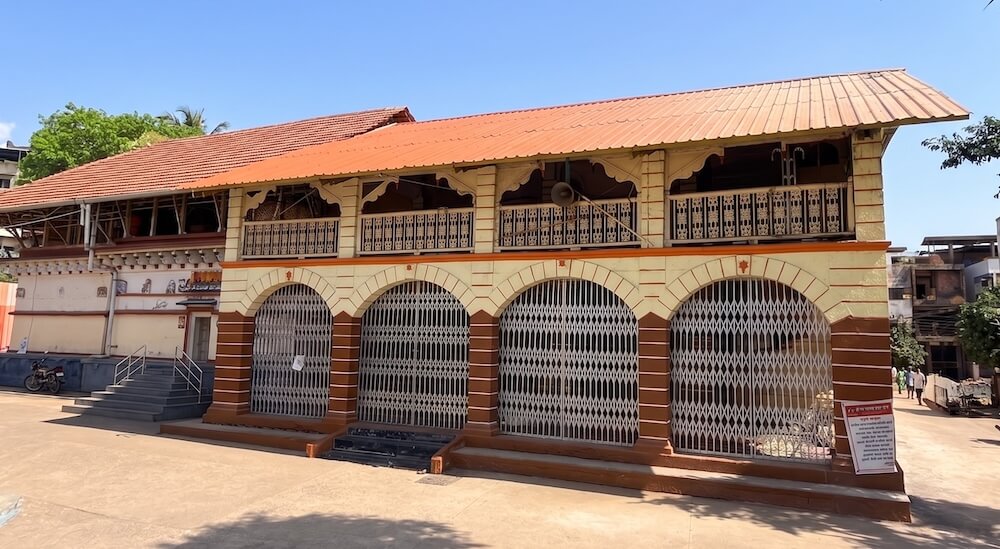
The antiquity of Mahad is proven by the Gandharpale caves dating from the first to the third century. The excavation of these caves began during the reign of the Kumbhoj Buddhist King Vishnu Pulit. According to historical records, Mahad is mentioned as an important trading port as early as 225 BCE. The old name of this city was ‘Mahikavati’. The name ‘Mahad’ is believed to have been derived from the Pali word ‘Maha Hat’, meaning a large marketplace. During the thirteenth century, under the Yadavas of Devagiri, the trade here held great significance. The Portuguese referred to this city as a ‘wheat market’. This was because wheat, cloth, and jewelry from Pune, Satara, Sangli, and Kolhapur were brought here via Mahabaleshwar and sent elsewhere by sea. During the time of Chhatrapati Shivaji Maharaj, the Maratha rule was established here after Raigad Fort. The Maharaj’s administrative work was conducted from Mahad, and according to some historians, this city was even considered as a capital. According to the book ‘Raigadchi Jeevangatha’ by Sha. Vi. Avalaskar, the Maharaj resided here many times between 1668 and 1669 and even built a Wada here. This seat of Vireshwar Mahadeva has existed since the pre-Shivaji era, and the Maharaj himself used to come here for Darshan and to listen to Kirtans. Due to this historical connection, a special seat and bolster are still kept in the temple for Chhatrapati Shivaji Maharaj during the Kirtan festival. It was Shivraya himself who appointed the Guravs from Dhopeshwar near Rajapur as priests of this temple. He established a rule that half the priests would serve Vireshwar and half would serve the Jakhmata temple, and they would exchange their duties on the night of Mahashivratri, a tradition that is still followed today. It was a common belief among the people that if anyone stood under the bell in this temple and lied, the deity would punish them. A famous story is told of a ‘Tail Divya’ (ordeal by boiling oil) performed in this very temple to prove one’s truthfulness. When there was a suspicion of embezzlement in the making of the 32-mon gold throne on Raigad, Ramji Prabhu Chitre proved his innocence by retrieving a gold coin from a cauldron of boiling oil in front of Vireshwar. Vireshwar Temple houses a Swayambhu (self-manifested) Shiva Linga. The current large temple structure was built during the time of Shrimant Nanasaheb Peshwa by his Subhedar and Chhatrapati Shahu Maharaj’s Sardar, Yashwantrao Potnis. Yashwantrao Potnis was the nephew of the brother of Murarbaji Deshpande, a valiant warrior of Swarajya. It is estimated that the temple was constructed around 1768. The temple is built on a plinth about three and a half feet high. The stones required for the temple were extracted from the quarry in front, which was later converted into a large pond.
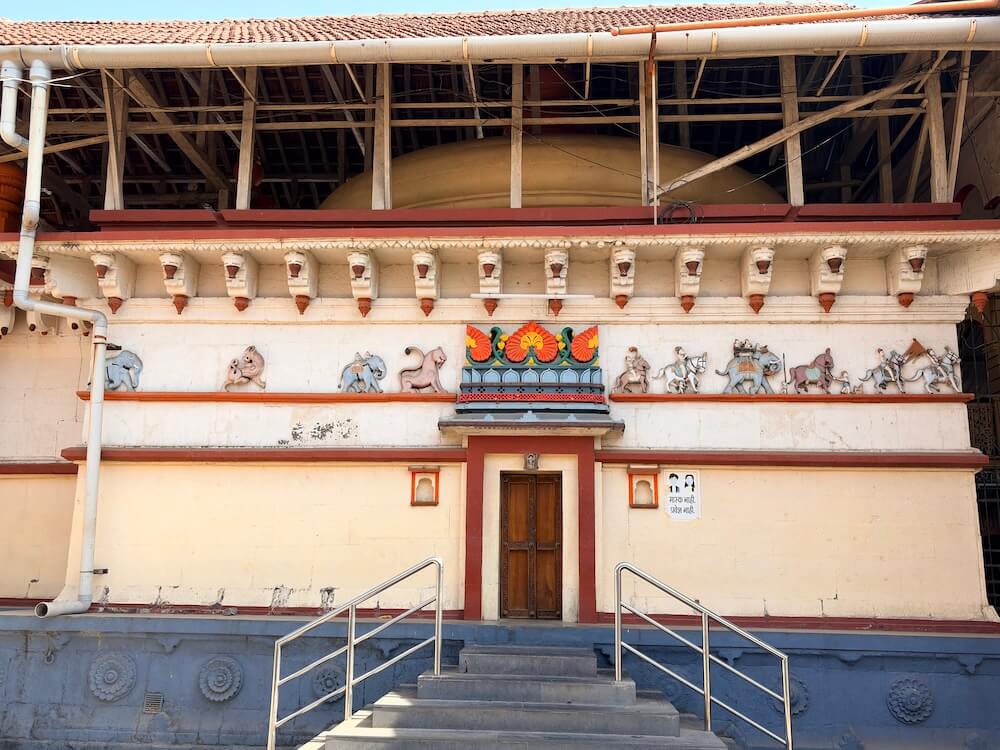
The stone architecture of this temple, situated on the banks of the pond, is highly eye-catching. The temple layout is divided into the Nandi Mandap, Sabha Mandap, Antaral, and Garbhagriha. The Nandi Mandap features a large Nandi carved from a single stone, which appears lifelike due to its beautiful coloring. Between the Nandi Mandap and the Garbhagriha is a two-story Sabha Mandap. The intricate craftsmanship on the stone pillars is further highlighted by the coloring. Various sculptures are also carved on the outer walls of the Sabha Mandap.
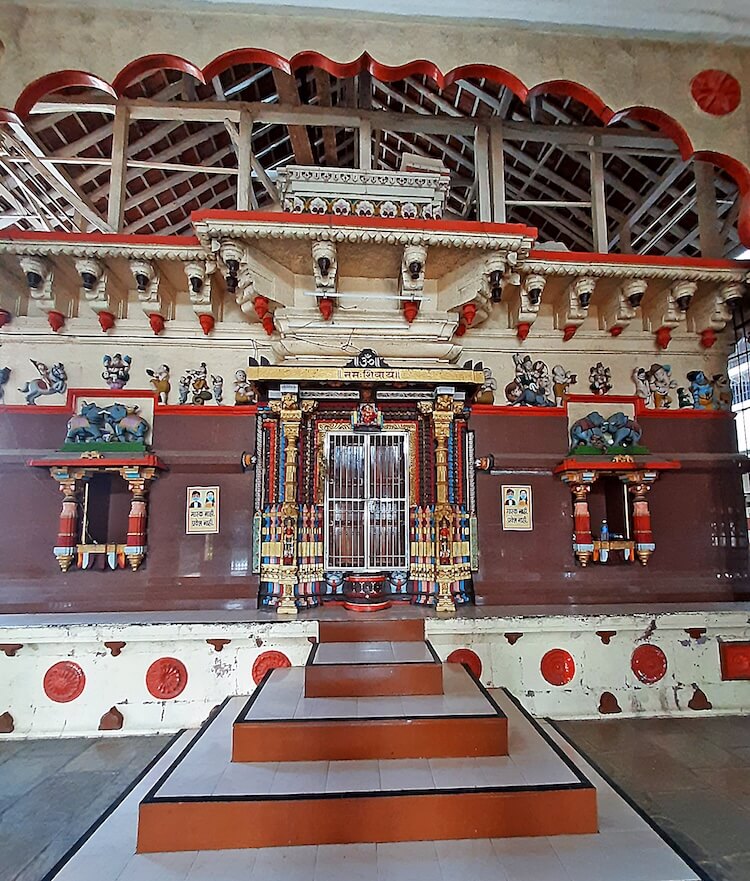
One of the sculptures depicts a procession passing on an elephant. It is believed that the main person sitting on the elephant is Sardar Yashwantrao Potnis, who built the temple. There are four steps to enter the main temple from the Sabha Mandap.
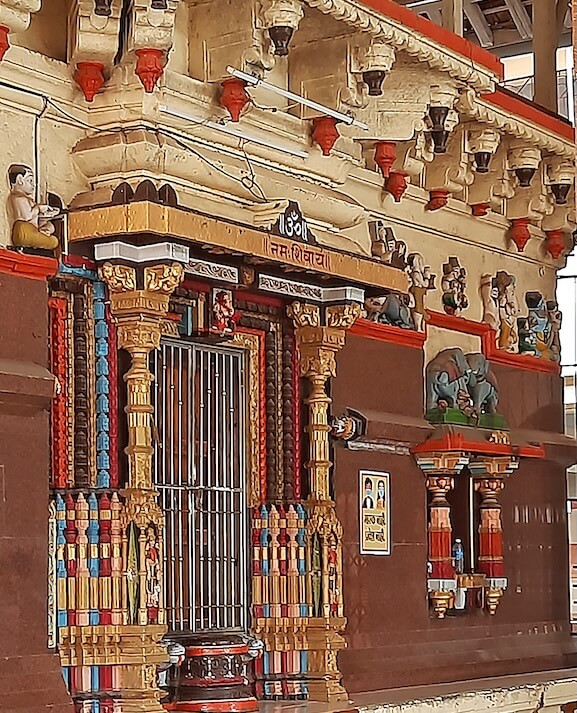
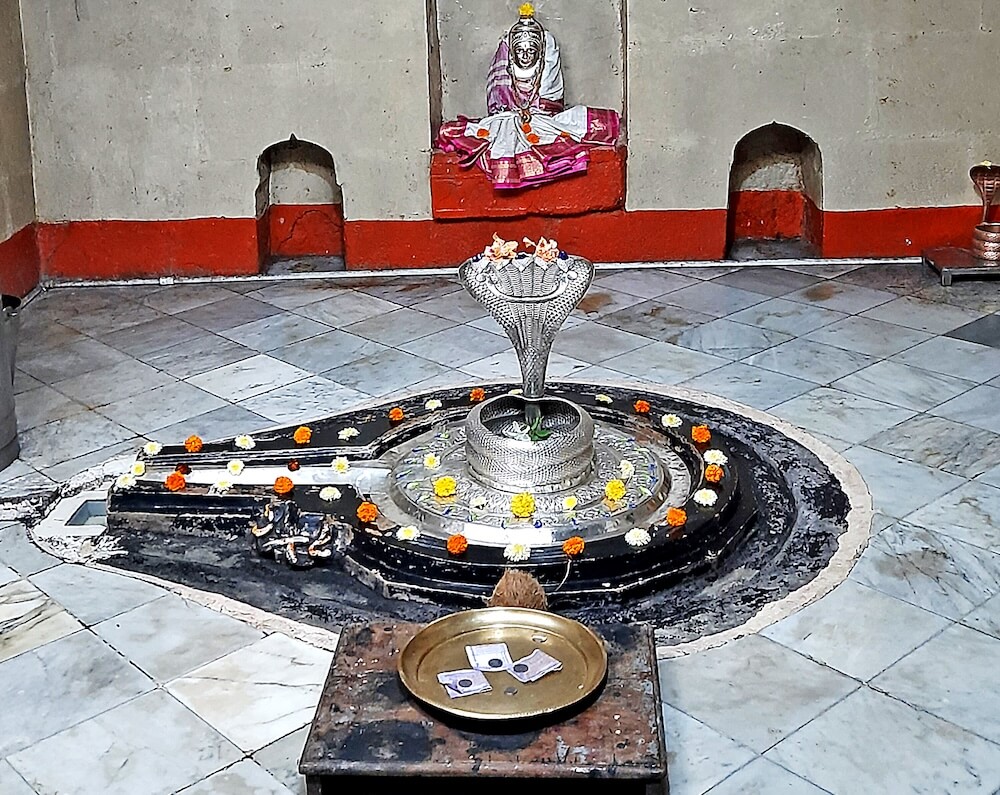
The facade wall features sculptures of various deities and elephant carvings on two niches. The entrance to the Garbhagriha has carvings of Dwarapalas and Lord Ganapati. In the center of the Garbhagriha is a stone Shiva Linga. During festivals, a silver mask of Vireshwar is placed upon it. This mask features a turban, a crescent moon, and Sheshnag, with large eyes and a mustache depicted on the face of Vireshwar. Above the Garbhagriha is a tall Shikhara that showcases the architectural characteristics of that era.
Various religious programs are celebrated in this temple throughout the year. Mahashivratri is the biggest festival here. Devotees believe that on the day after Mahashivratri, Vireshwar himself partakes in the Naivedya. The largest festival in this area is the Chhabina Mahotsav, which takes place after Shivratri.
This festival begins on the second or third day of the bright fortnight of Phalguna. At this time, palanquins of various deities from surrounding villages, such as Jholai Devi, Bahirinath, Ravalnath, Jakhmata, and Koteshwari Mata, come to visit Vireshwar. This festival concludes with the Kirtan of Lalita. Devotees can have Darshan here daily from 7:00 AM to 1:00 PM and from 4:00 PM to 9:00 PM.
This sacred temple stands as a testament to deep spiritual devotion, ancient architectural grandeur, and rich local cultural traditions.
The sanctum sanctorum houses the divine idol consecrated according to ancient Vedic traditions, surrounded by serene courtyards and traditional temple architecture.
Navratri, Maha Shivratri, Annual Temple Jatra & Deepotsav
Compare and book flights, secure top-rated local hotels near the temple, hire reliable guides, and rent cars instantly.
Extend your pilgrimage by visiting other highly sacred temples located nearby.


Add ₹999 more to unlock FREE SHIPPING!
Your sacred cart is currently empty.
Shop Photo FramesFill in your delivery details below to place your order.
Add comment