
Add ₹999 more to unlock FREE SHIPPING!
Your sacred cart is currently empty.
Shop Photo FramesIt is believed that Bhimadevi is a form of Shakambhari Devi. When demons wreaked havoc in the Kashmir region, the Devi took the powerful avatar of Bhimadevi to liberate Her devotees. This Devi, primarily worshipped in North India, has more temples in the states of Haryana and Rajasthan. The Bhimadevi temple built in the tenth century in Chandigarh, Haryana, is particularly famous. Similarly, the Bhimadevi Peeth temple located in the forest near Fhalani village in Mangaon taluka of Raigad district is also renowned.
This temple was completed in two thousand three, and in the same year, the idol was consecrated and opened to devotees. The legend of this temple is that Bhimadevi appeared in a dream to the renunciate Narendra Devji Maharaj from Rajasthan, telling him that She was in the forests of Raigad in Maharashtra and that Her temple should be built there. Following the Devi’s command, Narendra Dev reached the forest of Fhalani village. Upon excavating the spot seen in the dream, the Devi’s idol was found in the ground. He built a temple at the place where the idol was found and established Bhimadevi Peeth.
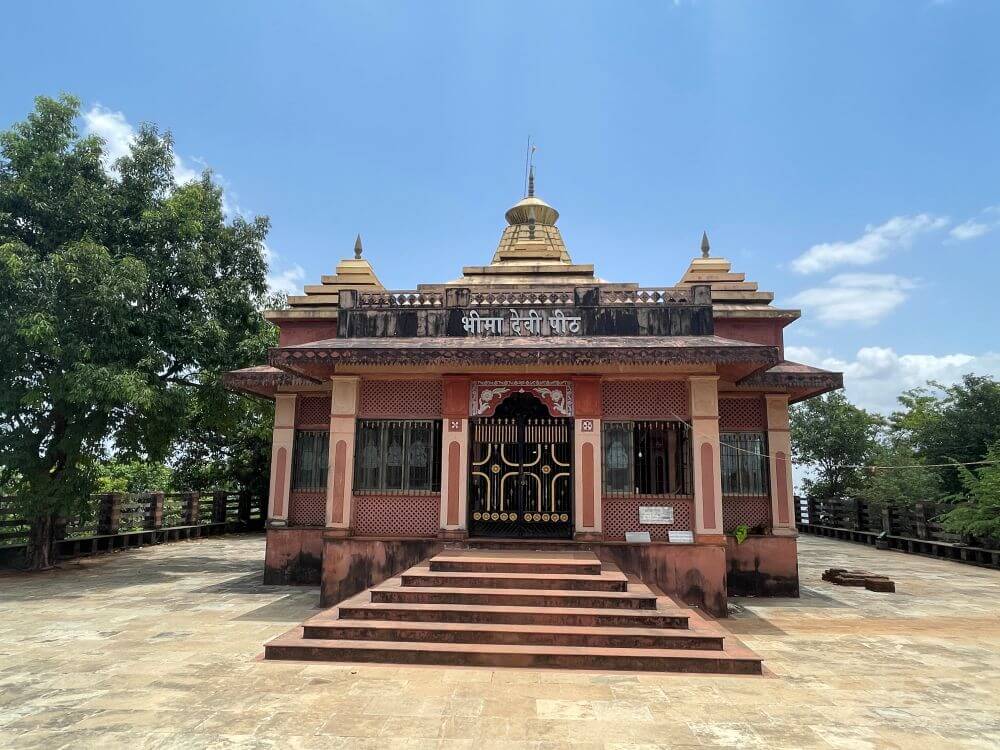
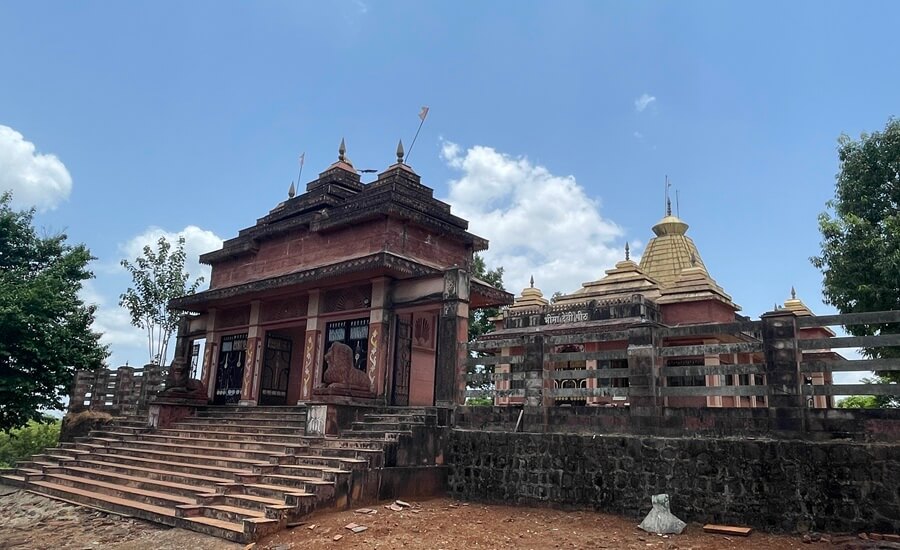
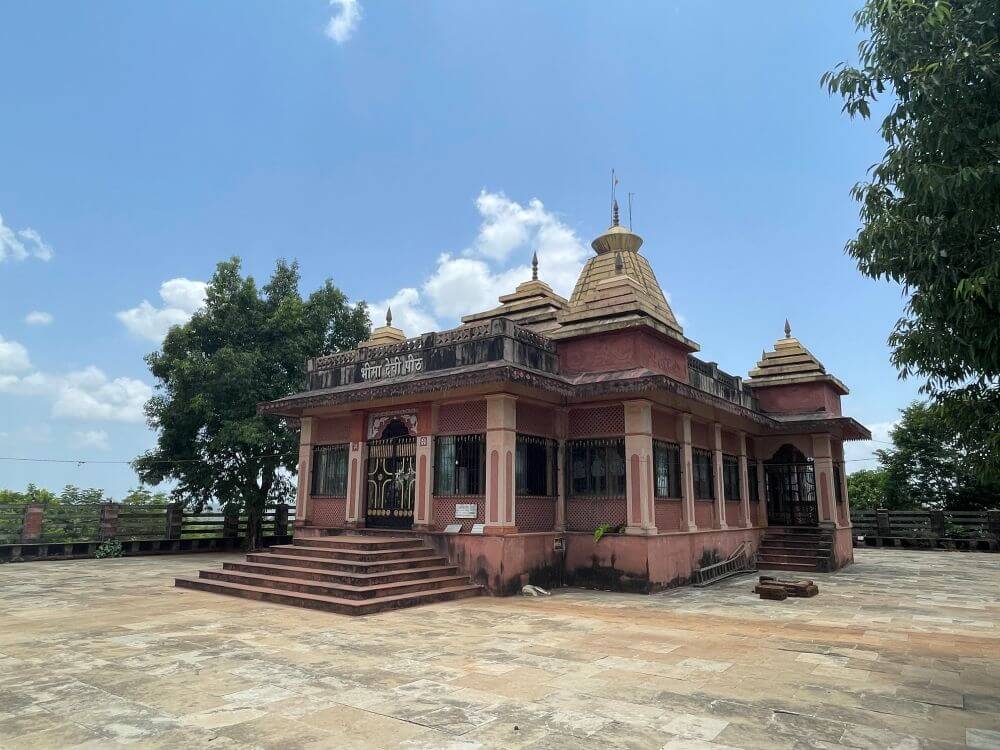
Bhimadevi Peeth is located on the Nandvi-Ambet road in Mangaon taluka. There is a spacious parking area in front of the temple. Adjacent to the parking lot is the temple’s strong fortification. There are a total of three entrances in the fortification. To the left of the main entrance in the center is a Maruti temple, and next to it is a sub-entrance. To the right of the main entrance is a Ganapati temple, and next to it is another sub-entrance. There are ten steps to enter the temple courtyard. On both sides of the steps are platforms with stone tiger sculptures. The roof of the main entrance and the adjacent temples is flat, and on it are three pyramid-like, tapering, stepped square shikhara, topped with kalasha and dhvajapataka (flags). Upon entering through the main entrance, one steps into the temple’s paved courtyard.
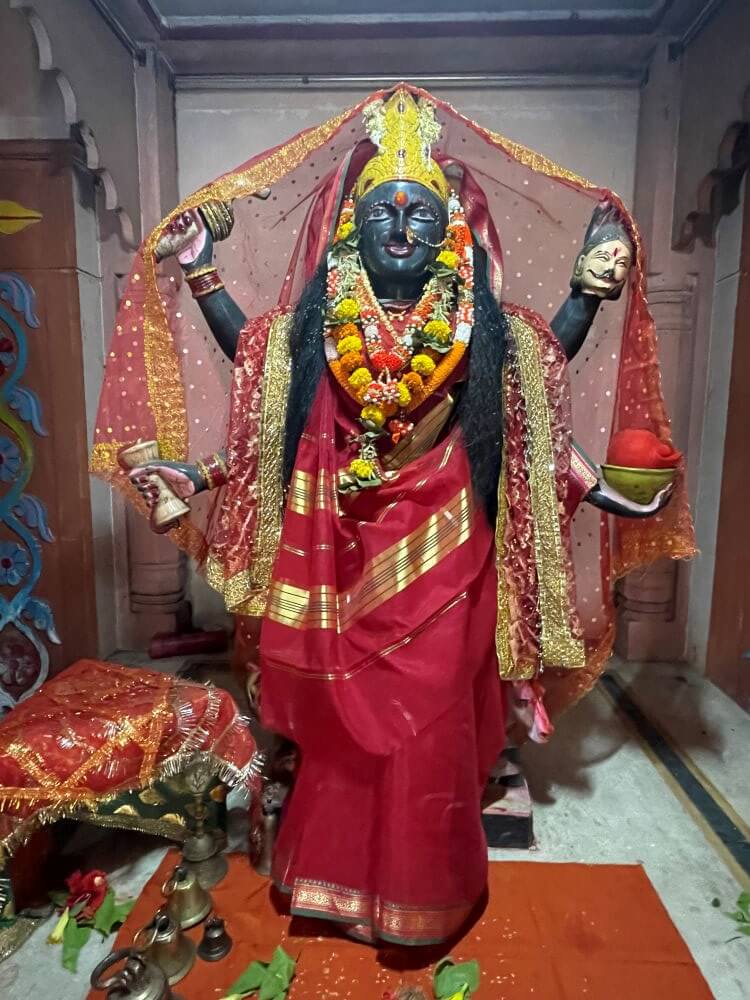
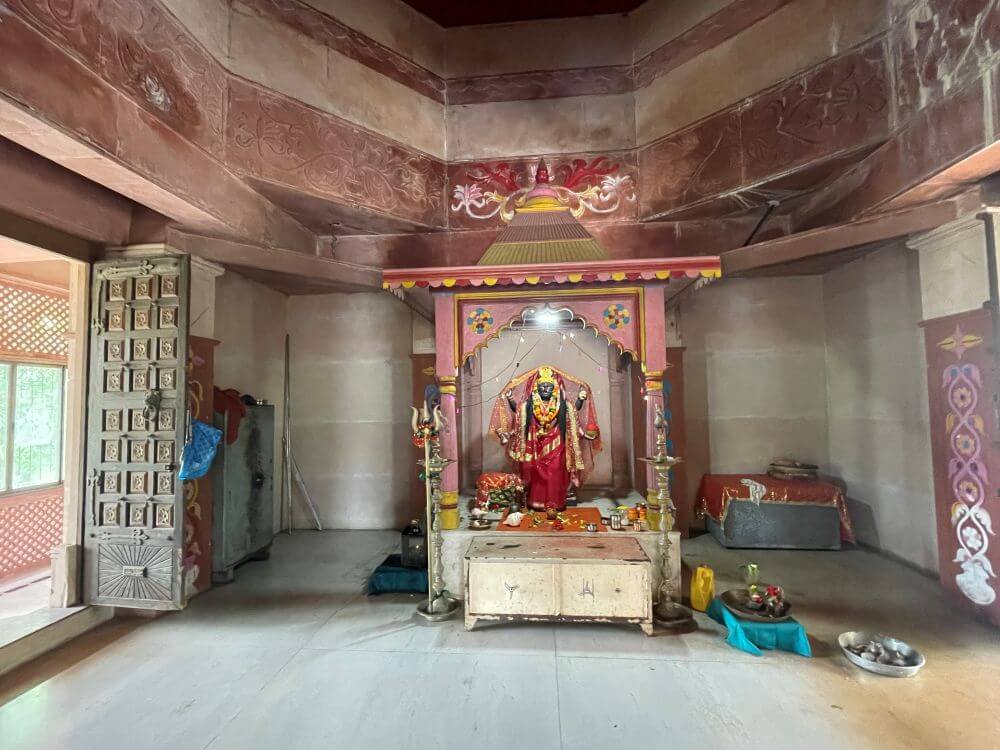
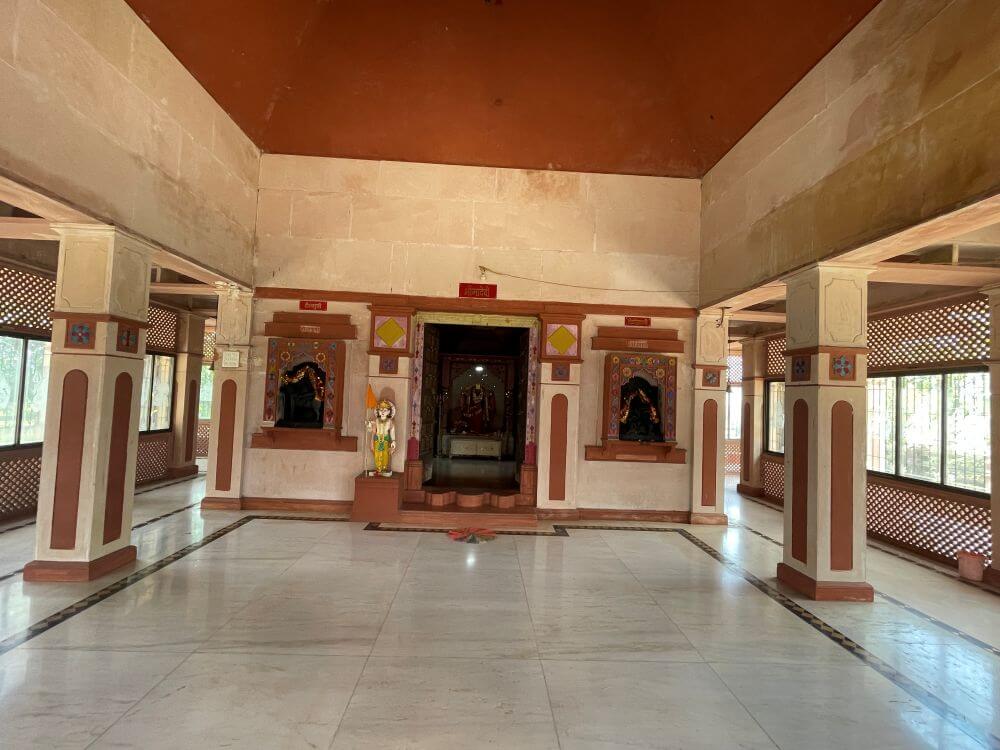
Further ahead is an enclosed sabhamandapa (assembly hall). The sabhamandapa has a total of five entrances: one in the front and two each on the left and right sides. Being elevated from the courtyard, the front entrance of the sabhamandapa has steps designed to be ascended from three sides. In the sabhamandapa, in front of each entrance, there are two square, intricately carved pillars. The enclosed sabhamandapa has ventilators for air and light. Further ahead is the entrance to the garbhagriha (sanctum sanctorum). To the left of the entrance is a marble dwarapala (doorkeeper) sculpture. The garbhagriha has a total of three doors: one in the front, one on the left, and one on the right. Inside the garbhagriha, in a makara (archway) on a vajrapitha (diamond throne), is a four-armed black stone idol of Bhimadevi. In the Devi’s hands are a chandrahāsa khadga (crescent sword), a narāmunda (human skull), a damaru (drum), and a shankha (conch shell). The Devi wears an intricately carved crown on Her head and various ornaments on Her body. A trishula (trident) is placed next to the idol.
There is a pradakshina marga (circumambulatory path) around the garbhagriha. On the outer walls of the garbhagriha along the pradakshina marga, there are nine devakoshthakas (niches for deities). These devakoshthakas contain black stone idols of Shailaputri, Brahmacharini, Chandraghanta, Kushmanda, Skandamata, Katyayani, Kalaratri, Mahagauri, and Siddhidatri. Both sides of all devakoshthakas are adorned with creeper motifs.
The temple roof has eight shikhara. Four of these are at the four corners, and two are above the right and left side entrances, making a total of six miniature shikhara. These shikhara are square like pyramids, and their stupikas are topped with kalasha. The shikhara on the roof of the sabhamandapa is three-tiered, square, and its stupika is topped with a kalasha. The shikhara on the roof of the garbhagriha is tall, square, tapering upwards, with a horizontal ridge pattern, and topped with an amalaka and a kalasha.
The serene temple is surrounded by lush, dense forest. The two main annual festivals celebrated in the temple are Chaitra Navaratri and Sharadiya Navaratri. During these times, hundreds of devotees from the district come here for darshan of the Devi and to fulfill their vows. During each Navaratri, programs such as bhajan, kirtan, music, and pravachan are organized in the temple for ten days.
This sacred temple stands as a testament to deep spiritual devotion, ancient architectural grandeur, and rich local cultural traditions.
The sanctum sanctorum houses the divine idol consecrated according to ancient Vedic traditions, surrounded by serene courtyards and traditional temple architecture.
Navratri, Maha Shivratri, Annual Temple Jatra & Deepotsav
Compare and book flights, secure top-rated local hotels near the temple, hire reliable guides, and rent cars instantly.
Extend your pilgrimage by visiting other highly sacred temples located nearby.


Add ₹999 more to unlock FREE SHIPPING!
Your sacred cart is currently empty.
Shop Photo FramesFill in your delivery details below to place your order.
Add comment