
Add ₹999 more to unlock FREE SHIPPING!
Your sacred cart is currently empty.
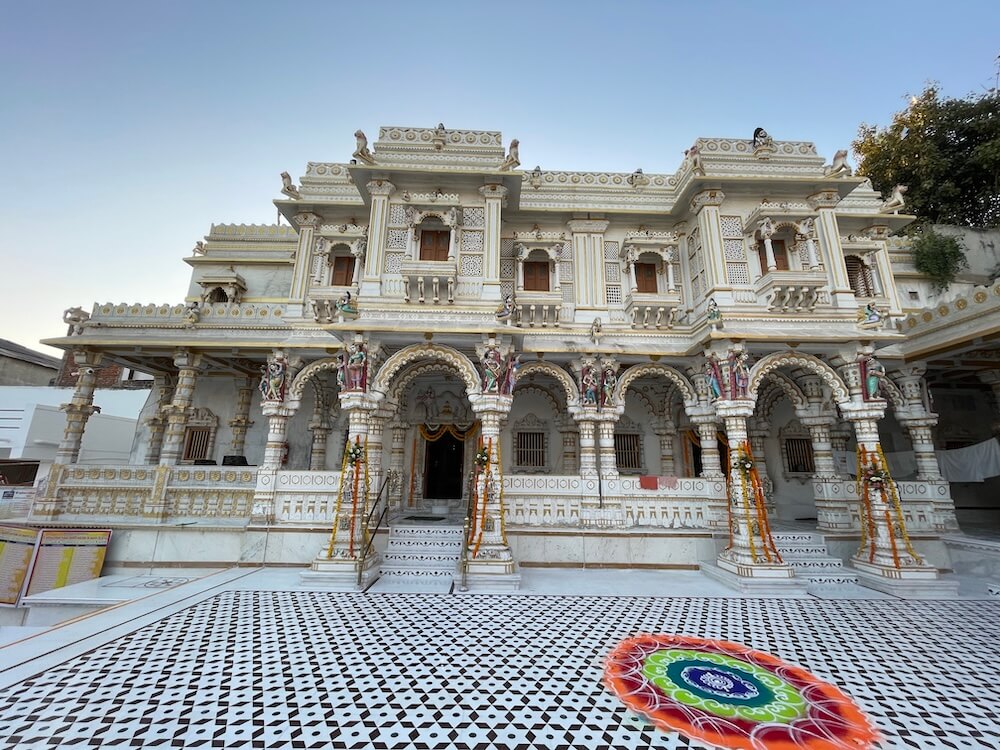
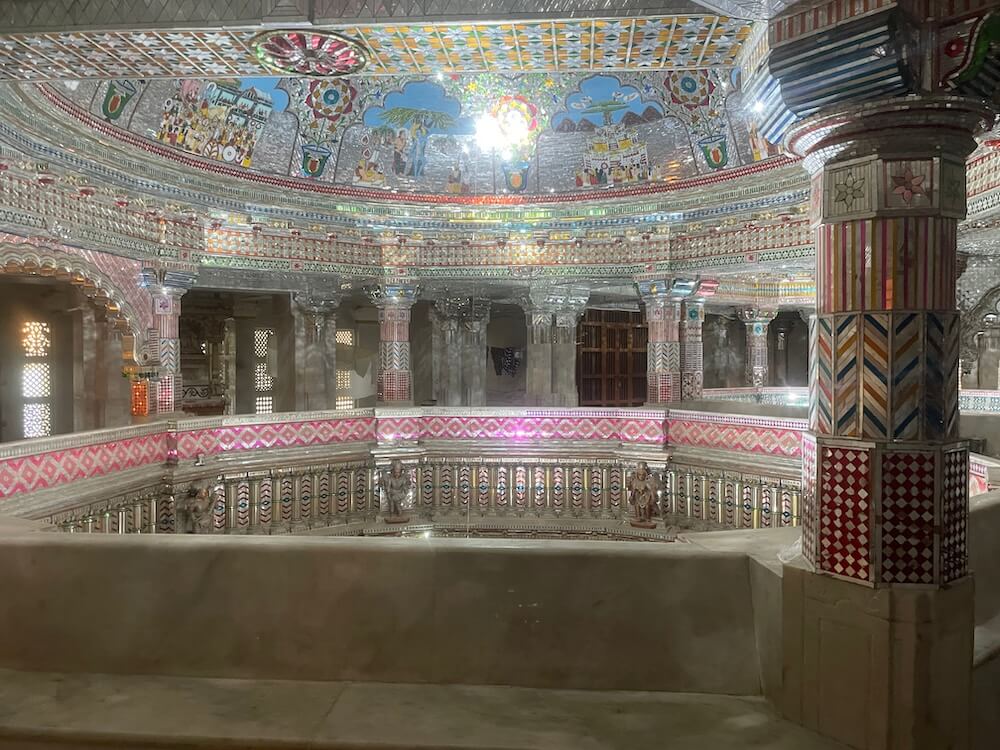
Shop Photo FramesSituated within the bustling Chokshi Bazar area of Mehsana city, the Manoranjan Parshvanath Jain Tirtha stands as one of the most ancient and historically significant shrines in the region. Dedicated to Lord Parshvanath, the 23rd Tirthankara of the Shwetambar Murtipujak tradition, this temple is widely renowned as the ‘Manoranjan Parshvanath Bada Jain Derasar’ (The Great Temple). It holds an esteemed place among the 108 pre-eminent pilgrimages dedicated to Lord Parshvanath across various lands. A singular hallmark of this sacred edifice is the exquisite and extensive ‘mirror work’ that adorns its interiors, creating a celestial ambience for the devout.
According to ancient Jain scriptures, the serene white stone idol of Lord Parshvanath enshrined here dates back to the glorious epoch of the Mauryan Emperor Samprati (r. 224–215 BCE). A poignant legend connects the temple to Mehsaji (Mesaji) Chavda, the illustrious founder of Mehsana city. Despite possessing vast wealth and sovereignty, Mehsaji was deeply aggrieved by his lack of progeny. Seeking spiritual solace, he followed the counsel of a venerable Jain Acharya and engaged in fervent, heartfelt prayers before this very idol. His devotion was soon rewarded with the birth of a son. Overwhelmed with gratitude and immense joy, Mehsaji named the deity ‘Manoranjan Parshvanath’ – signifying the Lord who bestows ‘Manoranjan’ or delight and peace upon the soul. Historical legend attest that Mehsaji Chavda established Mehsana city in 1358 CE, on the auspicious tenth day of the bright half of the month of Bhadrapada, after the ritual installation of Toranwali Mata. According to another historical legend the town was founded on Bhadrapad Sud 10 of the Vikram Samvat 1375 (1319 CE).
The historical tapestry of this region is even more ancient than the city itself. In Puranic times, this territory was identified as ‘Anarta’. Legend dictates that Anarta, the son of Sharyati (one of the ten sons of Vaivasvata Manu), founded ‘Anartanagari’ in the Kathiawar region, with Vadnagar serving as its capital. References to this hallowed land are found in the ‘Skanda Purana’ and the ‘Bhrigu Purana’. Over the centuries, this land was governed by the Gupta, Mauryan and Chavda dynasties. Around 696 CE, the Solanki dynasty briefly claimed power after defeating the Chavda Rajput monarchs, though the heirs of the Chavda lineage eventually reclaimed their heritage.
The spiritual eminence of this Tirtha is underscored in 15th-century literary works such as the ‘Tirthamala’ composed by Meghakavi, as well as in ancient texts like ‘Shri Shankheshwar Parshvanath Chand’, ‘Parshvanath Chaityaparipati’ and ‘Shri 108 Namgarbhit Parshvanath Stavan’. Furthermore, the influence of the Parshvanath of Mehsana is mentioned in the ‘Shri Shankheshwar Parshvanath’ verses composed by the poet Nayasundar in 1599 CE.
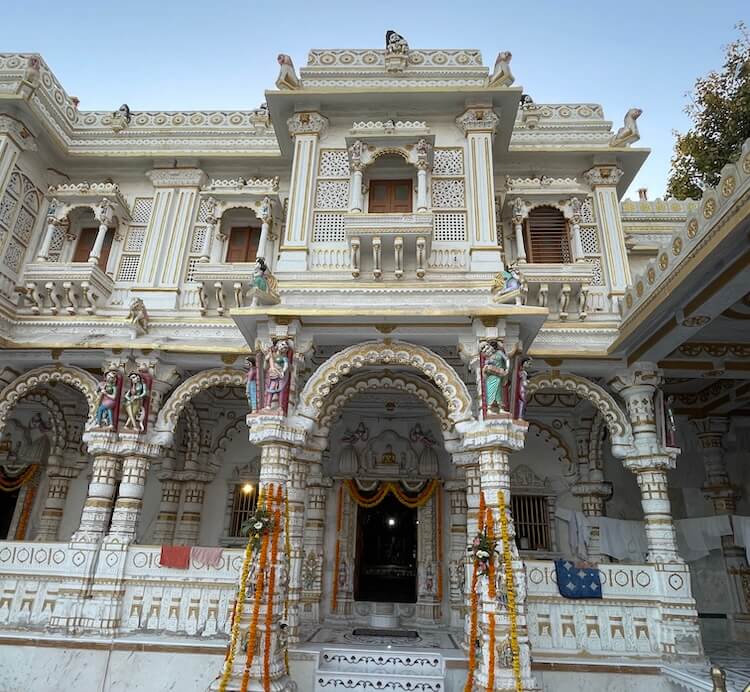
Regarding its architectural splendour, the design of this Jinalaya mirrors the structural elegance of a traditional ‘Haveli’ or a stately manor. In the original Derasar, the idol of Lord Parshvanath faced westward, as the city’s expansion was then concentrated in that direction. However, as the modern city developed towards the east, the idol was reoriented to face eastward, adhering to the scriptural precept that a deity’s back should not be turned toward the township. Historically, Mehsana also housed the temple of Kalyan Parshvanath, but to safeguard the idol from 14th and 15th-century invasions, it was relocated to a temple in Visnagar. Previously, Manoranjan Parshvanath and Lord Sumatinath were worshipped in separate shrines. However, in 1864 CE, a magnificent two-storeyed temple was constructed and both idols were ceremoniously installed on the tenth day of the bright half of Magh.
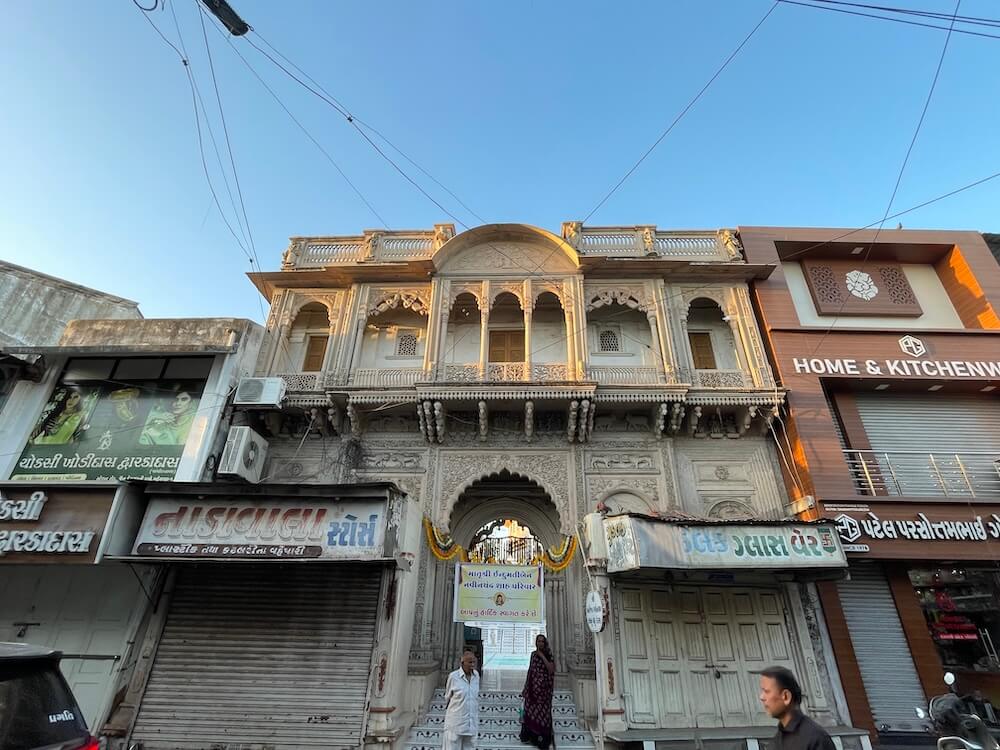
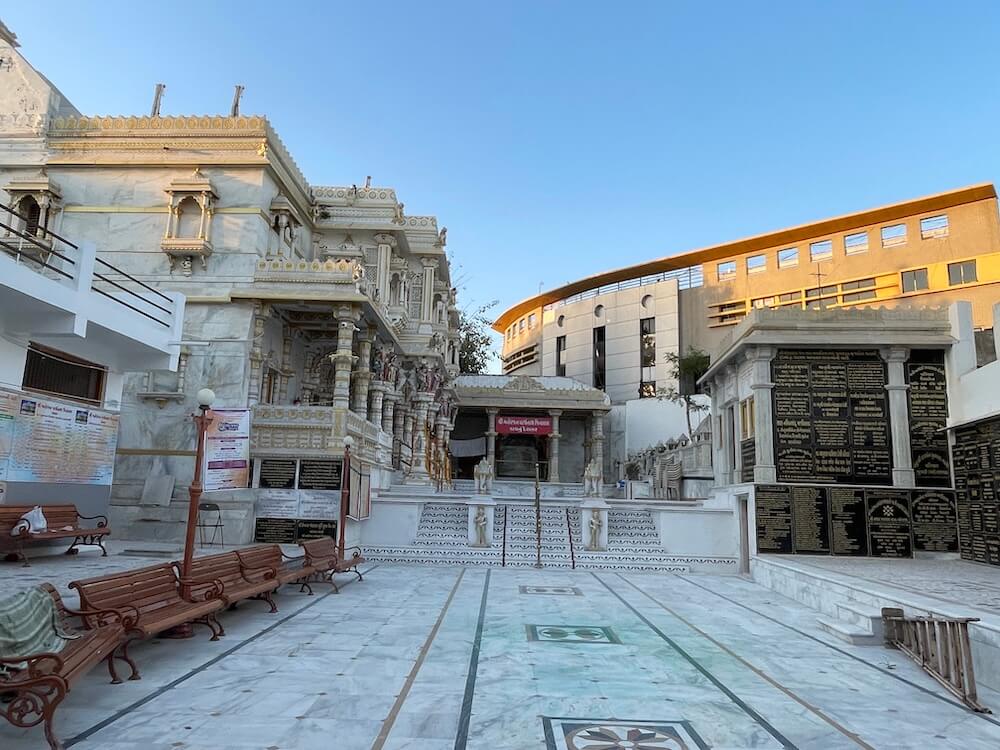
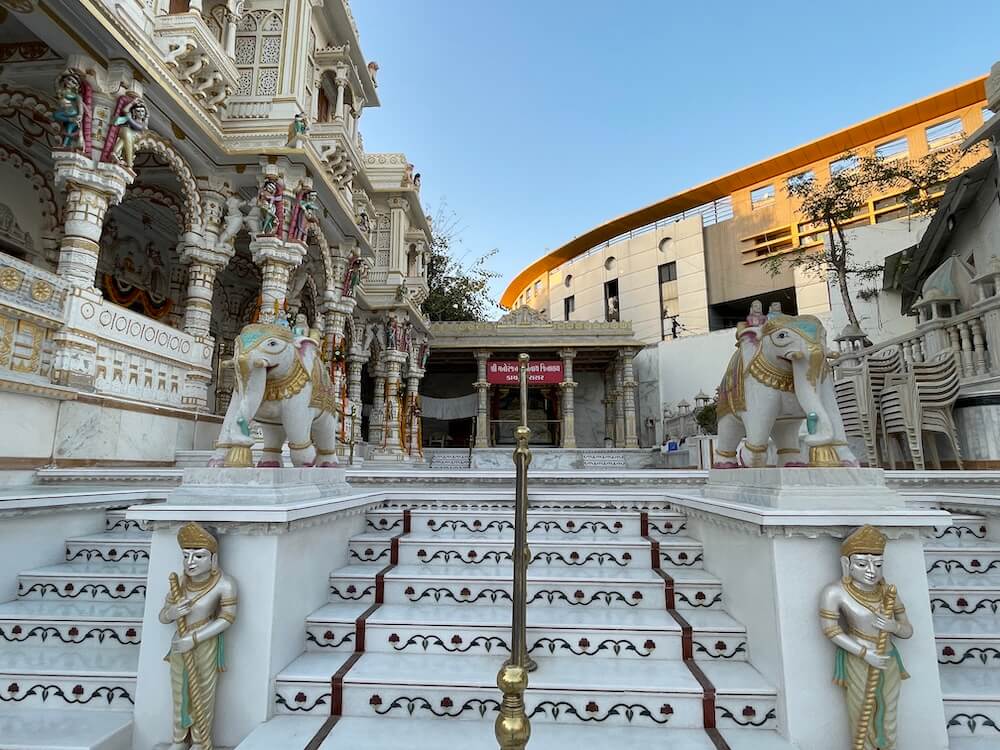
Upon entering through the arched main gateway, visitors are greeted by a vast courtyard. A flight of stairs leads to the main sanctum, flanked by finely sculpted figures of gatekeepers and majestic elephants. The pillars of the temple’s facade are embellished with scalloped arches, featuring intricate carvings and images of ‘Sursundaris’ (celestial beauties). Above the entrance to the ‘Rangamandapa’ (assembly hall) sits a central figure of a Tirthankara in the meditative ‘Padmasana’ posture. The columns within the grand assembly hall are likewise connected by arches and adorned with various sculptures at their base. The temple’s layout incorporates three assembly halls, with the interiors showcasing opulent glasswork. The primary ‘Garbhagriha’ (sanctum sanctorum) enshrines the white stone idol of Lord Parshvanath in deep meditation. This central figure is flanked by idols of other Tirthankaras in similar seated postures. The temple also houses images of Lord Sumatinath, Lord Neminath and Lord Vasupujya Swami. Adjacent to the principal deity, one finds a representation of Mata Marudevi mounted upon an elephant, along with depictions of the fourteen auspicious dreams seen by the mother of a Tirthankara before birth. The upper floor of the temple houses additional idols, including a delicately crafted image of Goddess Saraswati. Approximately two decades ago, master craftsmen were specially commissioned from Mumbai to execute the intricate glasswork that beautifies the interior.
For the convenience of pilgrims travelling from afar, the Tirtha provides a ‘Dharamshala’ (guest house) and the ‘Bhojanshala’ (refectory) serves wholesome, pure vegetarian meals. Within the temple precincts is the ‘Shrimad Yashovijayji Jain Sanskrit Pathshala’, an educational institution founded in October 1897 by Yoganishtha Shri Buddhisagar Surishwarji. The school imparts education in Sanskrit and Prakrit, alongside instruction in Jain philosophy. This historic site draws a vast number of Jain devotees and tourists alike. Throughout the year, the temple celebrates festivals such as ‘Paryushan Parva’, ‘Kartik and Chaitra Purnima’, ‘Parshvanath Janma Kalyanak’ on the tenth day of the dark half of Margashirsha and ‘Gyan Panchami’, in addition to the annual flag-hoisting ceremony. Devotees may visit daily between 7:00 am and 12:00 pm and 5:00 pm and 8:00 pm.
This sacred temple stands as a testament to deep spiritual devotion, ancient architectural grandeur, and rich local cultural traditions.
The sanctum sanctorum houses the divine idol consecrated according to ancient Vedic traditions, surrounded by serene courtyards and traditional temple architecture.
Navratri, Maha Shivratri, Annual Temple Jatra & Deepotsav
Compare and book flights, secure top-rated local hotels near the temple, hire reliable guides, and rent cars instantly.
Extend your pilgrimage by visiting other highly sacred temples located nearby.


Add ₹999 more to unlock FREE SHIPPING!
Your sacred cart is currently empty.
Shop Photo FramesFill in your delivery details below to place your order.
Add comment