
Add ₹999 more to unlock FREE SHIPPING!
Your sacred cart is currently empty.
Shop Photo FramesSituated on Radhanpur Road in Mehsana, directly opposite the Dudhsagar Dairy, stands the Shri Swaminarayan Temple (Nar Narayan Dev Gadi). This temple is regarded as an extended centre of the Kalupur Gadi of Ahmedabad, one of the two primary seats of authority established in 1822 by Bhagwan Swaminarayan, the founder of the sect. The temple in Kalupur, Ahmedabad was erected on land granted in 1822 by the British officer, Sir Dunlop. The Mehsana temple further continues this spiritual lineage. It was conceived through thirty years of meticulous planning under the guidance of G. K. Patel and P. P. Swami. After fifteen years of dedicated construction, the idols were consecrated in this grand edifice in 2009. In February 2024, the temple celebrated its 15th ‘Patotsav’ with great fervour.
Founded upon the principles of the Nar Narayan Dev Gadi, the temple is dedicated to the worship of Nar and Narayan, considered incarnations of Lord Vishnu. cAs cited in the scripture ‘Vachanamrut’, Bhagwan Swaminarayan is revered as the manifest form of the Divine Himself. The tradition of His seat offers a path towards ‘Moksha’ or spiritual liberation. During His lifetime, Bhagwan Swaminarayan constructed six principal temples. The Ahmedabad shrine was the first one. The Mehesana temple is a continuation of that august tradition. P. P. Swami imparted spiritual wisdom here by organising discourses on sacred themes such as ‘Chinha Chintamani’, which describes meditation upon the sixteen auspicious symbols on the lotus feet of Bhagwan Swaminarayan. According to mythological accounts, Nar and Narayan performed rigorous penance at Badrikashram. Devotees believe that their divine energy permeates this temple.
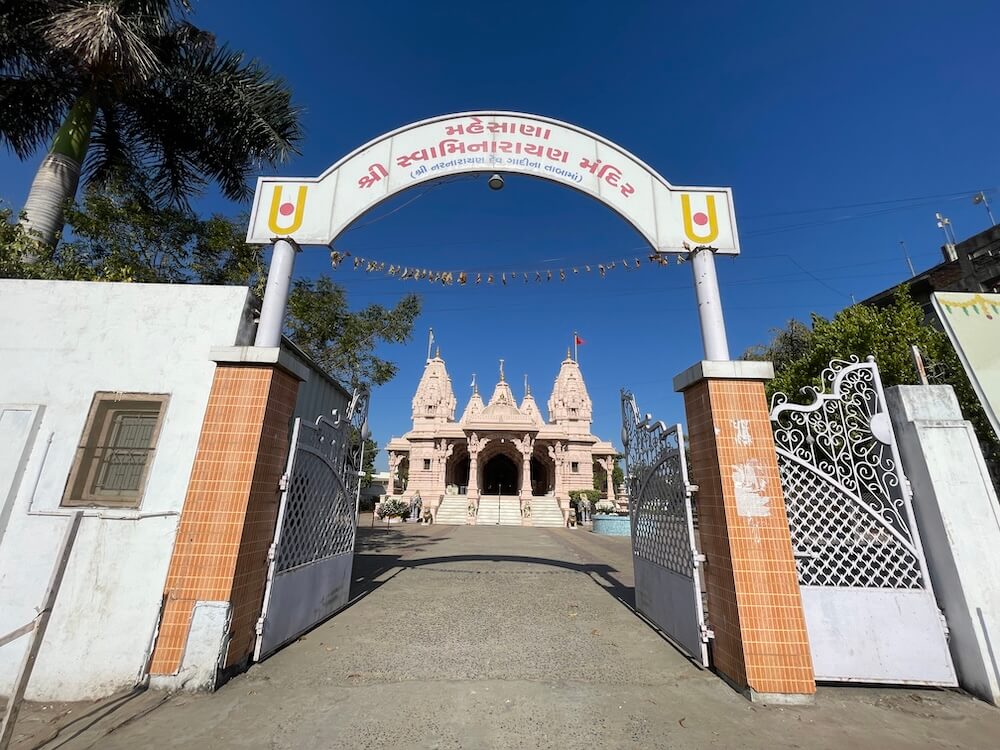
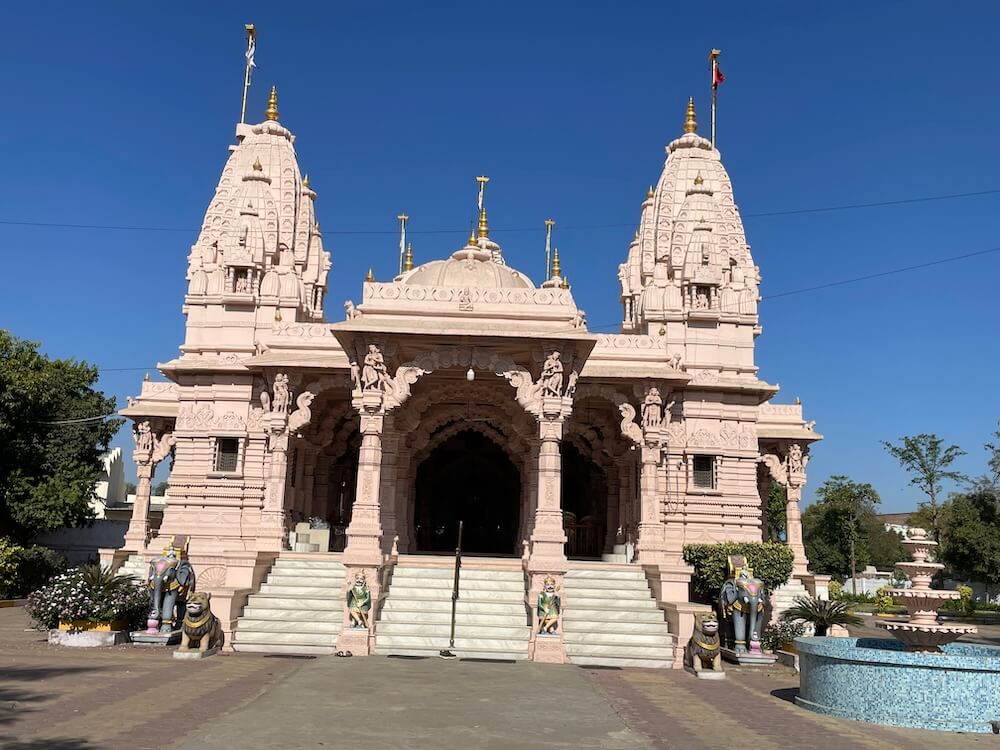
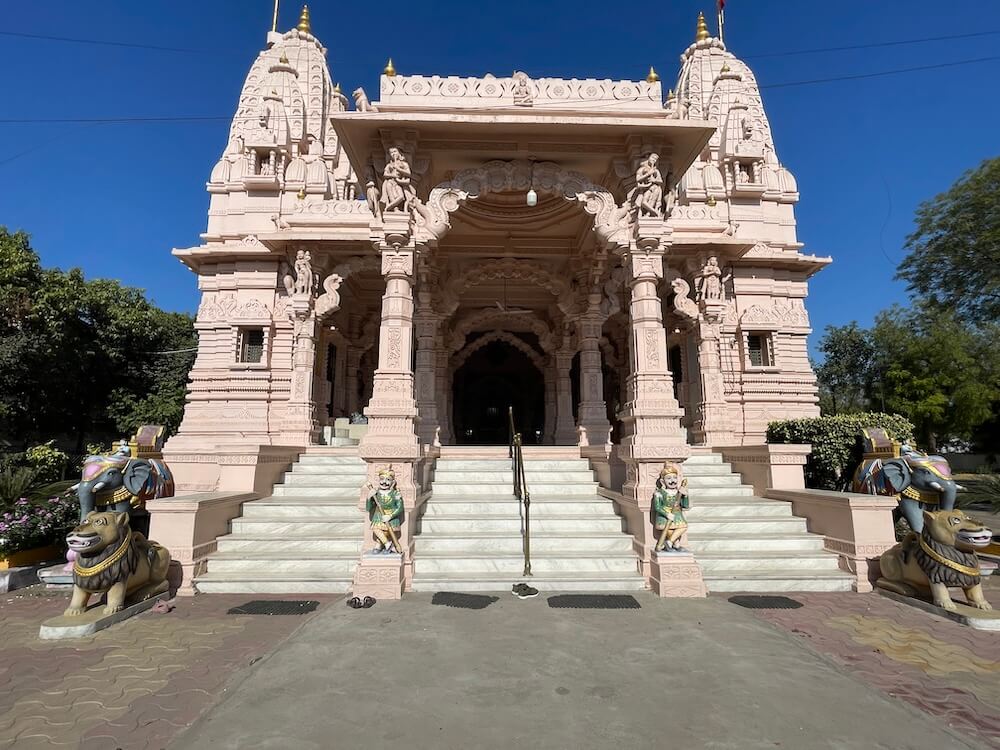
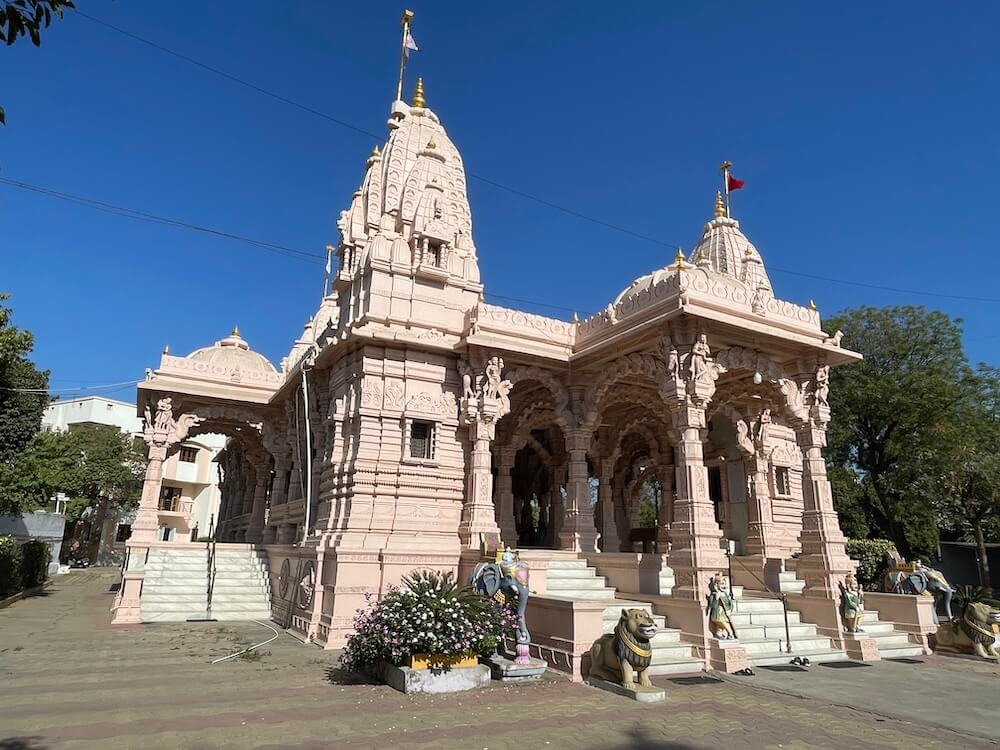
Leaving the bustling thoroughfare, one enters the temple’s expansive paved courtyard through a gateway set within the surrounding ramparts. Though close to a busy area, the trees make the temple precincts tranquil. The courtyard has seating for pilgrims and a fountain in front of the shrine. The temple is advanced and aesthetically pleasing, blending modern engineering with traditional Indian temple craftsmanship. This ‘Shikharbaddh’ (spired) temple reflects the ‘Nagar’ style of North Indian architecture. Built on a high ‘Jagati’ or plinth, the temple’s facade is grand and captivating. One enters the ‘Mukhamandapa’ (entrance porch) by ascending ten marble steps from the courtyard. Sculptures of ‘Dwarpalas’ (gatekeepers), elephants and lions flank the stairway. The temple structure comprises an entrance porch, a ‘Sabhamandapa’ (assembly hall), an ‘Antarala’ (vestibule) and the ‘Garbhagriha’ (sanctum sanctorum). Both the entrance porch and assembly hall are semi-open. The ornate pillars are adorned with sculptures of ‘Surasundaris’ (celestial maidens) and are connected at the top by uniquely carved cusped arches.
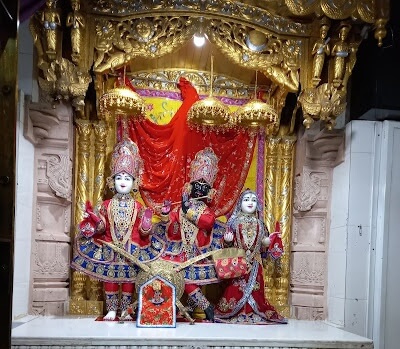
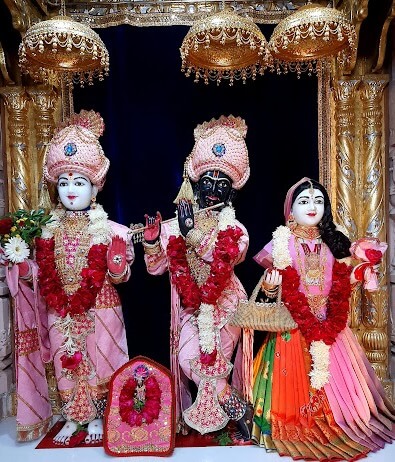
Beyond the entrance porch, within the assembly hall, lie independent shrines dedicated to the Shiva family, with Lord Ganesha on the left and Lord Hanuman on the right. A sculpture of Nandi sits upon a pedestal near the Shiva family shrine entrance. At the centre of this shrine is a Shivalinga, while niches in the walls house idols of Lord Ganesha – flanked by Riddhi and Siddhi – and Mata Parvati. The Hanuman temple enshrines an idol of Lord Hanuman in a heroic posture, wielding a mace, with a demoness (‘Panauti’) beneath his feet. This form of Hanuman is revered as ‘Kashtabhanjan Dev’ (the remover of sorrows). Small sculptures of the ‘Vanar Sena’ (monkey army) in various postures are carved into the surrounding pavilion. Past the assembly hall and circumambulatory path, three sanctums are arranged in a row. The entrance to the central main sanctum is embellished with intricately carved pink stone. The lintel features Lord Ganesha, while the carved pillars on either side are graced with gatekeeper sculptures. Within the sanctum, upon a ‘Vajrapitha’ (pedestal), reside the idols of Shri Hasatmukh Ghanshyam Maharaj and Shri Vrindavan Biharilal. The right sanctum houses Shri Nar Narayan Dev. The left sanctum contains the ‘Shri Shukhashayya’ (sacred bed). Niches on the exterior walls of the sanctums along the circumambulatory path also house various deities. Externally, the primary spire is striking, topped by a circular ‘Amalaka’ and a golden ‘Kalasha’ (pinnacle). The spire is surrounded by numerous smaller ‘Urushringa’ (subsidiary) spires.
The temple follows a tradition of performing ‘Aarti’ five times daily. The routine commences at 5:45 am with the ‘Mangala Aarti’. At 7:30 am, the ‘Shangar Aarti’ is performed after the deities are elegantly adorned. The ‘Rajbhog Aarti’ takes place at 10:10 am. From 12:00 noon until 4:00 pm, the temple remains closed for the Lord’s rest, a period referred to as ‘Madhyanh Shayan’ or ‘Rajbhog Thal’. At 4:00 pm, the ‘Utthapan’ ritual is performed, after which the temple reopens for devotees. The ‘Sandhya Aarti’ is conducted at 6:30 pm, accompanied by ‘bhajans’. The day concludes with the ‘Shayan Aarti’ at 7:45 pm.
The ‘Patotsav’ is celebrated annually in February. During this occasion, a ‘Mahabhishek’ with ‘Panchamrita’ is offered to the deity. In the evening, an ‘Annakut’ with various delicacies is arranged before the Lord. During the holy month of Shravan, the ‘Hindolo’ festival is celebrated extensively. The deities are placed in cradles crafted from fruits, flowers, dry fruits, vegetables or jewellery. Blood donation camps and social welfare activities are organised during the ‘Patotsav’. The birth anniversary of Bhagwan Swaminarayan falls on Chaitra Shuddha Navami or Ram Navami. It is celebrated with enthusiasm and a special ‘Aarti’ at 10:00 pm. On Akshaya Tritiya, the ‘Chandan Wagha’ festival is observed, where the idols are adorned with sandalwood paste. In winter, the ‘Shakotsav’ is celebrated following Loya village tradition. ‘Ringna nu Shak’ and ‘Bajra no Rotlo’ (aubergine curry and pearl millet flatbread) is offered as ‘Naivedya’. The temple is open for ‘Darshan’ from 7:00 am to 12:00 noon and from 4:00 pm to 8:00 pm.
This sacred temple stands as a testament to deep spiritual devotion, ancient architectural grandeur, and rich local cultural traditions.
The sanctum sanctorum houses the divine idol consecrated according to ancient Vedic traditions, surrounded by serene courtyards and traditional temple architecture.
Navratri, Maha Shivratri, Annual Temple Jatra & Deepotsav
Compare and book flights, secure top-rated local hotels near the temple, hire reliable guides, and rent cars instantly.
Extend your pilgrimage by visiting other highly sacred temples located nearby.


Add ₹999 more to unlock FREE SHIPPING!
Your sacred cart is currently empty.
Shop Photo FramesFill in your delivery details below to place your order.
Add comment