
Add ₹999 more to unlock FREE SHIPPING!
Your sacred cart is currently empty.
Shop Photo FramesWhile Ajanta and Ellora have gained global fame within Maharashtra’s rock-cut cave tradition, many such structures hidden in the soil of Marathwada stand as wonderful examples of architecture. Kharosa Caves in Nilanga taluka of Latur district are one such ancient and historical site. These caves are not merely centers of religious faith, but also prime examples of the cultural synthesis of Hindu, Buddhism, and Jainism of that era. The temples of Vishnu and Shiva established at this place bear witness to this synthesis.
Latur district has a very ancient history. Evidence has been found showing that human existence has been present here since the Paleolithic era, that is, about three lakh years ago. In ancient times, Latur was known by the names Lattaloor, Lattanoor, Lattalour, or Ratanpur. The text ‘Anguttara Nikaya’ mentions that there were sixteen Mahajanapadas in the southern region during the Maurya period. The Ashmaka or Assaka or Andhaka Mahajanapada was one of them. Latur was included in the region known as Kuntala, situated to the south of the Ashmaka Mahajanapada. Latur was also ruled by the Chalukyas of Badami. Some of the Chalukyas of Badami gave great patronage to architecture. According to the Latur District Gazetteer, the Kharosa Caves were excavated during their time. This period belongs to the sixth to eighth century CE.
An ancient mention of the village of Kharosa is also found in the treatise Kalpasamuha. In this Marathi text, composed during the Yadava period by the Muslim author Said Mohammad, Kharose is stated to be a place suitable for *Rasavidya*. The science of converting base metals like iron into gold through specific processes involving mercury, and rendering the body immortal using medicines made from mercury, was called *Rasavidya*. Said Mohammad has mentioned several places dating to the Yadava period that were important in connection with this science, and Kharosa is included among them. This highlights the significance of this site. In the course of history, the greatness of this place, as well as its caves, had fallen into oblivion. James Burgess, a Scottish officer, was the first to bring these caves to the attention of scholarly researchers.
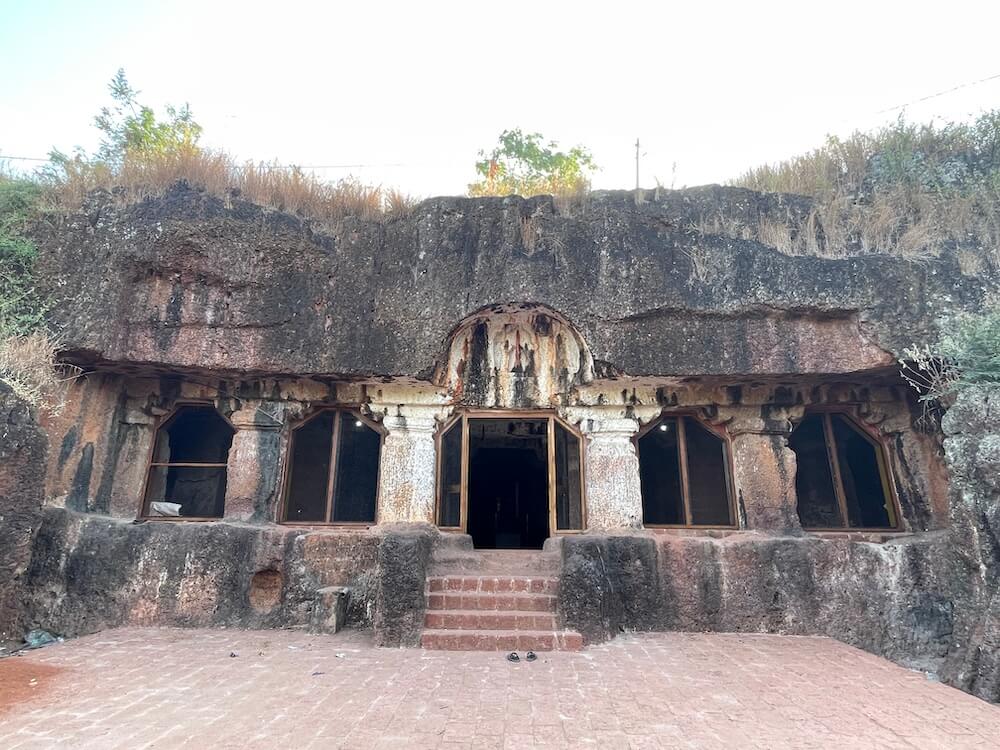
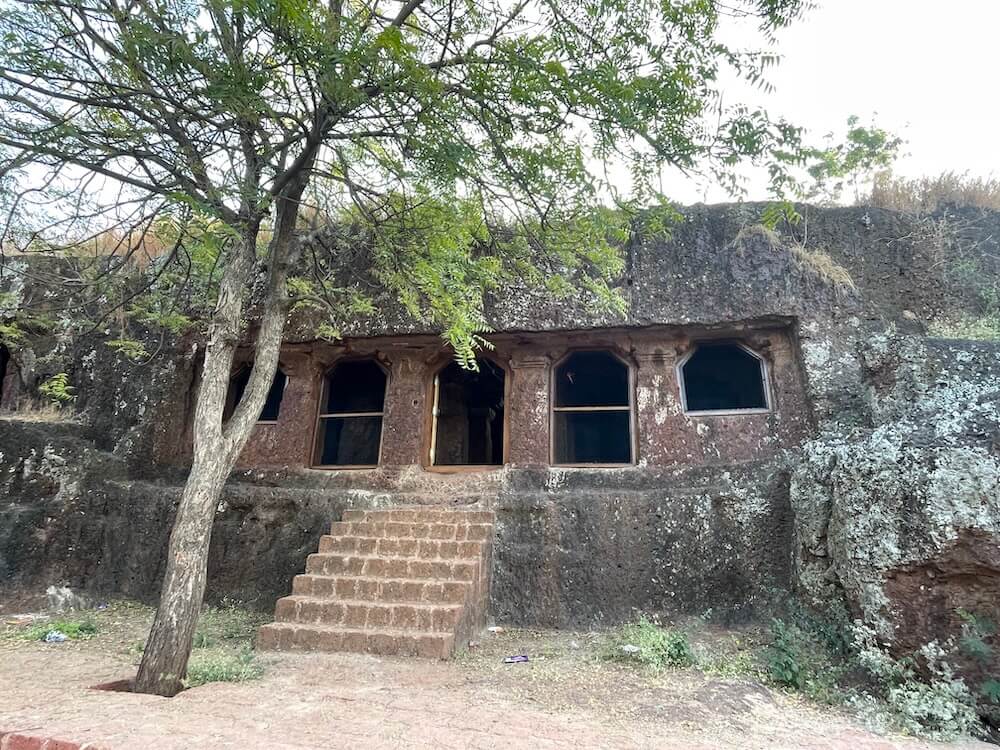
One of the distinctive features of these caves is that they are carved out of laterite rock. This stone is generally found in the Konkan region, whereas black basalt is found on the plateau. However, the Kharosa area is an exception to this. Near this village, there is a small hill of laterite stone, upon which stands a group of twelve caves. Among this group, the caves named ‘Mahadeva’ and ‘Lakola’ are particularly notable, while the other caves are considered to be of a secondary type.
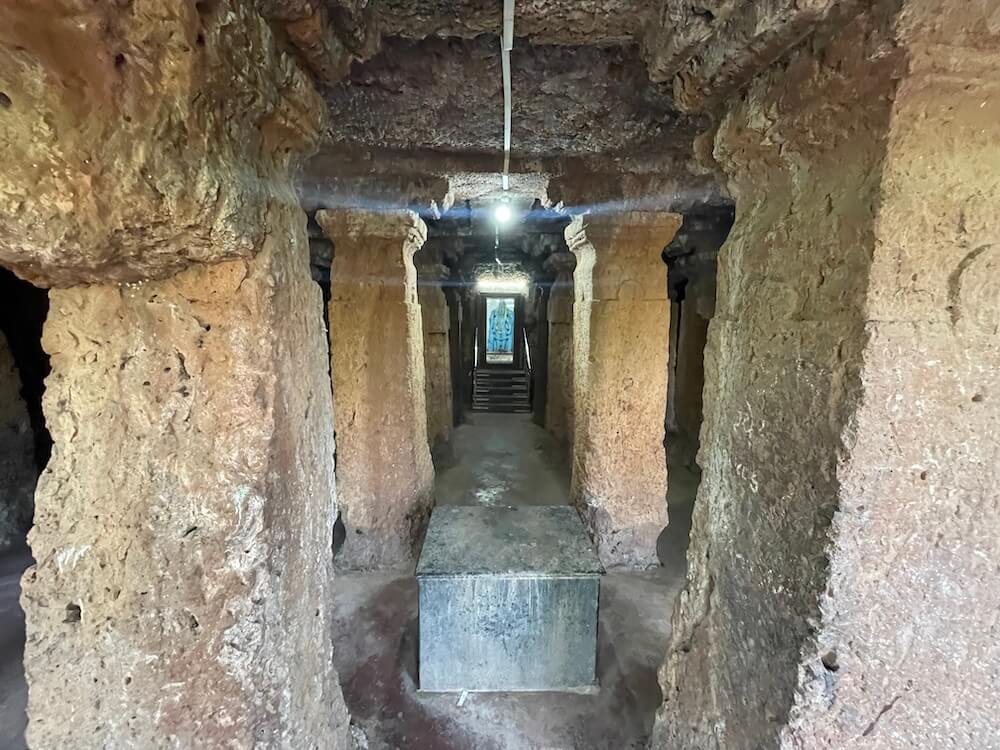
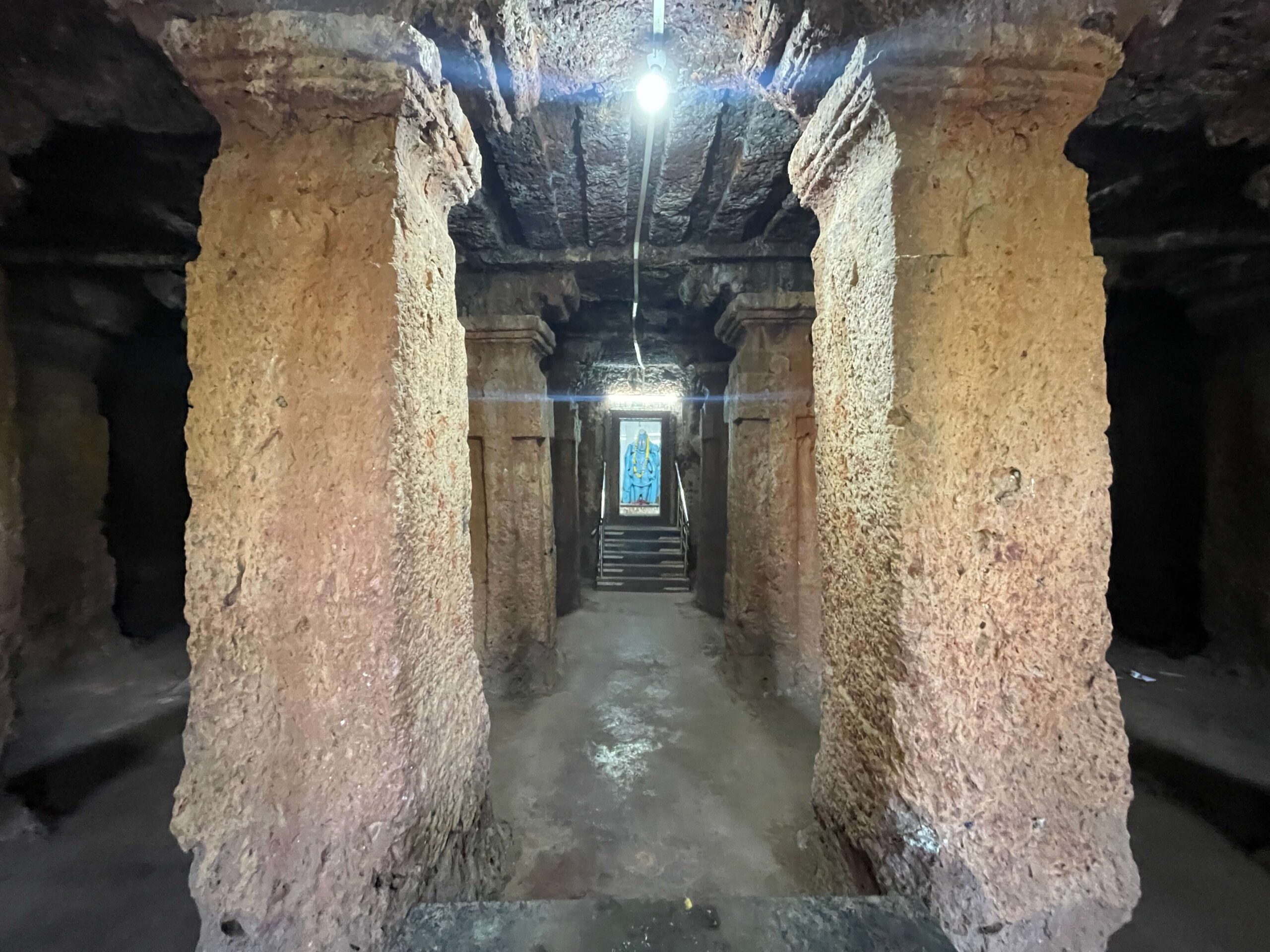
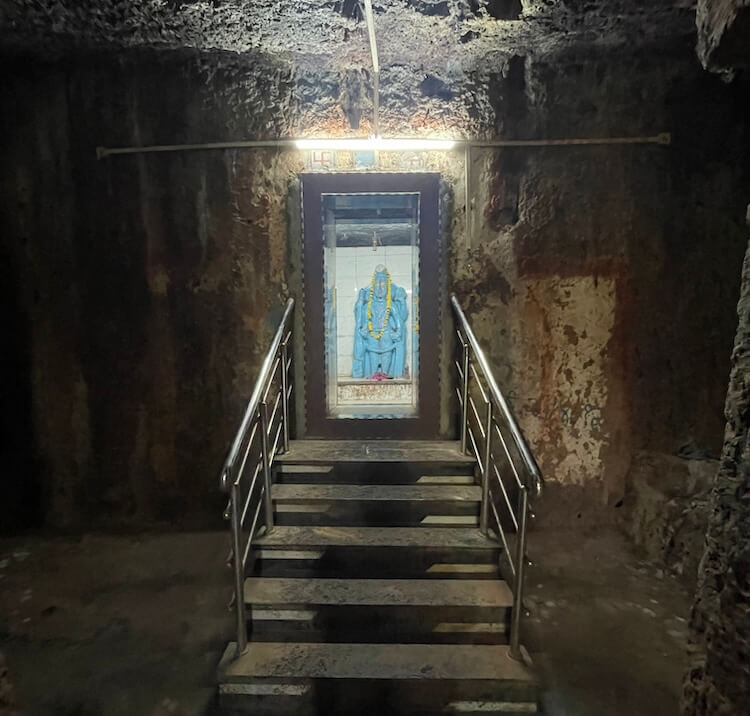
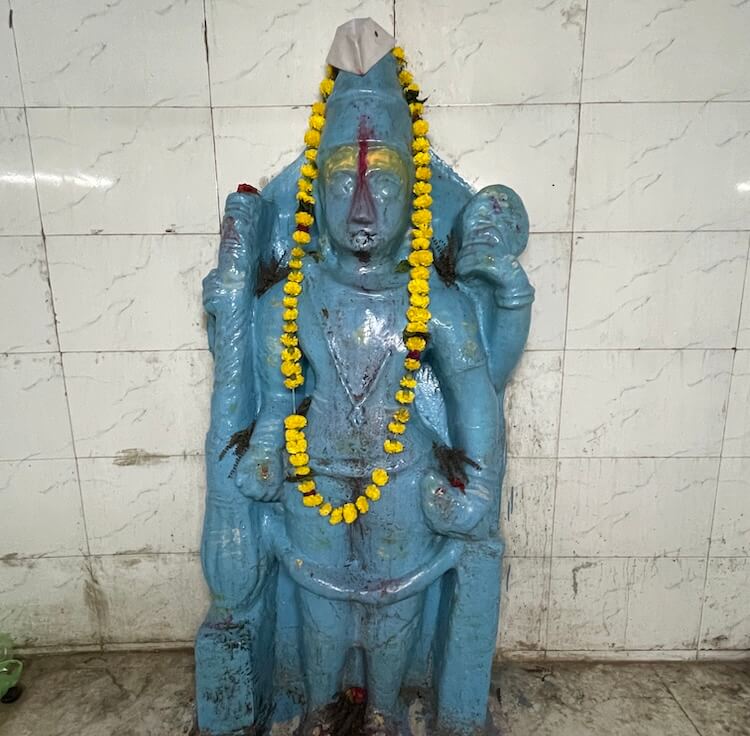
The cave containing the idol of Lord Vishnu is known as the ‘Dashavatara Cave’. At the entrance of the cave, there are ornate pillars, and inside lies a spacious assembly hall featuring numerous carved pillars. On the walls of the cave, various forms and incarnations of Lord Vishnu are depicted in relief sculpture. This cave houses a beautiful sculpture of Sheshashayi Vishnu. Furthermore, the fierce scene of Lord Vishnu taking the form of Narasimha to slay Hiranyakashipu is carved here, along with a sculpture of Vishnu’s Varaha avatar. Also depicted is the Trivikrama form assumed by Vamana after asking King Bali for a gift of three paces of land, in which one of Vishnu’s legs soars towards the sky, can be seen here. There is a four-armed (Chaturbhuja) idol of Lord Vishnu in the sanctum-like structure here. The idol wears a crown on its head. It holds a conch shell (Shankha), discus (Chakra), mace (Gada), and lotus (Padma) in its hands.
Adjacent to this cave is another cave containing a Shivalinga, which is known as the Mahadeva Cave. Measuring approximately sixty feet in width and sixty-nine feet in length, there is a spacious courtyard in front of this cave. On the rock surfaces on both sides of the steps leading to the cave, there are sculptures of Dvarapalas (guardian deities). Before entering the main cave, one encounters a veranda supported by carved pillars. Inside, there is a large sabhamandapa (assembly hall). The pillars in the assembly hall are of a mixed square and circular architectural style. The upper portions of the pillars are adorned with carvings of Kirtimukhas and floral vines. In the center of the assembly hall is the garbhagriha (sanctum sanctorum). Modern tiles have been installed inside this sanctum. A magnificent and exquisite Shivapindi is enshrined in the center of the garbhagriha. This pindi is situated on a large pedestal. To this day, the worship of the Shivalinga continues here. Around the sanctum, there is a sufficiently carved passageway for performing pradakshina (circumambulation). On the southern wall of this cave, generally Vaishnavite sculptures are carved, while on the northern wall, Shaivite sculptures are depicted. On the southern wall, primarily Malla, Nagadevatas, as well as incarnations of Lord Vishnu such as Varaha, Vamana, Narasimha, Krishna, and Lord Rama, are carved. On the northern wall, sculptures such as Ravanangraha murti, Shiva-Parvati, Tandava dance, and Bhairava are present. Apart from these, the Samudra Manthana sculpture panel is also carved here.
At the beginning of this series of caves, some caves are associated with Buddhism. Serene and majestic statues of Lord Buddha are carved here. Both viharas and chaityas are found in the architecture of these caves. On one side of the hill, there are also Jain caves. In them, statues of the Tirthankaras are carved. Right next to the cave complex, on the hilltop, is the temple of Goddess Renuka.
There is a large gathering at the Mahadeva Cave in this cave complex on Mahashivaratri. On this occasion, Abhisheka and Bhajan-Kirtan are performed here.
Even during the holy month of Shravan, devotees from the surrounding areas visit here for Darshan. Due to the rainy season, there is a rush of tourists here. The Kharosa Caves and the temples there remain open for tourists from six in the morning to half-past six in the evening.
This sacred temple stands as a testament to deep spiritual devotion, ancient architectural grandeur, and rich local cultural traditions.
The sanctum sanctorum houses the divine idol consecrated according to ancient Vedic traditions, surrounded by serene courtyards and traditional temple architecture.
Navratri, Maha Shivratri, Annual Temple Jatra & Deepotsav
Compare and book flights, secure top-rated local hotels near the temple, hire reliable guides, and rent cars instantly.
Extend your pilgrimage by visiting other highly sacred temples located nearby.


Add ₹999 more to unlock FREE SHIPPING!
Your sacred cart is currently empty.
Shop Photo FramesFill in your delivery details below to place your order.
Add comment