
Add ₹999 more to unlock FREE SHIPPING!
Your sacred cart is currently empty.
Shop Photo FramesThe Someshwar Mahadev Temple, located at Talikhed in the Nilanga taluka of Latur district, is considered a significant temple in the chain of ancient Trikuta (triple-shrine) temples within the Manjara river valley. During the era of the Kalyani Chalukya Empire, many magnificent temples were constructed in this river basin. Like the Nilkantheshwar temple in Nilanga city and the Sadashiv temple at Bhut-Mungali, this temple also features three sanctum sanctorum (Garbhagrihas). Based on architectural and sculptural criteria, the period of its construction is generally believed to be the 12th century. It is said that Talikhed was an important cultural center during that time.
Many legends are prevalent regarding this temple. According to local folklore, this temple was built by the Pandavas. Another mythological story states that the Moon (Chandra) was married to the 27 daughters of Daksha Prajapati, known as the Nakshatras. However, the Moon loved Rohini more than the others and neglected his other wives. Enraged by this, Daksha Prajapati cursed the Moon, decreeing that he would suffer from tuberculosis (consumption). Due to this curse, the Moon’s radiance began to wane daily, and he grew dim. This caused an imbalance in the entire universe. Then, on the advice of the King of Gods, Indra, the Moon sought refuge in Lord Shiva for liberation from the curse. Shiva told him to perform penance at a quiet and sacred place on Earth.
While searching for such a place, the Moon reached a dense forest in the Manjara river valley, at the site where the temple currently stands. He created a pond (Tali) here, bathed in its waters, and began rigorous penance for Lord Shiva. For many years, the Moon worshipped Shiva while chanting the mantra ‘Om Namah Shivaya’. Pleased by his sincere devotion, Lord Shiva appeared at that spot in the form of a Linga. He granted the Moon a boon: the Moon’s radiance would wane for 15 days—a period known as Krishna Paksha—and would wax for the next 15 days—a period known as Shukla Paksha. Through this cycle, the affairs of the universe would continue smoothly. The Moon is also called ‘Som’. Because Lord Shiva appeared here due to him, the Linga here is known as Someshwar Mahadev. The Moon bathed in a pond (Tali) and performed penance to attain liberation from the curse. That very pond is still a part of the village’s name today, and it is from this that the village got the name Talikhed.
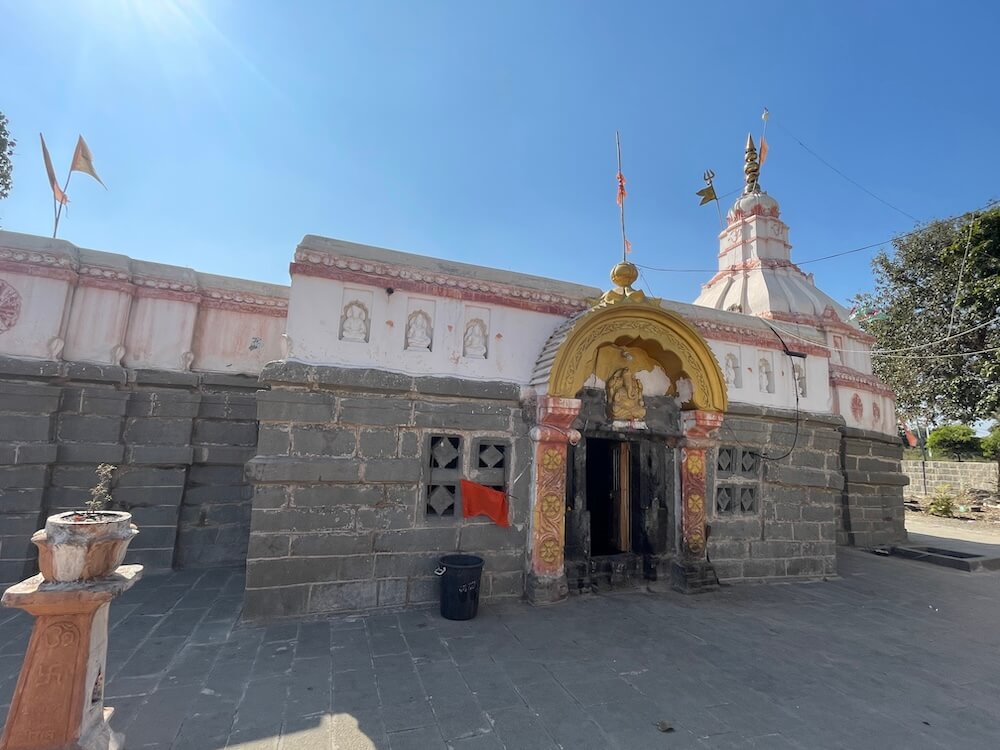
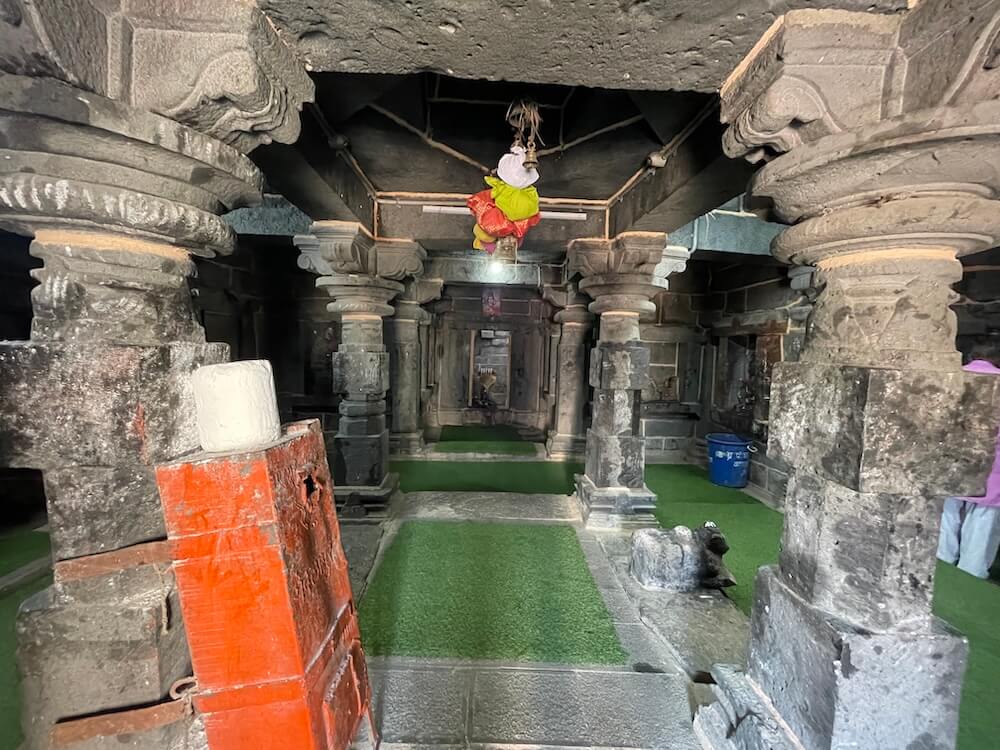
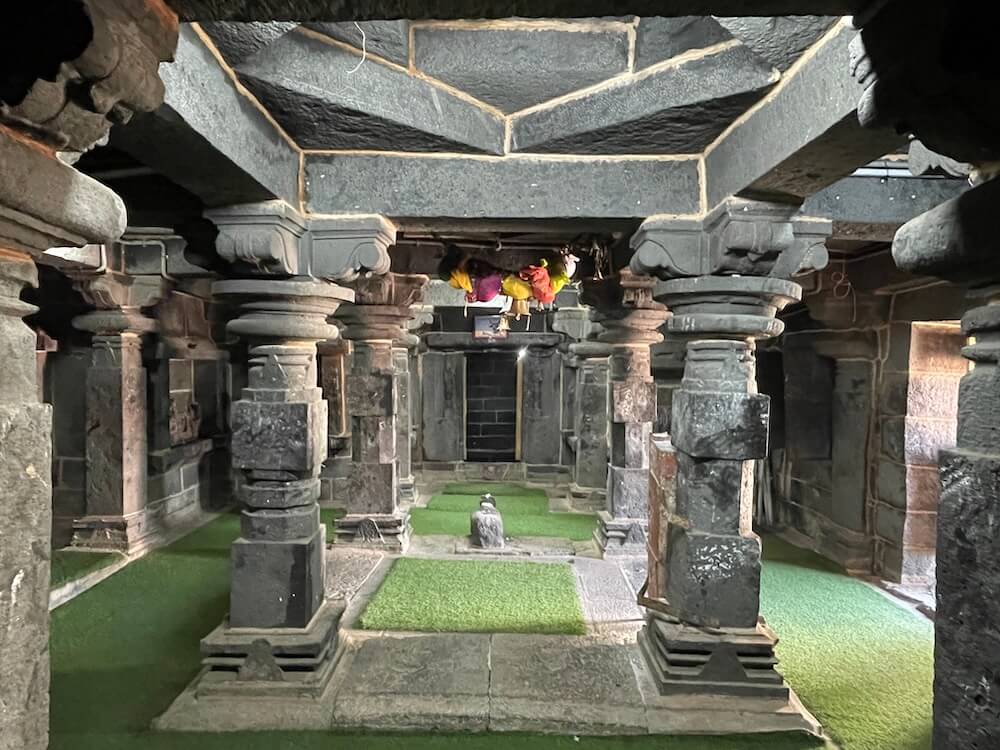
The temple is designed in the Hemadpanti style and follows the Trikuta pattern, meaning it has three sanctum sanctorum. The temple premises feature ancient stone cloisters and a low-height lamp pillar (Deepmal) in the courtyard. There are stone windows on both sides of the temple entrance. An image of Lord Ganesha is carved on the lintel of the entrance. In the center of the assembly hall (Sabhamandap), between four ornate pillars, lies the Rangashila (a raised stone platform). The doorframes of the sanctum sanctorum show simple carvings, excluding the door pillars. In the niches of the assembly hall, one can see sculptures of Narasimha slaying Hiranyakashipu, Ganesha, and Sheshashayi Vishnu. Additionally, the Varaha sculpture here is unique. This four-armed image holds a conch in the upper left hand, and a small female figure is seated on its shoulder. The lower right hand holds a mace (Gada). Due to the erosion of the sculpture, other details are not visible. Here, one can also see some small sculptures carved in a row, resembling the Saptamatrikas, though their number exceeds seven.
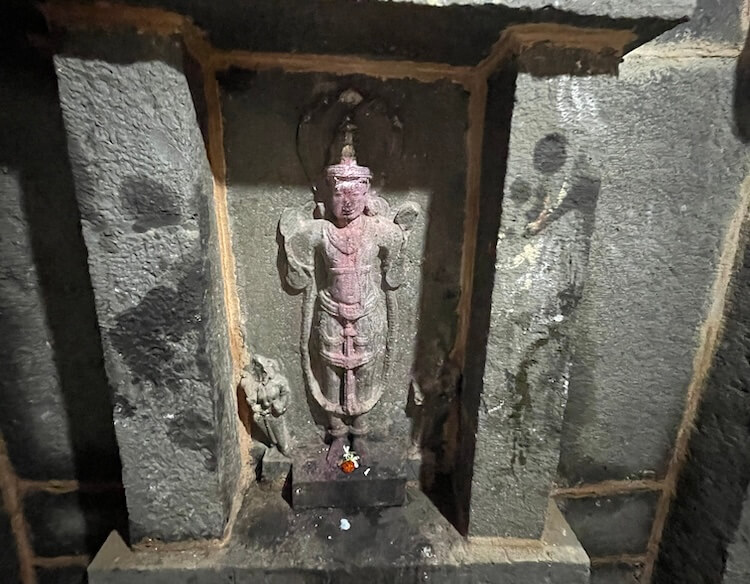
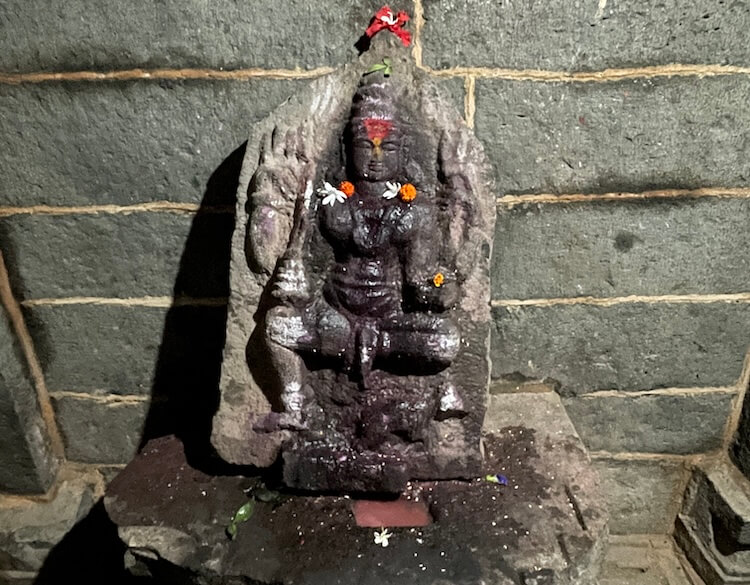
There are several niches in the assembly hall and the vestibule (Antarala) in front of these sanctums, containing sculptures of various deities. Standing on the Rangashila, one can see the Shiva Linga in the sanctum directly ahead. Its base (Shalunka) shows the shape of three Lingas. A brass cobra with five hoods rests upon the Linga. It is said that this is the abode of Jata-Shankar. In the vestibule of this sanctum, there are two niches facing each other. One of them contains a sculpture of Shankar-Parvati, in which Goddess Parvati is seen seated on the lap (left thigh) of Lord Shiva. In the opposite niche, there is a sculpture of a four-armed deity. It is said to be an image of Vishnu, but the symbols of the conch, discus, mace, and lotus are not clearly visible. Both lower hands of this figure are joined, appearing as if holding an object in the palms. In the sanctum on the left, there is an image of Goddess Durga carved in black stone. In the vestibule of this sanctum, there are two sculptures in facing niches. One is a deity in the Padmasana (lotus) posture. The lower hand of this figure holds a copper plate, while the upper two hands hold a noose (Pasha) and a goad (Ankusha). In Chalukyan sculpture, this figure seated in Padmasana holding a noose and goad is primarily considered to be Lalita Sundari. Opposite this figure is a standing deity. Since a beard is carved on this figure, it can be surmised that it represents Lord Brahma. Due to erosion, the other faces of Brahma are not clearly visible.
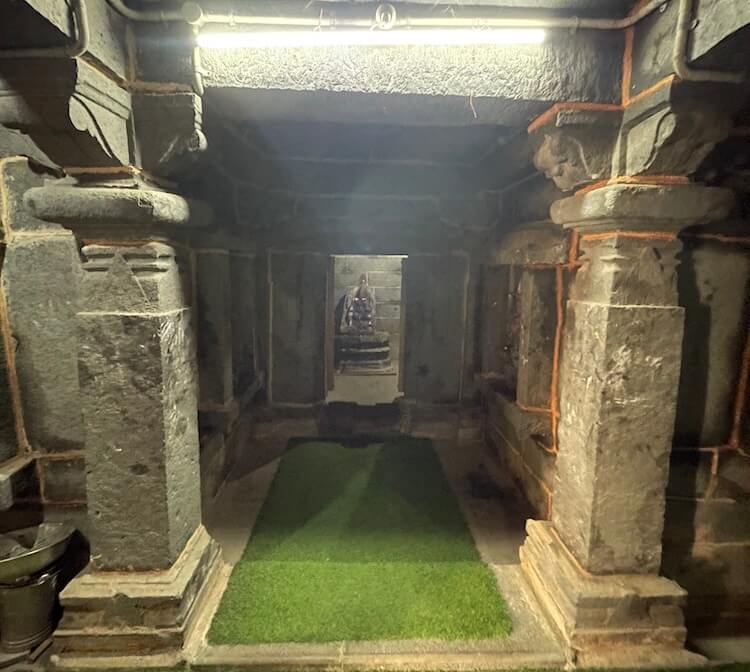
Near the vestibule on the right side, there is a Nandi sculpture. In front of it is the main sanctum. In a Trikuta-style temple, the main sanctum is usually in front of the Rangashila, but a slightly different layout is seen here. This sanctum is located in a lower area compared to the general level of the temple; one must descend six steps to reach it. The base of the Shiva Linga here is wide and circular, close to the ground. The Linga itself is of low height and semi-circular in shape. Of the two niches in the vestibule of this sanctum, one contains a sculpture of Parvati seated on Shiva’s lap. This sculpture is similar to the one in the other vestibule, but being less eroded, it appears more defined and clear. The sculpture in the niche opposite this one is of Ardhanarishvara.
The modern spire (Shikhara) of the temple is four-tiered and square-shaped, topped with an Amalaka and a finial (Kalash). There is an ancient inscription in the Someshwar temple premises at Talikhed. This inscription confirms the history and antiquity of the temple. During the Chalukya period, both Kannada and Marathi languages had an influence in this region. Therefore, the language of this inscription is primarily Hal-Kannada (Old Kannada). It is considered an excellent example of the synthesis of regional languages during the era of the Kalyani Chalukya kings. In ancient times, when temples were built, kings or local landlords would donate a village or land for their daily worship and maintenance. It is said that this inscription records the donation of some land in Talikhed village for the Naivedya of Lord Someshwar and for the oil for the Nanda Deep (eternal lamp). According to the historical records in this inscription, it is proven that this temple was built in the twelfth century.
The biggest festival at this temple, which is dedicated to Lord Shiva, is Mahashivratri. On this day, from early dawn, the holy Abhishekam of Someshwar is performed amidst the chants of ‘Har Har Mahadev’. A large fair is held here during this celebration. There is a huge crowd of devotees at the temple every Monday in the month of Shravan. During Shravan, special arrangements for Rudrabhishekam and Bhajan-Kirtan are made daily. Apart from this, on Tripurari Purnima, which is Kartik Purnima, a Deepotsav is celebrated in front of the temple. At this time, the entire temple lights up with the glow of lamps. Devotees can have Darshan at this temple from 6 AM to 1 PM and from 4 PM to 8.30 PM. On special festivals and Shravan Mondays, this temple remains open for Darshan throughout the day.
This sacred temple stands as a testament to deep spiritual devotion, ancient architectural grandeur, and rich local cultural traditions.
The sanctum sanctorum houses the divine idol consecrated according to ancient Vedic traditions, surrounded by serene courtyards and traditional temple architecture.
Navratri, Maha Shivratri, Annual Temple Jatra & Deepotsav
Compare and book flights, secure top-rated local hotels near the temple, hire reliable guides, and rent cars instantly.
Extend your pilgrimage by visiting other highly sacred temples located nearby.


Add ₹999 more to unlock FREE SHIPPING!
Your sacred cart is currently empty.
Shop Photo FramesFill in your delivery details below to place your order.
Add comment