
Add ₹999 more to unlock FREE SHIPPING!
Your sacred cart is currently empty.
Shop Photo FramesThere are several ancient temples dedicated to Mata Jagadamba, known as the ‘Mother of the Universe’, in Buldana district. One such prominent shrine is located at Bhadola near Buldana town. Nestled in scenic natural surroundings, numerous devotees visit this divine (jagrut) temple for darshan. The five-day fair (yatra) of the Goddess held here starting from Rang Panchami is famous throughout the district. Blessed with a tradition of nearly two hundred years, the sacred procession of ‘Devi che Song’ (divine impersonation of the Goddess) taken out during this fair is the central attraction of this festival.
Just as Maharashtra is the land of saints, it is also revered as the land of Shakti worship. The sacred presence of Mother Jagadamba is felt in every grain of soil across the state. Situated amidst the Sahyadri ranges and the Arabian Sea, the state is home to the Three and a Half Shakti Peethas of the Goddess. Mahalakshmi of Kolhapur, Renuka Mata of Mahur, Bhavani Mata of Tuljapur, and Saptashrungi Mata of Vani are the principal shrines of faith in the state. Bhavani Mata of Tuljapur, who inspired Chhatrapati Shivaji Maharaj to establish Swarajya, is revered as the Kulswamini (patron deity) of Maharashtra and a symbol of self-respect. On the Vani fort in Nashik, the eighteen-armed Jagadamba is seated as Saptashrungi Mata. It is believed that Her divine darshan dispels the sorrows of Her devotees. The folk art and culture of Maharashtra are considered incomplete without the worship of Jagadamba. When the Gondhalis chant “Aai Jagadambecha Udo Udo…” to the rhythmic beats of the Sambhal and Daf, a vibrant spiritual atmosphere is created.
Buldana district is home to sacred shrines of the Goddess at Shendola, Sav, Pimpalgaon Devi, Sulaj, Wankhed, Janefal, and Shivani Taka. The temple at Bhadola is one among these sacred abodes. No written historical record exists regarding when the Goddess was originally consecrated in this village. Near the temple stands an ancient stepwell (barav). A few years ago, while removing silt from it, several coins from the era of Chhatrapati Shivaji Maharaj were discovered. Hence, it is estimated that this temple dates back to the Shivaji era. Earlier, the temple was small and built of stone masonry. The temple acquired its present magnificent form during recent renovations. The State Government has conferred ‘C’ Grade Pilgrimage Center status upon this temple.
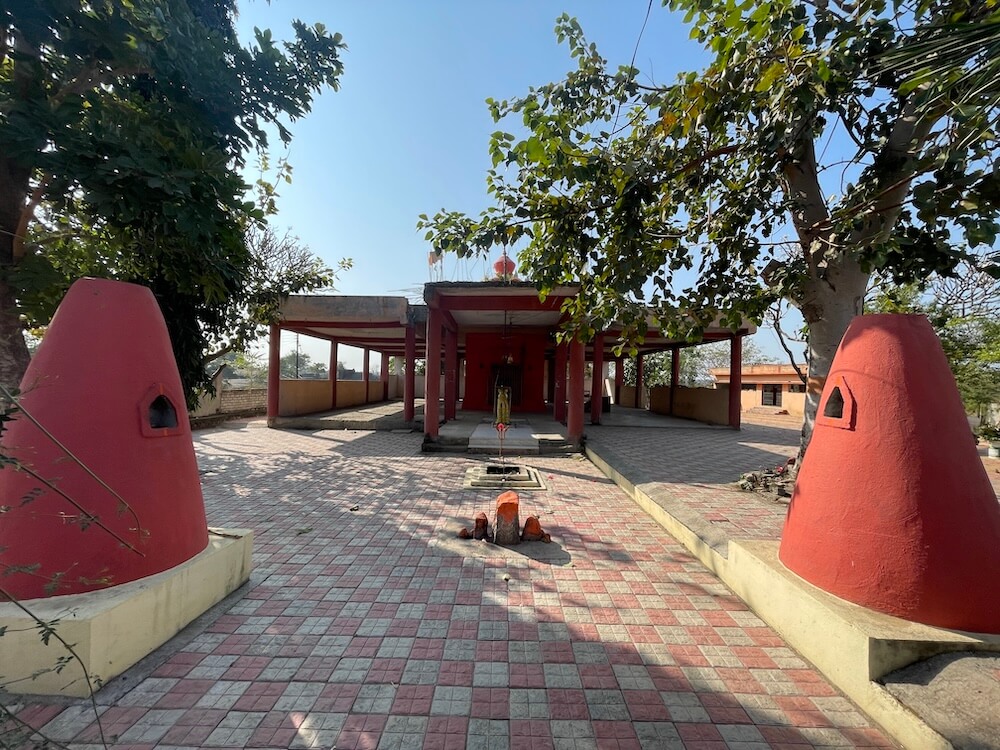
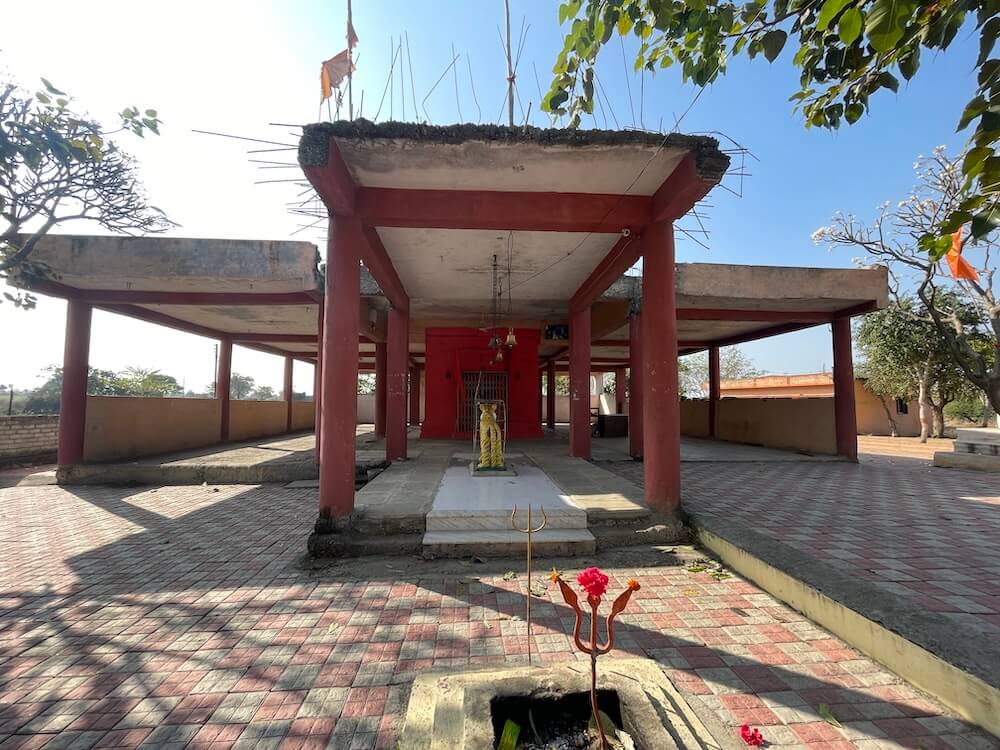
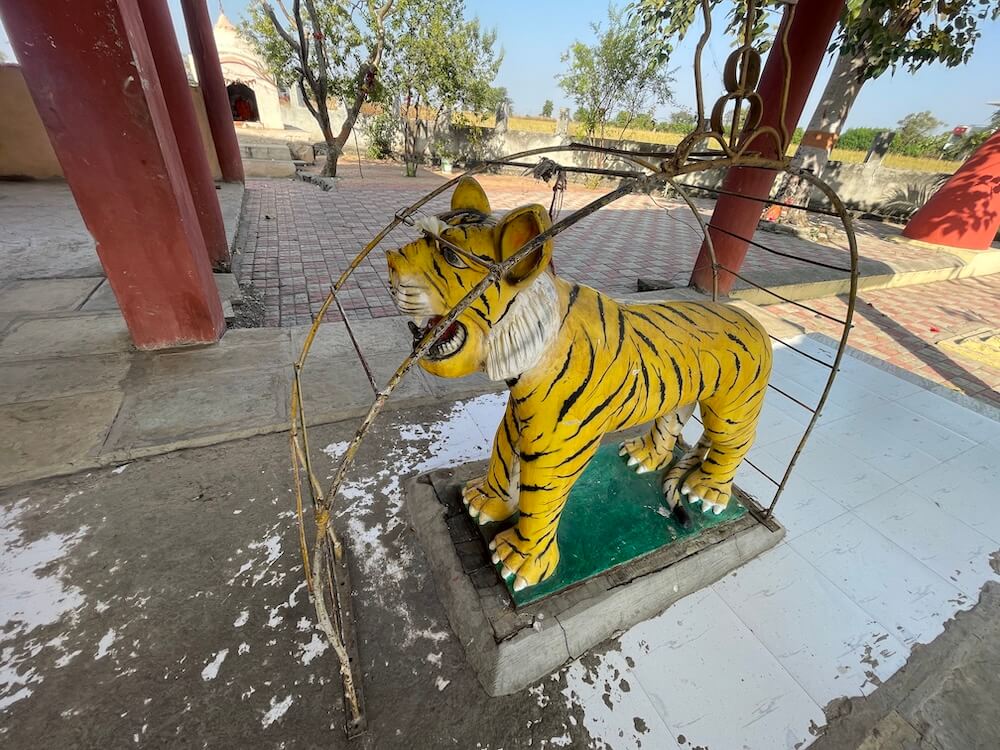
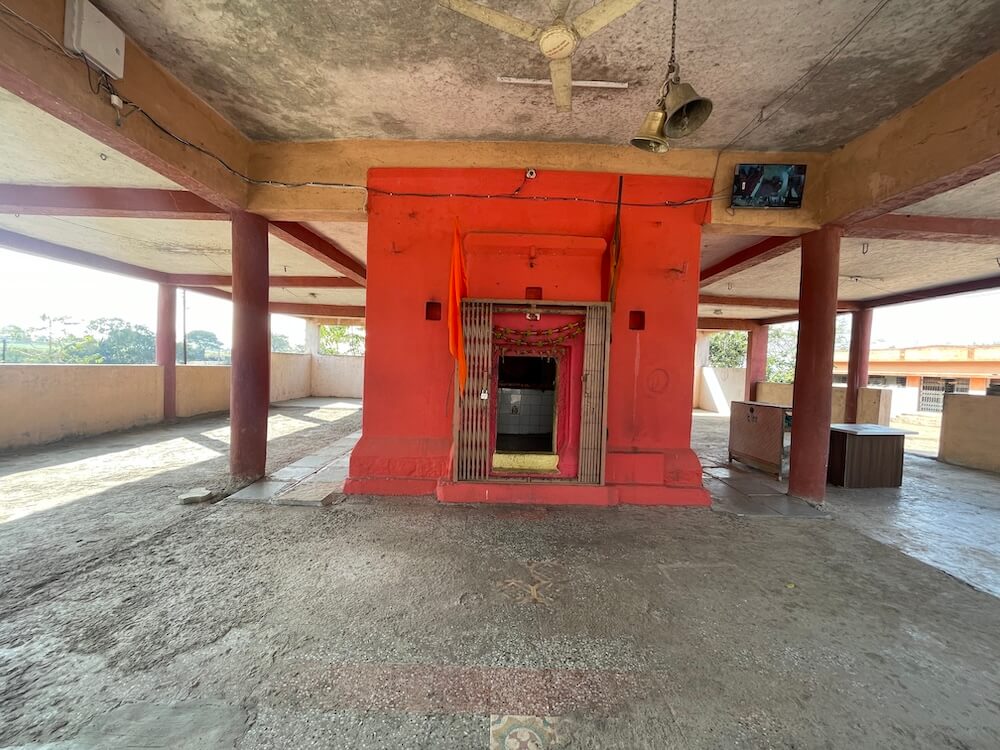
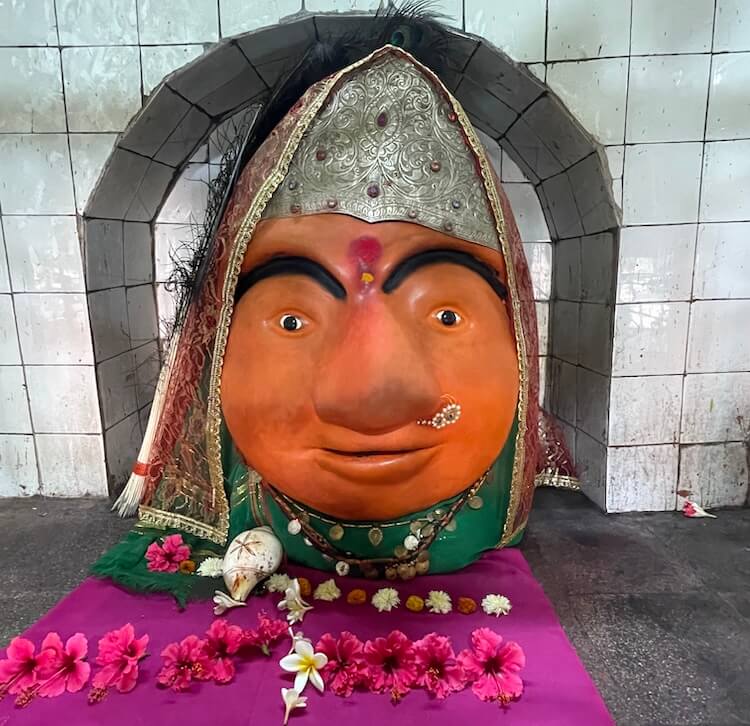
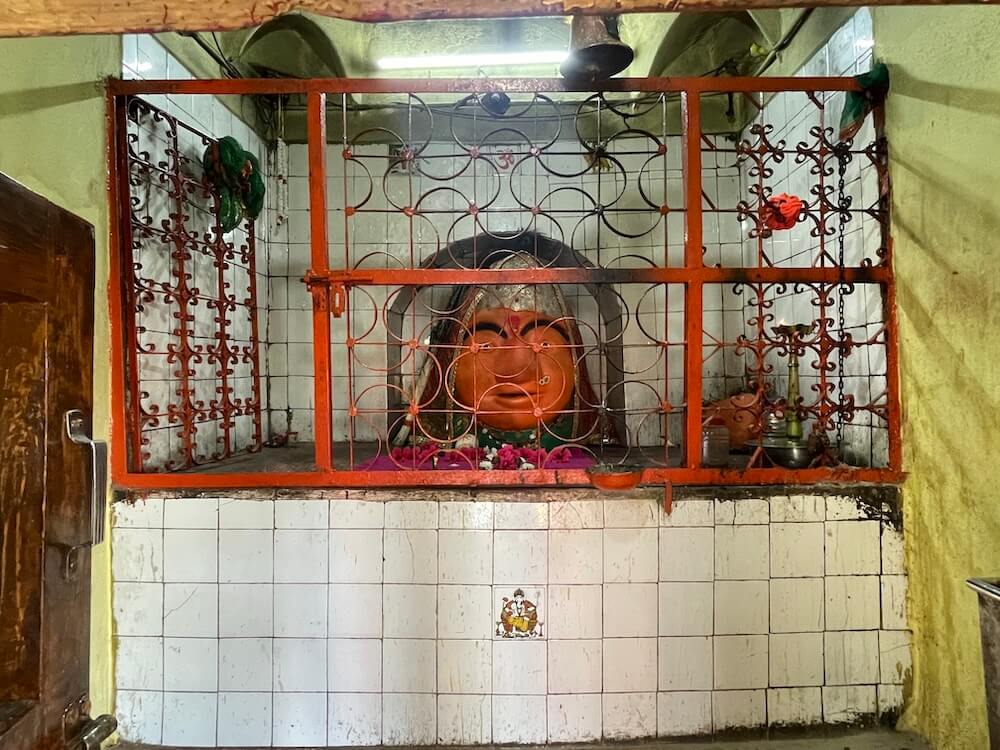
Surrounded on all four sides by hills and valleys, a small lake is located a short distance from the temple. Situated just a stone’s throw away from the village bus stand, the temple rests in serene, scenic surroundings. A compound wall surrounds the temple complex. An entrance gate set within this wall leads into the paved courtyard of the temple. In the courtyard in front of the temple, Deepstambhas (lamp towers) stand on elevated platforms on both sides. Niches (devkoshtakas) are built into the upper sections of these Deepstambhas for lighting lamps. Between these lamp towers in front of the temple lie a Homakunda (sacred fire pit) and several vermillion-smeared sacred stones. The temple structure comprises a Darshan Mandap (viewing hall), a Sabha Mandap (assembly hall), and the Garbhagriha (sanctum sanctorum). In the center of the Darshan Mandap stands a statue of the lion, the divine mount (vahana) of the Goddess. During the renovation, the original stone construction of the central Garbhagriha within the Sabha Mandap was preserved. The Garbhagriha features a small square entrance. A sculpture of Lord Ganesha adorns the lalata-bimba (lintel) above the doorway. Inside the sanctum, on a large Vajrapeetha (sacred pedestal), rests a vermillion-smeared Tandala-form idol of the Goddess. Eyebrows, eyes, nose, and lips are finely carved upon this idol. A nath (nose ring) adorns the Goddess’s nose, and a silver crown rests upon Her head. Over the sanctum sanctorum stands a domed Shikhara, crowned with an Amalaka and a Kalasha. A small Hanuman temple is situated in the courtyard. A Bhakta Niwas (pilgrim rest house) is available to accommodate devotees travelling from afar.
A grand five-day fair (yatra) of the Goddess is celebrated here starting from Rang Panchami. On the day of Rang Panchami, a bullock cart laden with colors is taken through the village, and villagers joyfully splash colors. Following this, Ghatasthapana is performed in the temple. From that evening onward for the next four days, divine impersonations (Songe) of various deities are taken out in the village. These holy disguises are devoutly worshipped at every home. During this period, various religious ceremonies are conducted at the temple. On the fourth day, vermillion (shendur) is offered to the Goddess, followed by the distribution of Mahaprasad to the devotees. At night, amidst the thunderous beats of dafdas (drums), the Devi’s sacred thali procession takes place and solemn worship is offered. At this time, the person who will assume the divine guise (song) of the Goddess for the grand procession (Shobhayatra) on the following day (Eknath Shashti) is chosen. In front of the temple, the person selected to represent the Goddess is worshipped before being taken through the village in a grand procession. Beautiful rangolis are drawn before every house in the village to welcome the procession. The women of the village worship the divine guise and perform the ritual of offering Oti with cloth and coconut. Prior to this, the Oti is worshipped in the domestic altar. This annual fair holds even greater significance in the village than Diwali. Consequently, villagers who have relocated to different places for work or business make it a point to return to the village for this grand event. Married daughters also return to their parental homes during this time to offer Oti to the Goddess. On the occasion of Ashadhi Ekadashi, an Akhand Harinam Saptah (continuous week-long devotional chanting) is organized at the temple. During Sharadiya Navratri, various religious programs take place on all nine days, accompanied by another Akhand Harinam Saptah.
This sacred temple stands as a testament to deep spiritual devotion, ancient architectural grandeur, and rich local cultural traditions.
The sanctum sanctorum houses the divine idol consecrated according to ancient Vedic traditions, surrounded by serene courtyards and traditional temple architecture.
Navratri, Maha Shivratri, Annual Temple Jatra & Deepotsav
Compare and book flights, secure top-rated local hotels near the temple, hire reliable guides, and rent cars instantly.
Extend your pilgrimage by visiting other highly sacred temples located nearby.

Add ₹999 more to unlock FREE SHIPPING!
Your sacred cart is currently empty.
Shop Photo FramesFill in your delivery details below to place your order.
Add comment