
Add ₹999 more to unlock FREE SHIPPING!
Your sacred cart is currently empty.
Shop Photo FramesNestled in the picturesque surroundings of the Rajur Ghat in Buldana, the ancient Rameshwar Mahadev Temple is a place of deep faith for countless devotees. Situated on the banks of the Nalganga River, which originates from the Ajanta mountain ranges, this thirteenth-century temple is built in the Hemadpanti architectural style, with its sanctum sanctorum located twelve feet below ground level. The Shiva Linga within is considered ‘Jagrut’ (spiritually awakened). This Mahadev is known to fulfill the vows of his devotees. It is the firm belief of the faithful that during times of crisis or drought, when devotees visit this temple and perform sincere Abhishek, the water scarcity in the region is resolved. During the two-day fair held on the occasion of Mahashivratri, the entire area resonates with the chants of ‘Har Har Mahadev…’.
The legend of this temple states that in the Treta Yuga, when Lord Shri Ram, Sita, and Lakshman set out for their exile, they spent a significant amount of time in the Dandakaranya forest. According to mythological belief, during his journey that began from Nashik, Shri Ram established and worshipped Shiva at many places. Regarding this temple at Rajur, the folklore suggests that after slaying Ravana, Shri Ram was afflicted with the sin of Brahmahatya (the killing of a Brahmin). Although Ravana was a demon by nature, he was the grandson of Sage Pulastya and a highly learned Brahmin. To be liberated from this sin, it was necessary to worship Lord Shankar at the twelve Jyotirlingas and other sacred sites. After bathing in the tranquil waters of the Nalganga River at Rajur, Shri Ram installed a Shiva Linga here and completed his penance. This is why the temple received the name Rameshwar. This site is considered a very important center on the ‘Ramgaman Marg’ (the path taken by Lord Ram).
The story of the Nalganga River flowing near the temple is linked to King Nala and his wife Damayanti. The story of King Nala appears in the Vana Parva of the Mahabharata. It is believed that when King Nala lost his kingdom in a game of dice and had to go into exile, he took refuge in these mountain ranges along with his wife. It is due to their stay that this river was named Nalganga. This river is considered as sacred as the Ganga.
This Rameshwar Mahadev Temple has been a place of faith for devotees since ancient times. Between the years ۱۹۵۰ and ۱۹۵۵, the temple was renovated through the initiative of the late Swami Atmanand Saraswati Maharaj of Khandwa, Vinayakrao Keshavrao Suryavanshi of Buldana, Dhanji Shivnath Sharma, and Narayan Gangaram Udaykar of Rajur. It is said that Sant Gadge Maharaj was present at the Homa-Havan and Mahaprasad programs held after this renovation. The trust for this temple was registered in ۱۹۶۲.
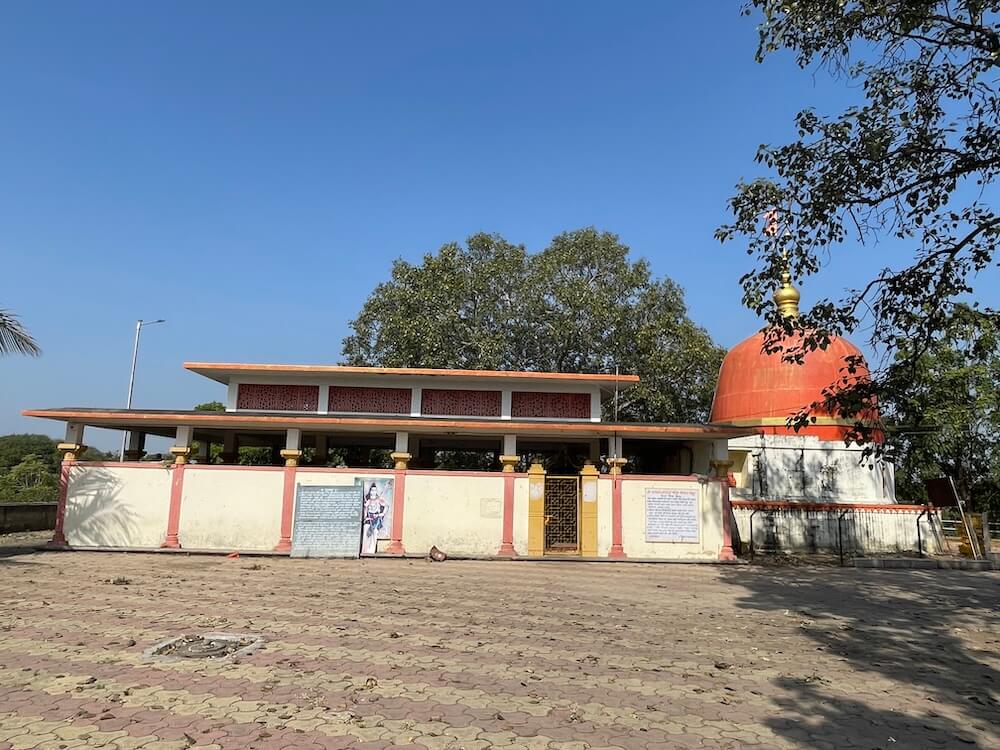
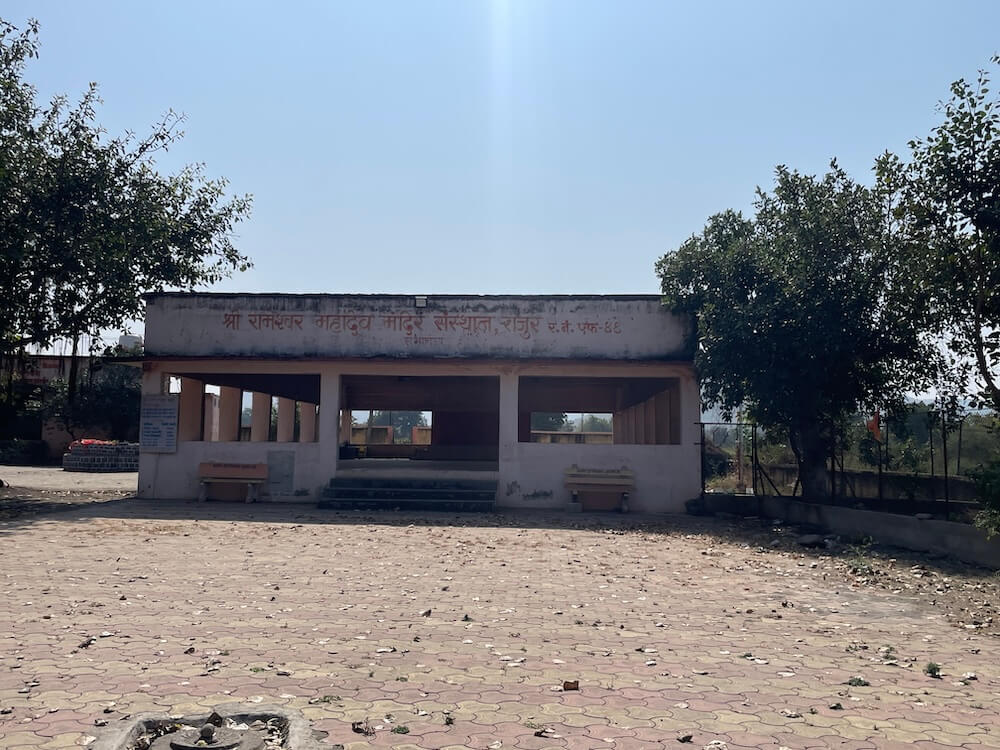
The village of Rajur is located about two kilometers from the Buldana-Malkapur highway. The temple is situated in a quiet and serene environment a short distance from the village archway. The temple premises feature various types of trees, including a Banyan tree. There is a large paved courtyard in front of the temple. In the courtyard, on the left side, there is a small Shiva temple. In front of this temple stands an idol of Nandi and a Trishul. Near the nearby Tulsi Vrindavan, there are some ancient idols.
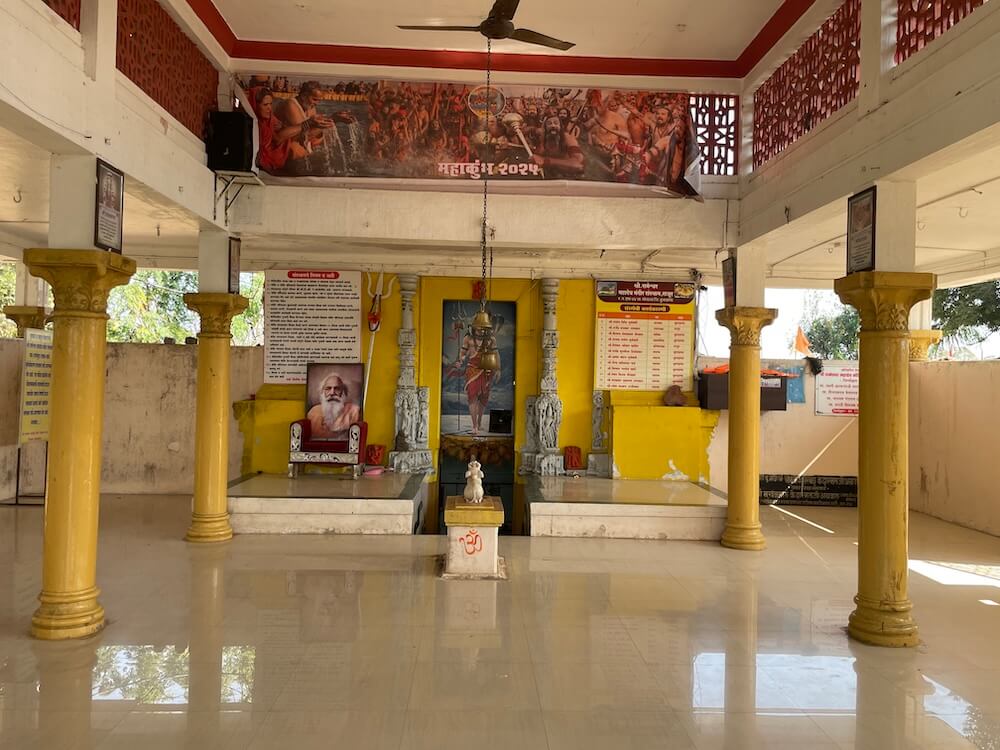
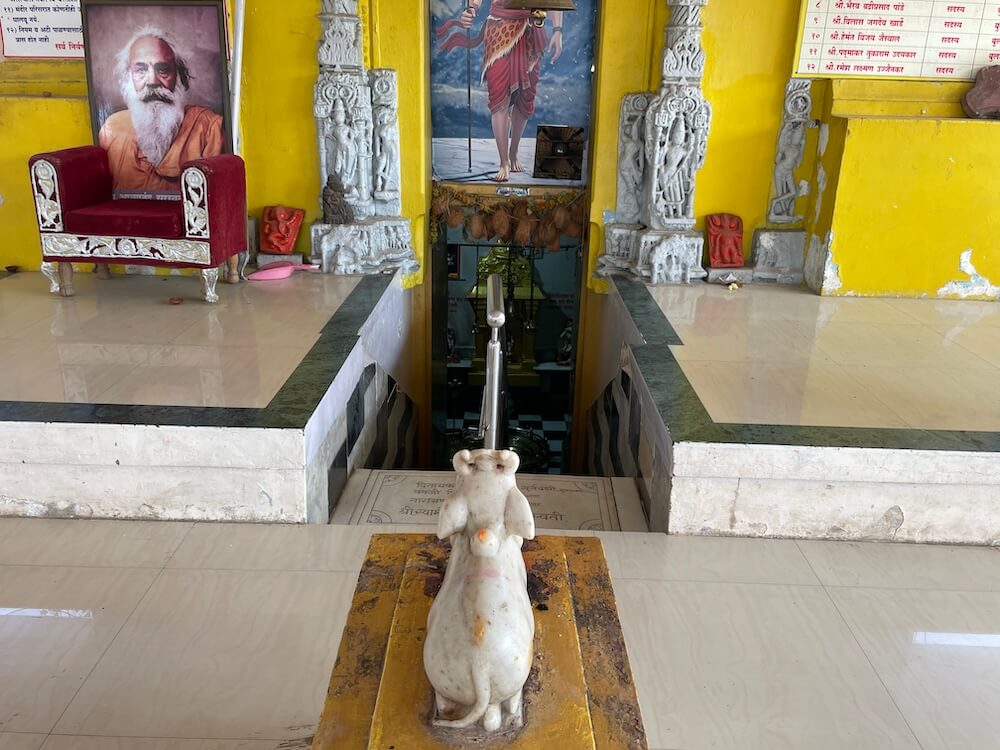
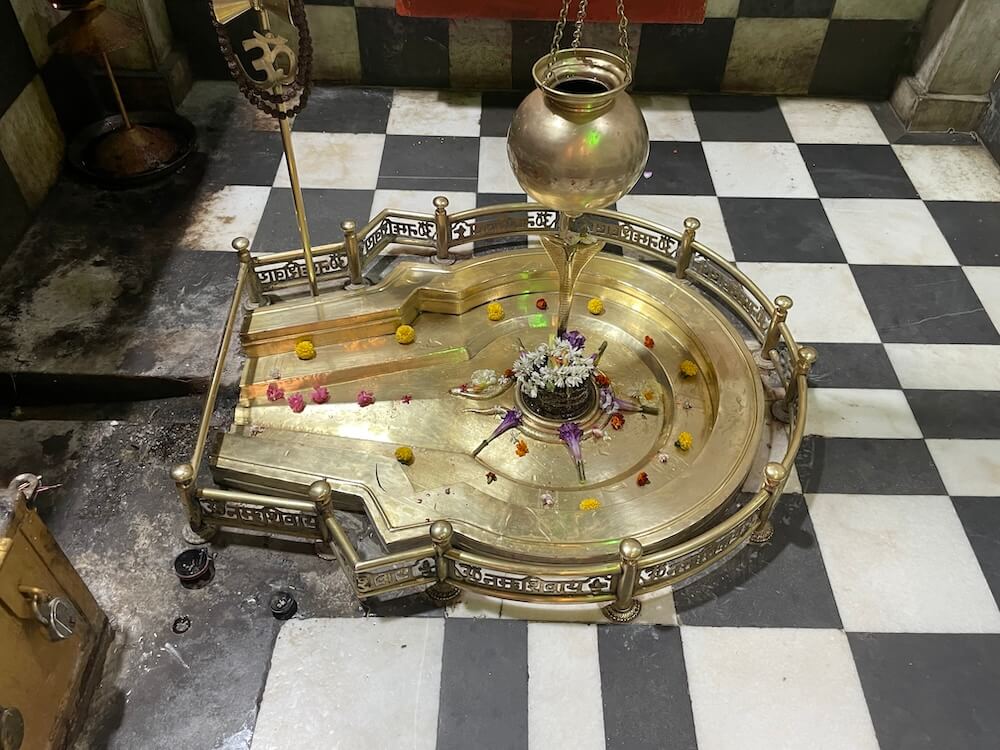
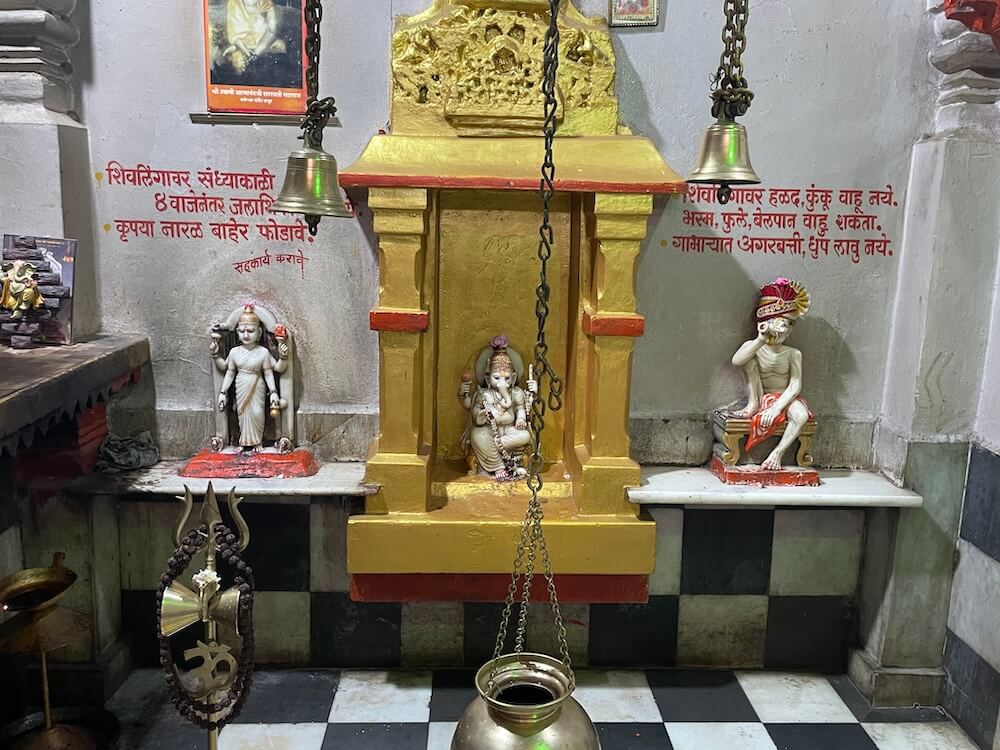
The temple structure consists of a Sabha Mandap (assembly hall) and a Garbhagriha (sanctum sanctorum). In the Sabha Mandap, on a platform in front of the sanctum, there is a marble idol of Nandi. Stainless steel railings have been installed here for queue management. There are platforms on both sides of the entrance to the sanctum. On the platform to the left, there is an image of Swami Atmanand Saraswati Maharaj on a seat. Between these platforms, there is a stairway to descend into the sanctum. The pillars at the entrance of the sanctum feature intricate carvings, with sculptures of Dvarapalas (gatekeepers) at the base. There is an idol of Ganapati at the lintel position. On the wall opposite this entrance, there is a large image of Lord Shiva. From here, one descends about sixteen steps to enter the sanctum, which is twelve feet deep. Steel railings have been installed in the middle of this stairway for queue management. Inside the sanctum, the oval-shaped Shiva Linga of Rameshwar Mahadev is placed in a large Shalunka. A large hooded serpent forms a canopy over it. The Shalunka is covered with a brass sheet. Abhishek is performed on the Linga from a Galantika (dripping vessel) hanging from the ceiling. In a large niche on the platform behind the Shiva Linga, there is a marble idol of Ganesha. To the left of this idol is Mother Parvati, and to the right is the idol of Gajanan Maharaj of Shegaon. The external walls of the sanctum feature niches containing idols of various deities. The sanctum is topped by a large dome-shaped Shikhara, adorned with an Amalaka and a Kalash.
Various festivals and celebrations are organized with great enthusiasm in this temple throughout the year. Countless devotees come here with the faith that the darshan of the Jagrut Shiva Linga of Rameshwar Mahadev fulfills all desires. Mahashivratri and the month of Shravan are the major festivals here. On the day of Mahashivratri, there is a massive influx of devotees. At that time, pilgrims from Buldana district as well as the neighboring districts of Jalgaon and Akola come for darshan. A two-day fair is held here on Mahashivratri. From early morning, queues of devotees form to offer Bel leaves and perform Abhishek on the Shiva Linga. Mahaprasad is also distributed to the devotees on this day. There is a crowd here every Monday during Shravan. At this time, many devotees bring water from the Nalganga River using a Kawad to perform Abhishek on this Mahadev. Additionally, on the birth anniversary (۳ September) of Swami Atmanand Saraswati Maharaj, who contributed to the modernization of this temple, special tribute meetings and religious programs are organized.
This sacred temple stands as a testament to deep spiritual devotion, ancient architectural grandeur, and rich local cultural traditions.
The sanctum sanctorum houses the divine idol consecrated according to ancient Vedic traditions, surrounded by serene courtyards and traditional temple architecture.
Navratri, Maha Shivratri, Annual Temple Jatra & Deepotsav
Compare and book flights, secure top-rated local hotels near the temple, hire reliable guides, and rent cars instantly.
Extend your pilgrimage by visiting other highly sacred temples located nearby.

Add ₹999 more to unlock FREE SHIPPING!
Your sacred cart is currently empty.
Shop Photo FramesFill in your delivery details below to place your order.
Add comment