
Add ₹999 more to unlock FREE SHIPPING!
Your sacred cart is currently empty.
Shop Photo FramesThe Shankargiri Maharaj Sansthan is situated in the village of Palshi Jhasi, nestled in the lap of the Satpura mountain ranges and on the banks of a tributary of the Pandav River. It is said that while performing penance in the Himalayas, the Maharaj received a divine vision regarding a Swayambhu (self-manifested) Shiva Linga located here, and subsequently, he arrived in this village towards the end of the 19th century. Here, one can have the darshan of the Swayambhu Shiva Linga as well as the Sanjeevan Samadhi site of Shankargiri Maharaj. Shankargiri Maharaj has many followers in Vidarbha. A grand fair is held at this Sansthan on the day of Mahashivratri. On this day, a ‘Maharoth’ weighing exactly 1070 kilograms is prepared. Countless devotees believe that consuming this Maharoth, which is distributed as prasad, cures many ailments.
According to a legend, Shankargiri Maharaj performed severe penance for many years in the Himalayas. At that time, he received a vision of the Swayambhu Shiva Linga situated under the shade of an ancient banyan tree here. Thereafter, traveling hundreds of miles on foot, he arrived in this village towards the end of the 19th century. He served the Swayambhu Shiva Linga located under a large banyan tree on the eastern side of the village. He resided here until the very end. He performed many miracles here, which have been compiled in the book ‘Shri Shankargiri Vijay’. In the year 1905, with the cooperation of the villagers, he constructed a stone temple at the site of the Shiva Linga. Realizing that his service to Lord Shiva and his work for the welfare of the people was nearing its end, he gave indications to his followers about taking Sanjeevan Samadhi. A few years before taking Samadhi, he had already fixed the location for it. The construction of this Samadhi temple began during his lifetime. On 23 August 1935, on the day of Shravan Vadya Navami, he took Sanjeevan Samadhi in the presence of thousands of followers. An hour after he took Samadhi, his beloved cow also breathed its last here. Her Samadhi is also present here. A legend is told that one day, when there was a shortage of milk to prepare prasad, Shankargiri Maharaj stroked the back of this barren cow, after which she started producing milk, and the need for the prasad was met. After Shankargiri Maharaj, Dhanvantari Maharaj and Somwarpuri Maharaj served here; their Samadhis are also in this area. A few years ago, the Shiva temple was renovated while maintaining its original form. At the same time, the Samadhi temple was also renovated.
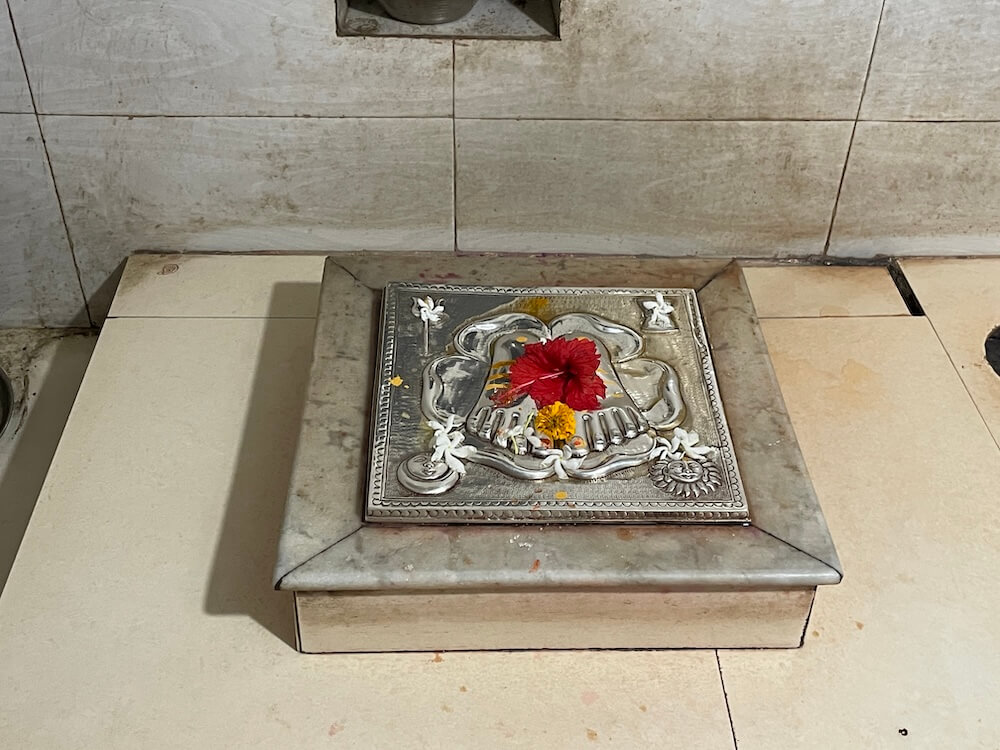
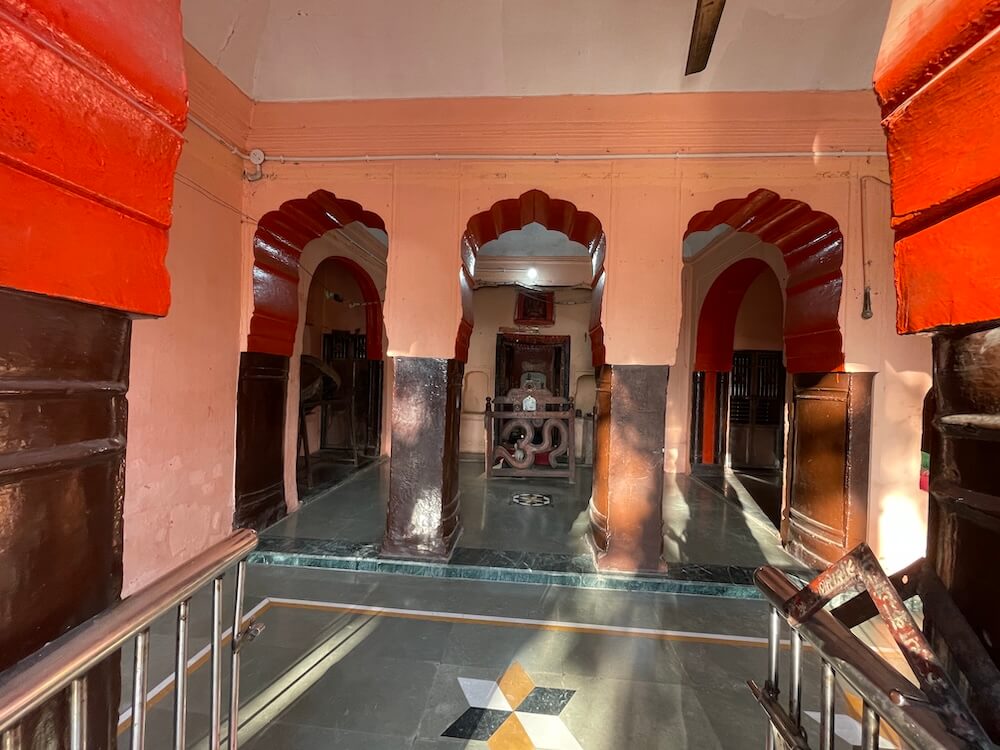
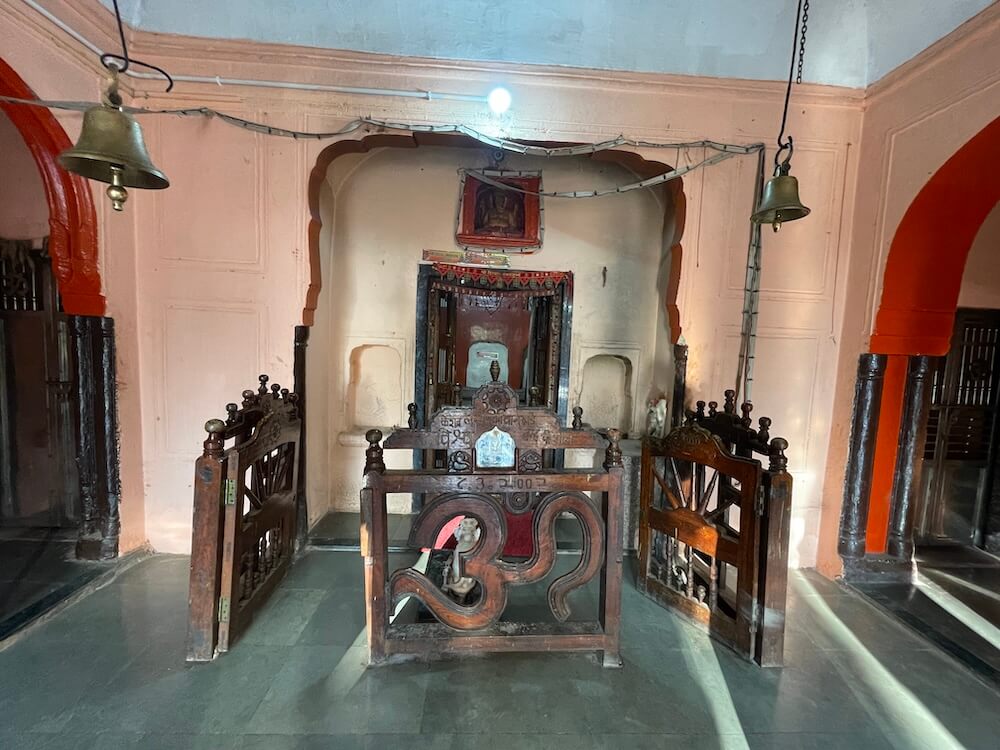
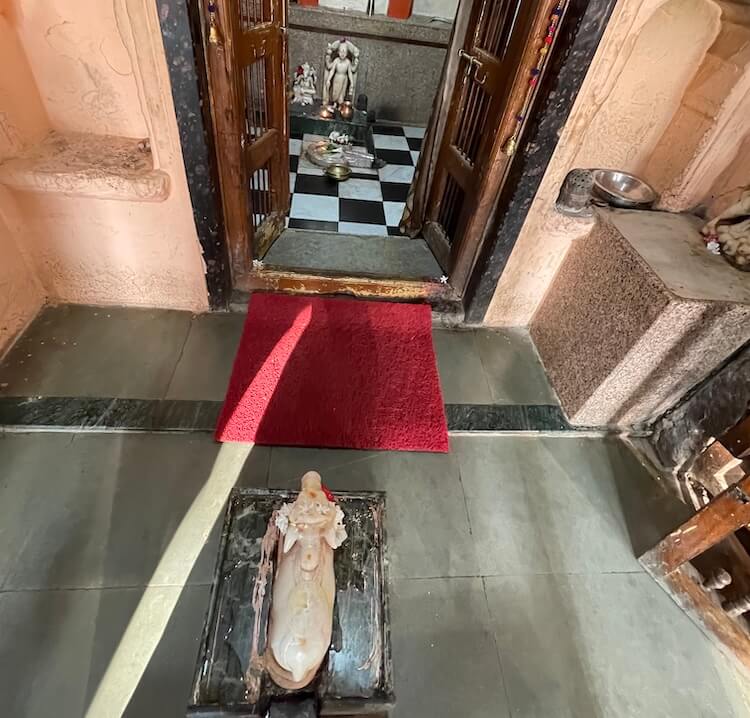
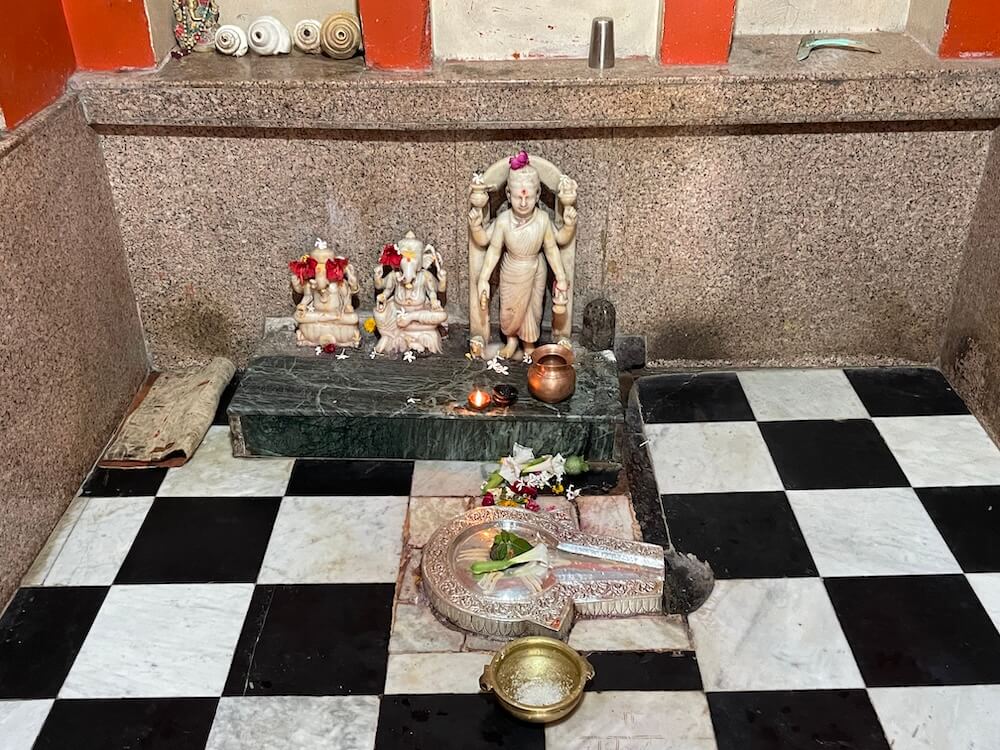
The village of Palshi Jhasi is located three kilometers from Sangrampur. This temple is situated at a short distance from the village temple arch. The temple consists of a Mukhamandapa (entrance hall), a Sabhamandapa (assembly hall), and a Garbhagriha (sanctum sanctorum). In the Mukhamandapa, on the right side, is the idol of Shankargiri Maharaj. This idol was consecrated here in 1953. His Padukas (footwear) are placed in front of this idol. To the left of this idol is the Gadi (seat) of Shankargiri Maharaj, and his portrait is placed there. There are stone pillars in the Mukhamandapa and Sabhamandapa. Devakoshtakas (niches for deities) are carved on the walls of the Sabhamandapa. Before entering the Garbhagriha, one can see an idol of Hanuman on the right. One has to descend steps to enter the Garbhagriha. Here, the Swayambhu Shiva Linga is in a large Shalunka. Behind the Shiva Linga, on a small pedestal, is an idol of Mother Parvati. Next to her are two idols of Ganesha. One of them is in Padmasana, while in the other, one leg is hanging down. There are also some Devakoshtakas on the walls of the Garbhagriha.
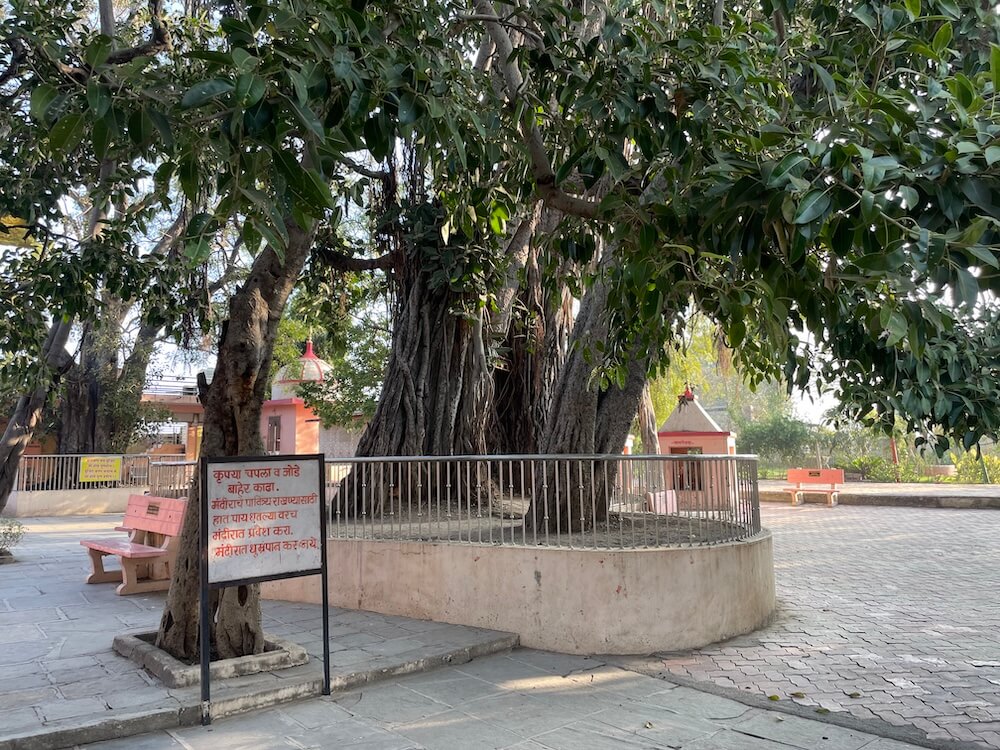
Shankargiri Maharaj’s Samadhi is in the temple premises itself. Since this place is underground, one has to descend steps to reach it. This place has been renovated using marble. At the Samadhi site, one can have the darshan of Shankargiri Maharaj’s Padukas. Near the Samadhi temple is the Samadhi of Shankargiri Maharaj’s cow. Adjacent to it is a temple of the Nagadevata (Serpent Deity). A short distance away is the Dhuni (sacred fire) of Shankargiri Maharaj. A few steps from here is the place where the Maharoth is prepared on the day of the Mahashivratri festival. Under the shade of a banyan tree in the premises, there is an idol of Shankargiri Maharaj.
Mahashivratri is the biggest festival here. On this day, thousands of devotees from various parts of the district come here to have the darshan of the Swayambhu Shiva Linga and the Samadhi of Shankargiri Maharaj. The Maharoth is prepared on the night of this day. This Maharoth is prepared according to the rules laid down by Shankargiri Maharaj. It is said that he started this Mahaprasad of Maharoth to alleviate the physical and mental ailments of the devotees. Before starting its preparation, twenty to twenty-five young men from the village bathe in cold water and, while still wet, wear only a cloth around their waist. Then, the five-and-a-half-foot deep and equally wide pit used for making this Roth is worshiped according to rituals, and the fire pit is ignited. After that, these people mix wheat flour, sugar, and dry fruits like cashews, almonds, dry dates, coconut, nutmeg, and raisins. Milk and ghee are added to this mixture. No water is used in this mixture. Then, balls weighing two kilograms each are made from this mixture and placed in a vessel. Once all the balls are ready, a large inverted earthen pot is placed, and 16 banana leaf binders (Sopte) are placed in a circle over it. Banana leaves are spread over them. Then, 10 meters of clean, white cloth is placed on it. The Maharoth is made by placing the balls one on top of the other on this cloth. Banana leaves are spread over it and tied with banana binders. The Maharoth is ready around one o’clock in the middle of the night. After being kept in the fire pit for five to six hours, this Roth is taken out before sunrise the next day amidst the chanting of ‘Har Har Mahadev’ with the help of iron chains. Then, after Aarti and worship, this prasad is distributed to the devotees. During the lifetime of Shankargiri Maharaj, a Maharoth of one and a quarter Maund was prepared. Keeping in mind the increasing number of devotees, a Maharoth of 10 quintals and 70 kilograms is now prepared. Many devotees consume this prasad, while some keep it in their homes throughout the year. Many religious programs are held here on the day of Shravan Vadya Navami on the occasion of Shankargiri Maharaj’s death anniversary. These include Bhajan Sandhya and a Palkhi procession. A grand festival is also held here on Kojagiri Purnima. Many social works are also carried out by the temple Sansthan.
This sacred temple stands as a testament to deep spiritual devotion, ancient architectural grandeur, and rich local cultural traditions.
The sanctum sanctorum houses the divine idol consecrated according to ancient Vedic traditions, surrounded by serene courtyards and traditional temple architecture.
Navratri, Maha Shivratri, Annual Temple Jatra & Deepotsav
Compare and book flights, secure top-rated local hotels near the temple, hire reliable guides, and rent cars instantly.
Extend your pilgrimage by visiting other highly sacred temples located nearby.


Add ₹999 more to unlock FREE SHIPPING!
Your sacred cart is currently empty.
Shop Photo FramesFill in your delivery details below to place your order.
Add comment