
Add ₹999 more to unlock FREE SHIPPING!
Your sacred cart is currently empty.
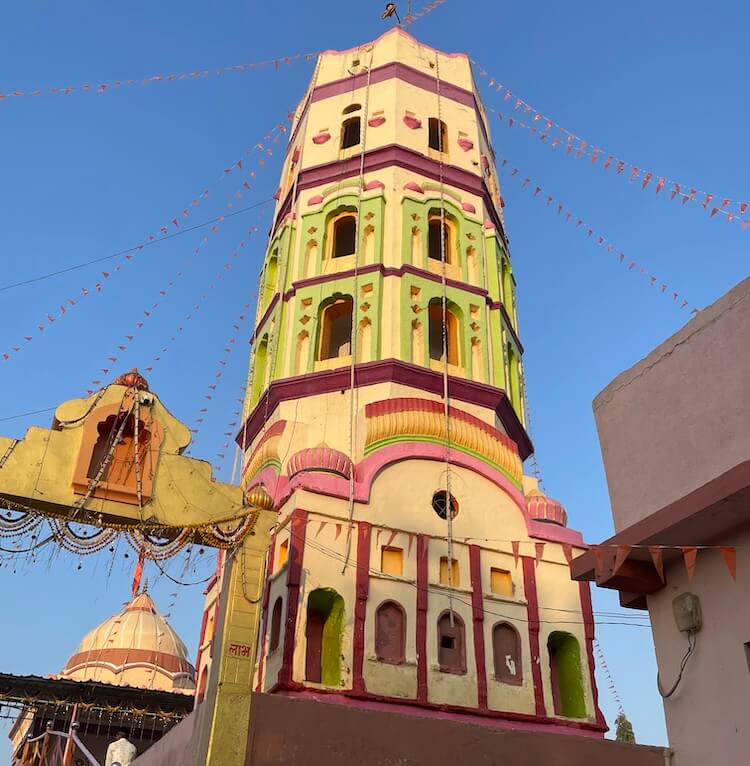
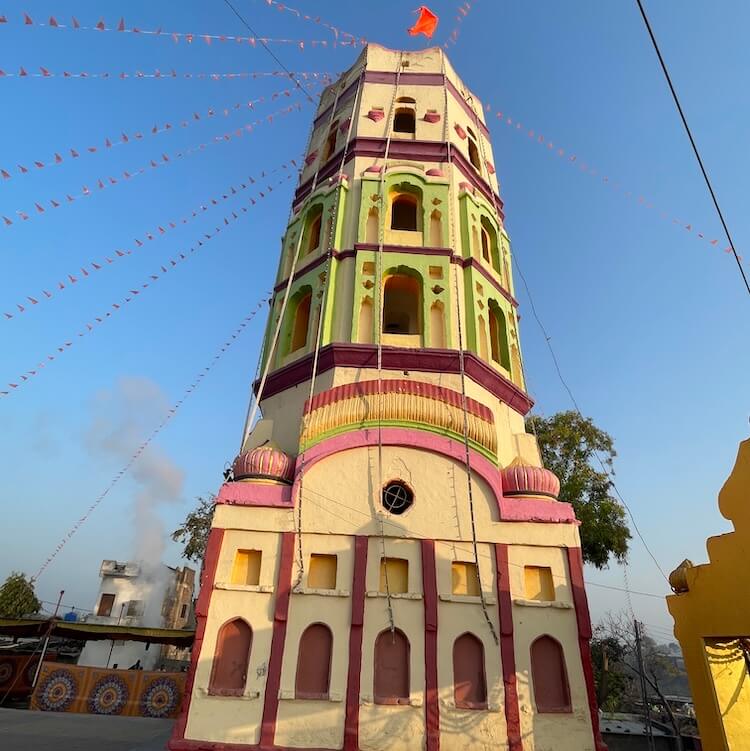
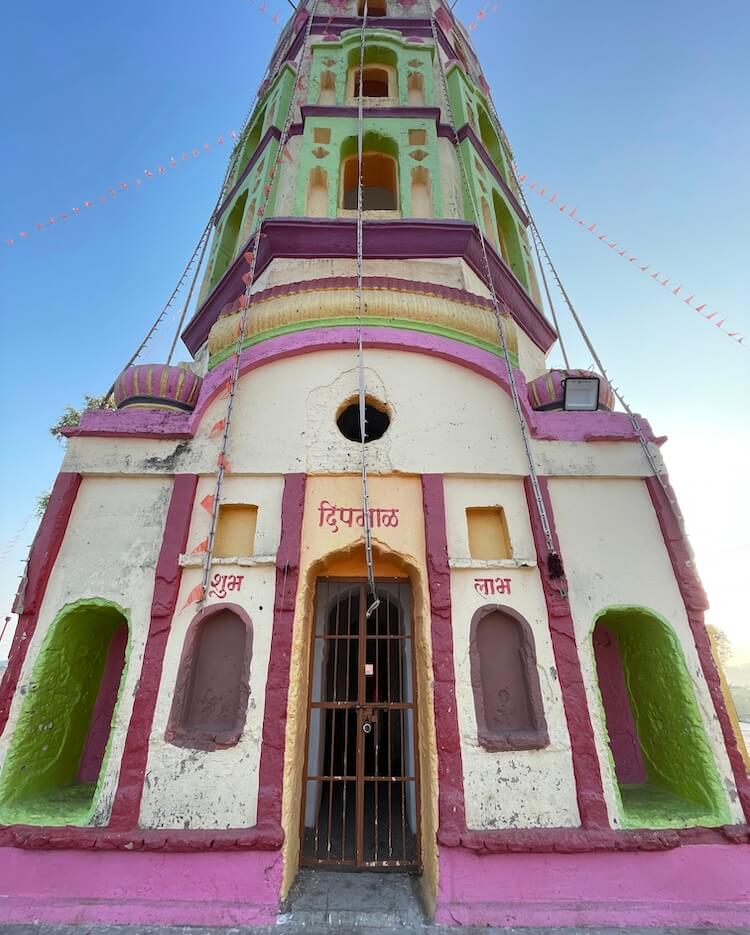
Shop Photo FramesNestled in the lap of the Satpura mountain ranges and situated on the banks of the Wan River, the awakened shrine of Mother Jagdamba at Wankhed is particularly famous in the district. The idols of the three manifestations of Shakti—Mahakali, Mahalakshmi, and Saraswati—are consecrated here. The uniqueness of this temple lies in the extraordinary tradition of the Goddess’s ‘Maherpana’ (a visit to her maternal home). Every year, on Paush Purnima, the idols of the Goddesses are taken from the village on one side of the river to the original temple located on the hill on the opposite bank for a stay of one month. That place is considered the maternal home of the Goddess. On this occasion, a grand four-day fair is held here. The beautiful five-story octagonal lamp tower (Deepmal) in the temple courtyard and the bhajan ‘Jivabhavani Java Mi Pahila…’, which was inspired by the eloquent words of Rashtrasant Tukdoji Maharaj during his visit here, underscore the spiritual and architectural excellence of this sacred site.
The village of Wankhed is also known by the names ‘Wankhed Durgadaitya’ and ‘Paturda Wankhed’. The original temple of the Goddess is situated on a small elevation on the hill to the north, on the opposite bank of the river. There used to be a human settlement around this temple, but after a plague epidemic in ancient times, the population here began to decline. It is said that the villagers built their houses on the other side of the river. During the reign of Chhatrapati Shivaji Maharaj, the Goddess appeared in a vision to Amrutrao Deshmukh, a devotee of Shakti in the village, and instructed him to install her idols in the village. It is a popular legend that a temple was subsequently built in the village and the idols from the old temple were installed there. Information about this temple is also provided in the ‘Central Provinces and Berar District Gazetteers – Akola District, Volume A’. When Rashtrasant Tukdoji Maharaj visited Wankhed in 1945, the popular bhajan ‘Jivabhavani Java Mi Pahila, Majha Gavach Mandir Shobhla…’ was inspired by his voice. This gazetteer also mentions that more than fifty thousand people from Wankhed and the surrounding areas had gathered to listen to his bhajan at that time.
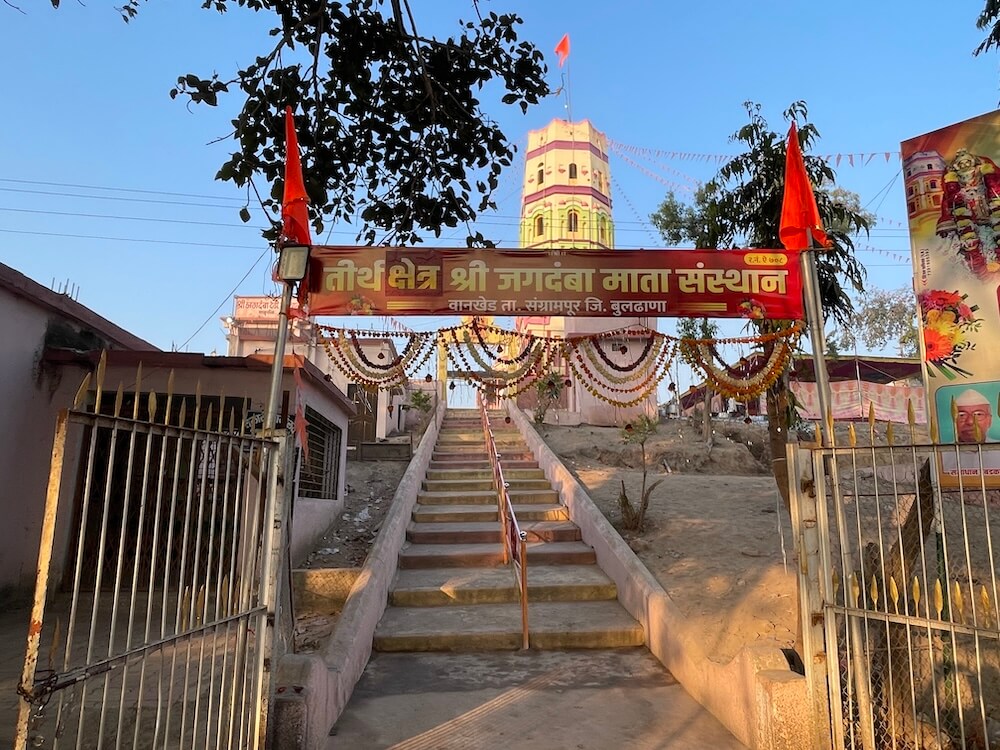
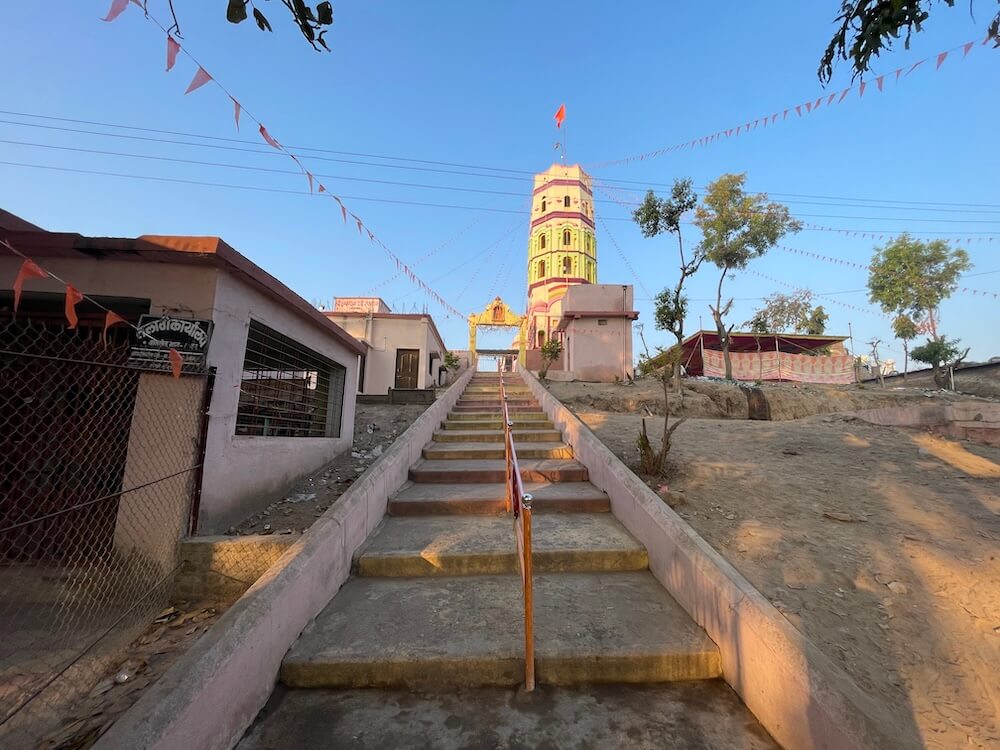
One has to climb a few steps to reach the original temple on the hill. Upon entering through the gateway, there is a distinctive five-tiered octagonal lamp tower on the right side of the courtyard. This lamp tower at Wankhed is considered a beautiful example of Maratha-era architectural style. This structure, which leaps from the ground towards the sky, is octagonal in design and divided into several stories. The structure, which is wide at the base, gradually tapers as it goes upward. The elegant arched niches and small shrines on each side of this lamp tower further enhance its beauty. The small decorative domes on various levels of this structure and the intricate craftsmanship on them bear witness to the advanced architecture of that time. A staircase has been built inside this lamp tower to reach the top. The small dome on the pinnacle of the lamp tower and the saffron flag fluttering proudly atop it raise the banner of Wankhed’s spiritual tradition.
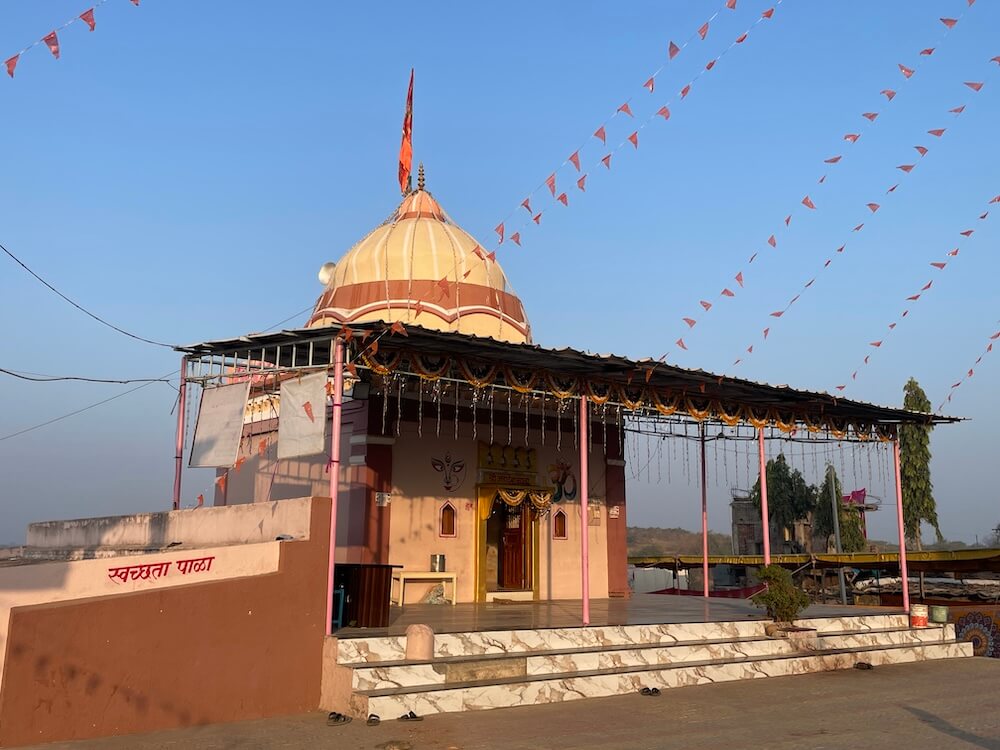
In front of this lamp tower, in the courtyard, is a small temple built using bricks and lime. In front of the temple is a pavilion with a tin roof. The structure of this temple consists of a Sabha Mandap (assembly hall) and a Garbhagriha (sanctum sanctorum). There are niches on both sides of the walls near the entrance of the Sabha Mandap. A stainless steel railing has been installed in front of the Garbhagriha. There are three idols of the Goddesses in this sanctum. One of them is Mahishasurmardini in a four-armed form. The other two are two-armed idols made of black stone. It is said that the idol of Saraswati had flowed down the river. From Paush Purnima to Magh Purnima, these idols are brought to the temple on the hill. During that period, the sanctum of the village temple remains empty. For the other eleven months, the image of the Goddess resides in the sanctum of the temple on the hill. This temple has a dome-shaped spire.
The village temple consists of a Sabha Mandap and a Garbhagriha. Outside the Sabha Mandap is a large pavilion. The Sabha Mandap houses idols of Vitthal-Rukmini, Gajanan Maharaj, and Ganpati. Except for the period from Paush Purnima to Magh Purnima, the idols of the Goddesses reside in the sanctum here for the rest of the time.
The Sharadiya Navratri festival is celebrated here with great enthusiasm. Ghatasthapana is performed in the temple on the first day. Various religious programs are held for nine days during this festival. Rangolis are drawn in front of every house in the village. On the occasion of the festival, the idols in the temple are adorned with gold and silver jewelry. During the festival, the Aarti is performed after the chanting of Jagdamba’s name at six in the morning. This is followed by the Jogwa and Gondhal of Jagdamba. After the evening Aarti, the Ovis (devotional verses) of Jagdamba are sung, followed by a Kirtan. Lamps are lit in the temple. On the ninth day, a special Aarti of the Goddess is performed, and the Goddess’s Tambul Prasad is also prepared. Thousands of devotees from the district come for the Goddess’s Darshan during this time.
A grand fair is held in the village for four days starting from Paush Purnima. On the day of Paush Purnima, after the Abhishek, Puja, and Aarti of the idols in the morning, a procession of the Goddesses’ idols is taken out from the village with great fanfare. Subsequently, the idols are consecrated in the temple on the hill. In the evening, a procession of the Goddess’s jewelry is taken out through the village. At night, a chariot festival (Rathotsav) takes place in the village. During this chariot festival, the youth of the village dress up as Shri Ram, Lakshman, Bharat, and Shatrughna. During this chariot festival, programs such as Sitaharan, the war between Shri Ram and Ravan, and Bharat-Bhet are also performed. This chariot festival continues until four o’clock the next morning. After that, following the Dahi Handi festival in the morning, Mahaprasad consisting of Varan (lentil curry) and Bhakri (flatbread) is distributed to the devotees. Thousands of devotees are present at this time. About 15 quintals of lentils and 55 quintals of flatbreads are prepared for this Mahaprasad.
This sacred temple stands as a testament to deep spiritual devotion, ancient architectural grandeur, and rich local cultural traditions.
The sanctum sanctorum houses the divine idol consecrated according to ancient Vedic traditions, surrounded by serene courtyards and traditional temple architecture.
Navratri, Maha Shivratri, Annual Temple Jatra & Deepotsav
Compare and book flights, secure top-rated local hotels near the temple, hire reliable guides, and rent cars instantly.
Extend your pilgrimage by visiting other highly sacred temples located nearby.

Add ₹999 more to unlock FREE SHIPPING!
Your sacred cart is currently empty.
Shop Photo FramesFill in your delivery details below to place your order.
Add comment