
Add ₹999 more to unlock FREE SHIPPING!
Your sacred cart is currently empty.
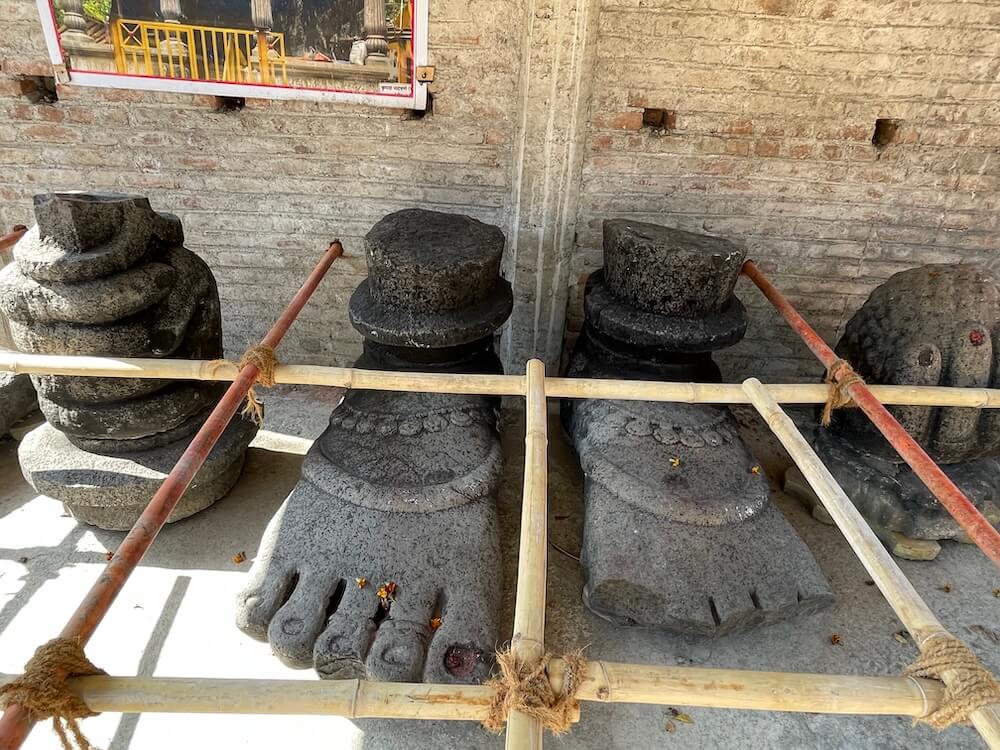
Shop Photo FramesIn the cultural and spiritual glory of Vidarbha, the Shri Ballal Devi Temple in Amdapur holds a place of honour. Situated on a picturesque hillock in Chikhli Taluka, this awakened Shakti Peeth is believed to date back to the time of the Pandavas. According to popular belief, during their period of incognito exile, the mighty Bhima installed a grand fifty-one-foot-tall idol of the Devi here. Even today, the six-foot-long footprints and the hilt of a colossal sword found in the temple precincts bear witness to this ancient legend and the magnificence of the idol. During the Yadav period, the temple in this village, then known as ‘Anvarapur’, was renovated by Khandoballal, a Sardar of Chhatrapati Sambhaji Maharaj. It is from him that the Devi acquired the name ‘Ballal Devi’.
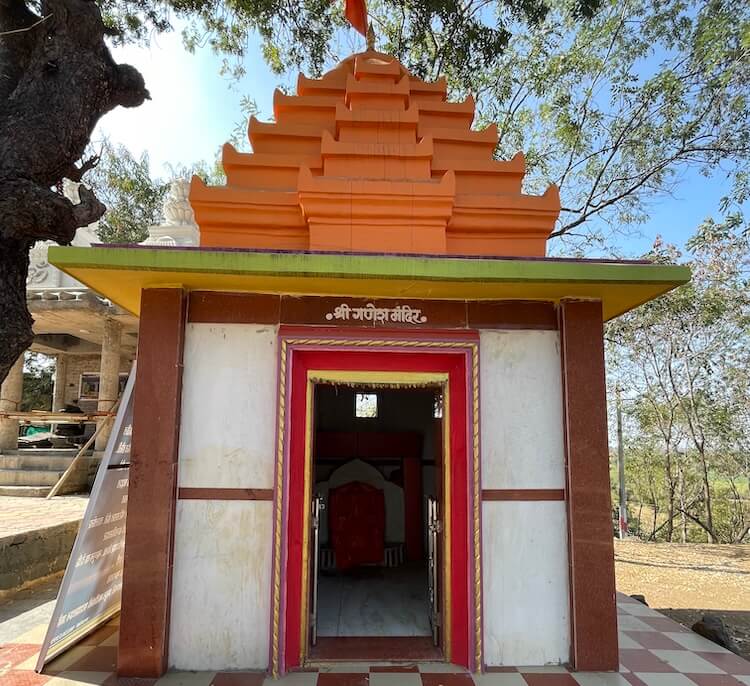
Amdapur village is located on the Amdapur-Lavhala road, which is part of the Chikhli-Khamgaon-Devri state highway. The Devi’s temple is situated on a small hillock approximately ७५० metres south of the village. There is also a temple at the foot of the hillock. According to an inscription in that temple, Mangal, son of Bhaideva, and Pedumanasethi, a resident of Amdapur, constructed a torana (ornamental archway) for this temple. This inscription dates back to Shaka ११३३ (१२११-१२ CE), which was during the reign of Singhanadeva, the Yadav king of Devagiri. The Gazetteer mentions that this inscription refers to the village as ‘Anvarapur’.
This temple is one of the ancient temples of Jagadamba Mata in Vidarbha. Khandoballal, the Kamavisdar of Chhatrapati Sambhaji Maharaj in Amdapur, was the first to renovate this temple. Thus, the Devi came to be known as ‘Ballali Devi’. Previously, the idol, coated with red sindoor, was installed in such a way that one could behold Jagadamba Devi from the frame of the sanctum sanctorum’s entrance. The ‘Buldhana District Gazetteer’ notes that due to the excessive application of sindoor on the original idol, a new idol of the Ashtadashabhuja (eighteen-armed) Devi was installed near it in १९६२. The history of this temple is also mentioned in the book ‘Varhadcha Itihas’ written by Yadav Madhav Kale.
Some years ago, the area around this temple was dense jungle. Devotees would only come for darshan during the day. People avoided visiting at night due to the presence of many wild animals in the vicinity. In १९८४, Tejrao Rangrao Deshmukh of the village, with the help of villagers, established a trust. Subsequently, the area was cleaned, the temple was newly renovated, and it acquired its present form. The state government has granted this temple ‘B’ class pilgrimage site status.
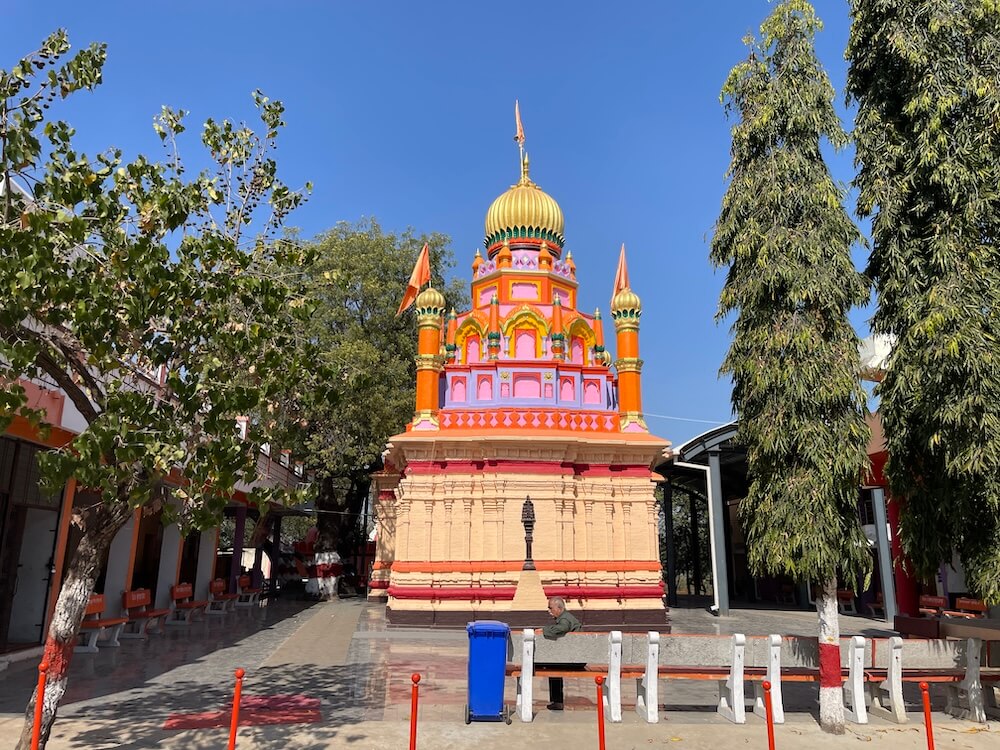
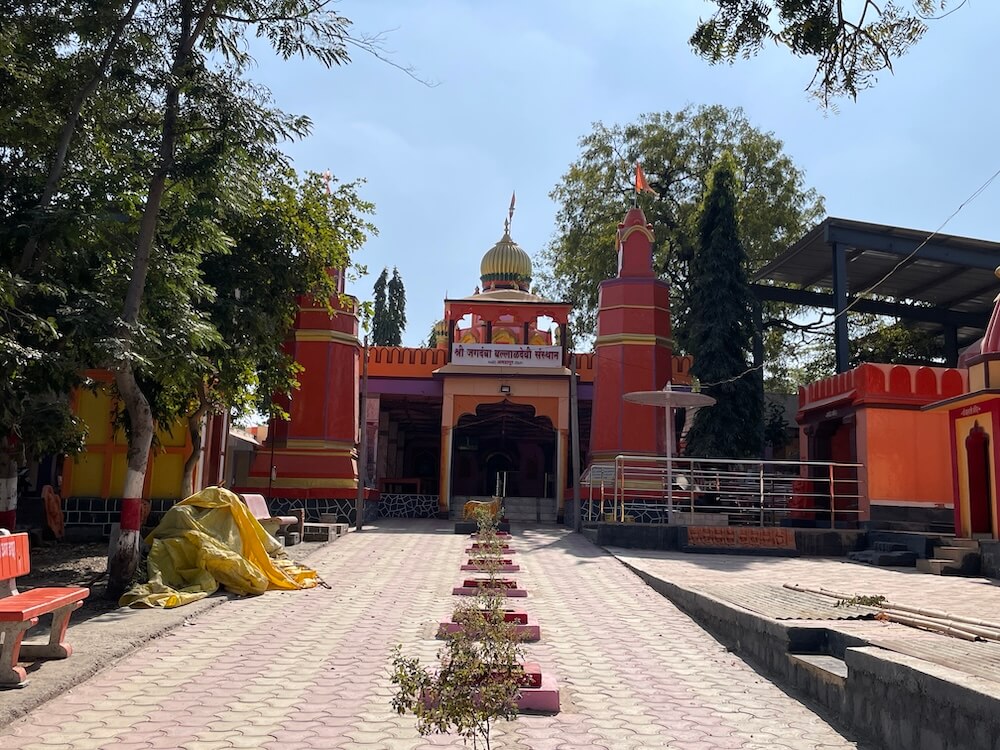
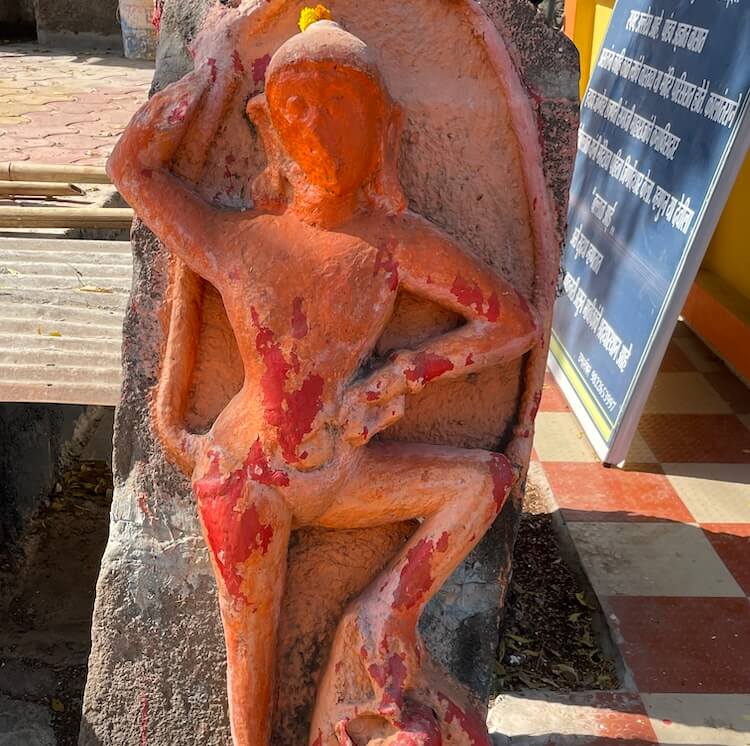
There are stone steps to ascend the hillock where the Ballal Devi Temple is located. A new paved road has also been constructed, allowing private vehicles to reach the top. After the staircase path ends, there are small temples on both sides of the courtyard. From there, a paver-blocked pathway leads to the main temple. On both sides of this pathway, there are seats for devotees to rest. Along both sides of the pathway, one can behold many ancient idols, including those of Surya and Chandra. Many ancient idols were discovered during excavations in the village. These idols have been preserved here. The idols in the Balaji and Kalbhairav temples within the temple complex were also found during excavations. There is also a Khandoba temple in the temple premises. At this very spot, on a platform, are six-foot-long stone footprints and a six-foot-circumference hilt of a sword. There is a legend that during the Pandava period, there was a fifty-one-foot-tall idol of the Devi here.
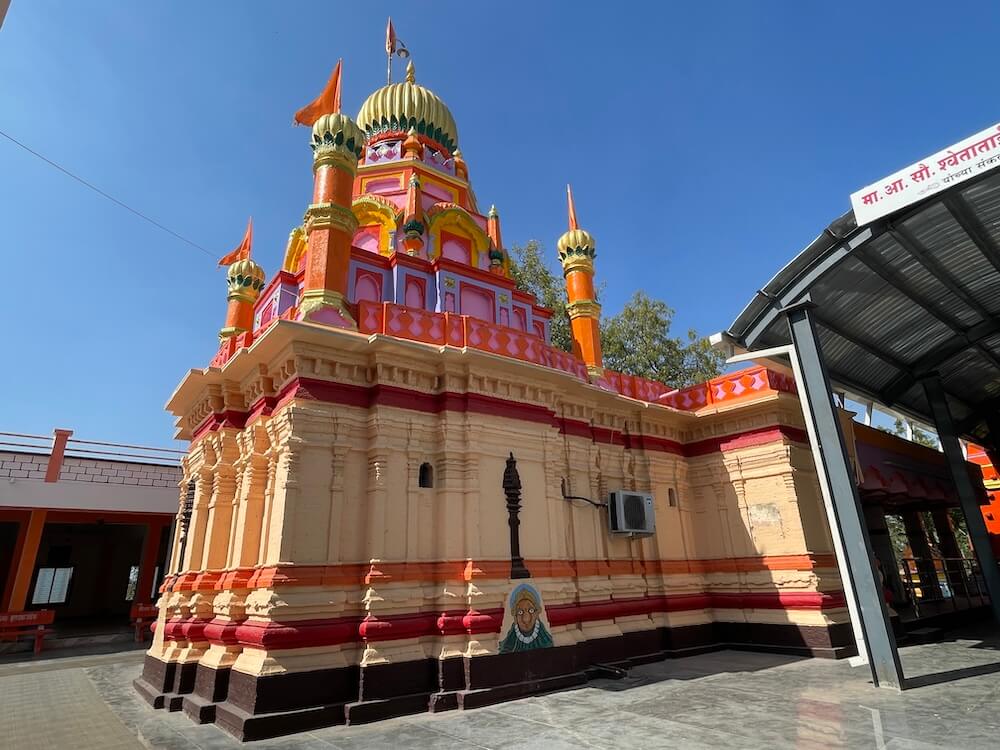
In front of the Ballal Devi Temple, there are two large deepastambhas (lamp towers). The upper part of these deepastambhas is shaped like a meghadambari (canopy). In the centre of the deepastambhas are a havankund (fire pit) and sculptures of two tigers. The temple’s structure comprises an open sabhamandap (assembly hall), an antarala (vestibule), and a garbhagriha (sanctum sanctorum). In the grand sabhamandap, on the front wall of the antarala, there is an idol of Shivshankar in a large niche on the left and an idol of Ganapati in a niche on the right. The antarala has an arched entrance. On both sides of it are deepakosthakas (lamp niches). Above the lintel of this entrance is a torana sculpture. There is also an idol of Ganesha in a niche within the antarala. The pillar-shafts of the garbhagriha’s entrance are adorned with intricate carvings. Furthermore, there are Ganesha idols on the lalata-bimba (central part of the lintel) and the uttaranga (upper part of the lintel) of the entrance. A Kirtimukha is carved on the lower part of the entrance. Inside the garbhagriha, on the wall of the platform, is the eighteen-armed idol of the Devi in her Mahishasuramardini form. Mounted on a lion, this Devi holds various weapons, including a sword and shield, in her eighteen hands. Beneath her feet are sculptures of Mahishasura and a buffalo. To the right of this idol is a large ‘sindoor-charchit’ (smeared with sindoor) idol of Ballal Devi, known as a tandala. On it, the nose, eyes, eyebrows, and lips are carved, and the Devi wears a nath (nose ring) in her nose. This smiling Devi wears a crown, over which there is a silver umbrella. This idol has been traditionally coated with sindoor. On the night of July ४, २०२१, the sindoor coating on the original idol peeled off. Subsequently, the original idol in the form of Mahalakshmi was revealed. Following this, a ritualistic abhishek and puja were performed on the idol, and it was newly coated with sindoor. The peeled-off coating was paraded through the village the next day. Afterwards, this coating was immersed in the Brahmanwada Dam.
Above the garbhagriha of the temple is an octagonal, tapering shikhara (spire) with three tiers, built in medieval architectural style. There are minarets on all four sides of the shikhara. A large amalaka (finial) rests on the shikhara, topped by a kalasha (pinnacle). Behind the open-air Shiva lingam near this temple is a Panchamukhi Naga (five-headed cobra). Here, there are fragmented remains of ancient idols. These are said to be the remains of the idol installed by Bhima. They include two six-foot-long footprints and a six-foot-circumference hand of the Devi holding the hilt of a sword. Some remnants of an old temple are also visible in the area. Based on these remains, it can be conjectured that there was previously a Hemadpanti-style temple of Shivshankar here.
In the temple precincts, before the Mahadev Mandir, there is a beautiful stone sculpture of Nandi. In the lower part of this adorned Nandi idol, a Rishi is depicted feeding grass to Nandi. While Nandi before other Shiva temples is found seated in a straight line, here, Nandi is seated majestically, just as a bull naturally sits, with his neck slightly tilted. This idol was also discovered during excavations in the village. Near another Shiva temple within the temple premises is the shrine of Manokamana Devi. The samadhi of Tejrao Deshmukh, who played a significant role in the renovation of the Ballal Devi Mandir in the area, is also present. In the two-storied community hall within the temple complex, ceremonies such as weddings are held. Nearby, in an open mandap, there is a bust of Chhatrapati Shivaji Maharaj. There is also a small temple of Gajanan Maharaj in the vicinity.
Devotees from various parts of Vidarbha and Marathwada come for the darshan of Ballal Devi, who is renowned as a awakened deity. Many devotees also make vows before the Devi. The number of devotees is higher on Fridays and Tuesdays. Here, the Chaitra and Sharadiya Navratrotsav are celebrated with great enthusiasm. The Sharadiya Navratrotsav is grander in scale compared to the Chaitra Navratrotsav. During this period, the temple premises take on the appearance of a fair. Various religious programs are organized in the temple during this festival. On Ashtami, a homahavan is performed here. Many dindis (pilgrim groups) from various parts of Vidarbha, en route to Pandharpur and Shegaon, halt at this temple. Accommodation and meals for the Warkaris participating in these dindis are arranged by the temple management. The temple management also engages in cow protection, nurturing over ५० indigenous cows.
This sacred temple stands as a testament to deep spiritual devotion, ancient architectural grandeur, and rich local cultural traditions.
The sanctum sanctorum houses the divine idol consecrated according to ancient Vedic traditions, surrounded by serene courtyards and traditional temple architecture.
Navratri, Maha Shivratri, Annual Temple Jatra & Deepotsav
Compare and book flights, secure top-rated local hotels near the temple, hire reliable guides, and rent cars instantly.
Extend your pilgrimage by visiting other highly sacred temples located nearby.


Add ₹999 more to unlock FREE SHIPPING!
Your sacred cart is currently empty.
Shop Photo FramesFill in your delivery details below to place your order.
Add comment