
Add ₹999 more to unlock FREE SHIPPING!
Your sacred cart is currently empty.
Shop Photo FramesThe temple of Khandoba, the family deity (Kuldaivat) of Maharashtra, located in Sonati in Mehkar taluka, is renowned. Legend has it that while on his way to Jejuri after slaying the demons Mani and Malla, Khandoba rested for a while on the plateau here. Devotees believe that the Khandoba enshrined in this temple, known as the ‘Malhari Mhalasakant Sansthan’, has been protecting the surrounding region since ancient times. During the annual fair held from Paush Shuddha Dashami to Paush Purnima, countless devotees bow before Khandoba, chanting ‘Yelkot Yelkot Jai Malhar’ while showering turmeric (Bhandara) and coconut pieces.
Khandoba, an avatar of Lord Shiva, is the family deity of many families in Maharashtra, Andhra Pradesh, and Karnataka. Khandoba is also known by names such as Mallari (Malhari) Martand, Martandbhairav, Mhalasakant, and Mailar. His devotees range from Marathas and Brahmins to Dhangars and Ramoshis. Lord Shiva assumed the avatar of Martandbhairav on Margashirsha Shuddha Shashthi, also known as Champa Shashthi, to destroy the demons Mani and Malla. It is believed that while traveling to Jejuri after slaying these demons, Khandoba rested for some time on the plateau at Sonati. Because of this, devotees believe this to be a ‘Jagrut’ (awakened/living) site of Khandoba.
The village of Sonati is situated near the borders of Mehkar, Lonar, and Risod talukas, effectively on the boundary of Marathwada and Vidarbha. The villagers believe that Malhari Mhalasakant is the protector (Kshetrapal) of this village and its borders. Villagers claim that at night, the sound of horse hooves can be heard at the village gates. Due to the belief that the deity himself patrols the village on horseback, there is no fear of theft or robbery at night, as Malhari himself is the protector. Furthermore, Malhari Mhalasakant is considered a god of justice. If anyone speaks a lie inside the sanctum or while holding the sacred Bhandara, they face the deity’s wrath within a few days. Devotees believe that the Bhandara and Bel-Bhandara from this temple possess medicinal properties. Many devotees come to the temple to pray for relief from skin ailments or for the health of their ailing livestock. It is a firm belief that applying the Bhandara from before the deity to one’s forehead or showering it on the body cures illnesses.
There is no precise information available regarding when this temple in Sonati was built, but it is said to be very ancient. The temple has undergone several renovations over time. It attained its current form after a renovation carried out a few years ago. Considering the number of devotees visiting for darshan and the people’s faith in the deity, the state government has granted this temple the status of a ‘B’ class pilgrimage site. Information about this temple is also found in the ‘Central Provinces and Berar District Gazetteer – Akola District, Volume A’ (1910).
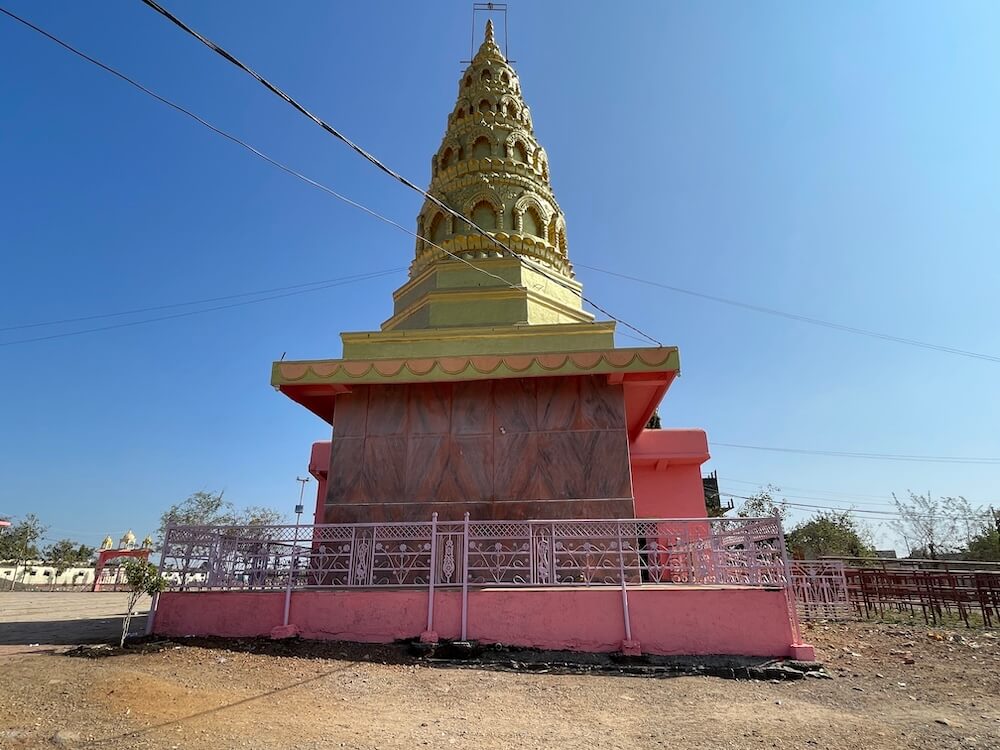
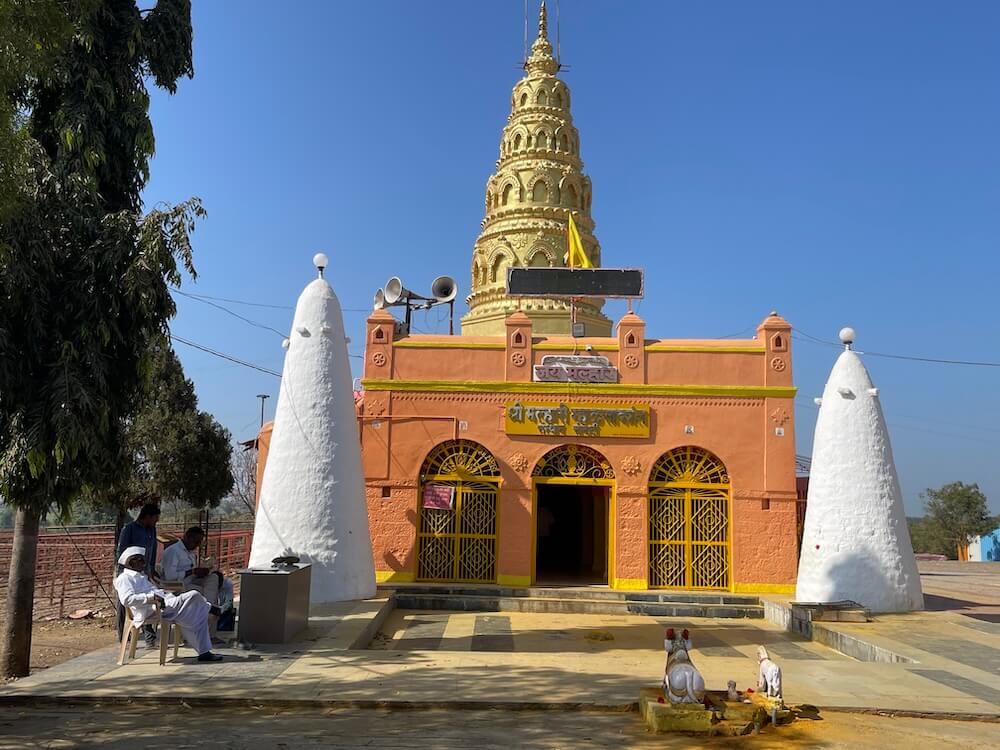
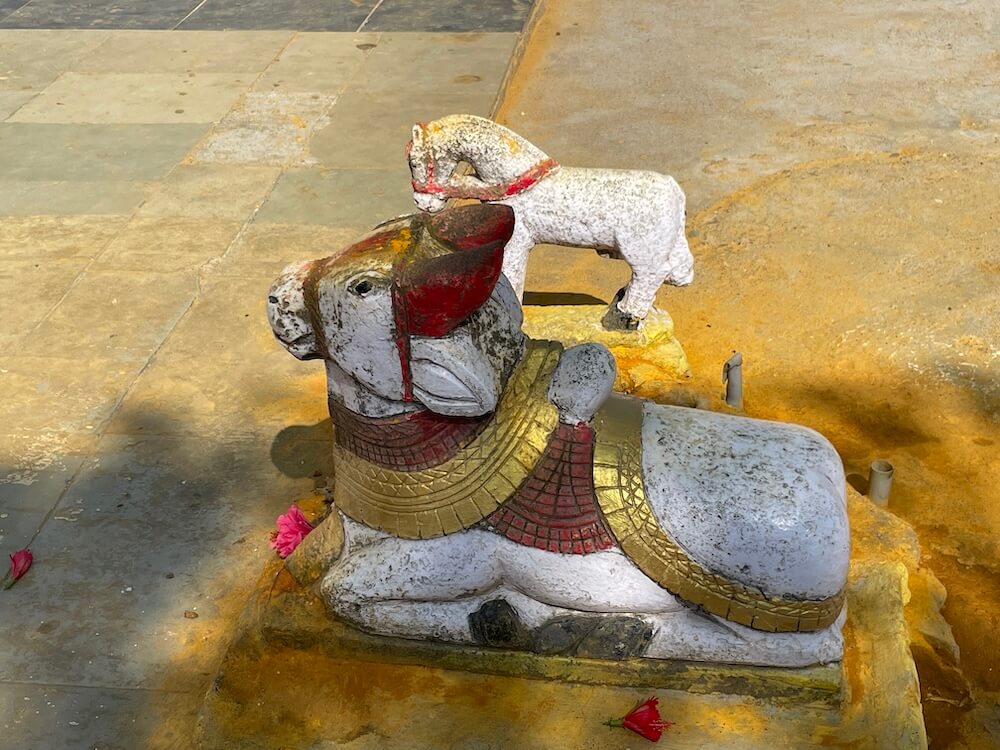
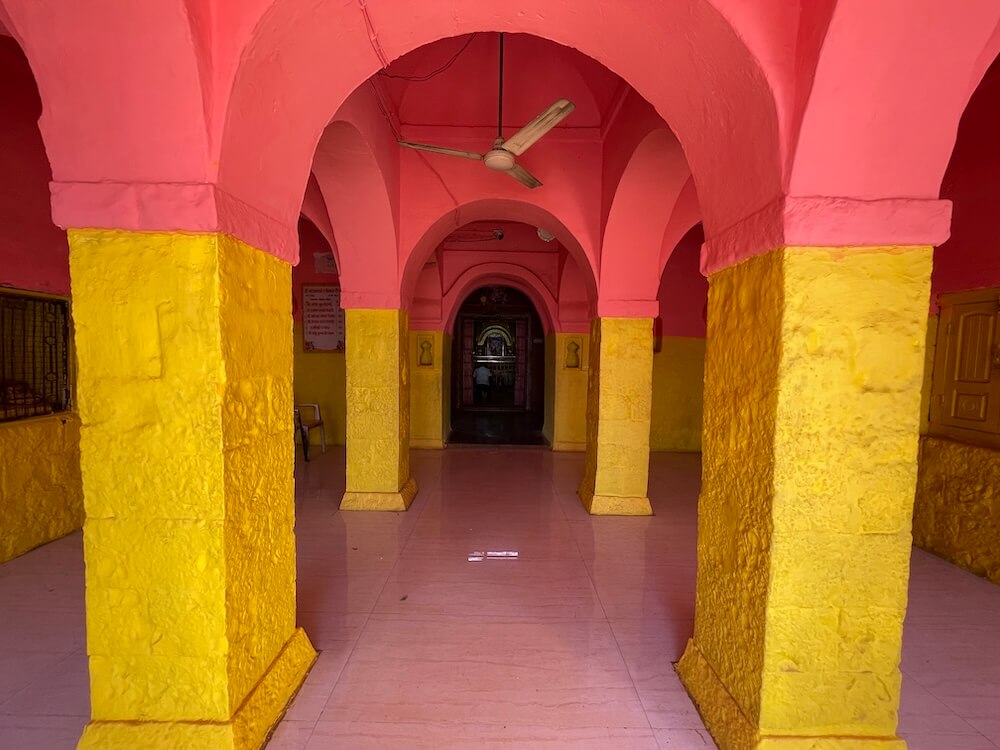
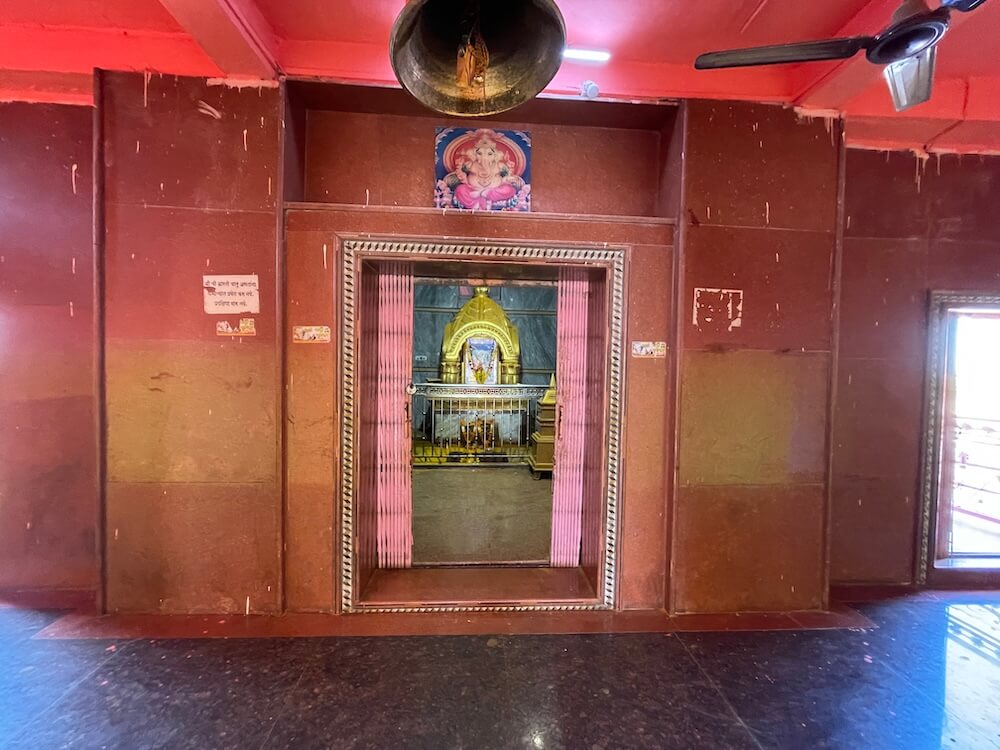
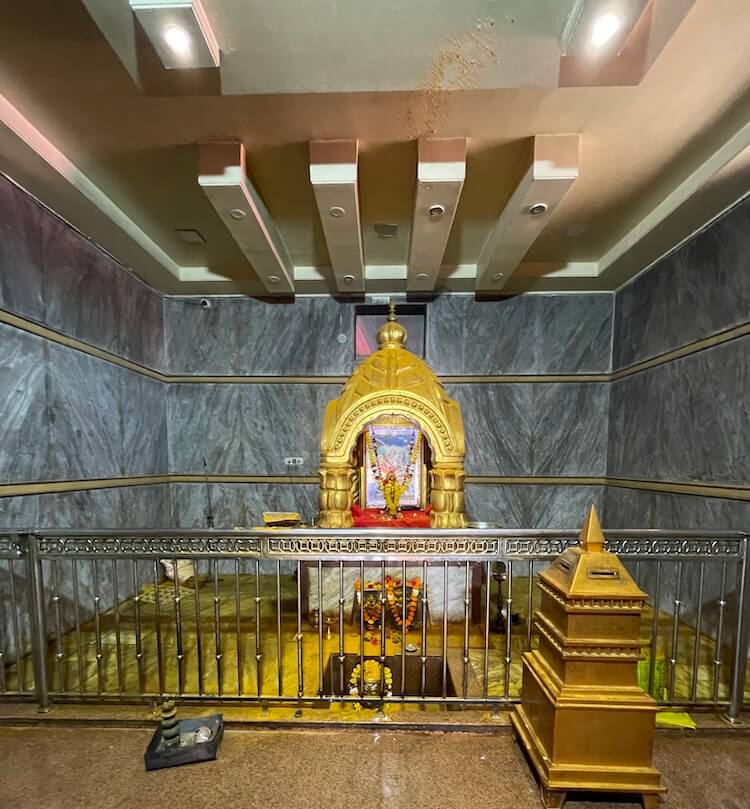
The temple is located on a plateau near Sonati village. There is a paved courtyard in front of the temple, equipped with benches for devotees. In this courtyard, facing the temple, are statues of Nandi, the vehicle of Lord Shiva, and a horse, the vehicle of Khandoba. In front of them is a brass tortoise statue. On both sides of the temple are lamp pillars (Deepstambhas) that taper towards the top. The original construction of the temple was of stone. During the renovation, the interior of the temple acquired a somewhat modern appearance. The structure consists of a Sabhamandap (assembly hall), Antaral (vestibule), and Garbhagriha (sanctum sanctorum). One enters the enclosed Sabhamandap through an arched doorway. All the stone pillars in this hall are connected to each other in a semi-circular fashion. Some niches are carved into the walls here. In one of the large niches, there is an idol of Ganpati. A Shivling is placed in a niche in the Antaral. In the Garbhagriha, images and idols of Khandoba and Mhalasai are placed on a throne (Makhar) atop a Vajrapitha. Below the pedestal are the idols of Mani and Malla. In the hollow space in front of them is the place for keeping the Bhandara. Above the Garbhagriha is a tall, tapering Shikhara (spire) adorned with many niches. At its pinnacle are a two-tiered Amalaka and a Kalash. Next to the temple is a temple dedicated to the serpent deity, Domya Shesh. On the platform in front of it are idols of Hanuman, Ganesh, and Shani.
Khandoba here is renowned as a deity who fulfills vows. Therefore, countless devotees from the taluka come here for darshan. Sunday is considered the day of Khandoba, so the number of devotees is higher on this day. A large fair is held here from Paush Shuddha Dashami to Paush Purnima. During this fair, Bhandara is showered everywhere. Many devotees bring ‘Kathis’ (ceremonial poles) as part of their vows and offer ‘Rodga-Pangya’ (traditional bread and flatbread) as Naivedya to Khandoba. A Mahaprasad of eggplant curry and puri is served to the devotees attending the fair.
This sacred temple stands as a testament to deep spiritual devotion, ancient architectural grandeur, and rich local cultural traditions.
The sanctum sanctorum houses the divine idol consecrated according to ancient Vedic traditions, surrounded by serene courtyards and traditional temple architecture.
Navratri, Maha Shivratri, Annual Temple Jatra & Deepotsav
Compare and book flights, secure top-rated local hotels near the temple, hire reliable guides, and rent cars instantly.
Extend your pilgrimage by visiting other highly sacred temples located nearby.


Add ₹999 more to unlock FREE SHIPPING!
Your sacred cart is currently empty.
Shop Photo FramesFill in your delivery details below to place your order.
Add comment