
Add ₹999 more to unlock FREE SHIPPING!
Your sacred cart is currently empty.
Shop Photo FramesDuring his exile, while traveling through Dandakaranya, Shri Rama consecrated Shiva Lingas at many places. One such Shiva Linga is in the village of Moli in Mehkar Taluka. Devotees believe that the Shiva Linga in this ancient temple, famous as the Shivchandra Molishwar Temple, is spiritually awakened. Because of this, countless devotees from the surrounding five-village radius come here in large numbers to offer Bel leaves and perform Abhisheka on the Shiva Linga. On the day of Mahashivratri, the area takes on the form of a pilgrimage site. The Shiva-Parvati wedding ceremony held in the temple on this day is highly unique.
According to Puranic legends, Shri Rama spent about ten years in Dandakaranya during his exile. Mehkar Taluka was once a part of Dandakaranya. The village of Vishwi (Taluka Mehkar) is situated near the border of the present-day Akola and Buldana districts. In the Treta Yuga, Sage Vishwamitra established a Shiva Linga in this village and performed penance for many years. Once, when he organized a Yajna there, demons from the area tried to disrupt it. At the request of Sage Vishwamitra, Shri Rama and Lakshmana, who were residing in Dandakaranya at that time, came to Vishwi and destroyed those demons. Thereafter, they came to the present village of Moli. This land was a place of penance for sages and seers; they stayed here for some time. Shri Rama was a supreme devotee of Lord Shiva. He would not begin his daily routine without worshipping Lord Shiva. That is why he established a Shiva Linga here. Legend has it that after his stay here, he proceeded towards Lonar.
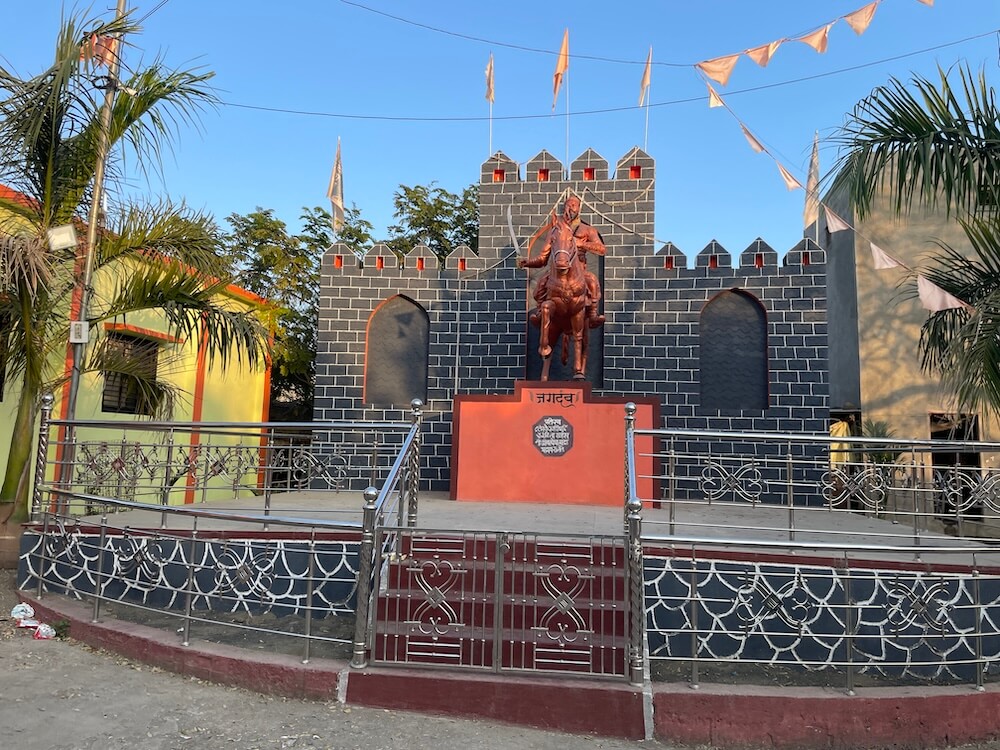
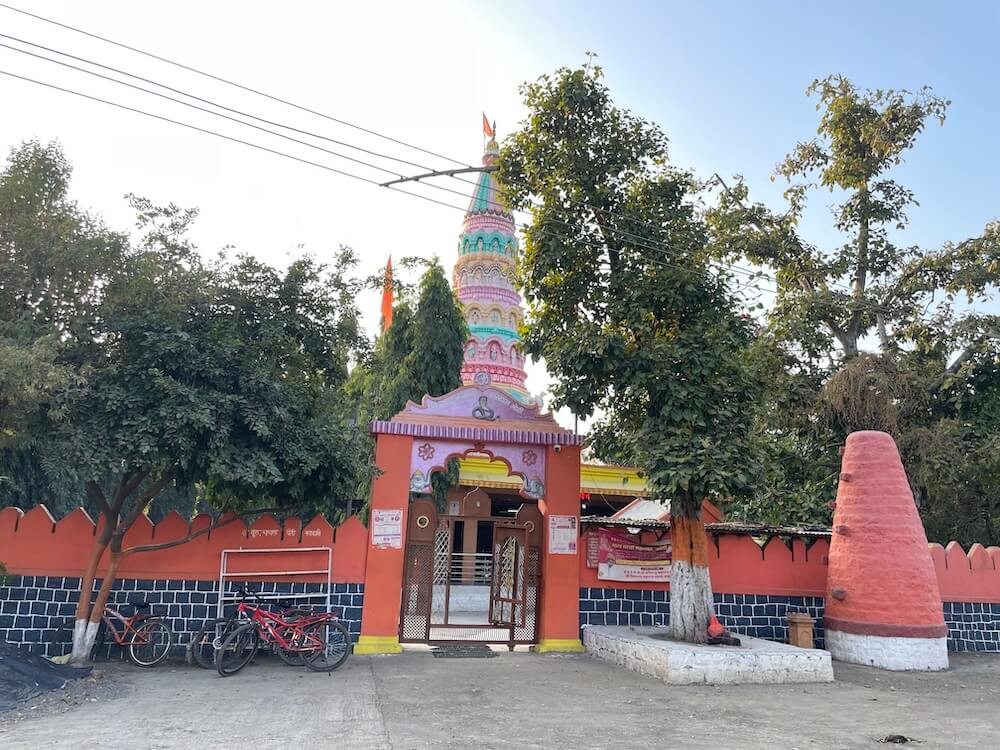
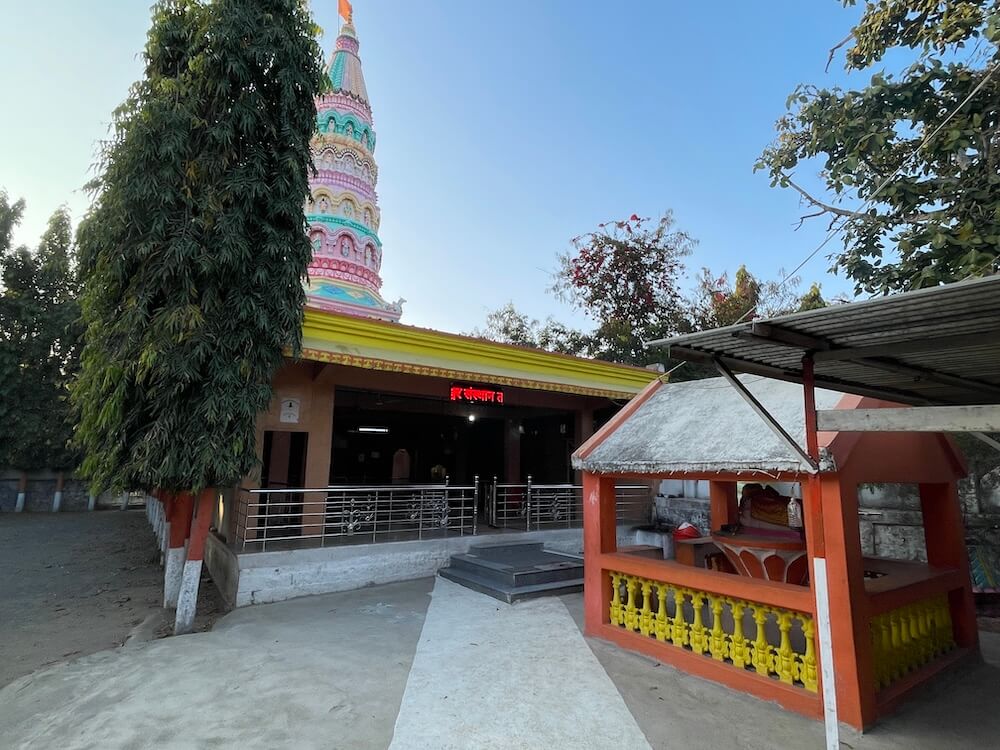
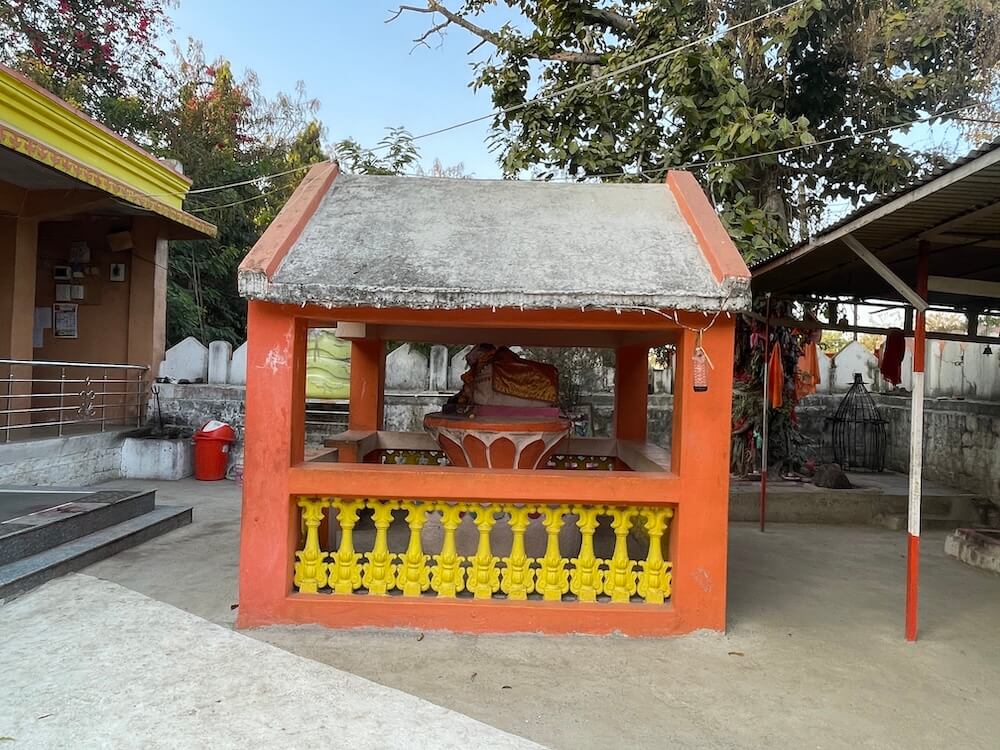
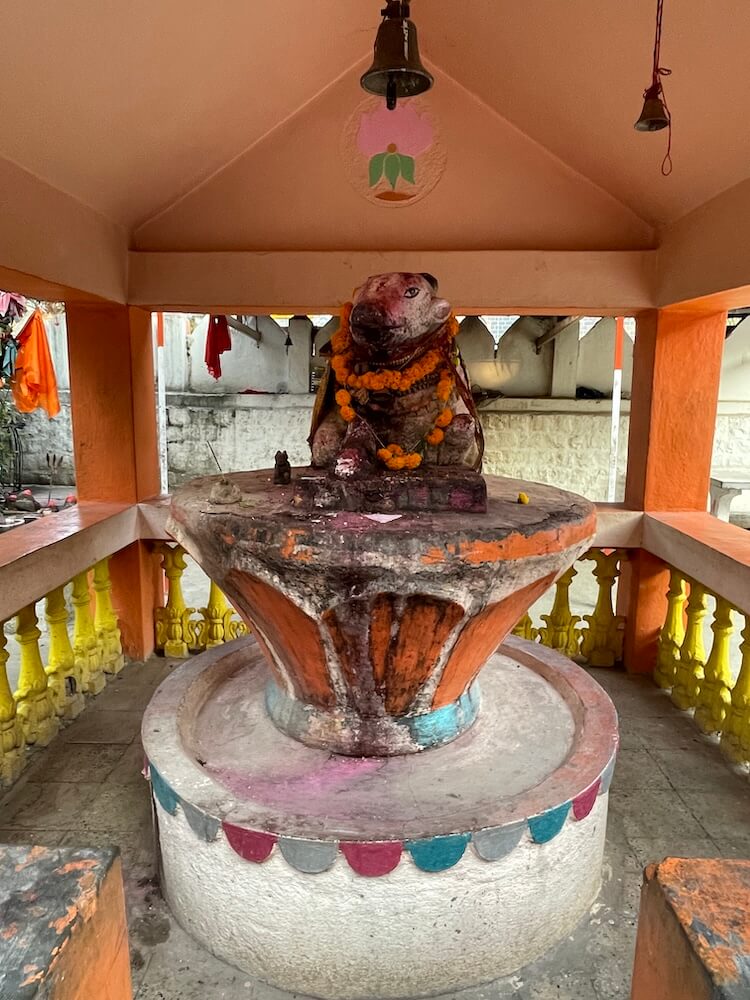
Over time, a small Shiva temple was built here, and this temple was renovated many times. A few years ago, the villagers of Moli transformed the temple through public contributions. In the year 2018, the villagers established a Board of Trustees for the temple. The villagers also contributed significantly through voluntary labor to build the new grand temple. The State Government has granted this temple the status of a ‘C’ class pilgrimage site. The village of Moli is about 13 km away from Mehkar, the taluka headquarters. The temple has a spacious campus. A few years ago, the villagers installed an equestrian statue of Chhatrapati Shivaji Maharaj in front of the temple through public contributions. To the right of the temple entrance stands an elegant stone lamp pillar (Deepmal). After entering through the gateway in the perimeter wall, one enters the temple courtyard. Various trees have been planted in the courtyard and behind the temple. There is a facility of benches for devotees to sit. In the Nandi Mandapa in front of the temple, a large stone idol of Nandi, the vehicle of Shiva, is seated on a high pedestal. Some idols are kept under a nearby Banyan tree. Devotees worship them with devotion as well. A sacred fire (Dhuni) is kept burning nearby.
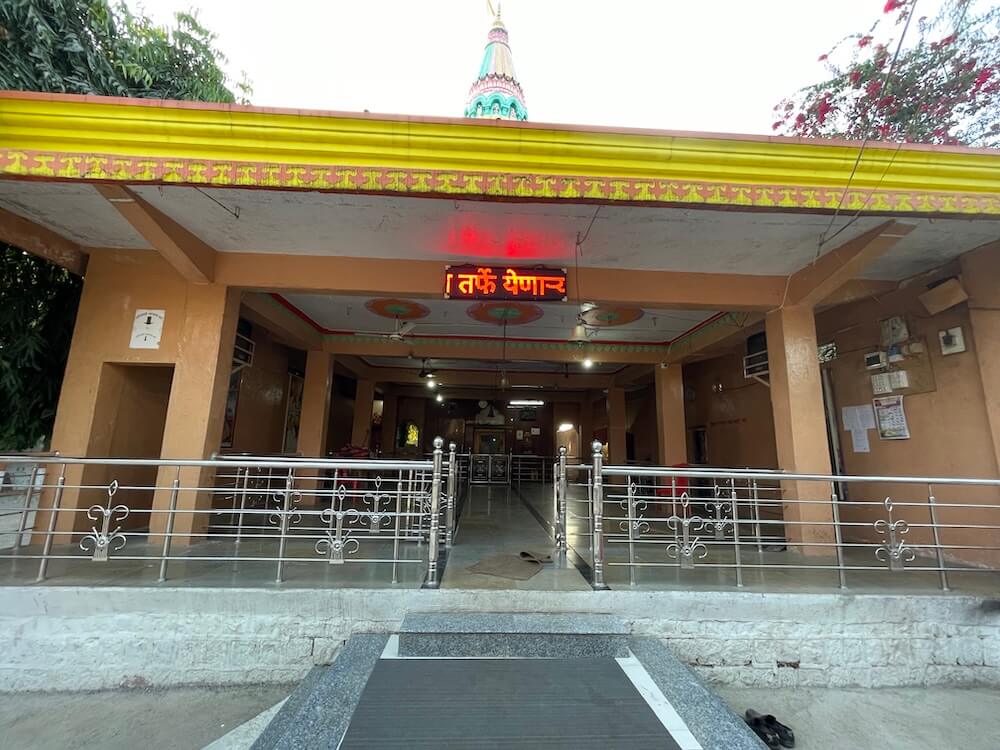
The temple structure consists of a semi-open assembly hall (Sabhamandapa) and a sanctum sanctorum (Garbhagriha). To ensure proper management of the devotees’ queue during festivals, a stainless steel railing has been installed in the assembly hall. Idols of Vitthal-Rukmini and Saint Dnyaneshwar are installed in the niches of the assembly hall. There are two doors in the assembly hall to perform circumambulation (Pradakshina) around the sanctum. In the sanctum, the Shiva Linga is in the center on the floor. The base of the Linga (Shalunka) is covered with a brass sheet, and there is a mask on the Linga. On the head of this mask, there is a crescent moon and the Ganges. A serpent holds its hood over the Linga like an umbrella. Above the sanctum of the temple, there is a tall spire that tapers upwards. There are idols of sages and seers in the niches on the spire. At the top, there is a two-tiered Amalaka and a Kalasha.
Various cultural and religious programs are held in the well-equipped hall located on the temple premises during festivals. Aarti is performed in this temple every day at 6:00 AM and 7:00 PM. Haripath is recited before the evening Aarti. Various religious programs are organized here throughout the year. Mahashivratri is the main festival here. On the occasion of this festival, an unbroken Harinam Saptah is organized. Renowned Kirtankars perform Kirtans during this week. On the concluding day of the Saptah, Mahaprasad is distributed to the devotees. On Mahashivratri, a procession of Lord Shiva is taken out from the village in a palanquin with music and fanfare. In the evening, the Shiva-Parvati wedding ceremony is performed in the temple according to scriptural rites. On this day, the entire area takes on the form of a pilgrimage site. Shops selling worship materials, Prasad, and various items are set up on the temple premises. People who have settled elsewhere for jobs and business make it a point to come to the village for this festival. On the occasion of Ram Navami, a foot pilgrimage (Dindi) departs from the temple to Shegaon. Various religious programs are organized here in the month of Shravan. Mahaprasad is organized for devotees every Monday of this month. About 2,500 devotees benefit from this Mahaprasad. On the last Monday of Shravan, the youth of the village bring water in Kawads and perform Jalabhisheka on the Shiva Linga.
This sacred temple stands as a testament to deep spiritual devotion, ancient architectural grandeur, and rich local cultural traditions.
The sanctum sanctorum houses the divine idol consecrated according to ancient Vedic traditions, surrounded by serene courtyards and traditional temple architecture.
Navratri, Maha Shivratri, Annual Temple Jatra & Deepotsav
Compare and book flights, secure top-rated local hotels near the temple, hire reliable guides, and rent cars instantly.
Extend your pilgrimage by visiting other highly sacred temples located nearby.


Add ₹999 more to unlock FREE SHIPPING!
Your sacred cart is currently empty.
Shop Photo FramesFill in your delivery details below to place your order.
Add comment