
Add ₹999 more to unlock FREE SHIPPING!
Your sacred cart is currently empty.
Shop Photo FramesThe Vivekananda Ashram, established to propagate and spread the radiant thoughts of Swami Vivekananda in rural areas, is located in Vivekananda Nagar at Hivra (Budruk) in Mehkar Taluka. Saint Shukdas Maharaj established this ashram in 1965. Situated on the border of Marathwada and Vidarbha, this ashram is especially famous for its three-day festival that begins on Paush Vadya Panchami to mark the birth anniversary of Swami Vivekananda. On the final day of this festival, thousands of devotees partake in the ‘Mahaprasad’ served during the grand community feast held on the 40-acre premises of the ashram.
The Harihar Tirtha, located near this ashram, has a history spanning over seven hundred years. This sacred site, along with the grand memorial of Swami Vivekananda built on a six-acre island near the nearby Koradi water project, are major attractions for tourists. Countless devotees and tourists visit here every year. Shukdas Maharaj, who founded this ashram, was known as a ‘Nishkam Karmayogi’ (a selfless worker). He was born on November 24, 1943, on Kartik Vadya Trayodashi, at Hivra (Budruk). He was deeply influenced by the thoughts of Swami Vivekananda and considered him his Guru. At the age of fourteen, he wrote the book ‘Anubhuti’, which chronicles his spiritual experiences.
Rather than keeping the thoughts of Swami Vivekananda limited to theory and philosophy, Shukdas Maharaj brought them to a practical level of action and human welfare. He began his social work with the belief that God resides in every human being. He had a profound knowledge of medicine, and many patients would come to him for treatment. Various organizations honored him for his social work, and the State Government also recognized his contributions by awarding him the ‘Dalit Mitra Puraskar’.
He founded this ashram in the village on January 14, 1965, in memory of Swami Vivekananda. The area is lush with greenery due to the Koradi River, which winds around Hivra village, and the Painganga River, which flows a short distance away. The ashram building stands on a plot of one acre and 28 gunthas. The ashram was relocated here from its original site in 1972. The teachings of Swami Vivekananda are practiced in this ashram, and in accordance with them, various religious, social, and educational programs related to Indian culture are conducted here. Committed to social service, this ashram serves humanity through various social initiatives, with special emphasis on healthcare. To the north of the ashram lies the Harihar Tirtha, which is about seven hundred years old. In the intervening period, this sacred site had fallen into neglect, but Shukdas Maharaj restored its former glory. The State Government has granted this site the status of a ‘B’ grade pilgrimage center and a ‘C’ grade tourist destination.
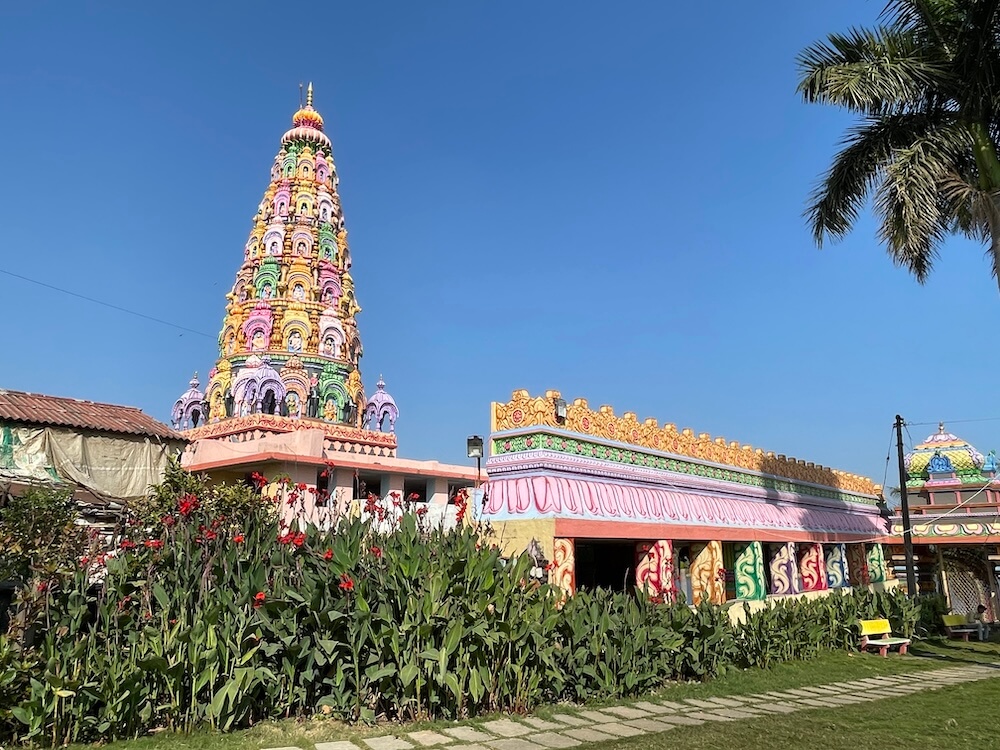
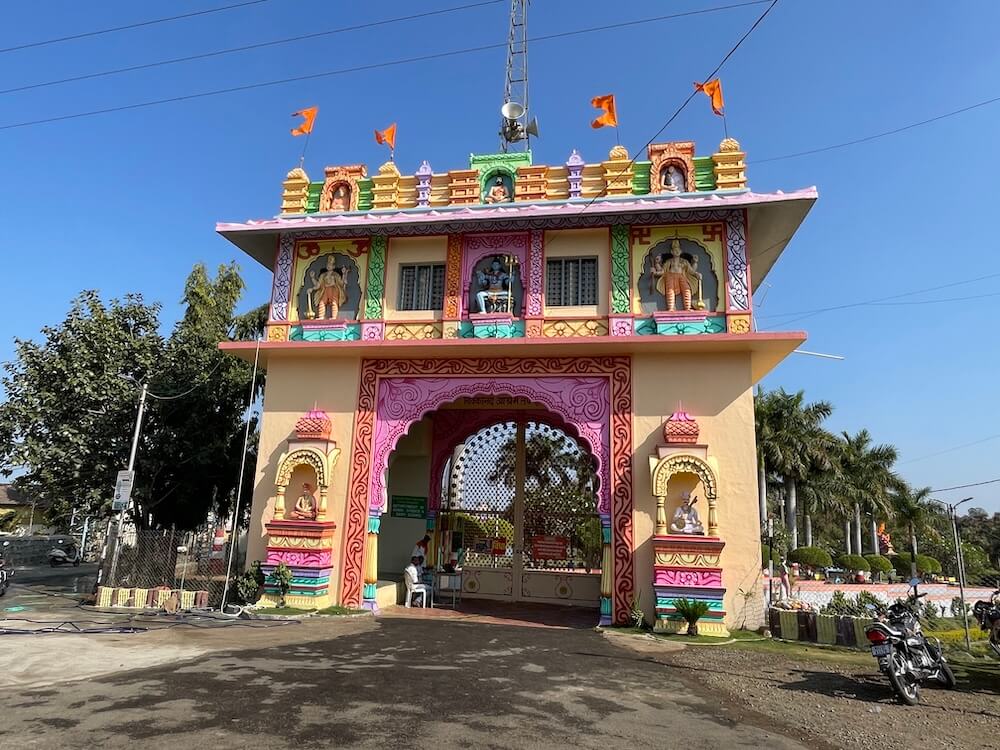
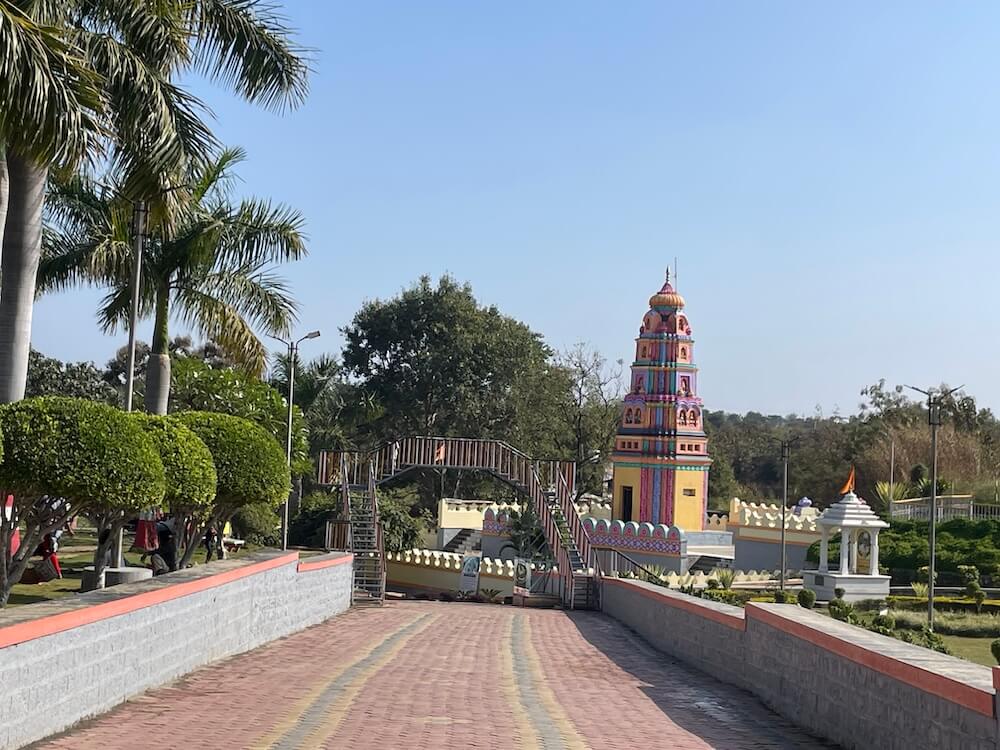
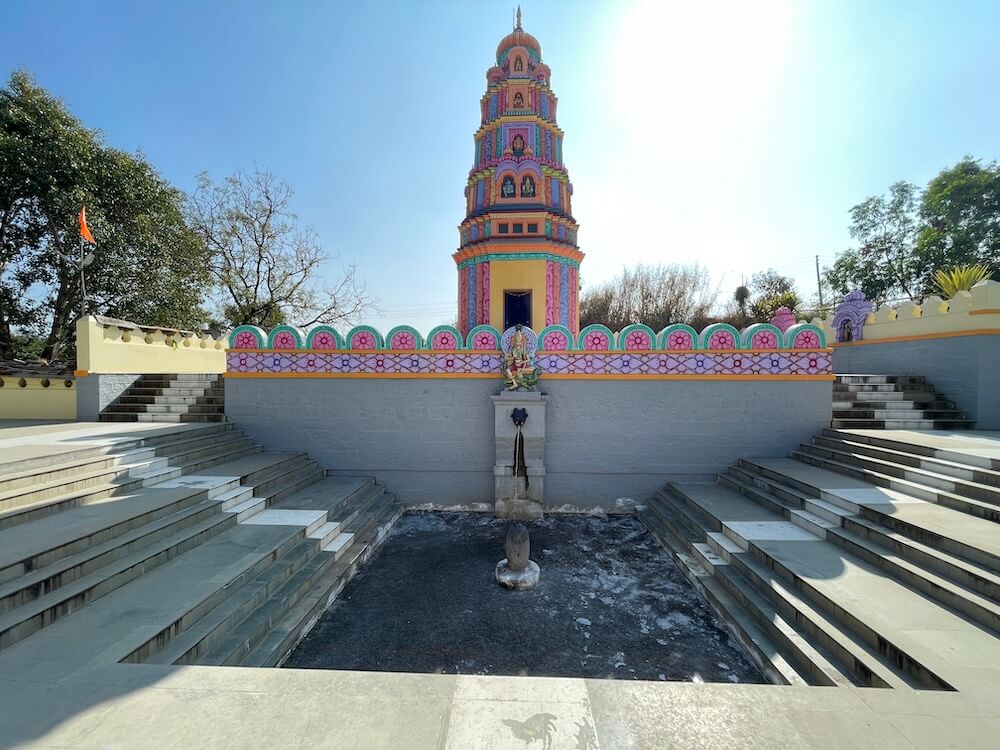
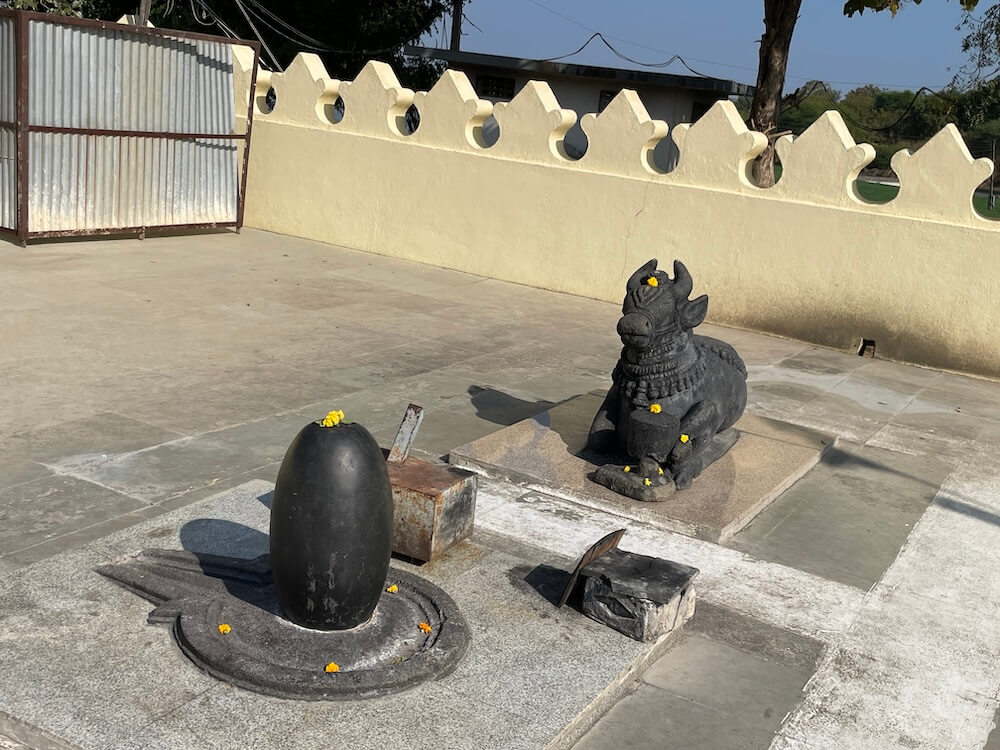
A paved road passing through the ashram’s educational complex leads directly to the main entrance (Mahadwar) of Harihar Tirtha. The Mahalaxmi Devasthan of Mumbai has constructed this Mahadwar, which is 45 feet long, 20 feet wide, and 35 feet high. In the niches on both sides of the entrance are statues of Saint Tukaram and Saint Dnyaneshwar. At the top are statues of Lord Shiva and Goddess Parvati. Inside the entrance, there is a paved pathway. The surrounding area features a picturesque garden. In this garden, spread over approximately two acres, there are flowering and ornamental plants, fountains, playground equipment for children, and statues of characters like Chhota Bheem and Doraemon. In this area, there are temples dedicated to Shrihar (Shiva Temple) and Shrihari (Balaji). After climbing the steps of the Shrihar temple complex, one can see the statue of Goddess Ganga, the ‘Gomukh’ (cow-faced spout) from which holy water flows incessantly, and a spacious ‘Ganga Kund’ (sacred pond). One can descend into the pond using the side steps. Above the Gomukh is a statue of Shiva. On both sides of the Ganga Kund are Shiva Lingas and Nandi statues, one of which is over seven hundred years old. Adjacent to this pond is the temple of Ashutosh Shiva. In front of this temple, there is a Shiva Linga set in a high pedestal. In front of the temple entrance is a stone statue of Ganesha with his trunk turned to the right. In this temple, which stands on a high plinth, there is a six-foot-tall standing copper statue of Lord Shiva, adorned in tiger skin. In front of the statue is a copper statue of Nandi. Tribal priests serve in this temple. The temple, with its elegant architecture, is 51 feet tall. The temple premises also house statues of Dattatreya, Durga Mata, and Vitthal-Rakhumai. On occasions like Mondays, Amavasya, and other auspicious days, devotees flock here for holy baths and darshan.
Directly in front of this temple is the Balaji Temple. After climbing a few steps, one enters a grand assembly hall (Sabhamandap) featuring intricate and exquisite craftsmanship. The walls depict various mythological scenes. Above the entrance to the sanctum sanctorum of this temple is a sculpture of a reclining Ganesha. Above that, statues of Sheshashayi Vishnu and Lakshmi are carved. On both sides of the entrance are carved ‘Kirtimukhas’. In the sanctum of this 81-foot-tall temple, there is a 12-foot-tall statue of Balaji. The ‘Prabhavali’ (halo) of this statue features carvings of the Dashavatara. Daily ‘Aarti’ and ritualistic worship are performed here. Devotees are offered ‘Prasad’ of curd-rice, dry fruits, and laddoos. In the temple directly in front, a statue of Shri Krishna is enshrined.
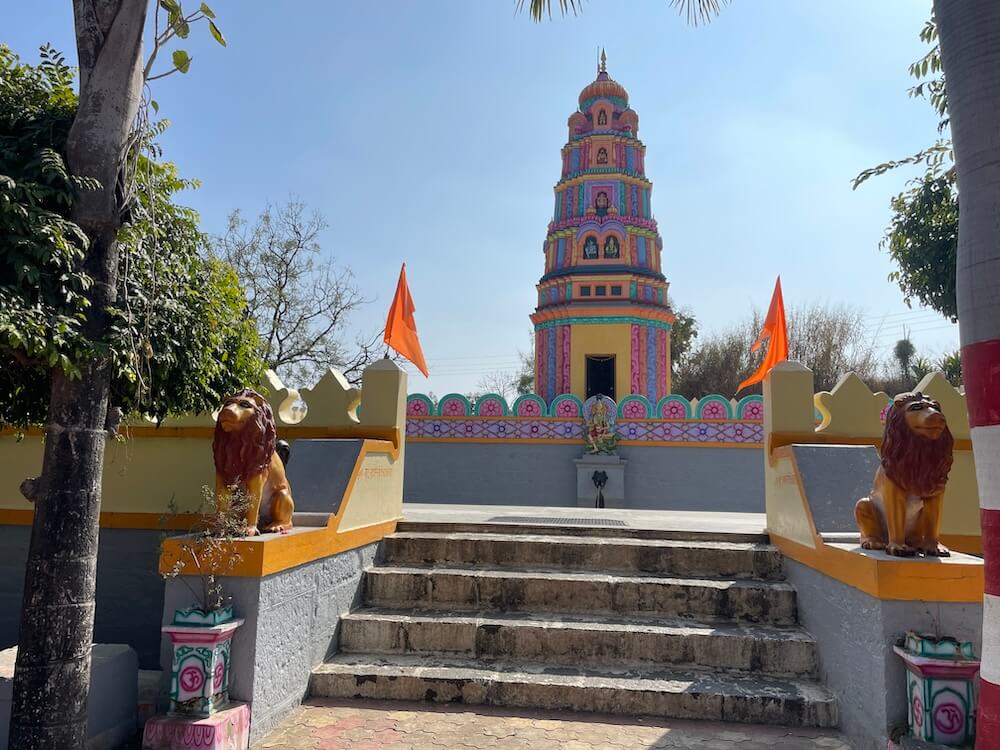
A short distance from here is the Samadhi temple of Shukdas Maharaj. Shukdas Maharaj attained Samadhi here on April 4, 2017, on the day of Ram Navami. A Samadhi temple was recently built here. On the platform in front of the temple are meditative statues of Swami Vivekananda, Saint Dnyaneshwar, Gautama Buddha, Mahatma Basaveshwara, and Lord Mahavira . Inside the sanctum, there is a marble statue of Shukdas Maharaj, with his ‘Paduka’ (footprints) placed in front.
Every year, the Ashram celebrates Swami Vivekananda Jayanti on a grand scale. This festival spans three days, from Paush Vadya Panchami to Saptami, and is marked by ‘Gyan-Yajna’ (a symposium of knowledge) and ‘Annadaan’ (offering of food). The festival commences on Paush Vadya Panchami with a procession featuring the chariot-mounted idols of Swami Vivekananda and Shukdas Maharaj. Hundreds of Bhajan troupes, gymnasium squads, Lezim, and Dhol-Tasha pathaks participate in this procession. Starting from Harihar Tirtha, the Shobhayatra circumambulates Vivekananda Nagar and concludes near the village Hanuman Mandir. Villagers shower gulal and flowers along the route, and many married women perform puja of the chariots. In the evening, a Dahi-Handi event is organized, followed by the commencement of the Gyan-Yajna (intellectual session) on a stage. Renowned speakers, singers, preachers, and folk artists from across the country participate in this Gyan-Yajna. Representatives of all religions are also given the opportunity to present their views on the platform.
On the day of Paush Vadya Saptami, which marks Vivekananda Jayanti, a Mahaprasad is organized on a 40-acre plot near the Ashram. By 4:00 PM, the premises are filled with thousands of devotees seated in rows for the grand feast. The preparation for the Mahaprasad begins before sunrise on Paush Vadya Shashthi. This Mahaprasad, consisting of puris made from approximately two hundred quintals of wheat flour and one hundred and fifty quintals of eggplant curry, is prepared within 18 hours. On the day of Paush Vadya Saptami, vehicles like tractors and Matadors loaded with the Mahaprasad arrive at the venue in a festive procession accompanied by music. The Mahaprasad is distributed at the hands of dignitaries. About seven to eight hundred volunteers distribute the food to the gathered devotees in just a few minutes. Excellent planning, the discipline maintained by the devotees, and the cooperation of the administration are the hallmarks of this Mahapangati. Apart from this, festivals like Vyas Purnima, Shri Krishna Jayanti, Gopalakala, and the Jayanti of Shukdas Maharaj are also celebrated here. The Sanjeevan Samadhi ceremony of Shukdas Maharaj takes place on the day of Ram Navami.
One kilometer to the south of the Ashram, on an island near the Koradi project reservoir, lies the Vivekananda Memorial. One must travel by boat to reach this island. Construction of this memorial began in 1980. The six-acre memorial complex features a garden with about five hundred coconut and palm trees. There are also statues of characters like Chhota Bheem and Doraemon here. On a high platform on this island stands a 20-foot-tall full-size statue of Swami Vivekananda. The installation of this statue took place on January 19, 2017. Devotees and tourists visiting the Vivekananda Ashram make it a point to visit this place as well.
This sacred temple stands as a testament to deep spiritual devotion, ancient architectural grandeur, and rich local cultural traditions.
The sanctum sanctorum houses the divine idol consecrated according to ancient Vedic traditions, surrounded by serene courtyards and traditional temple architecture.
Navratri, Maha Shivratri, Annual Temple Jatra & Deepotsav
Compare and book flights, secure top-rated local hotels near the temple, hire reliable guides, and rent cars instantly.
Extend your pilgrimage by visiting other highly sacred temples located nearby.


Add ₹999 more to unlock FREE SHIPPING!
Your sacred cart is currently empty.
Shop Photo FramesFill in your delivery details below to place your order.
Add comment