
Add ₹999 more to unlock FREE SHIPPING!
Your sacred cart is currently empty.
Shop Photo FramesThe Hemadpanti architectural style is a primary identity of many ancient temples in Maharashtra and India. Broadly, the timeline of this style is divided into two parts. From the eleventh to the latter half of the thirteenth century, abundant sculpture is seen on the temples. However, after the latter half of the thirteenth century, the sculpture in temples seems to have almost disappeared. These temples continued to be built during the Chalukya, Yadava, and subsequent periods. There are many such ancient temples in Beed district, among which the Nagnath Temple in Pali village is famous.
It is said that this temple in the Hemadpanti architectural style belongs to the period of the Yadava King Singhana Deva (Second). Scholars state that there is an ancient inscription in the courtyard of the Nagnath Temple, which mentions the period of this temple. Looking at the structure, carvings, and sculptural style of the temple, some scholars are firm that it must belong to the Yadava period. It is also said that in ancient times, there was a golden five-hooded serpent on the Shiva Linga in the Nagnath Temple.
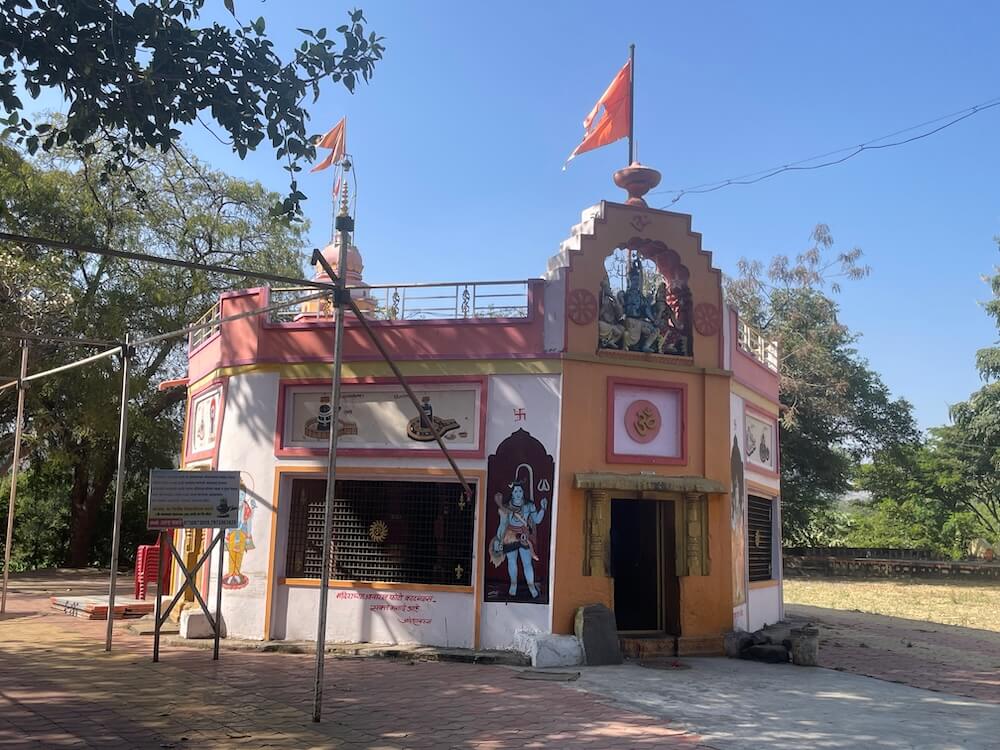
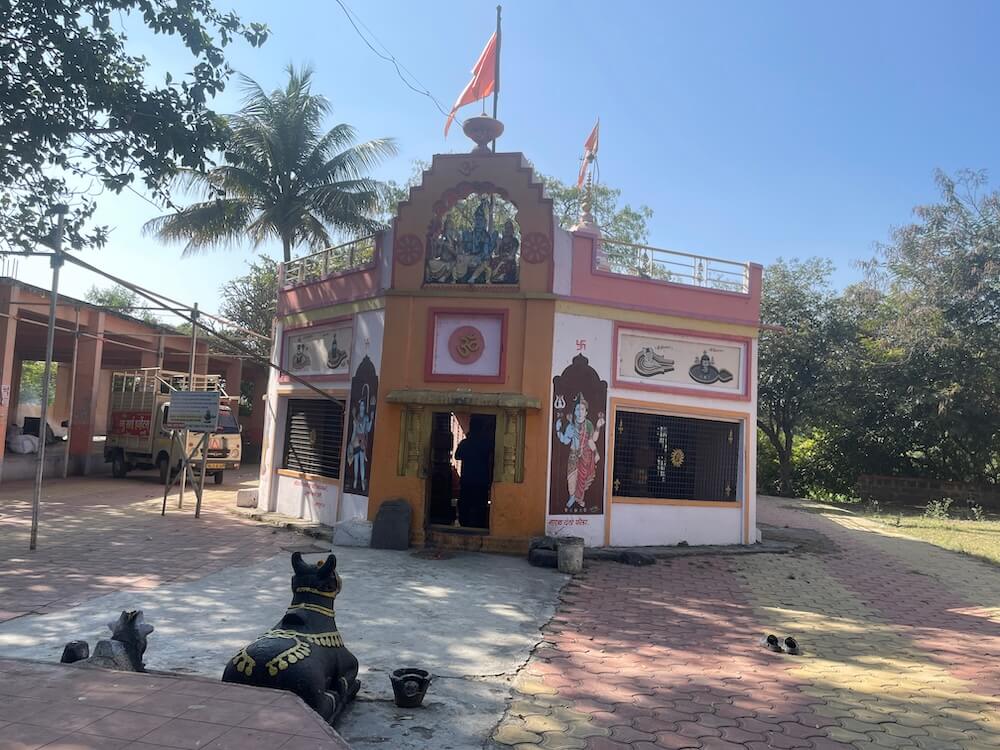
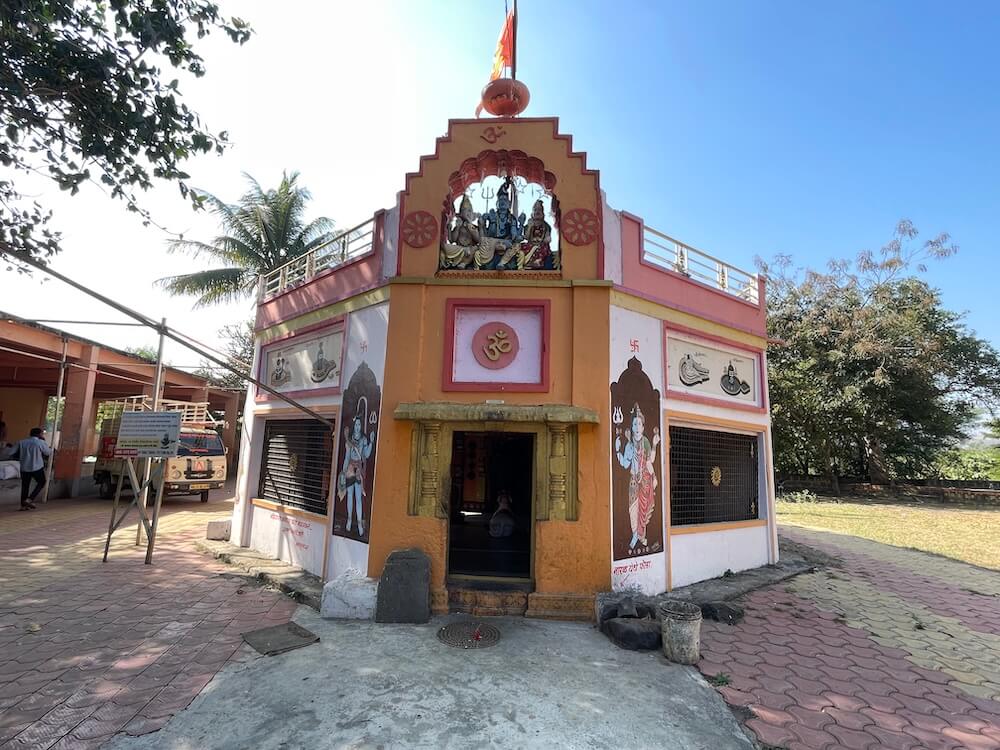
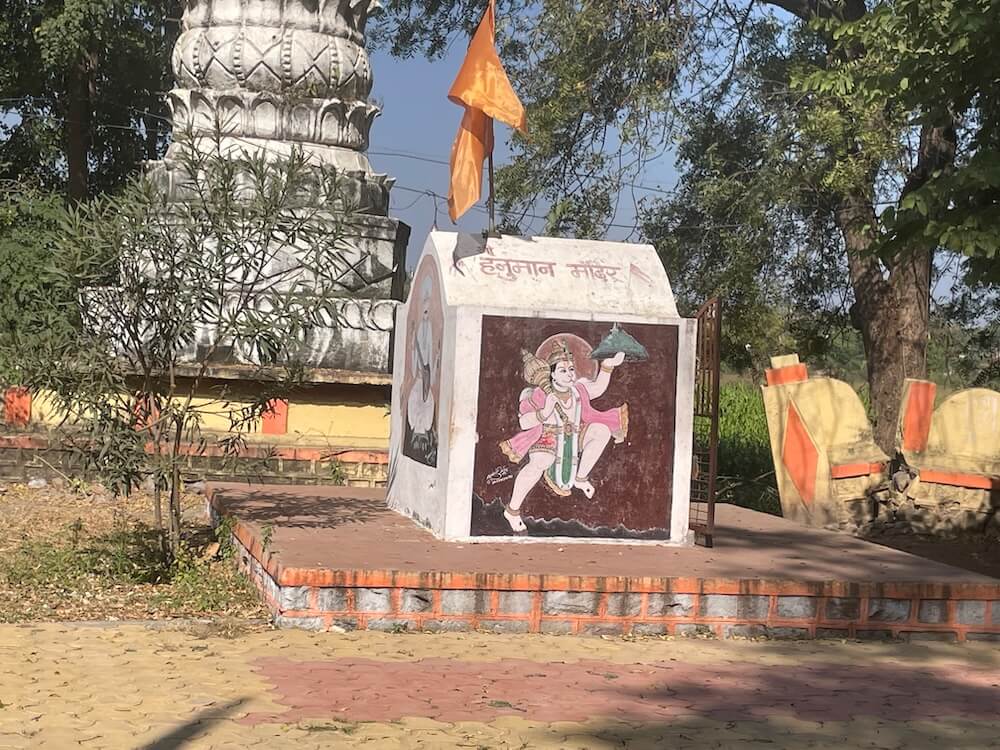
The Nagnath Temple is located adjacent to the highway, about ten kilometers from Beed on the Beed-Solapur road. There is a fortification wall around the temple with a main entrance gate. In the temple courtyard, which is covered with paver blocks, there are various types of large trees; there are also some hero stones, sati stones, Nandi sculptures, Shiva Lingas, and a small temple of Maruti. In front of the temple, there is an octagonal platform with a Tulsi Vrindavan in the center.
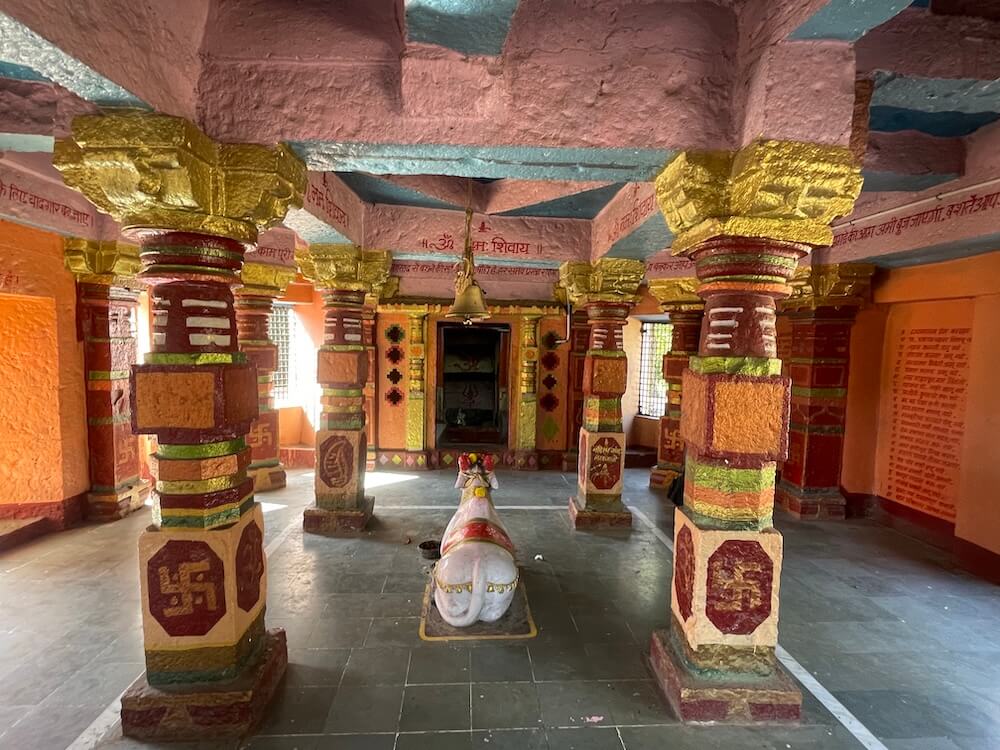
The temple, which has a structure consisting of a Sabha Mandapa (assembly hall), Antarala (vestibule), and Garbhagriha (sanctum sanctorum), has an inscription in front of the entrance of the Sabha Mandapa. This inscription is said to be from the thirteenth century, during the reign of the Yadava King Singhana. This obscure inscription of ३६ lines is in the Sanskrit language and Devanagari script. The sun and moon are carved at the top of the inscription. On the doorjambs of the Sabha Mandapa entrance, floral and pillar carvings are etched. There is a sculpture of Ganapati on the Lalatabimba (lintel). The Mandaraka has a Chandrashila (moonstone) and a Kirtimukha. The front wall of the Sabha Mandapa has been plastered with cement and painted. Inside the Sabha Mandapa, there are four rows of four ornate pillars each. All pillars stand on square bases. In their shafts, various geometric shapes like squares, hexagons, octagons, and circles can be seen. There is a circular design on the ceiling. In the Sabha Mandapa, the idol of Nandi is placed in the space between the middle four pillars. There are two more doors on the left and right sides of the Sabha Mandapa. On the circumambulation path, there are also two doors on the left and right sides of the Antarala. The original structure of the Sabha Mandapa was semi-open, but after renovation, it has been made enclosed. There are ventilators here for air and sunlight.
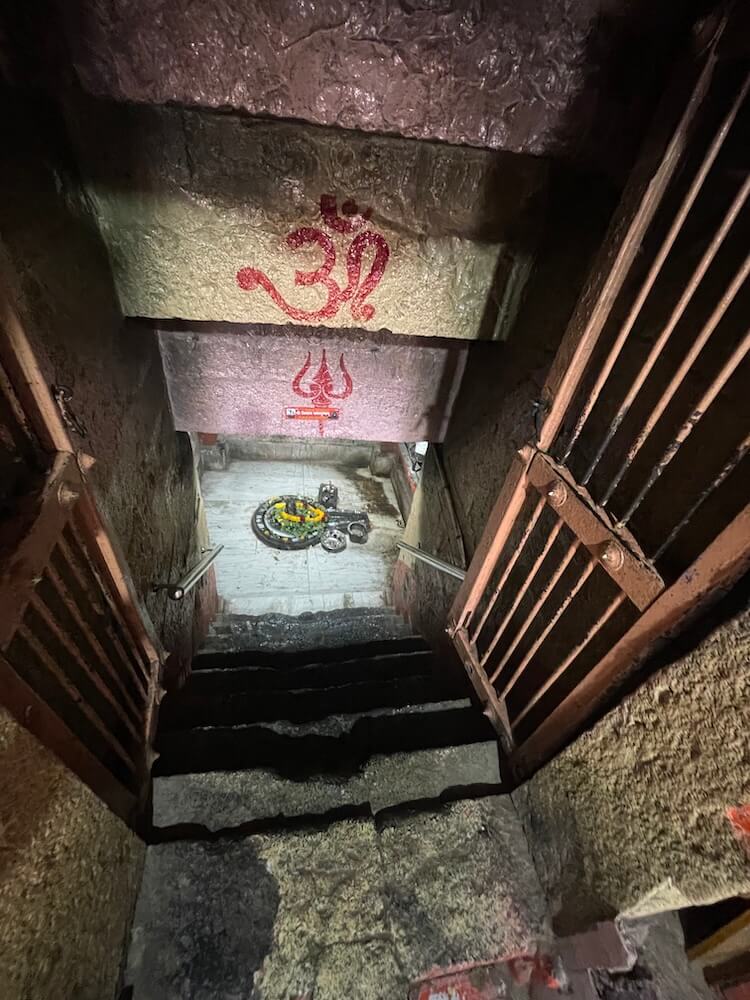
Further ahead is the entrance to the Antarala. There are floral and pillar carvings on the doorjambs. There is a sculpture of Ganesha on the Lalatabimba. The Mandaraka has a Chandrashila and above it is a Kirtimukha. Since the Antarala is narrow, the entrance to the Garbhagriha is in front of it. The design of the entrances to the Antarala and the Garbhagriha is identical. Since the Garbhagriha is deeper than the Antarala, one has to descend a few steps. In the Garbhagriha, there is a Shiva Linga in the center on the floor. There is a brass serpent holding a canopy over the Shiva Linga, and a copper Abhishek vessel holding a water stream is hung from the ceiling. It is believed that in ancient times, there was a golden five-hooded serpent on the Shiva Linga. Since a mirror is installed on the back wall of the Garbhagriha, devotees can easily have Darshan of the Shiva Linga from the Antarala. There is a circular design on the ceiling of the Garbhagriha.
There is a safety railing on all four sides of the temple roof, and there is a five-layered Shikhara (spire) on the roof of the Garbhagriha. The first lower layer of the Shikhara is square, while the four octagonal layers above it each have eight Devakoshthakas (niches) containing idols of various deities. At the top of the Shikhara is a Stupika and above it is a Kalasha. In the courtyard, behind the temple, there is an ancient Pushkarani (stepped tank). There are stone walls on all four sides of the Pushkarani and steps on all four sides to descend. There is a Gomukha on the steps on the right side. There are empty niches in the walls of the Pushkarani. Previously, there were idols of deities in these niches. It is said that the water storage in this Pushkarani is inexhaustible.
In the Nagnath Mahadev Temple, the Mahashivratri festival is the main annual fair celebrated with great enthusiasm. At this time, thousands of devotees from the surrounding area come here for the Darshan of the Lord. Khandoba is the family deity of many devotees in the area. In the Khandoba temple, a fair is held during the month of Pausha on the Mrig Nakshatra of the moon for the wedding ceremony of Khandoba and Mhalasa Devi. During festivals, the deity is seated in a palanquin and taken out for a village procession. Thousands of devotees participate in the palanquin procession amidst the sound of drums and the throwing of Gulal. Festivals and celebrations like Chaitra Padwa, Champashasthi, Dussehra, Diwali, Shravan month, Nag Panchami, and Makar Sankranti are celebrated in the temple. On days like Monday, Purnima, Amavasya, Pradosh, Ekadashi, and Shashthi, there is a large crowd of devotees in the temple.
This sacred temple stands as a testament to deep spiritual devotion, ancient architectural grandeur, and rich local cultural traditions.
The sanctum sanctorum houses the divine idol consecrated according to ancient Vedic traditions, surrounded by serene courtyards and traditional temple architecture.
Navratri, Maha Shivratri, Annual Temple Jatra & Deepotsav
Compare and book flights, secure top-rated local hotels near the temple, hire reliable guides, and rent cars instantly.
Extend your pilgrimage by visiting other highly sacred temples located nearby.


Add ₹999 more to unlock FREE SHIPPING!
Your sacred cart is currently empty.
Shop Photo FramesFill in your delivery details below to place your order.
Add comment