
Add ₹999 more to unlock FREE SHIPPING!
Your sacred cart is currently empty.
Shop Photo FramesAlthough Beed district is currently known as the district of sugarcane cutters, this region was once extremely prosperous. Many royal dynasties established their capital cities in this district. Rivers like Manjara, Terna, and Karanja flow through the Kej taluka of Beed district. This taluka is home to many ancient temples that narrate a rich historical heritage. Places like the Kankaleshwar Temple, Balaji Temple, Sant Ramgiri Baba Samadhi, and the Dharur Fort are famous in this taluka. The ancient Uttarareshwar Mahadev Temple in Pimpri village of this same taluka, which holds mythological significance, is particularly renowned.
Experts estimate that this temple, built in the original Hemadpanti architectural style, dates back about eight hundred to one thousand years; however, the local priests state that this temple is about five thousand years old. The legend associated with this temple is that while Shri Ram was in exile, Ravana abducted Sita. As Ravana was carrying Sita away through the sky, the bird Jatayu fought with him. In this battle, Jatayu was wounded and fell to the ground. While Shri Ram was searching for Sita, he encountered the wounded Jatayu. At that time, Jatayu told Ram that Ravana had abducted Sita and taken her to Lanka, and then he breathed his last. It was here that Lord Ram performed the last rites (Uttarakarya) for the bird Jatayu, which is why this temple came to be known as ‘Uttarareshwar Mahadev’.
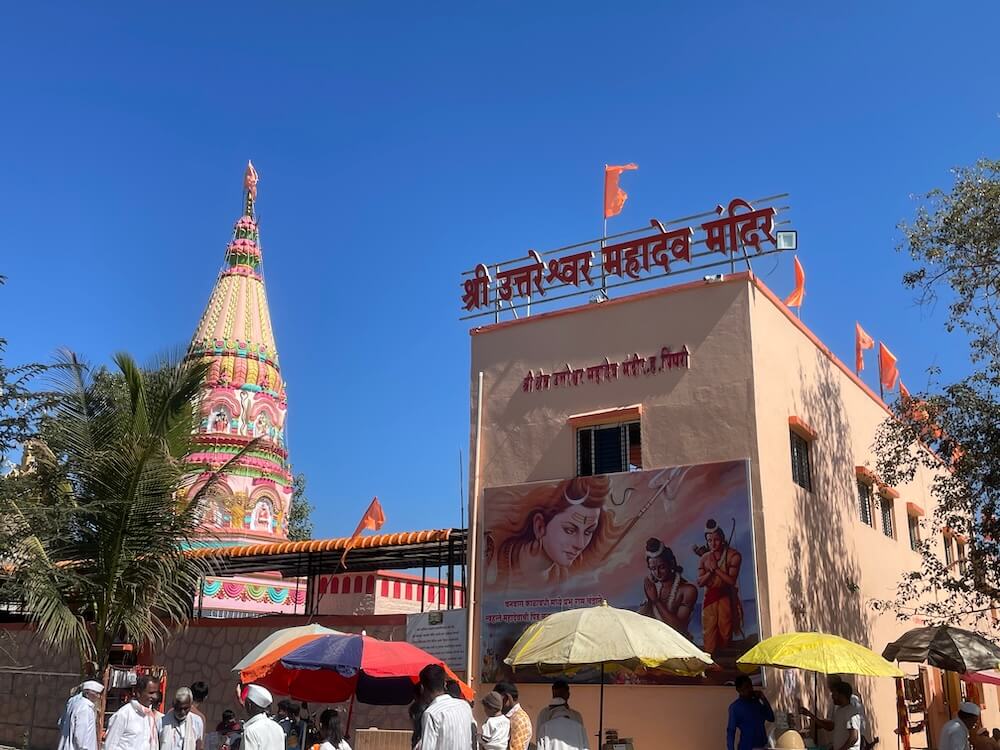
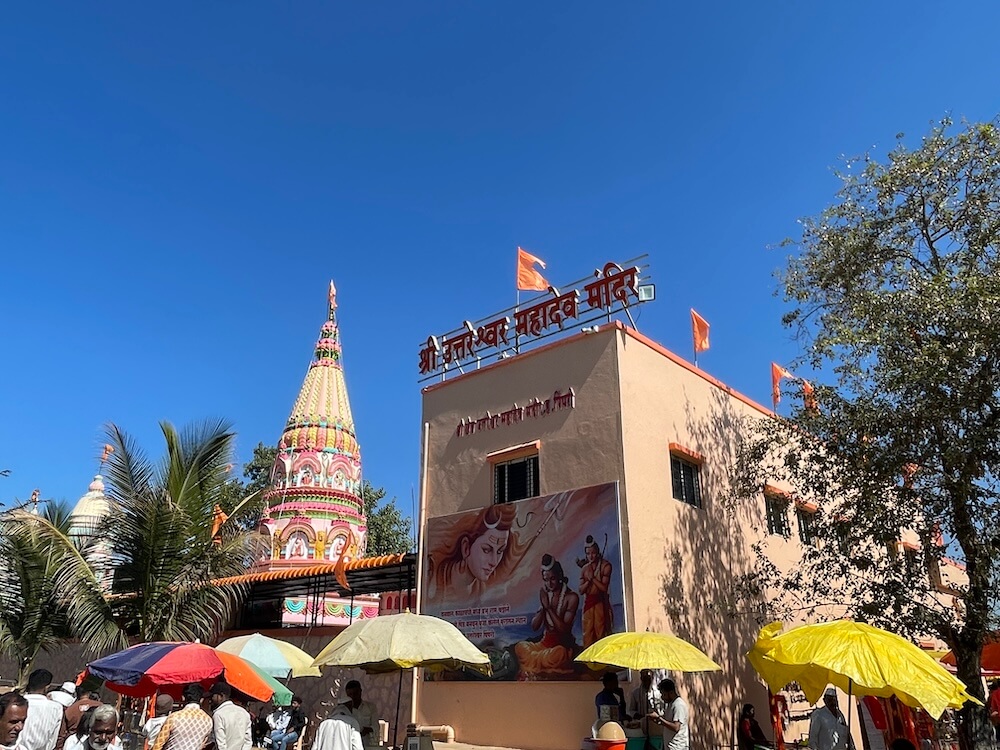
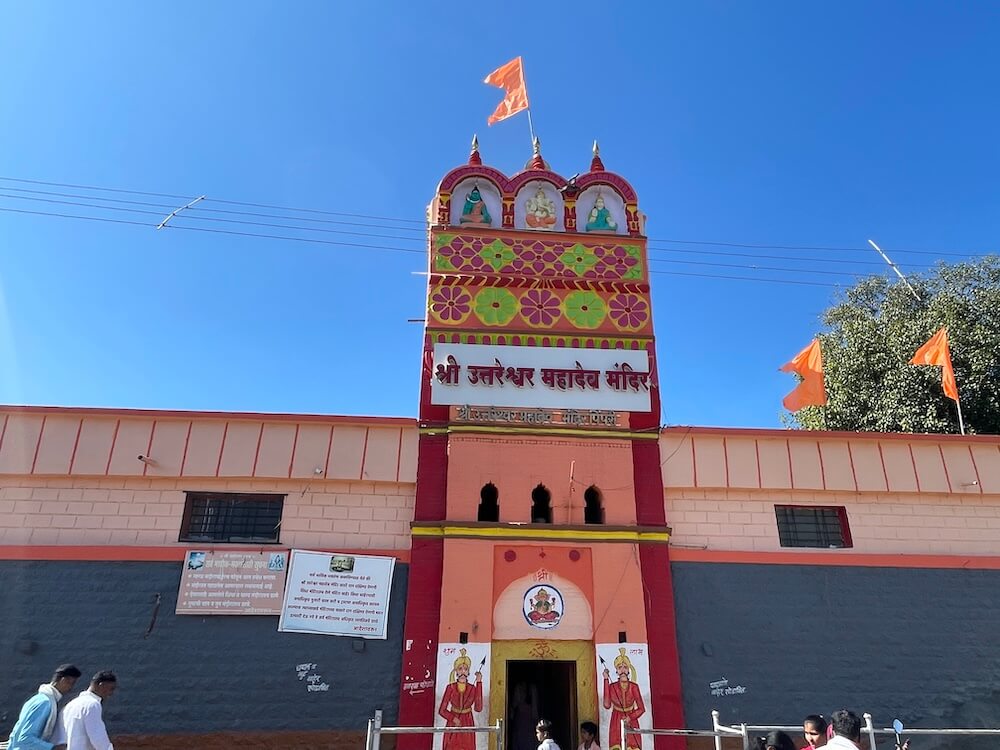
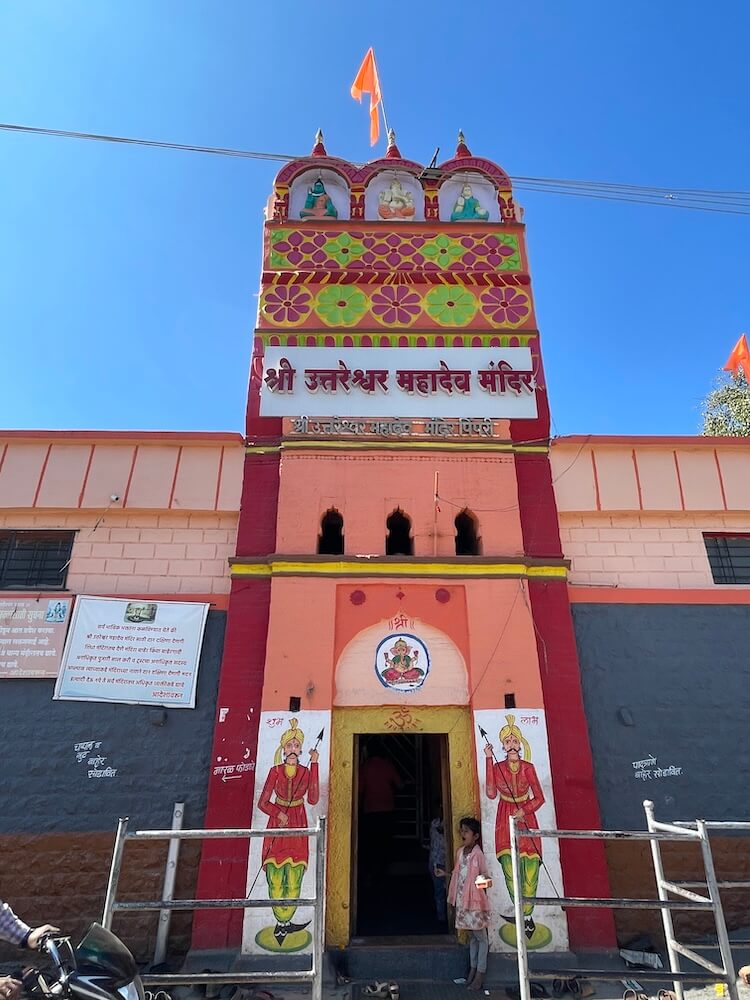
This temple is located near the village, adjacent to the main road. The temple has a sturdy fortification wall about twelve feet high, which features a two-story entrance gate. Paintings of guards are depicted on both sides of the entrance, while a sculpture of Lord Ganesha is placed under the stone archway of the gate. The entrance features circular carvings and lamp niches. There is a Nagarkhana (drum house) on the upper floor of the entrance. Sculptures of Ganesha, Mahadev, and Parvati are installed in the parapet of the roof. There are three other gates in the fortification.
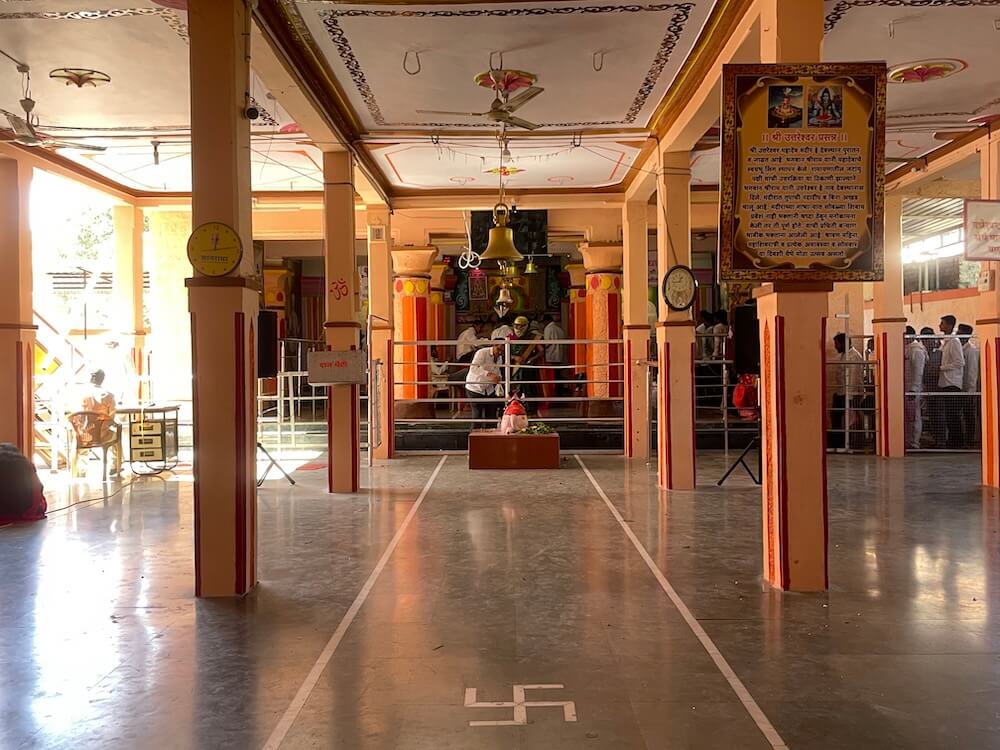
Upon entering through the main gate of the fortification, one enters the Sabhamandap (assembly hall). The semi-open Sabhamandap has four rows of five ornate square pillars each. The palanquin used during festivals is kept here. In the Sabhamandap, in front of the entrance to the Antarala (inner chamber), there is a statue of Nandi on a pedestal. This statue is made of black stone and painted in white. In front of Nandi is a sculpture of a tortoise, and beyond that is the Antarala. There are about twelve circular ornate pillars in the Antarala. The walls of the Antarala are adorned with paintings depicting various episodes from the Ramayana and other deities.
The entrance to the Garbhagriha (sanctum sanctorum) is narrow and low in height. The door frames are decorated with vine carvings. There is a sculpture of Ganesha on the lintel. The entrance has ornate wooden shutters. It is said that the Shivling on the floor inside the Garbhagriha was installed by Shri Ram himself. There is a silver serpent holding a canopy over the Shivling, and a copper vessel for Abhishek (ritual bathing) is hung from the ceiling to hold the water flow. On a pedestal against the back wall of the Garbhagriha, silver masks of Uttarareshwar Mahadev are kept. During festivals, these masks are placed in the palanquin and for public viewing.
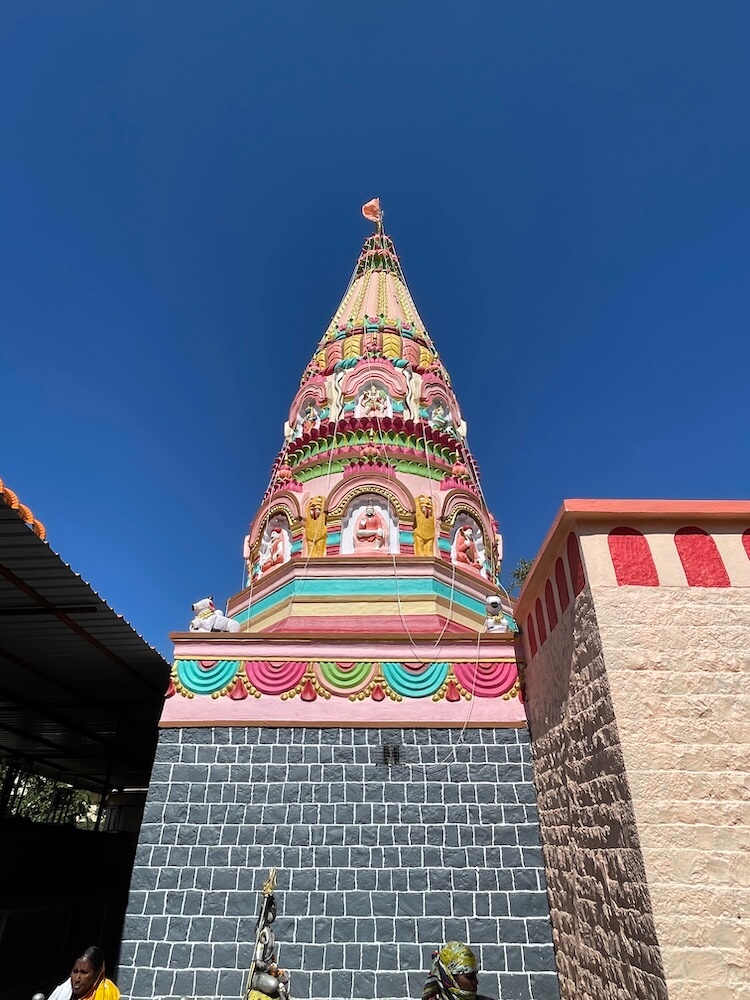
The Garbhagriha of the temple is topped by a three-tiered circular Shikhara (spire). The lower two tiers of the Shikhara each have eight niches containing sculptures of various deities. The third tier, which tapers upwards, features leaf and vine carvings. At the apex, there are two Amalakas placed one above the other. The Kalash and the temple flag atop it attract attention. Beside this temple, in the courtyard, are the Sant Dnyaneshwar Mauli Temple, Shri Ram Temple, and Maruti Temple. The roofs of all three of these temples feature three-tiered octagonal Shikharas. The temple premises include a Bhaktaniwas (pilgrim lodging) for devotees, a temple trust office, and other structures.
The main annual fair, Mahashivratri, is celebrated with great enthusiasm in the temple for three days. During this time, thousands of devotees come for the Darshan of the deity and to fulfill their vows. Programs such as Maha-Abhishek, Bhajans, Kirtans, discourses, and Mahaprasad are organized in the temple. As shops selling various goods are set up here for three days during the festival, the area takes on the appearance of a temporary marketplace. Millions of rupees worth of transactions occur through the buying and selling of household items, agricultural tools, entertainment gadgets, agricultural products, clothes, blankets, and food items.
On Mahashivratri and the fourth Monday of Shravan, the palanquin procession of the deity goes to the river. After the Maha-Abhishek of the deity there, the palanquin leaves for a circumambulation of the village. The palanquin returns to the temple at five in the morning. A special festival for the deity is celebrated in the month of Phalguna. A Harinam Saptah is organized between Chaitra Padwa and Ram Navami. There is a large crowd of devotees at the temple during all festivals and celebrations. The flow of devotees increases on Mondays, Purnima, Amavasya, and Pradosh.
This sacred temple stands as a testament to deep spiritual devotion, ancient architectural grandeur, and rich local cultural traditions.
The sanctum sanctorum houses the divine idol consecrated according to ancient Vedic traditions, surrounded by serene courtyards and traditional temple architecture.
Navratri, Maha Shivratri, Annual Temple Jatra & Deepotsav
Compare and book flights, secure top-rated local hotels near the temple, hire reliable guides, and rent cars instantly.
Extend your pilgrimage by visiting other highly sacred temples located nearby.


Add ₹999 more to unlock FREE SHIPPING!
Your sacred cart is currently empty.
Shop Photo FramesFill in your delivery details below to place your order.
Add comment