
Add ₹999 more to unlock FREE SHIPPING!
Your sacred cart is currently empty.
Shop Photo FramesIn the rich religious and cultural heritage of Maharashtra, the three-and-a-half Shakti Peethas hold unparalleled significance. In the series of these sacred Shakti Peethas, the seat of Mother Renuka at Mahurgad is revered as a Purna Peetha (complete seat). Nestled in the picturesque hill ranges of Nanded district, this center of power is also famous for its unique Tambul (betel leaf) tradition. It is a distinctive custom here to offer the Goddess a specially prepared betel leaf, crushed with betel leaves and various aromatic spices, a practice not found anywhere else.
Geographically, Mahurgad is situated in a remote and scenic area. In ancient times, this region was referred to as Matapur or Matripura, which means the City of the Mother. Situated in the valleys of the Penganga and Pus rivers, this fort is blessed with natural defenses. In the tradition of Maharashtra’s Shakti Peethas, the Mahalakshmi of Kolhapur, Tulja Bhavani of Tuljapur, and Renuka of Mahur are considered the three Purna Peethas, while the Saptashrungi of Vani is considered an Ardha Peetha (half seat). According to the legends in the Devi Bhagavata and Skanda Purana, when Lord Shiva performed the Tandava dance while carrying the mortal remains of Sati, Vishnu’s Sudarshana Chakra severed Sati’s body, and the pieces fell at various places on Earth. Sati’s head fell at Mahurgad. Therefore, this place is known as a Jagrut (awakened) Shakti Peetha. Renuka Devi is also addressed by various names such as Yamai, Ekvira, and Yallamma.
Renuka Devi is Bhudevi, and the word Renuka means the Earth made of dust. According to mythological legends, Renuka is the wife of Sage Jamadagni. The ‘Renuka Mahatmya’ text narrates her character story, stating that in ancient times, a king named Renu, also known as Prasenajit of the Ikshvaku dynasty, ruled in the Kanyakubja country. When he performed the Kanyakameshti Yajna, a daughter was born from the sacrificial fire. She was named Kamali in her cradle. As the daughter of King Renu, she came to be called Renuka. After she grew up, King Renu arranged her Swayamvara at the Bhagirathi region, where she chose Sage Jamadagni as her husband. The couple had five sons: Rumanvat, Sushena, Vasu, Vishwavasu, and Rambhadra, also known as Parashurama.
Her devotion to her husband was so intense that she could make a pitcher out of riverbank sand to fetch water, using a coiled snake as a support for the pitcher. One day, while the Gandharva Chitraratha was playing in the waters of the Tungabhadra, her mind was distracted for a few moments upon seeing him. Because her pure, sattvic state of mind was lost, her power to create a pitcher from sand vanished. She returned to the ashram empty-handed. Through his meditative power, Sage Jamadagni understood everything. He became extremely furious and ordered his sons to behead Renuka. The first four sons—Rumanvan, Sushena, Vasu, and Vishwavasu—refused this command. Consequently, Jamadagni cursed them and rendered them devoid of their power of reasoning. However, the fifth son, Parashurama, who is considered an avatar of Lord Vishnu, obeyed his father’s command and severed his mother’s head with his axe.
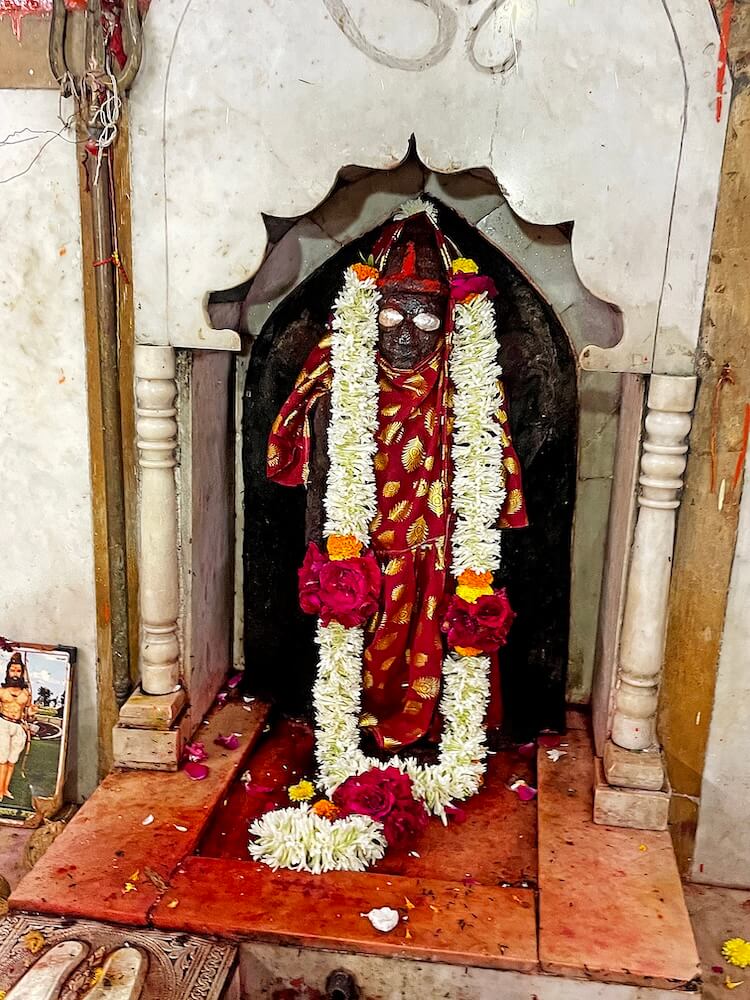
Pleased with this display of filial piety, Jamadagni asked Parashurama to seek a boon. Parashurama, with great wisdom, asked for his mother to be brought back to life and for his brothers to be freed from the curse. Jamadagni granted this. Renuka was brought back to life. Another part of this same story states that when Parashurama beheaded Renuka, the place where her head fell is considered the present-day Mahurgad. For this reason, only the mask of the Goddess is worshipped in the Mahur temple, not a full idol.
Furthermore, Mahur is mentioned in the Sahyadrikhanda and the Dattapurana. The importance of Mahur is described in the Shri Gurucharitra, a highly significant text of the Dattatreya tradition. The Gurucharitra mentions that Shri Nrusimha Saraswati visited Mahurgad during his travels and performed penance there. Additionally, Saint Eknath Maharaj sang the glory of Mother Renuka through his Bharuds. In compositions like ‘Dar Ughad Baye Dar Ughad’ (Open the door, Mother, open the door) or ‘Jogva Magen’ (I beg for alms), he invoked Renuka in the form of Jagadamba. References to the Goddess of Mahur are also found in the ‘Dasbodh’ and other miscellaneous writings of Samarth Ramdas Swami.
The greatest specialty of the Mahur temple is the Tambul or betel leaf offered to the Goddess. In no other Shakti Peetha is a betel leaf offered to the Goddess on such a large scale. Ingredients like betel leaves, catechu, lime, areca nut, fennel seeds, mace, dried coconut, cardamom, cloves, and gulkand are used to prepare this Tambul. A paste is made by crushing this Tambul, which consists of one thousand leaves. Devotees believe that this offering is very dear to the Goddess. The taste and the method of preparation of this Tambul are found only in Mahur. Due to this uniqueness, the process of obtaining a ‘Geographical Indication (GI) Tag’ for this Tambul has begun. Receiving a GI tag means this offering will receive the status of ‘intellectual property’. This will provide global recognition to the Mahur Tambul and legally protect this traditional recipe, further enhancing its importance.
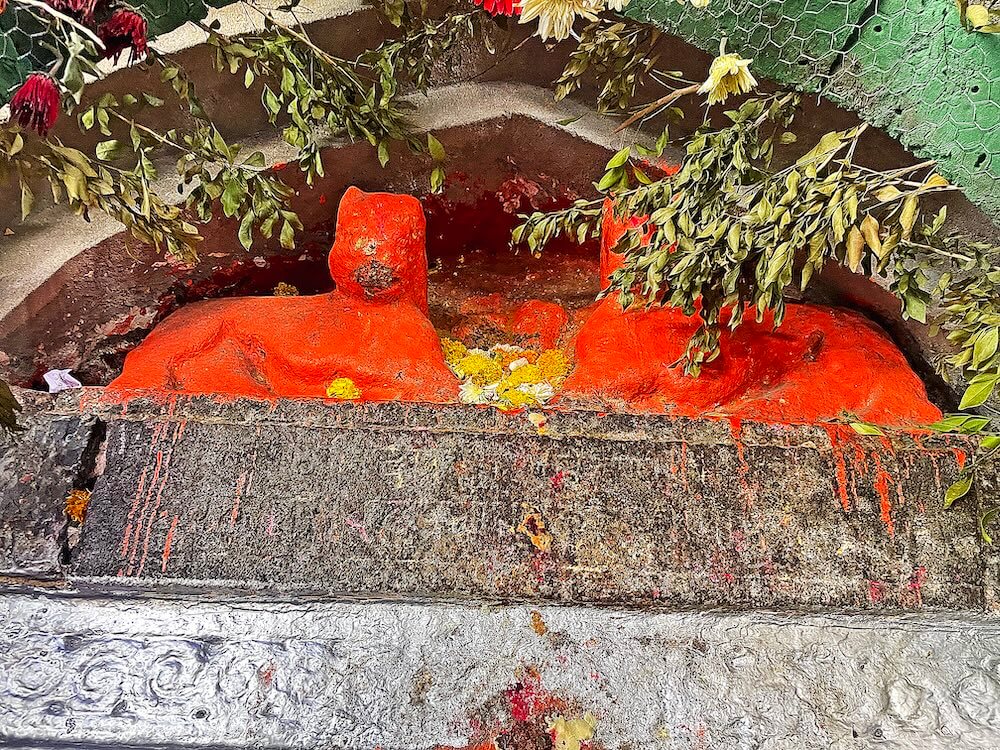
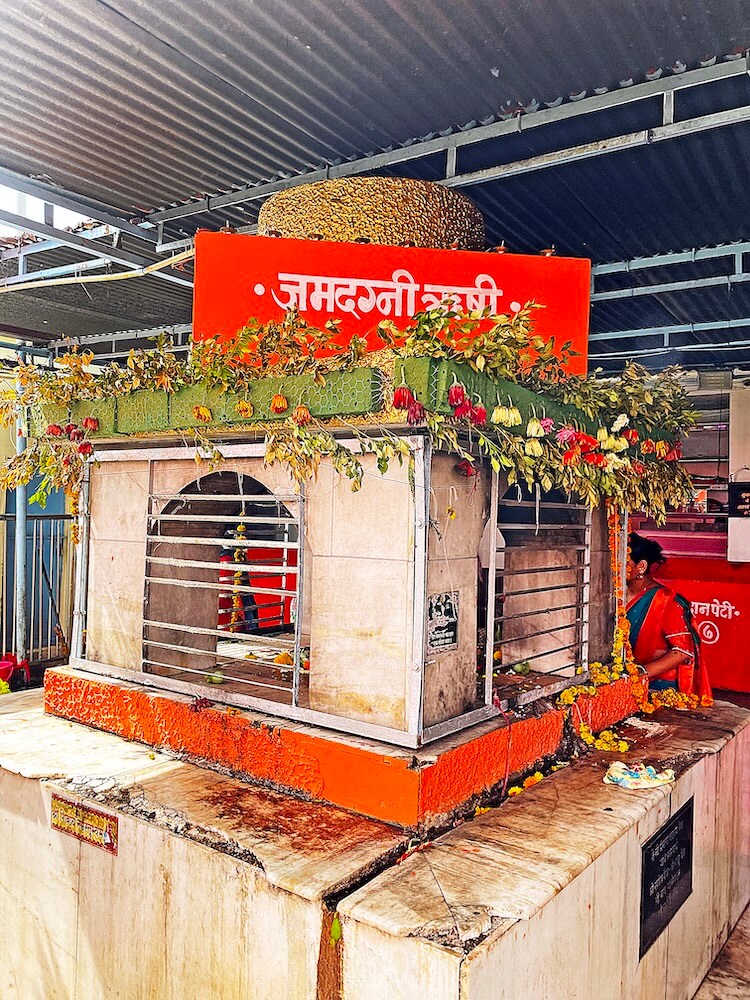
The Renuka Devi temple at Mahurgad is situated on a high hill, and there is a staircase path to reach it. One enters the temple courtyard on the fort after climbing approximately 250 steps from the base. There is a stone fortification around this courtyard. A panoramic view of the area can be seen from near this fortification. In this stone-paved courtyard, there are temples of Ganpati and Sage Jamadagni. In the center of the courtyard is the temple of Mother Renuka. There is a Rangamandapa (assembly hall) in front of the entrance of this temple. Devotees enter the temple through this hall. Archaeological evidence proves that the construction of this temple took place over various periods. The caves in this area (Pandav Leni) were likely worked on during the Rashtrakuta dynasty, which bears a resemblance to the Ajanta-Ellora caves. The current Renuka Devi temple is believed to have been built during the Yadava period, specifically during the reign of the Yadavas of Devagiri (12th-13th century). Although the temple’s structure is not in the Hemadpanti style, its stone masonry and the design of the pillars bear witness to medieval Hindu architecture.
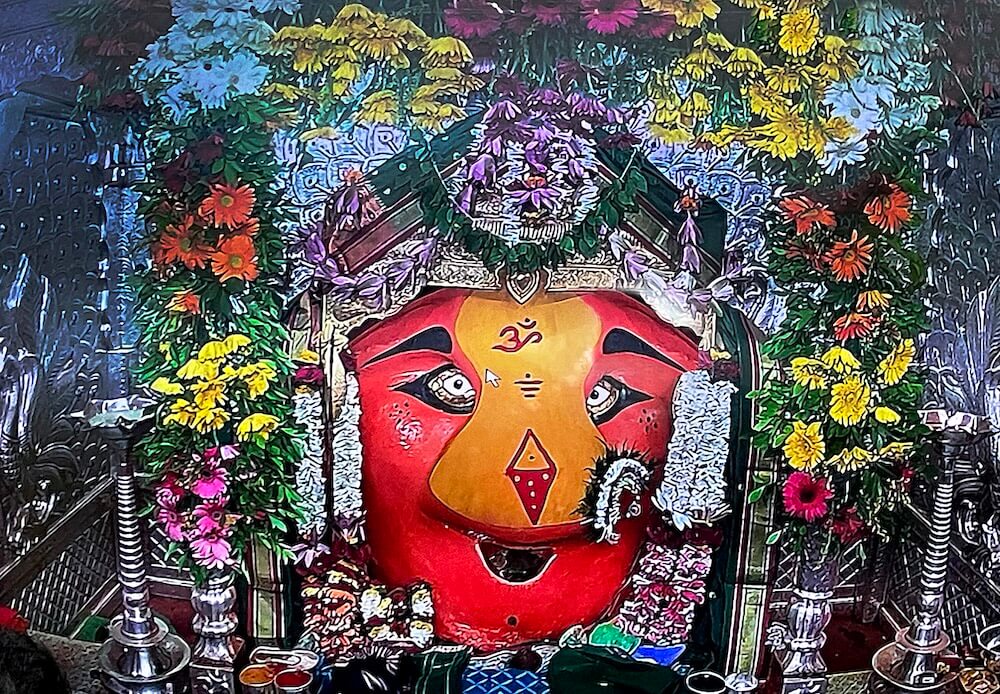
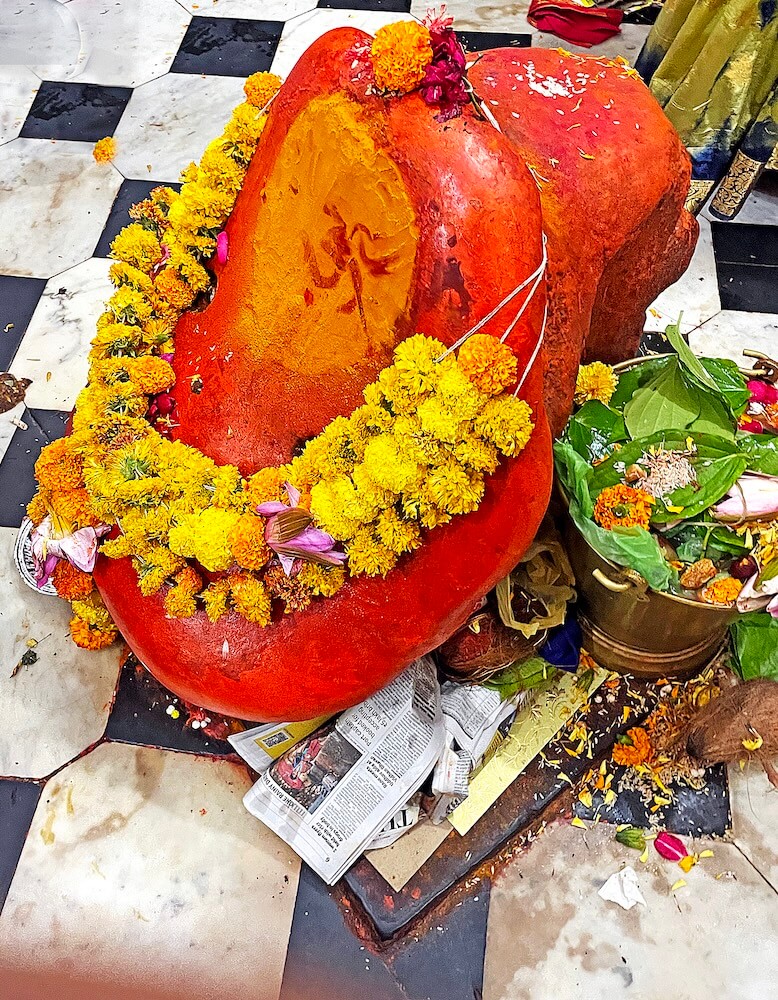
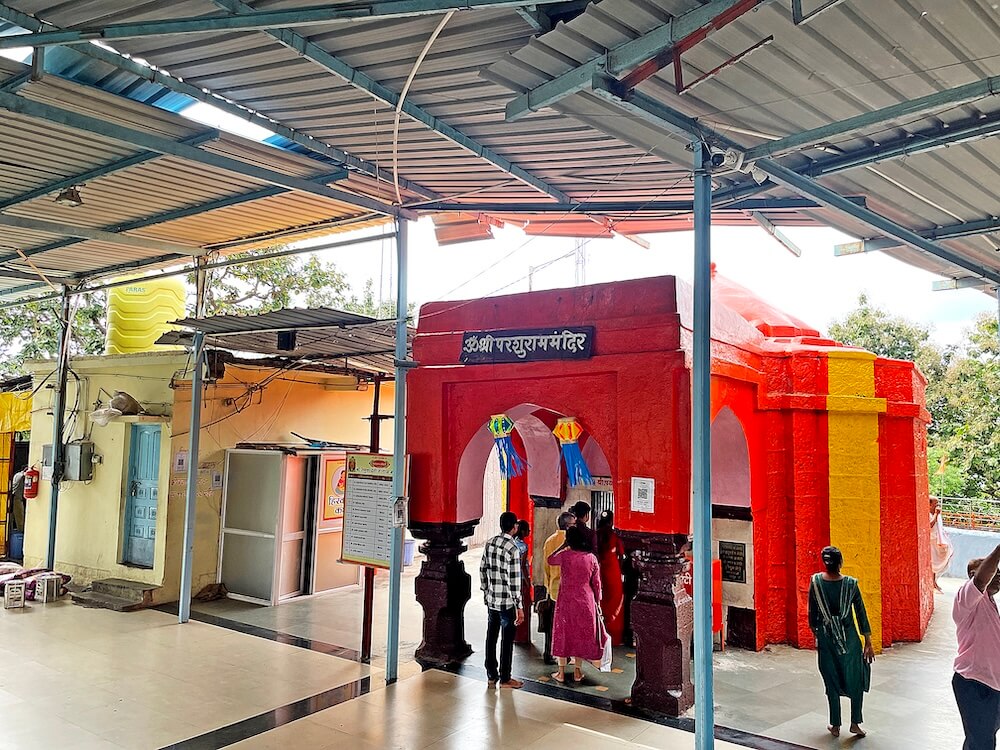
The assembly hall of this temple features large stone pillars, which are connected at the top by arched gateways. Traces of ancient craftsmanship are visible in some places on these pillars and the ceiling. The design of the sanctum sanctorum here resembles a cave or a crevice. The entrance to this sanctum is plated with silver. In the center of the sanctum, there is an idol (mask) of the Goddess in the form of a ‘Tandala’, adorned with vermilion. This mask is approximately five feet high and four feet wide. The Goddess is decorated with various gold and silver ornaments, a nose ring, and earrings. Only the face of the Goddess is worshipped here, as it is believed that the torso remains hidden beneath the ground. From this temple, one can descend a few steps on a different path to reach the Parashuram Temple located at the foothills. In this temple, there is a facility for ‘Mahaprasad’ for the devotees who visit every day.
Mahurgad is always bustling with devotees, but certain festivals celebrated here are the glory of this place. Among them, the Sharadiya Navaratri festival in the month of Ashvin is celebrated here on a grand scale. This festival begins from Ghatasthapana. For nine days, the Goddess is adorned in various forms such as Mahakali, Mahalakshmi, and Mahasaraswati. During this period, Shatachandi or Navachandi Yajna is organized in the temple. Devotees observe fasts for nine days and stay on the fort. During this time, the premises of the fort light up with illumination. Every night, Gondhal, Bharud, and songs of the Goddess are sung. On the day of Dussehra, that is, Vijayadashami, the ‘Simollanghan’ ceremony is celebrated with great enthusiasm. On this day, after the morning worship of the Goddess, the palanquin of the Goddess is brought down from the fort in a procession accompanied by music. Thousands of devotees participate in this palanquin procession. According to tradition, the palanquin is taken to a specific place for ‘Simollanghan’, where the program of looting gold, i.e., Apta leaves, takes place. This is considered a symbol of victory. There is a large fair on the fort on this day. Apart from this, Renuka Jayanti is celebrated on Vaishakh Shuddha Tritiya. On this day, the birth anniversary of the Goddess is celebrated. In the month of Paush, the Shakambhari Purnima festival is held, during which the Goddess is decorated with offerings of various types of vegetables and fruits. The daily worship rituals in the temple include the early morning Kakad Aarti, the afternoon Mahanivedya, and the night Shejarti. Devotees can have the darshan of Renukadevi every day from 5 in the morning until 10 at night.
This sacred temple stands as a testament to deep spiritual devotion, ancient architectural grandeur, and rich local cultural traditions.
The sanctum sanctorum houses the divine idol consecrated according to ancient Vedic traditions, surrounded by serene courtyards and traditional temple architecture.
Navratri, Maha Shivratri, Annual Temple Jatra & Deepotsav
Compare and book flights, secure top-rated local hotels near the temple, hire reliable guides, and rent cars instantly.
Extend your pilgrimage by visiting other highly sacred temples located nearby.


Add ₹999 more to unlock FREE SHIPPING!
Your sacred cart is currently empty.
Shop Photo FramesFill in your delivery details below to place your order.
Add comment