
Add ₹999 more to unlock FREE SHIPPING!
Your sacred cart is currently empty.
Shop Photo FramesMahurgad in Nanded district is considered a most sacred pilgrimage site in Maharashtra. Although this holy place is renowned as a Shaktipeeth of Goddess Renuka Mata, it also holds immense significance for the Datta Sampradaya and the Mahanubhava Sect. Situated on this holy land, the Devdeveshwar Temple is an extremely important pilgrimage destination for the Mahanubhava Sect. This temple stands on the sacred soil sanctified by the divine feet of Bhagwan Shri Chakrapani Maharaj (Shri Changdev Raul) and Shri Chakradhar Swami. Therefore, for the followers of the Mahanubhava Sect, this temple is as sacred as Kashi or Pandharpur.
The current temple at this holy spot is believed to be eight hundred years old. Constructed in the Hemadpanti architectural style, this temple was built by Changdev Raul of the Mahanubhava Sect. Shri Changdev Raul is a deeply revered deity and spiritual pillar in the Mahanubhava Sect. According to the philosophy of the Mahanubhava Sect, Shri Changdev Raul is the third incarnation among the Pancha Krishna (the five holy manifestations). He is also known by the name Shri Chakrapani. According to legends in Mahanubhava literature, a great yogi named ‘Changdev’ resided in the region of Dwarka. He had obtained divine power and knowledge from Lord Dattatreya. During the same period, in Phaltan, the son of Janaknayak and his wife Janakaisa passed away. Yogi Changdev then left his own body and entered the body of the deceased prince, bringing him back to life. This resurrected personality later came to be known as Shri Changdev Raul. It was Changdev Raul who bestowed divine grace upon Shri Govinda Prabhu of Riddhapur, who later initiated Shri Chakradhar Swami. Thus, in the revered guru lineage of Shri Chakradhar Swami, Changdev Raul holds a supreme position.
The legend of the Devdeveshwar Temple on Mahurgad states that in ancient times, the hermitage of Sage Devala was located at this place. Sage Devala had mastered many spiritual sciences through his intense penance, which made him proud of his mystic powers. Using his penances, he consecrated a Shivling in his ashram. This Shivling began to grow at an uncontrollable pace, and the intense heat emanating from it became unbearable for living beings. Consequently, all the animals and birds began leaving Mahurgad. The celestial Devas grew anxious that the overwhelming power of this Shivling might destroy the entire creation. Thereupon, all the Devas prayed to Lord Dattatreya to find a solution. Lord Dattatreya visited Sage Devala’s ashram. Upon seeing Shri Dattatreya, Sage Devala’s pride completely dissolved. Sage Devala bowed before Dattatreya and offered flowers at His holy feet. Lord Dattatreya placed those very flowers upon the Shivling and gently pressed it into the earth with His little finger. Sage Devala then requested Lord Dattatreya to allow the memory of this Shivling to endure forever, and asked Him to make this holy place His resting abode, coming here daily for sleep so that the sanctity of the shrine would remain eternal. Lord Datta accepted the sage’s request. Ever since, it became the divine routine of Shri Dattatreya to “Take a bath at Kashi, seek alms at Kolhapur, and sleep at Mahur.” Thus, it is believed that no matter where Lord Datta is throughout the day, He returns to Mahurgad at night to rest.
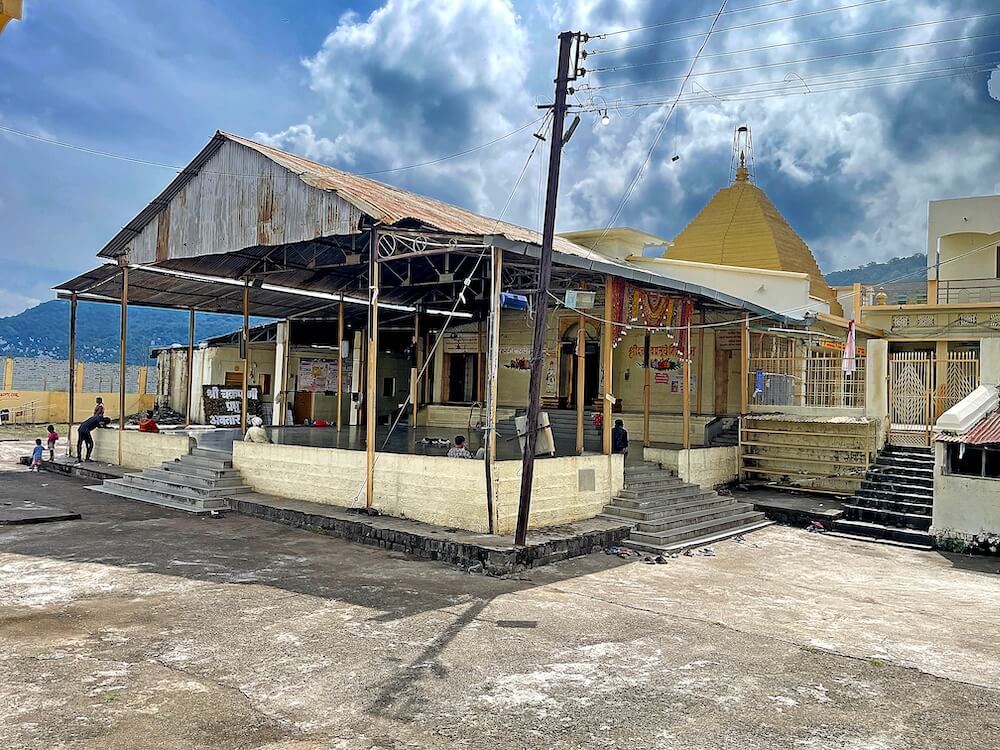
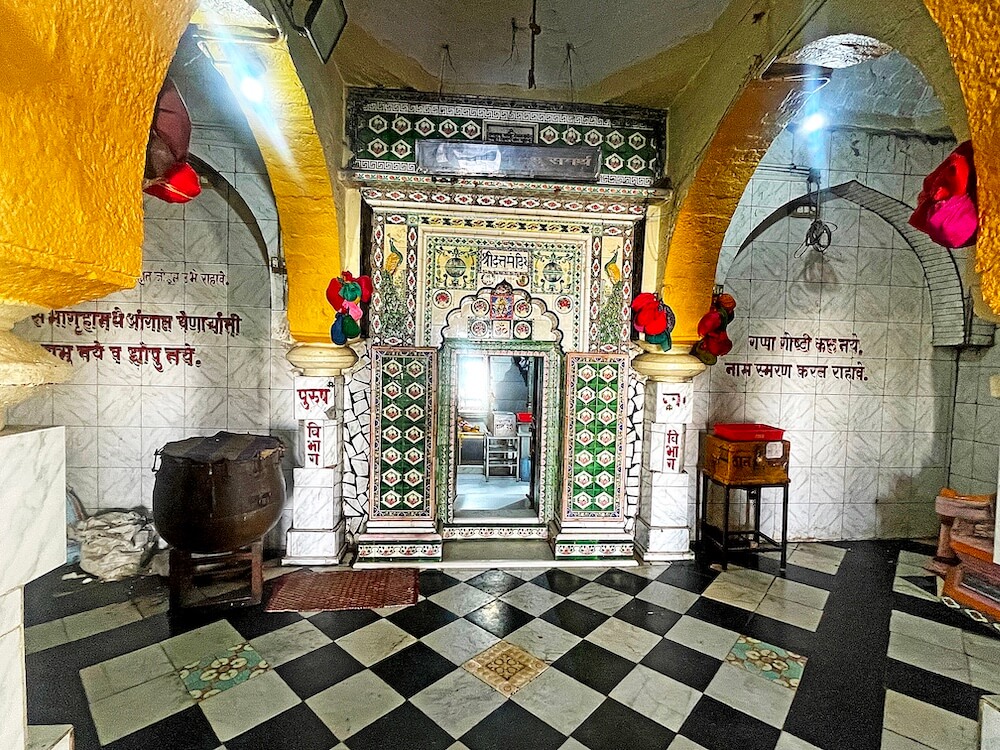
The layout of this temple comprises an outer assembly hall (Sabhamandap), a main assembly hall (Mukhya Sabhamandap), and the sanctum sanctorum (Garbhagriha). As the outer assembly hall is elevated above the courtyard, seven steps lead to its entrance. This semi-open assembly hall, built on iron pillars with a corrugated tin roof, was constructed in recent times. The main assembly hall and the sanctum sanctorum beyond it form part of the ancient temple structure. Since the main assembly hall is raised about four feet higher than the outer hall, six steps lead up to its entrance. The entrance is flanked on both sides by square pillars adorned with arched lintels. The enclosed main assembly hall features four rows of four intricately carved pillars each, with the outer pillars embedded within the walls. All the pillars are interconnected by arched lintels. The shafts of the pillars display geometric shapes such as squares and hexagons, and the capitals are decorated with carved motifs. There are two additional doors on the right and left sides of the main assembly hall. On the right side against the wall of the assembly hall stands a three-faced (Trimukhi) and four-armed (Chaturbhuja) idol of Shri Dattatreya, approximately six feet in height.
Further ahead lies the entrance to the sanctum sanctorum. The doorframes feature fine carvings of flowers and foliage, with peacock motifs and other figures engraved above the doorway. Inside the sanctum sanctorum, placed on two separate stone pedestals (Vajrapeethas), are the stone idols of single-faced (Ekmukhi) Shri Dattatreya and Shri Changdev Raul, the Guru of the Mahanubhava Sect. Both idols are adorned with silver masks and crowns, backed by ornate silver halos (Prabhavalis). Every evening, following the dusk Aarti (Sanjarati), the divine resting beds are prepared. It is believed that the Lord arrives here every night to rest. An exit doorway is located at the rear of the sanctum sanctorum. A square spire (Shikhara) that tapers upwards crowns the roof of the sanctum.
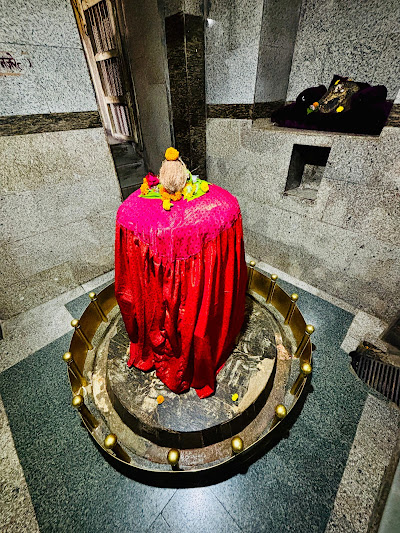
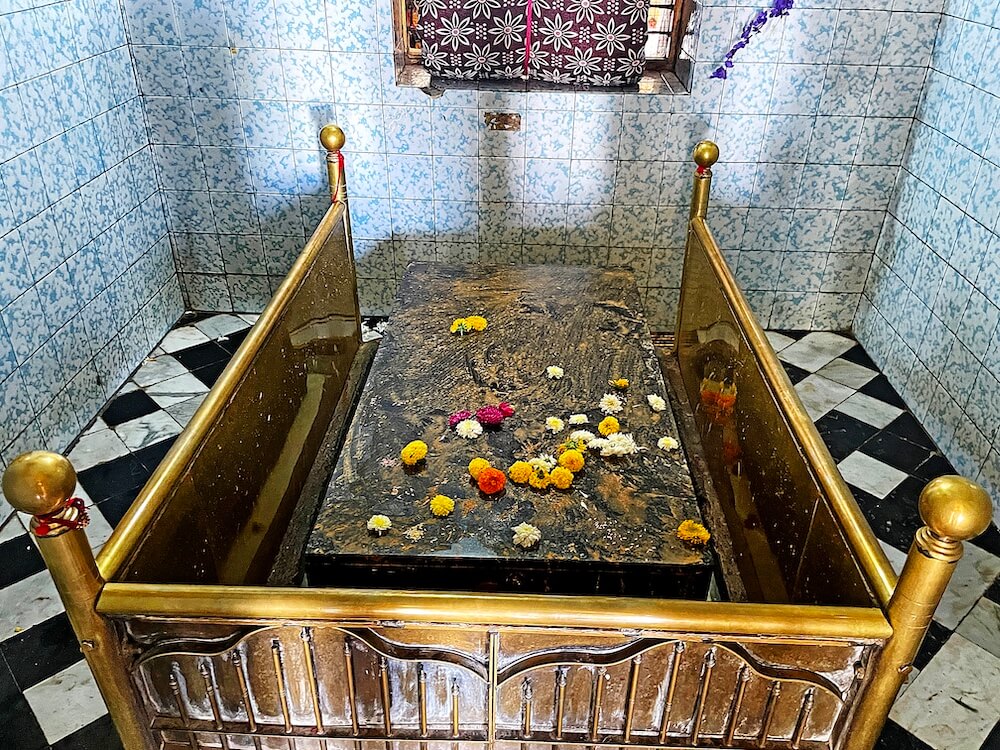
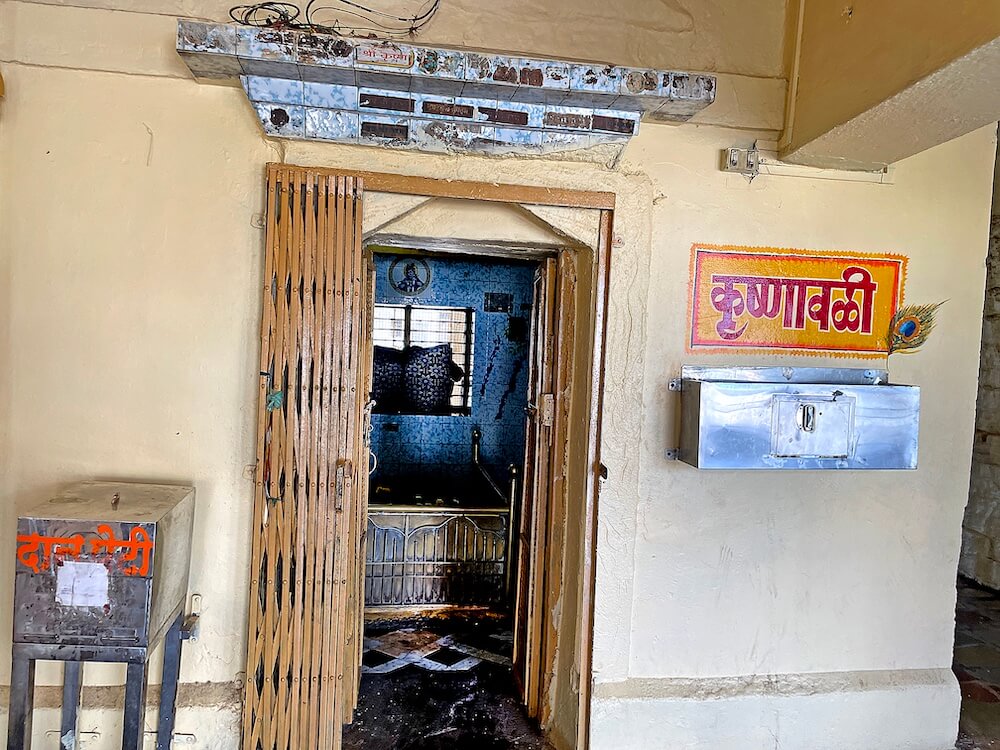
Behind the sanctum sanctorum of Shri Dattatreya lies a second sanctum sanctorum. This shrine is situated below ground level, with steps leading down into it. Inside this sanctum rests a Shivling with a square base, an octagonal middle section, and a circular top. According to legend, this is the very Shivling that had grown to touch the sky and was pressed into the earth by Lord Datta with His little finger. The temple complex also houses a sanctum containing an idol of Govinda Prabhu. Towards the rear of the temple are the Samadhis (memorial shrines) of several departed Mahants of the Mahanubhava Sect. Within the temple precincts lies a holy water tank named Sarvatirtha.
Shri Krishna Janmotsav, Shri Datta Jayanti, and Mahashivratri are the principal annual festivals celebrated here with great zeal. In addition, festivals such as Chaitra Padwa, Dussehra, Diwali, the holy month of Shravan, Nag Panchami, Kartik Poornima, and Kojagiri Poornima are observed. Various religious and spiritual events are organized at the temple during these festivals. On these sacred occasions, thousands of devotees from across the country arrive here to seek divine darshan.
This sacred temple stands as a testament to deep spiritual devotion, ancient architectural grandeur, and rich local cultural traditions.
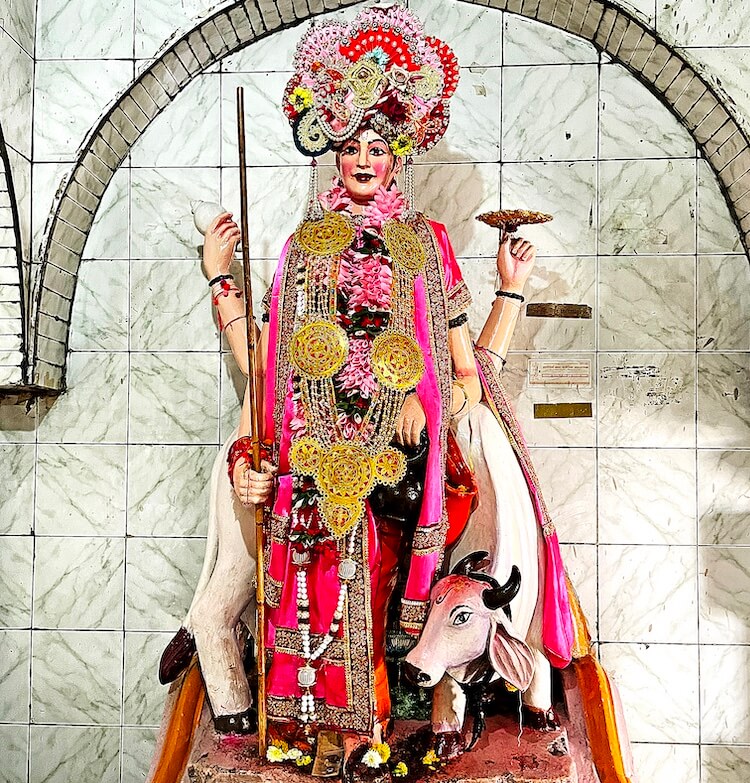
The sanctum sanctorum houses the divine idol consecrated according to ancient Vedic traditions, surrounded by serene courtyards and traditional temple architecture.
Navratri, Maha Shivratri, Annual Temple Jatra & Deepotsav
Compare and book flights, secure top-rated local hotels near the temple, hire reliable guides, and rent cars instantly.
Extend your pilgrimage by visiting other highly sacred temples located nearby.


Add ₹999 more to unlock FREE SHIPPING!
Your sacred cart is currently empty.
Shop Photo FramesFill in your delivery details below to place your order.
Add comment