
Add ₹999 more to unlock FREE SHIPPING!
Your sacred cart is currently empty.
Shop Photo FramesMany who believed that one should not discriminate while performing the sacred task of imparting knowledge once had to endure harassment from society. However, many great souls who continued their work without fearing the troubles caused by narrow-minded people attained the status of saints. Hundreds of maths (monasteries) that continued their work after them are active in Maharashtra today. The Shukanandnath Math in Vasmat, Hingoli district, is one of them. Devotees believe that one attains spiritual satisfaction by taking darshan of the Maharaj’s samadhi here.
This math is over two hundred years old. Shukanand’s father, Umapatyanand of the Kaundinya Gotra, was a devotee of Lord Ganesha. Umapatyanand turned towards the Shakta sect after accepting discipleship under Bhasuranand, a Siddha Purusha of the Shakta sect and the guru of the Jadhav family of Bhalki. Consequently, Shukanand Maharaj also practiced the worship of the Shakta sect. He began his worship and penance at the Shukashram in Chandrapur and attained authority in spirituality. As a result, the commander of the Chandrapur fort became his first disciple. Later, he returned to Bhalki and went on a pilgrimage. During this time, he was blessed with a son named Deshkanand. After his father’s death, Shukanand stayed at Siddhanathpuri in Nanded for his son’s education. Here, he taught Sanskrit at the school of the Shesh family. It was here that he met his disciple Kamlakar Sardeshpande, who built the Ram Mandir in Nanded. He imparted knowledge without observing caste discrimination. This did not please the orthodox people of that time. Therefore, he had to face harassment from society. To rescue him from this trouble, his disciple Nagorao Deshpande brought him to Vasmat. Here, he lived on the banks of the Asna River. Later, in the year 1827, he took samadhi at this very place. After him, his son Deshkanand Maharaj built his father’s samadhi and established the math. The tradition of Mahants of this math continues with Deshkanand, Yagneshanand, Lakshmishanand, Gaganand, Siddha Maharaj, and Chintamani Maharaj.
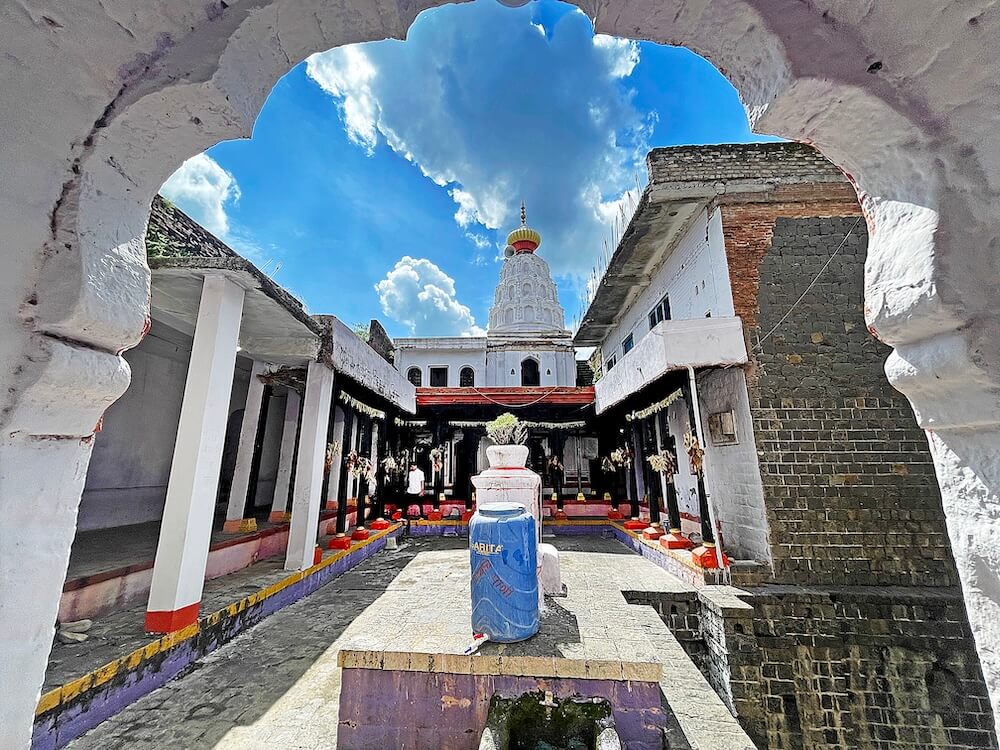
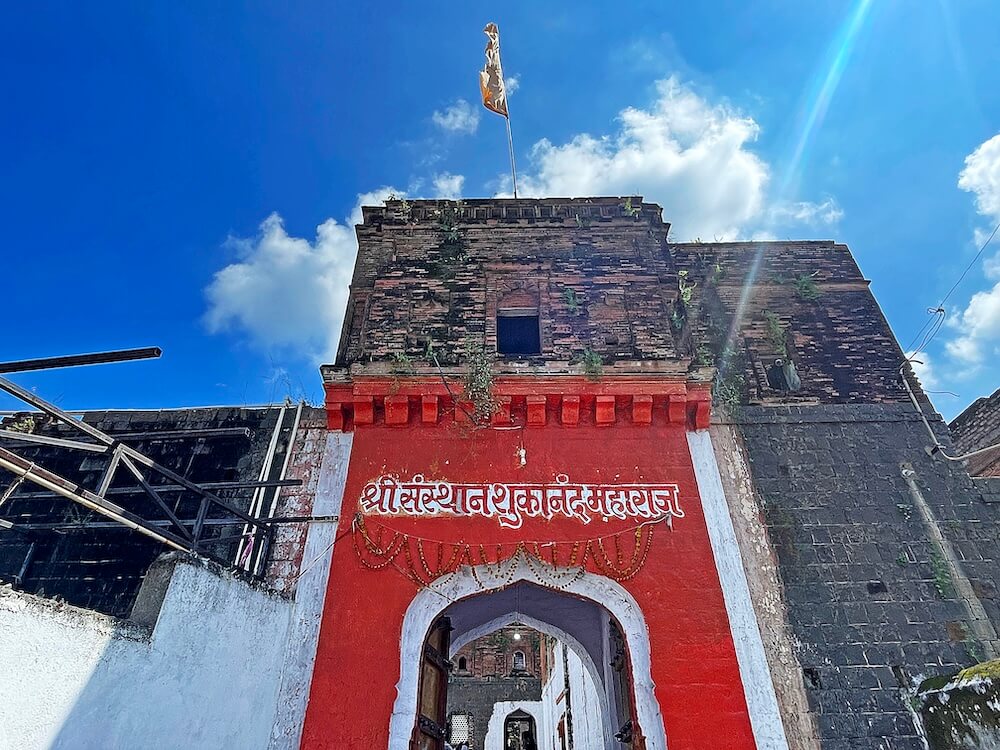
This math, located near the village, has strong fortifications. The lower wall of the fortification, about twenty feet high, is built of carved stone, while an eight-foot-high wall of bricks is built on top of it. The fortification has a grand two-story entrance. The entrance has wooden shutters. There are also guard rooms on the inside. There is a Nagarkhana on the floor above the entrance. In the spacious courtyard of the math, there is a rectangular stepwell built of carved stone on the right side. There are steps to descend into the well. It is said that the water reservoir here is inexhaustible. This stepwell is called Kashi Tirtha. Near the stepwell is a Tulsi Vrindavan. There are many two-story buildings in the math.
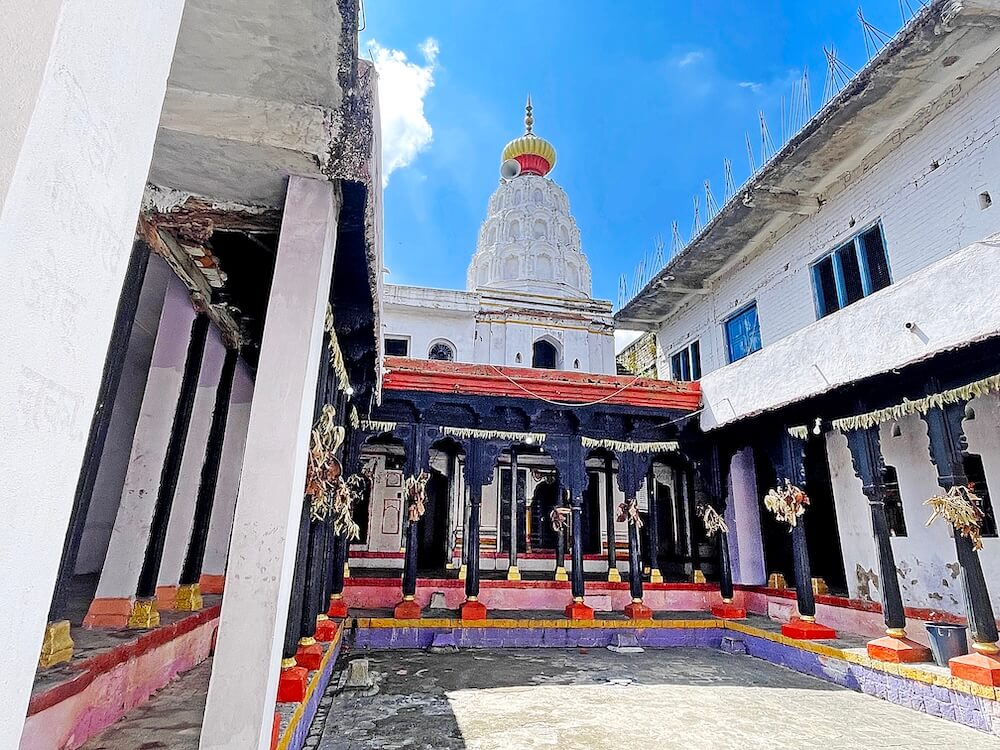
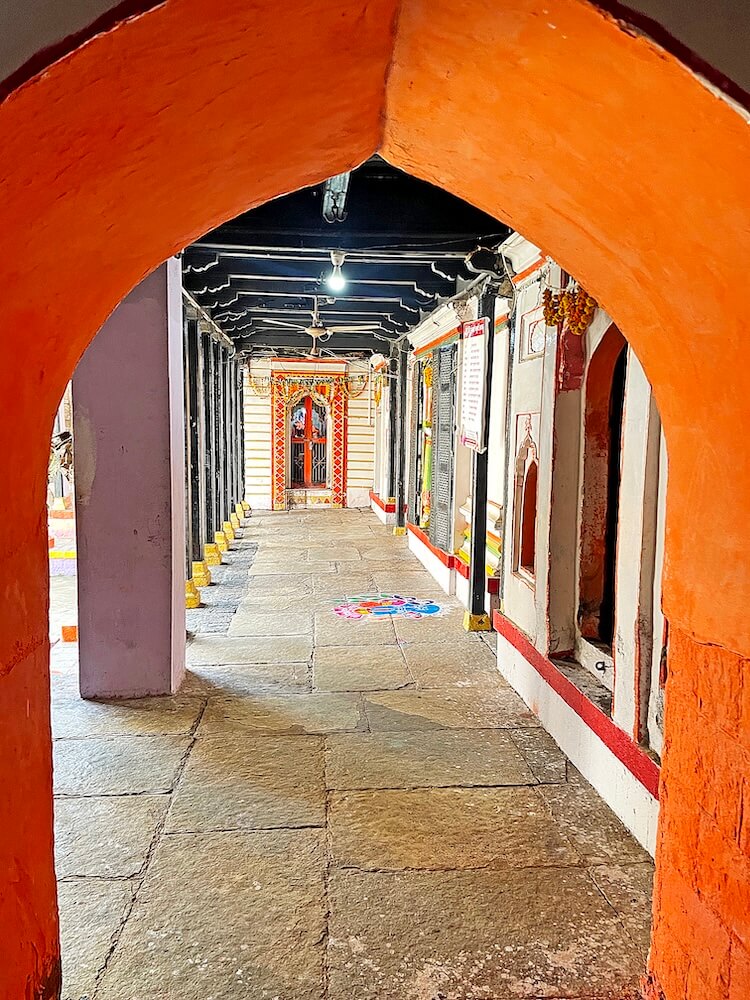
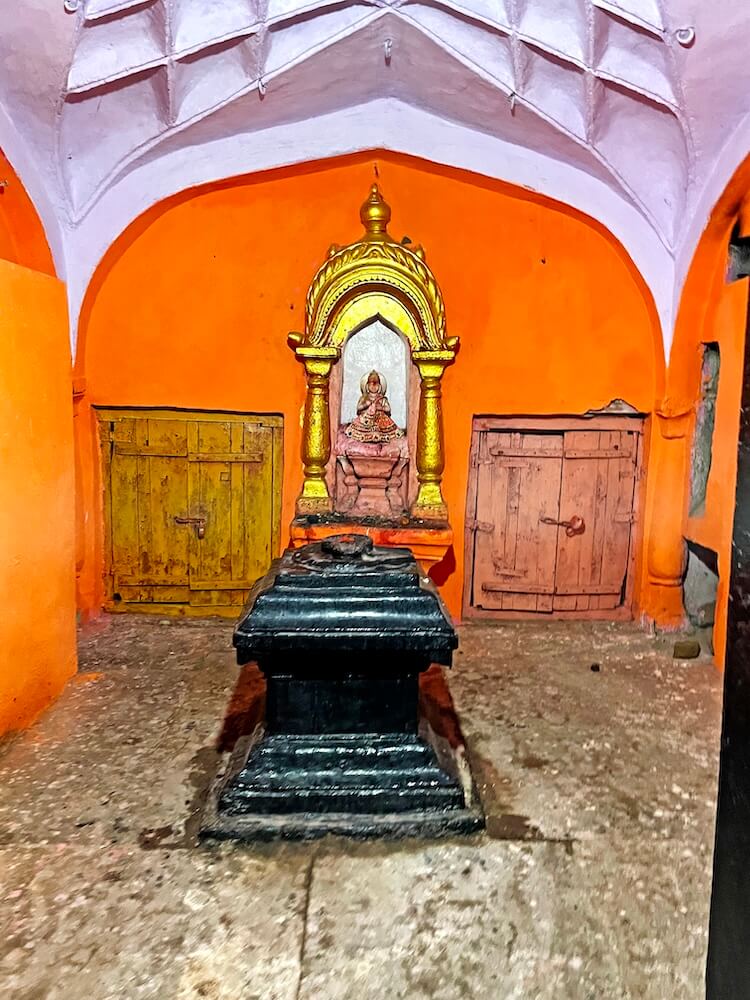
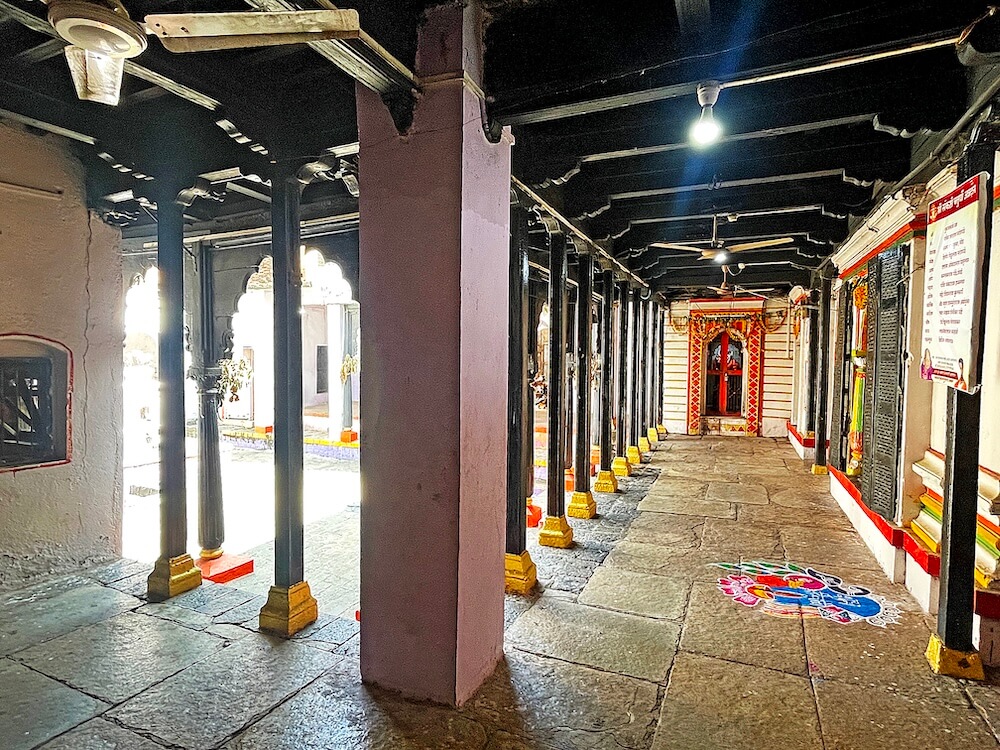
Further ahead is the main building of the math. The construction here is of brick and lime. In front of the building is a veranda with a wooden ceiling supported by wooden pillars. The wooden pillars here stand on square stone bases. On these pillars are wooden brackets, and on the brackets are beams. Here is the samadhi temple of Shukanand Maharaj. The entrance to the samadhi temple has an ornate door frame and a torana. In the center of the temple, on the floor, is the samadhi platform. On this platform, there is a makhar (canopy) with small pillars at the four corners. In the makhar, there is a parrot sculpture as a symbol of Shukanand Maharaj. At the top of the makhar is a crystal Shiva Linga. Behind the samadhi platform is a separate sanctum sanctorum with a wooden entrance. There, against the wall, on a Vajrapitha, is a vermilion-smeared stone idol of Shri Ganesha in an ornate wooden makhar. On the roof of the samadhi temple is a three-layered circular shikhara. Each layer of the shikhara has twelve empty niches. At the top of the shikhara is an Amalaka, and on the Amalaka is a Kalasha. The math houses the samadhis of deceased Mahants such as Yagneshanand, Lakshmishanand, Gaganand, and Siddha Maharaj. At each samadhi site, against the back wall, there are idols of different goddesses. Since the math tradition is of the Shakta sect, it is said that there are idols of goddesses at the samadhi sites here.
The Jyeshtha Krishna Dashami is the main annual festival here, marking the punyatithi (death anniversary) of Shukanand Maharaj. The punyatithi festival of Yagneshanand Maharaj is celebrated for three days from Chaitra Krishna Ashtami to Dashami. Apart from this, the Sharadiya Navratri festival is celebrated in the math. During this time, a pot (ghat) of Mangala Devi is installed and worshipped. During all festivals, Abhishek, Mahapuja, Bhajan, Kirtan, Jagaran, and Yajna are organized in the math. The punyatithi festivals conclude with a Palkhi procession that goes through the village. The worship of the Goddess concludes with a Mahaprasad. Other festivals and celebrations throughout the year are also observed in the math. Hundreds of devotees visit the math during festivals and on specific auspicious occasions. Devotees frequent the math on Mondays, Tuesdays, Thursdays, Purnima, Amavasya, and other days.
This sacred temple stands as a testament to deep spiritual devotion, ancient architectural grandeur, and rich local cultural traditions.
The sanctum sanctorum houses the divine idol consecrated according to ancient Vedic traditions, surrounded by serene courtyards and traditional temple architecture.
Navratri, Maha Shivratri, Annual Temple Jatra & Deepotsav
Compare and book flights, secure top-rated local hotels near the temple, hire reliable guides, and rent cars instantly.
Extend your pilgrimage by visiting other highly sacred temples located nearby.


Add ₹999 more to unlock FREE SHIPPING!
Your sacred cart is currently empty.
Shop Photo FramesFill in your delivery details below to place your order.
Add comment