
Add ₹999 more to unlock FREE SHIPPING!
Your sacred cart is currently empty.
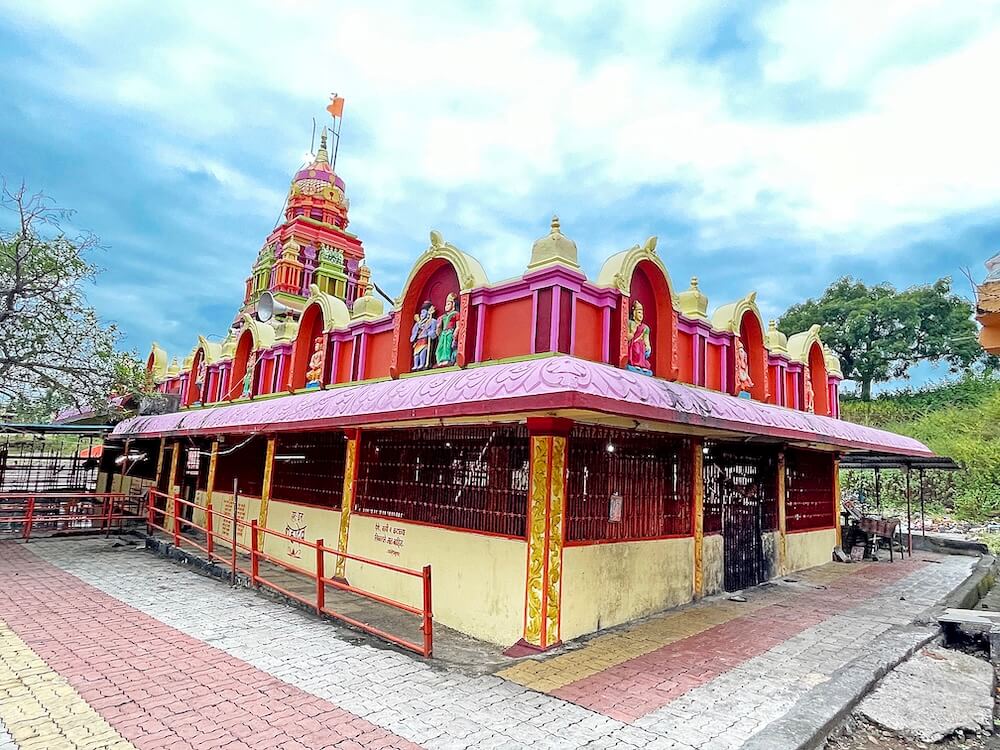
Shop Photo FramesNestled on a hilltop in Naigaon taluka of Nanded district, the Mahadeva Temple of Gaganbid is a revered seat of faith for devotees. Endowed with a tradition spanning hundreds of years, this temple is considered a replica of Shikhar Shingnapur. Its primary feature is the two swayambhu (self-manifested) linga stones within a single shalunka in the sanctum sanctorum, which symbolise Shiva and Parvati. A harmonious blend of Hemadpanti heritage and modern renovation, this holy shrine witnesses a grand fair during Maha Shivaratri. Vows of offering food (annadana) are taken at this temple, and upon the fulfillment of vows, a community feast known as ‘bhandara’ is organised here. Consequently, the bhandara continues year-round at this place.
This ancient holy shrine, dating back thousands of years, is situated on the hilltop at the tri-junction boundary of the three villages of Sugav, Nilegavhan, and Gaganbid. After the Hemadpanti-style stone structure of the temple fell into disrepair, the villagers renovated the temple. As a result, the temple has attained its present modern form. The Shivapindi, featuring two linga stones in a single shalunka—representing the form of Shiva-Shankara—is found in both Shikhar Shingnapur and Gaganbid. For this very reason, the temple at Gaganbid is called a replica of Shikhar Shingnapur. According to the legend associated with this temple, while Shankara and Parvati were traversing the skies, Parvati took a great liking to this beautiful spot atop the mountain peak and expressed her desire to Mahadeva to halt here. In accordance with Parvati’s wish, the divine couple established themselves here in the form of pindi.
There is a welcome arch of the temple on the approach road branching off from the main Nanded-Hyderabad highway. On the platforms on both sides of the road, there are serpent sculptures on the front face and two ornate circular pillars each on top. On the balcony over the pillars, within a domed canopy (meghadambari), is the Shiva family in the centre, with statues of Saraswati and Lakshmi on either side. Atop the canopy are a spire and kalasha in the Southern architectural style. The temple is located at a distance of about three kilometres from this arch. To reach here, there is a well-paved asphalt road as well as a stairway path. Along the stairway path, there is a towering, approximately twenty-foot-high colossal statue of Maruti holding a mountain in one hand and a mace in the other.
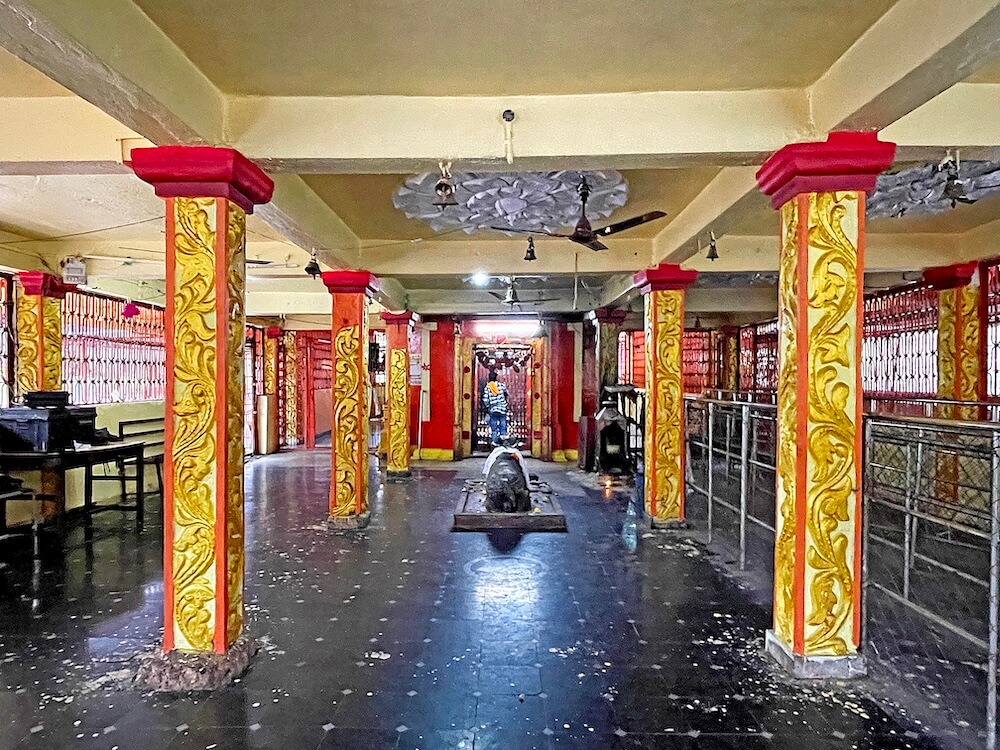
There is a spacious parking lot near the temple. Further ahead is the paver-block-paved courtyard of the temple. Seating arrangements have been provided at various places in the courtyard. Beneath a tree in front of the temple are ancient and weathered sculptures of Nandi along with Shivapindis. Comprising a sabhamandapa (assembly hall), antarala (vestibule), and garbhagriha (sanctum sanctorum), the temple features two entrances to access the sabhamandapa. The semi-open sabhamandapa has four rows of four ornate square pillars each. The outermost pillars are integrated into the railing. The pillars feature relief carvings of foliage and floral vines. Iron grills are fitted onto the railing. The pillars support brackets and beams, over which the roof is installed. The ceiling features a circular carved pattern. In the centre of the sabhamandapa, on a vajrapitha, is a black stone idol of Nandi. Ahead of Nandi is a Shivapindi, over which a copper serpent holds a canopy. Seating arrangements are provided in the sabhamandapa for devotees.
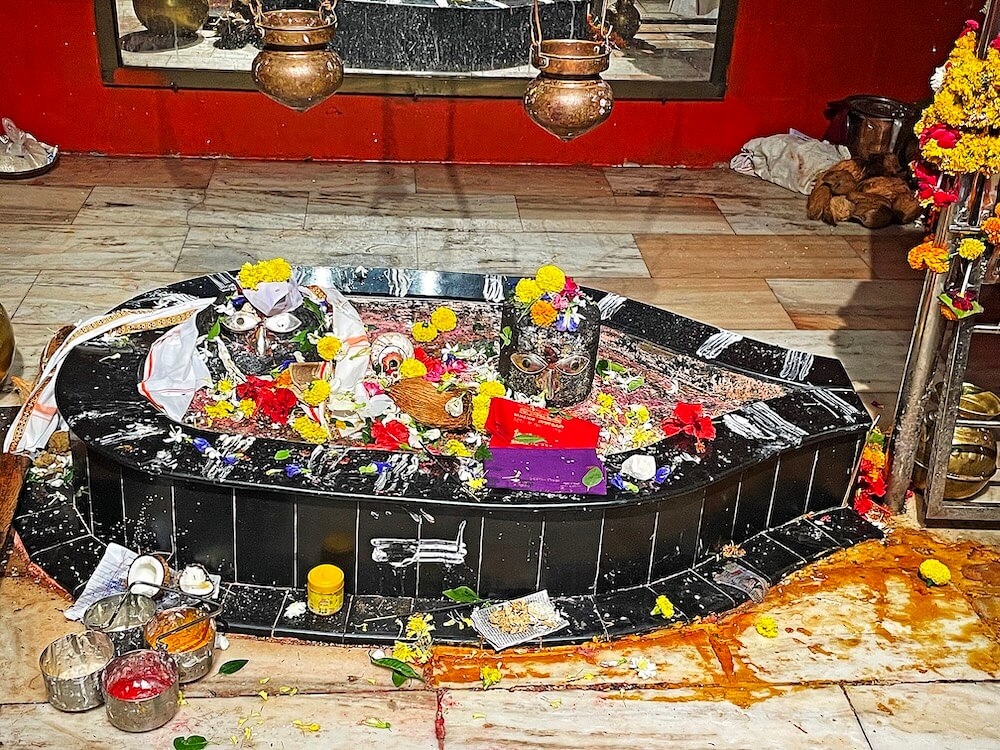
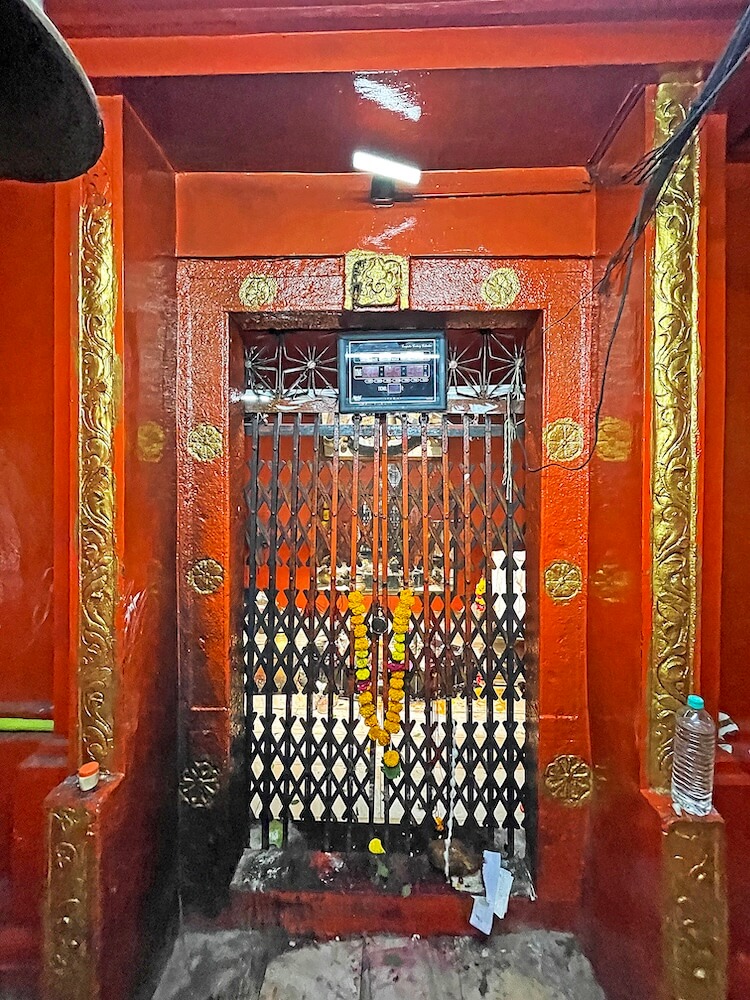
Further ahead is the ancient-structured antarala of the temple, and beyond that is the garbhagriha. The entrance of the antarala has three doorjambs adorned with floral and leaf carvings. On the lalatabimba (lintel centrepiece) is the sculpture of Ganapati. Ahead is a narrow antarala, followed by the entrance to the garbhagriha. The doorjambs here feature floral and leaf carvings, and the lalatabimba bears the sculpture of Ganapati. Inside the garbhagriha, on the floor, lies a massive shalunka surmounted by two swayambhu linga stones. These represent the forms of Shiva and Parvati. Silver eyes are affixed to the linga stones, and two independent abisheka vessels for collecting water trickles are suspended from the ceiling. A pradakshina path (circumambulation passage) runs along the exterior of the garbhagriha.
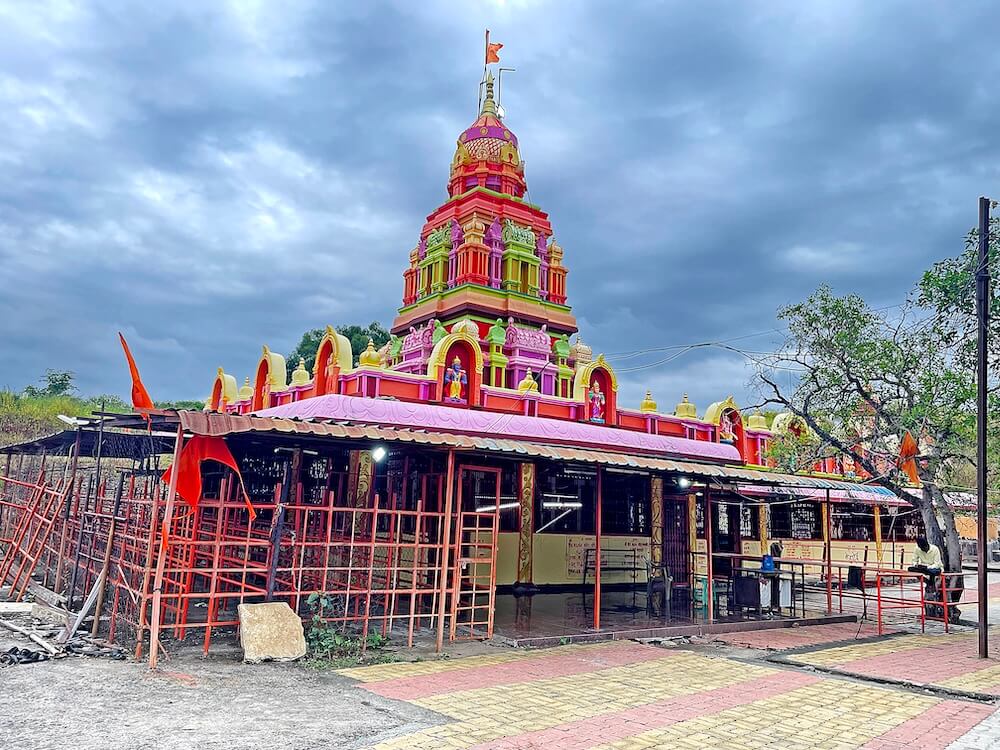
The temple roof is enclosed by a parapet wall on all four sides. Within it are eighteen niches housing statues of various deities and sages. The parapet features eighteen miniature spires, each topped with a kalasha. Over the roof of the garbhagriha rises a three-tiered spire in the Southern architectural style. Its corners feature miniature shrine architectures of dome-shaped spires known as ‘kuta’, while the central sections feature horizontal spires known as ‘shala’. The main spire is crowned with a stupika and a kalasha at the apex.
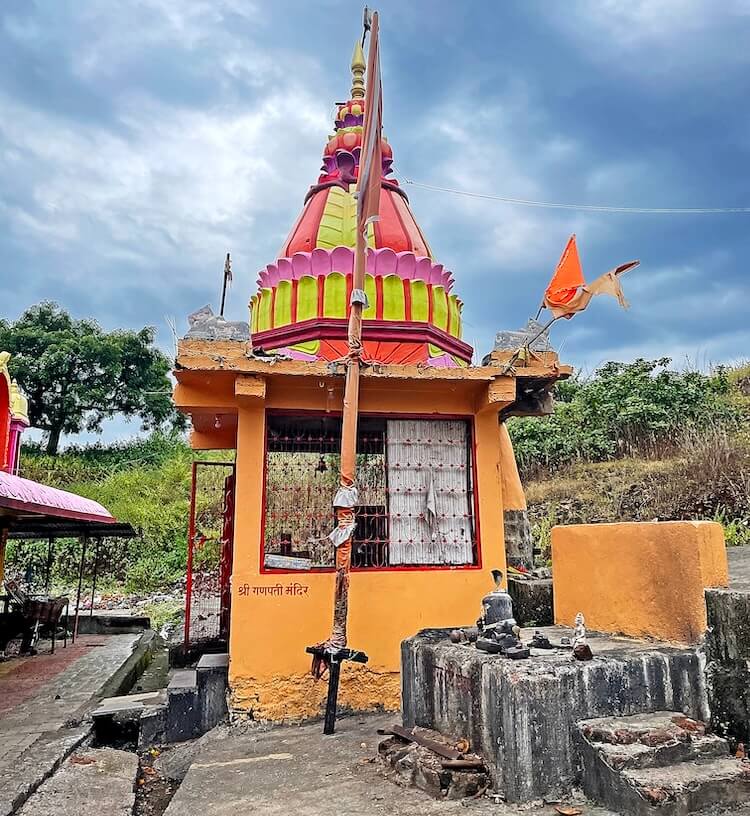
In front of the main temple stands a small temple dedicated to Ganapati. The roof of this temple features Nandi sculptures, a dome-shaped spire, and a kalasha atop it. Near the Mahadeva Temple, along the boundary wall, is the Viththala-Rakhumai Temple. Inside the temple, on a vajrapitha, are the idols of Viththala and Rakhumai. The temple roof features a dome-shaped spire with a kalasha on the stupika above.
Maha Shivaratri is the principal annual festival celebrated with great fervour in the temple. On this day, Laghurudra, Maha Abisheka, and various religious programmes are organised in the temple. At this time, numerous devotees from the surrounding region visit for the darshan of the deity and to fulfill their vows. A large gathering of devotees is also witnessed on auspicious days such as Shravana Maas, Pradosha, Amavasya, and others. Vows of offering food are undertaken at the temple, and upon the fulfillment of their vows, devotees perform a ‘bhandara’, meaning an offering of food, at the temple. Consequently, the bhandara continues in the temple for nearly the entire year.
This sacred temple stands as a testament to deep spiritual devotion, ancient architectural grandeur, and rich local cultural traditions.
The sanctum sanctorum houses the divine idol consecrated according to ancient Vedic traditions, surrounded by serene courtyards and traditional temple architecture.
Navratri, Maha Shivratri, Annual Temple Jatra & Deepotsav
Compare and book flights, secure top-rated local hotels near the temple, hire reliable guides, and rent cars instantly.
Extend your pilgrimage by visiting other highly sacred temples located nearby.


Add ₹999 more to unlock FREE SHIPPING!
Your sacred cart is currently empty.
Shop Photo FramesFill in your delivery details below to place your order.
Add comment