
Add ₹999 more to unlock FREE SHIPPING!
Your sacred cart is currently empty.
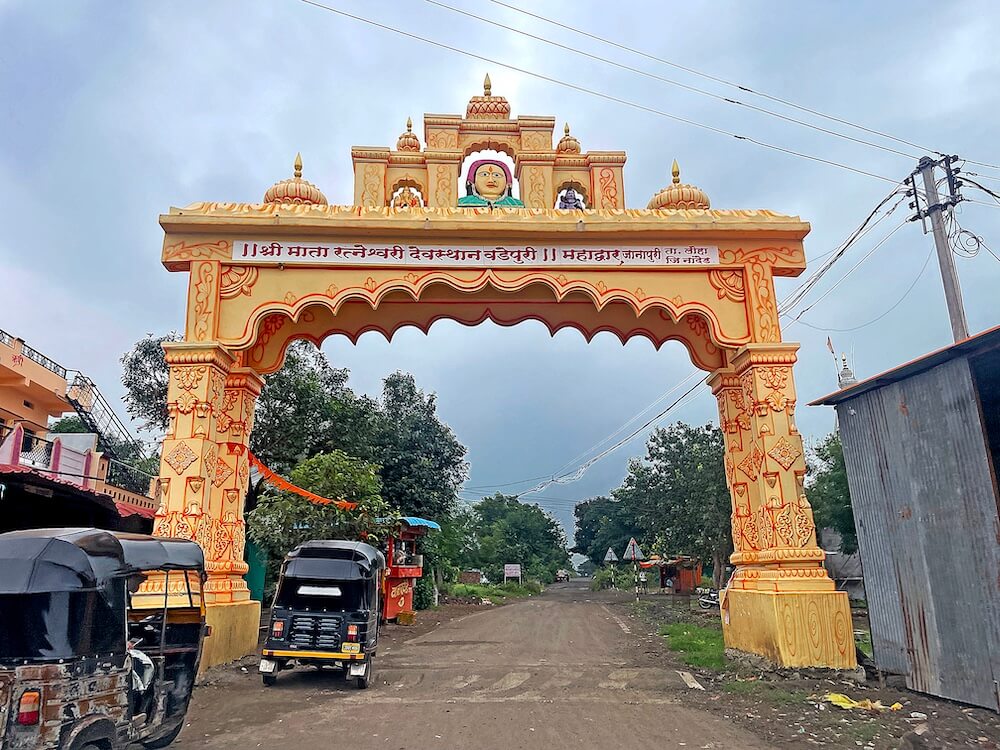
Shop Photo FramesIn the Hindu religion, there have been numerous sects, ideologies, deities, saints, ascetics, and great souls. Hinduism is a faith that sees the Divine in every living being, and indeed, even in animals, birds, and inanimate objects. A devotee, perceiving the Almighty in all things—in water, land, wood, and stone—worships even mountains and rocks. Along with the Divine, the devotee also bestows divinity upon those who are absorbed in devotion. This is why one finds temples dedicated to many such devotees across the country. One such ancient temple, dedicated to Ratneshwari Devi, a supreme devotee of Lord Mahadeva, is situated on a hilltop near the village of Vadepuri in Loha Taluka.
The legend of Ratneshwari Devi states that a girl was born to Narayan and Lakshmi Mali in Vadepuri village, and her parents named her Ratneshwari. She was a devout worshipper of Lord Shiva and would rise before sunrise every day to offer prayers at the Shiva temple. In due course, Ratneshwari was married to Shambhunath Mali. Even after marriage, she continued her daily routine, but Shambhunath began to suspect his wife, Ratna. One day, as Ratneshwari set out for the Shiva temple before sunrise, Shambhunath followed her. Just as he intercepted her and was about to behead her, a flash of lightning struck Ratneshwari, and she transformed into a stone. At that very moment, the Goddess manifested and declared that she herself had taken birth in the form of Ratneshwari and that her presence would henceforth remain in this stone. Later, a temple was built here for the Goddess. Since then, it is believed that the Goddess fulfills the wishes and aspirations of all devotees.
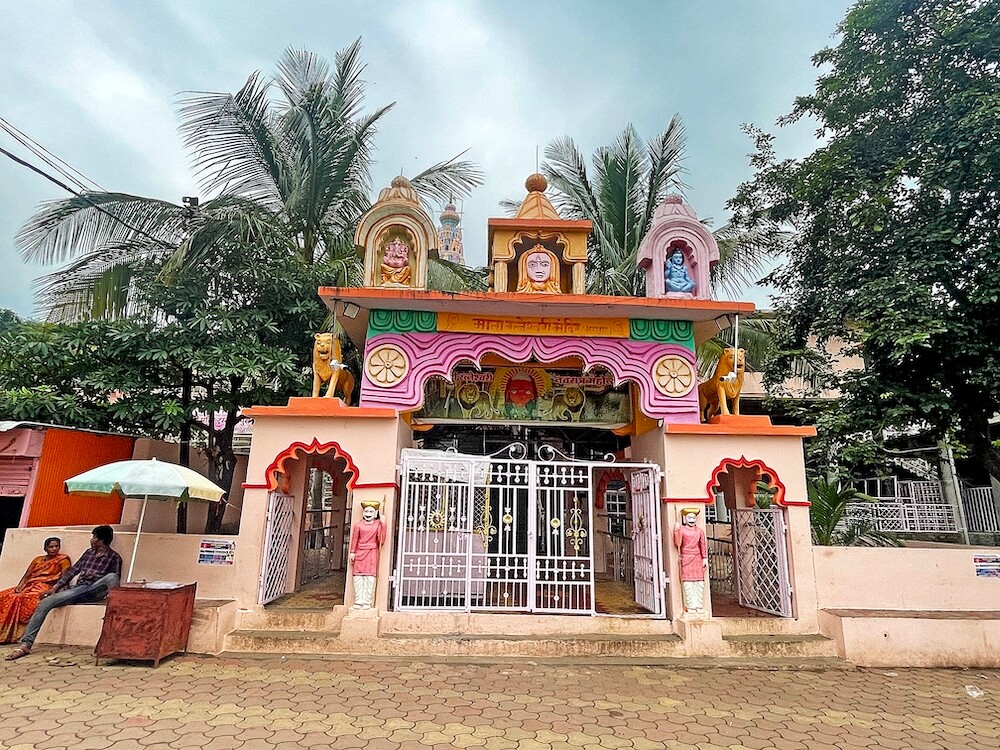
This temple, built in the Hemadpanti style, is said to date back to the thirteenth century. There is a paved asphalt road leading to the temple, which is situated on a hilltop about two kilometers from the village. In front of the temple, there is a spacious parking area and shops selling worship materials. Further ahead is the grand main entrance (Mahadwar). On both sides of the entrance, there are four pillars supporting a roof. The front pillars are carved with images of gatekeepers (Dwarpalas), while the roof is adorned with lion sculptures. On the roof on both sides, there are two Vaman pillars connected by arched gateways, and above the balcony, there are three small pavilions (Meghdambaris). In the central pavilion, there is an idol of Ratneshwari Devi. In the pavilion to the right is an idol of Mahadeva, and to the left is an idol of Ganapati. Passing through the main entrance, one enters the temple courtyard, which is covered with paver blocks. In the courtyard, beside the temple, is the freshwater Trishul Kund. It is believed that this pond was created when the Goddess struck the ground with the trident (Trishul) in her hand. There is a belief that bathing in the water of this pond cures skin diseases. It is customary to purify oneself with the water from this pond before entering the temple.
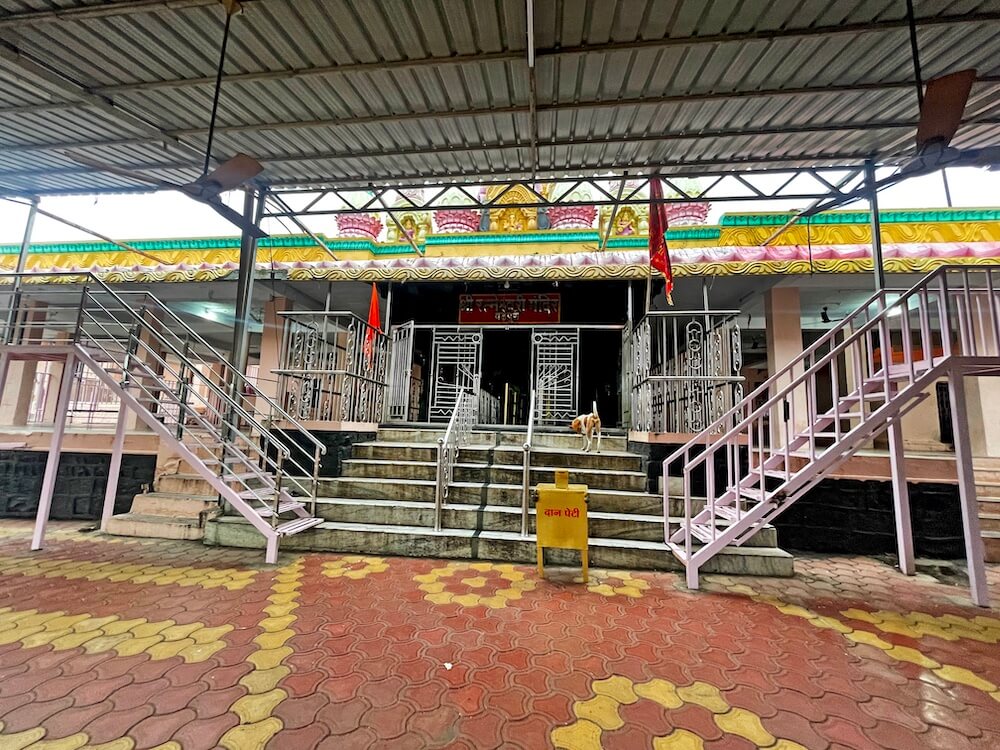
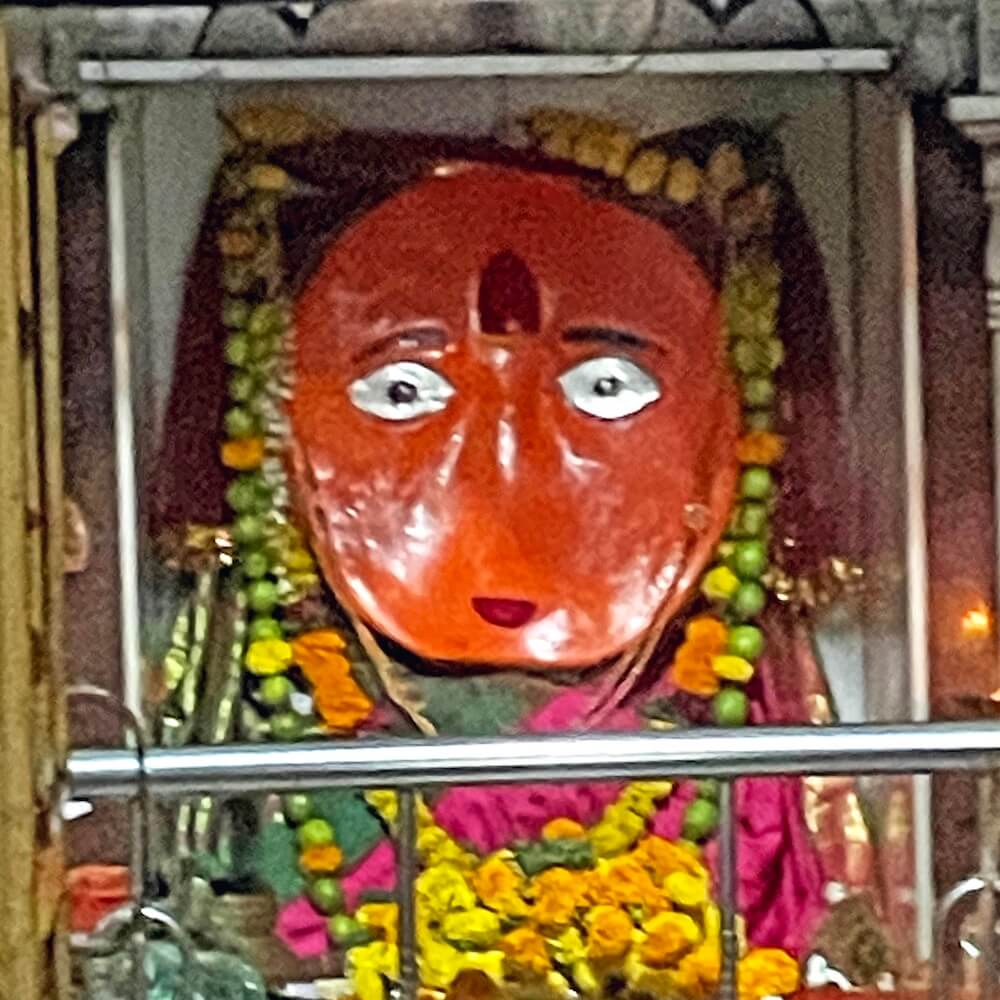
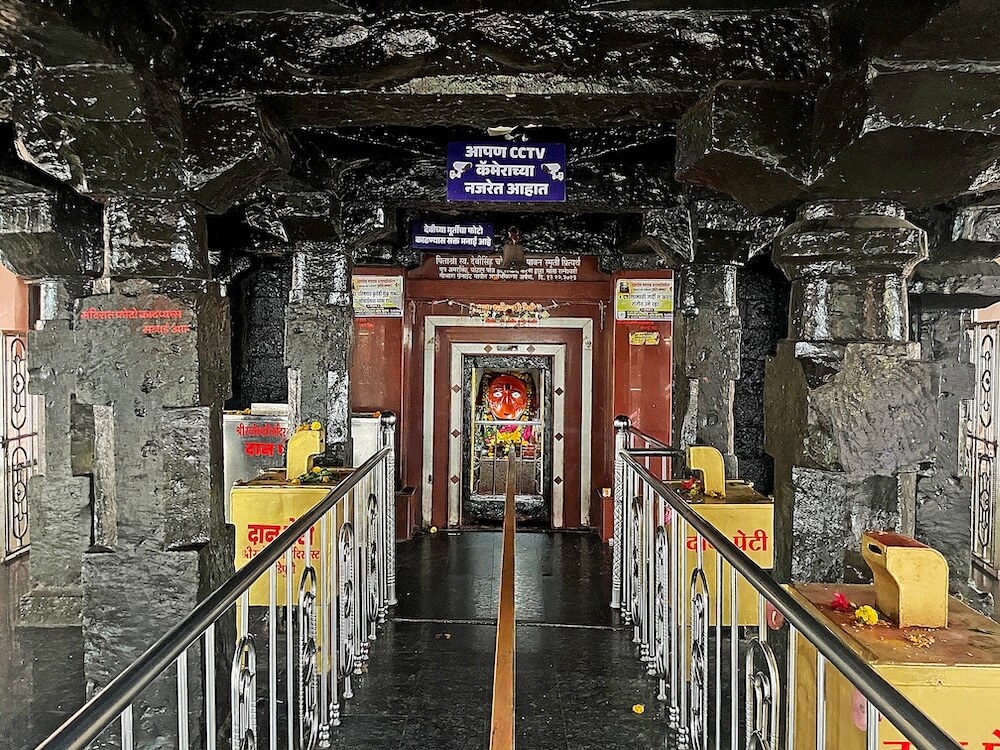
Since the temple is situated on higher ground from the courtyard, there are about 25 steps to reach it. The stairs have safety railings on both sides and a metal roof overhead. After climbing five more steps, one reaches the entrance of the assembly hall (Sabhamandap). The semi-open assembly hall has four rows of four ornate pillars each. The bases of the pillars are square, and the shafts are carved in various geometric shapes, including square, hexagonal, octagonal, and circular. The hexagonal ceiling features circular carvings and an attractive stone chandelier. Further ahead is the entrance to the sanctum sanctorum (Garbhagriha). The entrance has metal-covered ornate wooden doors. Inside the sanctum, against the back wall, is the self-manifested (Swayambhu) stone mask of Ratneshwari Devi, adorned with silver eyes. It is said that the Goddess’s entire body is beneath the ground, and only the face remains visible. This idol of the Goddess is seated in a marble shrine. There is a circumambulation path (Pradakshina Marg) around the exterior of the sanctum. It is believed that the Goddess’s hair is located on the exterior wall behind the sanctum.
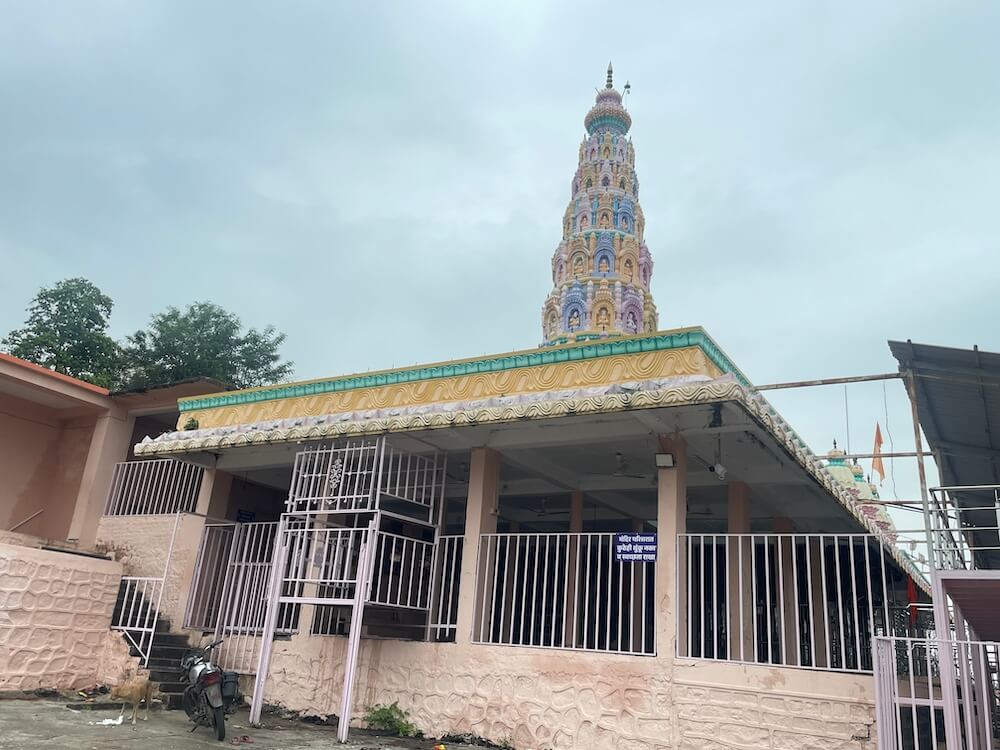
The roof of the temple has a parapet on all sides. On the roof of the assembly hall, near the entrance, there are five small dome-shaped spires. Above the sanctum, there is a magnificent seven-layered dodecagonal spire (Shikhar). Each layer of the spire contains twelve niches, each housing idols of various deities. Above each niche is a small spire, and on the crowning Amalaka sits a finial (Kalash). The main spire is topped with two Amalakas stacked one above the other, crowned by a finial. A short distance from the temple, amidst dense foliage, is a Shiva temple. It is said that Ratneshwari Devi always used to come to this Shiva temple for worship.
The Navaratri festival is the main annual event celebrated here with great enthusiasm. During this time, thousands of devotees come to seek the Goddess’s blessings and fulfill their vows. Various religious programs are organized in the temple for ten days. During Navaratri, lamps are kept lit continuously for ten days in the temple’s Trishul Kund. At this time, devotees from many parts of Nanded district arrive on foot in processions (Dindi) to seek the Goddess’s blessings.
This sacred temple stands as a testament to deep spiritual devotion, ancient architectural grandeur, and rich local cultural traditions.
The sanctum sanctorum houses the divine idol consecrated according to ancient Vedic traditions, surrounded by serene courtyards and traditional temple architecture.
Navratri, Maha Shivratri, Annual Temple Jatra & Deepotsav
Compare and book flights, secure top-rated local hotels near the temple, hire reliable guides, and rent cars instantly.
Extend your pilgrimage by visiting other highly sacred temples located nearby.


Add ₹999 more to unlock FREE SHIPPING!
Your sacred cart is currently empty.
Shop Photo FramesFill in your delivery details below to place your order.
Add comment