
Add ₹999 more to unlock FREE SHIPPING!
Your sacred cart is currently empty.
Shop Photo FramesThe Supreme Lord, who dwells in every particle of creation, who hungers for the devotion of His followers, and who is formless and attribute-less (Nirguna Nirakara), manifests in various forms for the salvation of His devotees. To provide solace to a weary soul, the vision of the Divine in the form of earth, stone, wood, or nature itself is sufficient. Thousands of legends and stories regarding the manifestation of the Divine are prevalent among the people. According to the prayers of one such devotee, the temple of Mahadev, who manifested on a mountain cliff in the village of Ghagardara in Kandhar taluka, is famous. Devotees believe that the awakened (Jagrut) Mahadev here fulfills vows and rushes to answer their calls, and the natural beauty surrounding the temple provides a profound experience of divinity.
The legend regarding the Mahadev temple at Ghagardara states that about three to four hundred years ago, a Shiva-devotee Yogi was meditating in this picturesque area. Mahadev appeared to him in a vision, making him aware of His presence. Following this, when the Yogi Maharaj excavated the mountain cliff, he discovered a Shiva Linga. The Maharaj cleaned the surrounding area, performed an Abhishekam on the Shiva Linga, and built a temple at that very spot. Thereafter, devotees from the surrounding areas began to visit Mahadev regularly. They started experiencing the power of this awakened shrine. As the reputation grew that the Lord fulfills the vows of His devotees, thousands began to flock here for His darshan.
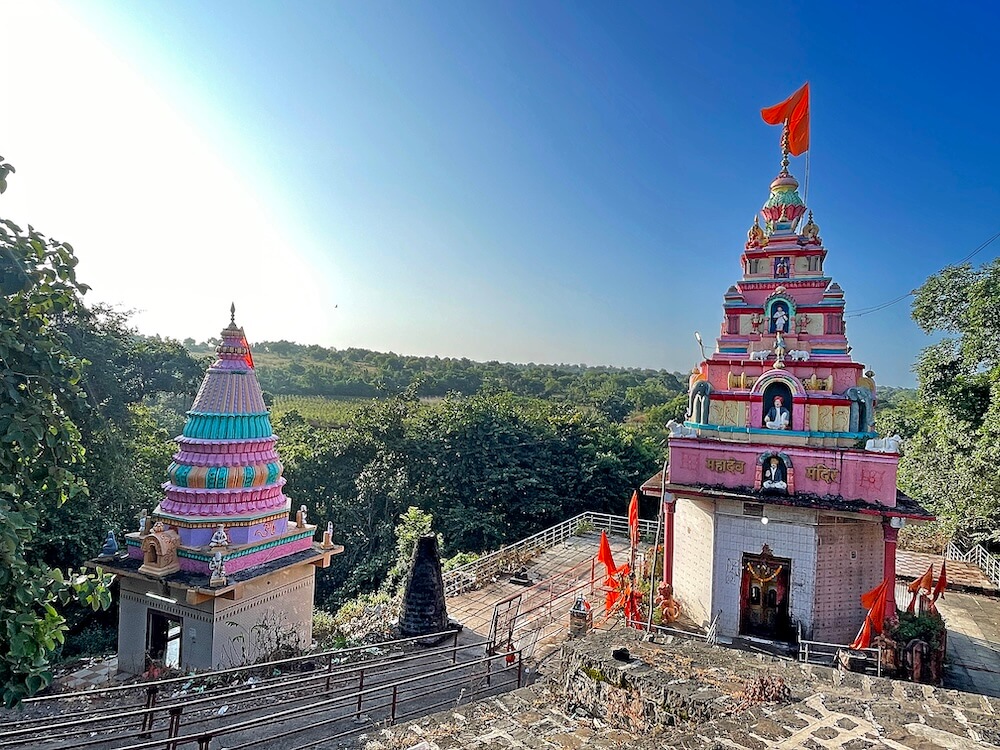
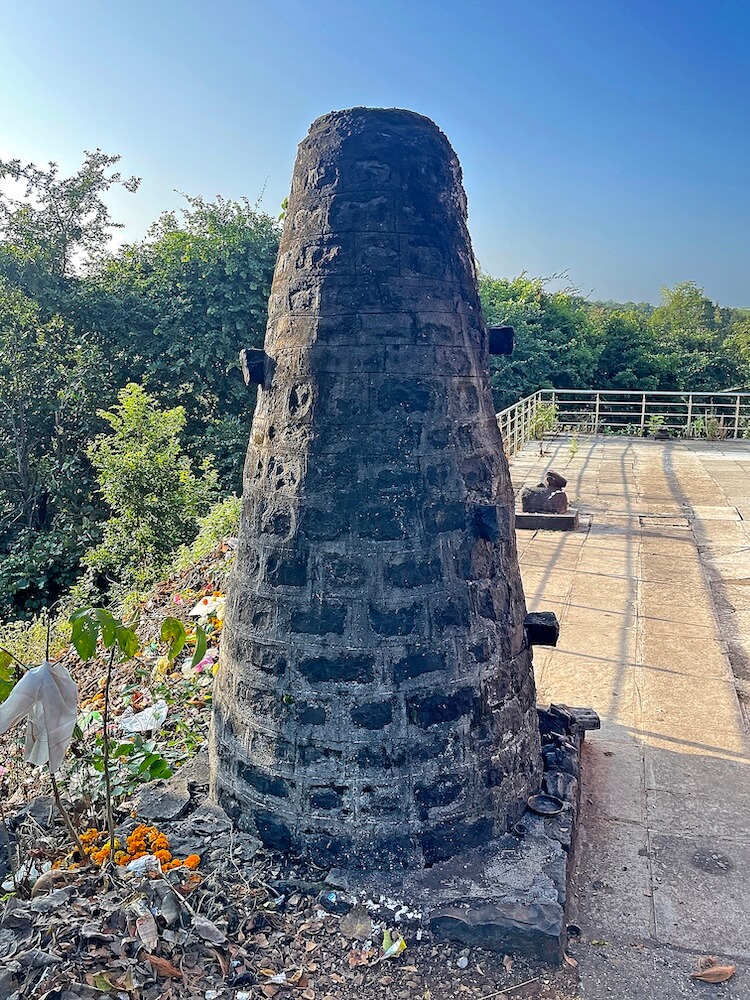
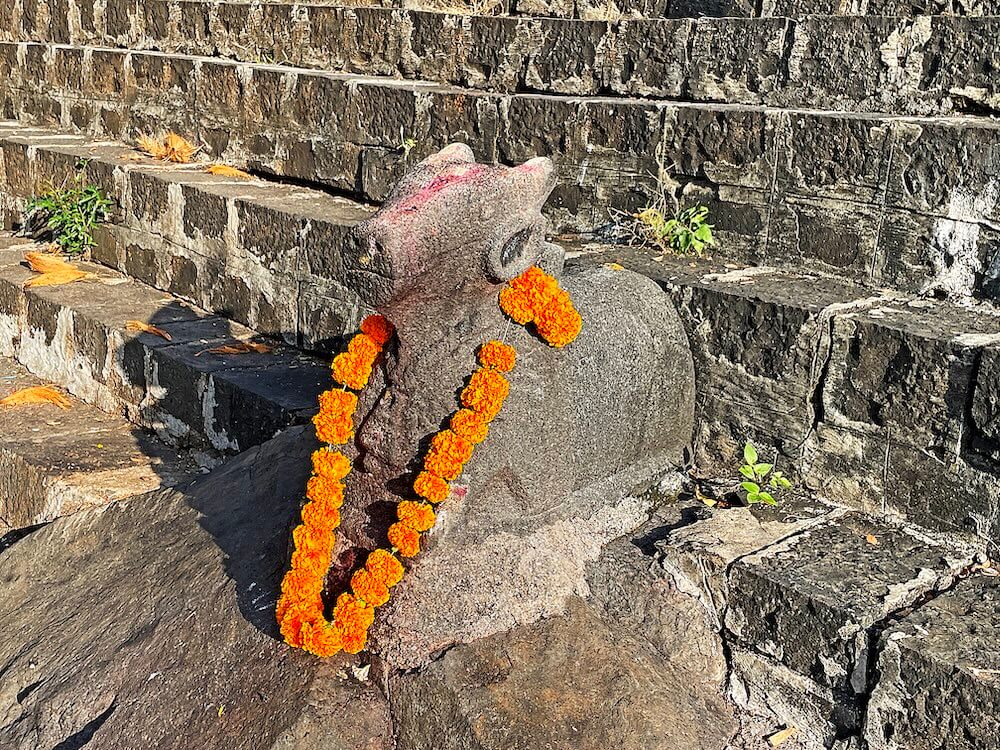
There is a paved road leading to the spacious parking lot in front of the temple. Seating arrangements have been provided at various places in the parking area for the convenience of devotees. From here, there are about fifty steps on three sides of the temple to descend into the courtyard. Since the temple is nestled in a mountain cliff, it came to be known as the ‘Kadyacha Mahadev Temple’. The temple courtyard is paved. In this courtyard, there is a small lamp pillar (Deepstambh) in front of the entrance. Next to the lamp pillar, there is a Nandi inside a canopy (Meghdambari). The canopy is topped with an Amalaka and a Kalash. In front of this canopy is a small mandapa. Here, there are hundreds of Nandis and Shiva Lingas in front of them. It is said that these Nandis and Shiva Lingas were found in the river flowing behind the temple. In ancient times, it was a common practice to keep Shiva Lingas in water to enhance the purity and energy of the river water.
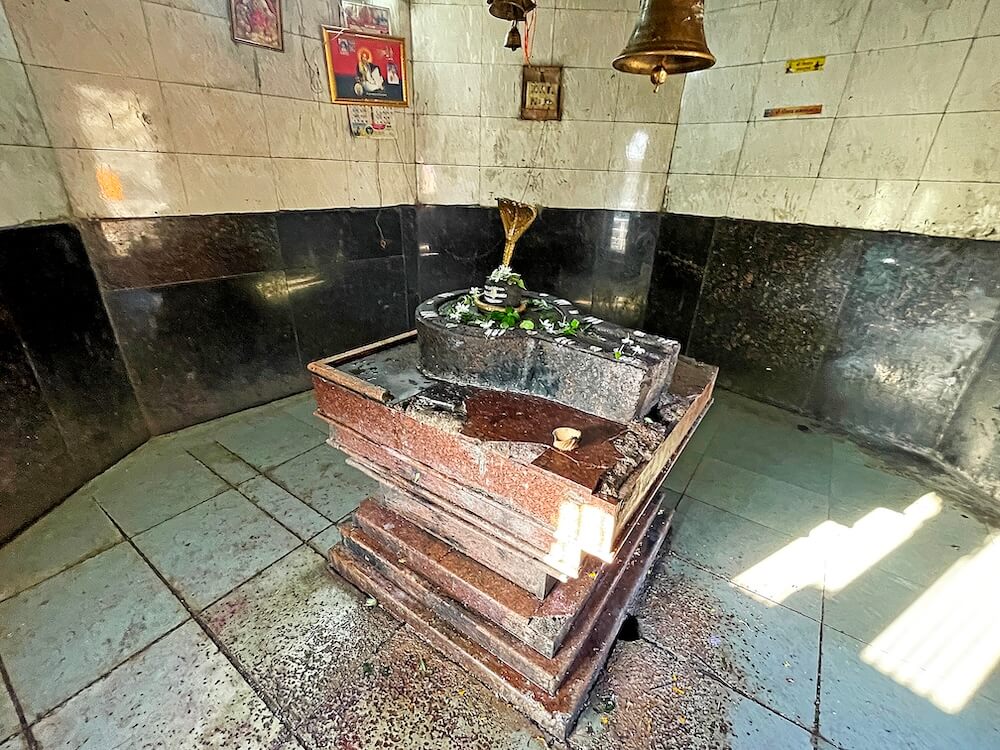
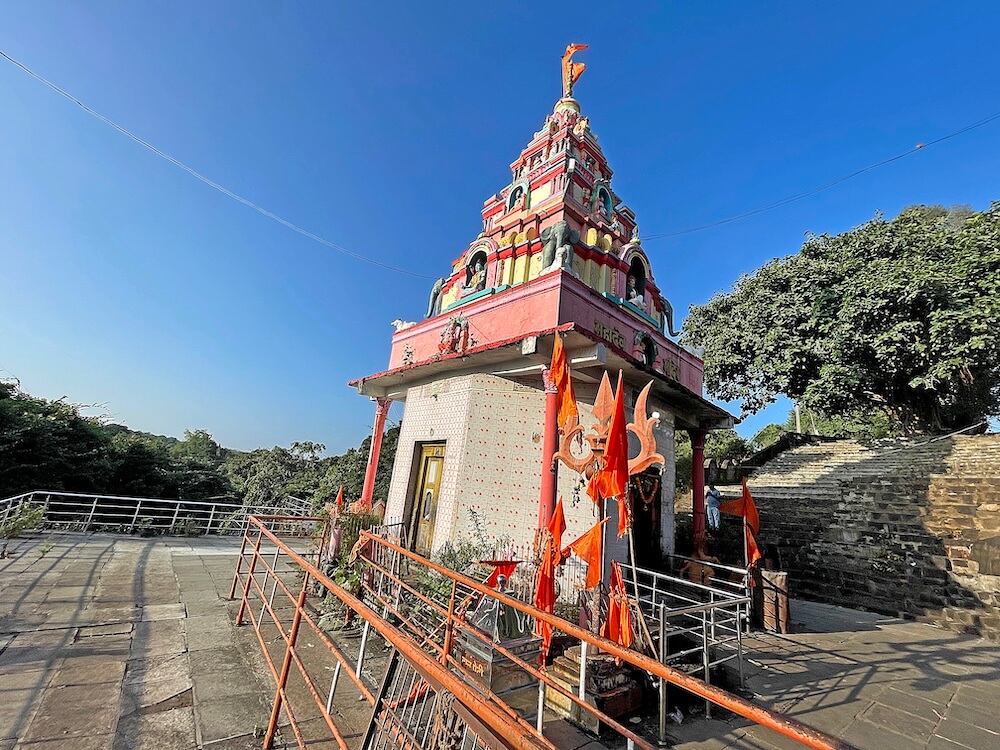
In front of the temple, there is a seven-foot-tall replica of a Trishul-Damaru. The temple, which consists only of a sanctum sanctorum (Garbhagriha), features circular pillars with vertical carvings at all four corners on the exterior, accompanied by lion sculptures. The temple is surrounded by iron railings. There are two entrances to the temple, one in the front and one on the left. In the center of the temple, there is a massive Shiva Linga on a Vajrapitha. A brass vessel for performing Jalabhishekam on the Linga is suspended from the ceiling.
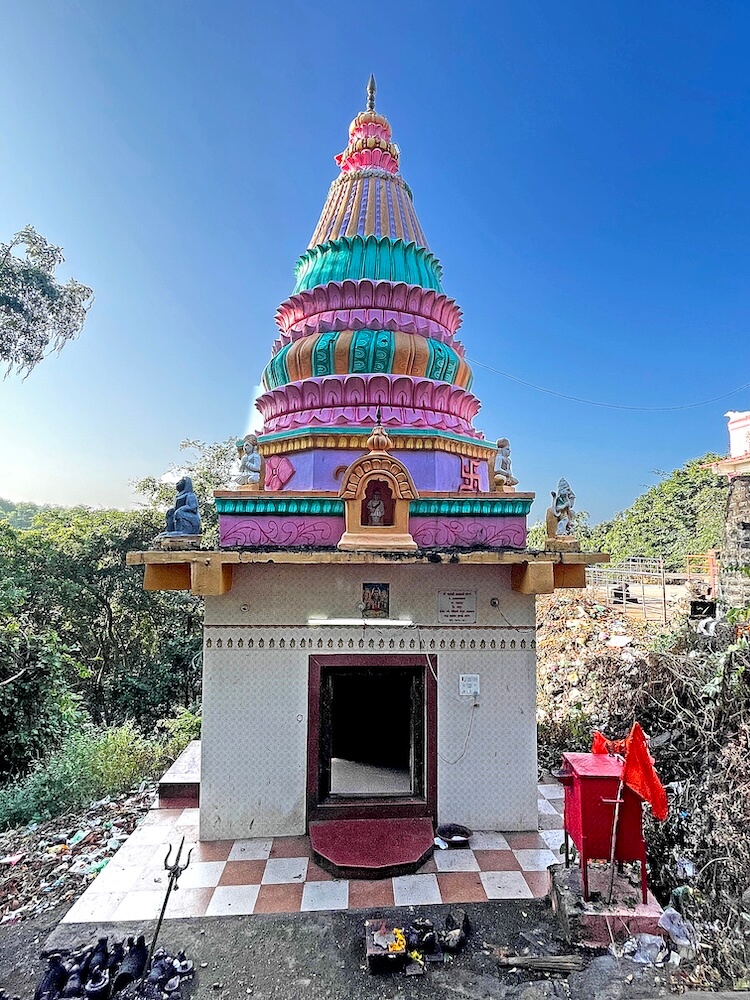
The temple roof features a seven-tiered square Shikhara. In the first four tiers of this Shikhara, there is a niche (Devakoshthaka) on each of the four sides, containing images of various deities and saints. The first tier of the Shikhara has Nandi sculptures at all four corners, while the tier above it features elephant sculptures at the corners. The niche in the third tier contains an idol of Shri Krishna with cow sculptures on both sides. The niche in the fourth tier contains Saint Tukaram with Garuda and Hanuman sculptures on both sides. The niche in the fifth tier contains an idol of Vitthal, while the upper tier features a Tulsi Vrindavan. The top of the Shikhara is adorned with an Amalaka and a Kalash.
Beside the temple are small shrines of local deities and a Mahant Math. Behind the temple, there is a spacious stairway. There are stainless steel safety railings on both sides of these steps. This stairway leads to the riverbed behind the temple.
Mahashivratri and the month of Shravan are the main annual festivals here. During this time, many devotees come here for darshan and to fulfill their vows. Various stalls are set up in the temple premises during these times. There is a large number of devotees and tourists who visit to experience the picturesque surroundings, clean air, riverbank, and tranquility, as well as to bathe in the river. The temple sees a rush of devotees on Mondays, full moon days (Pournima), new moon days (Amavasya), and other auspicious days.
Navratri, Maha Shivratri, Annual Temple Jatra & Deepotsav
Compare and book flights, secure top-rated local hotels near the temple, hire reliable guides, and rent cars instantly.
Extend your pilgrimage by visiting other highly sacred temples located nearby.


Add ₹999 more to unlock FREE SHIPPING!
Your sacred cart is currently empty.
Shop Photo FramesFill in your delivery details below to place your order.
Add comment