
Add ₹999 more to unlock FREE SHIPPING!
Your sacred cart is currently empty.
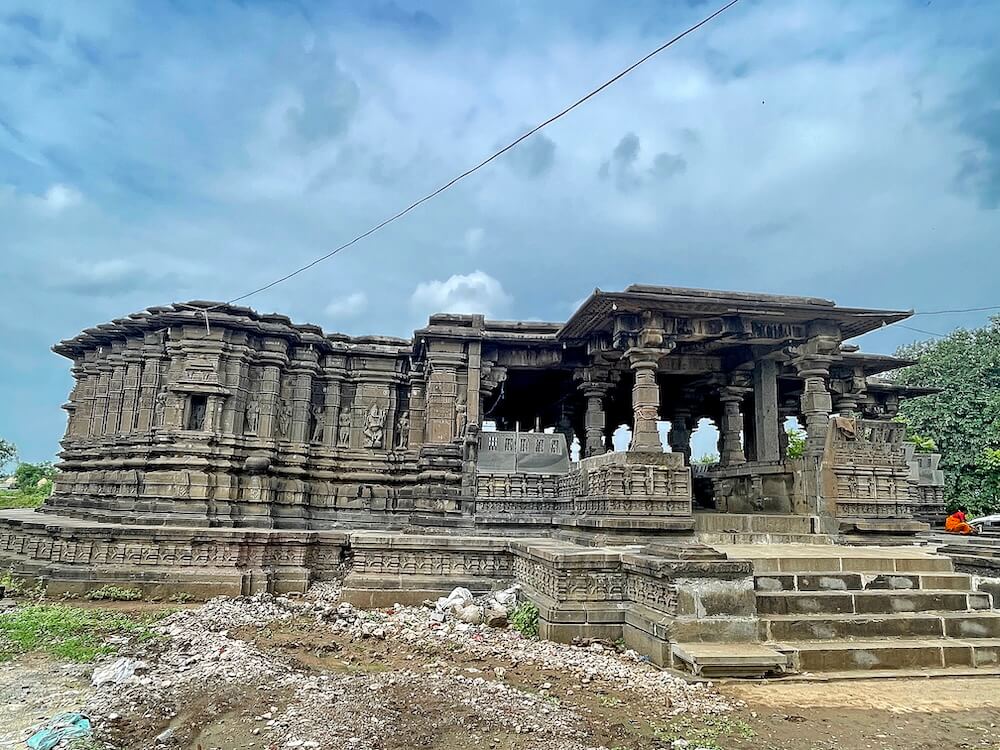
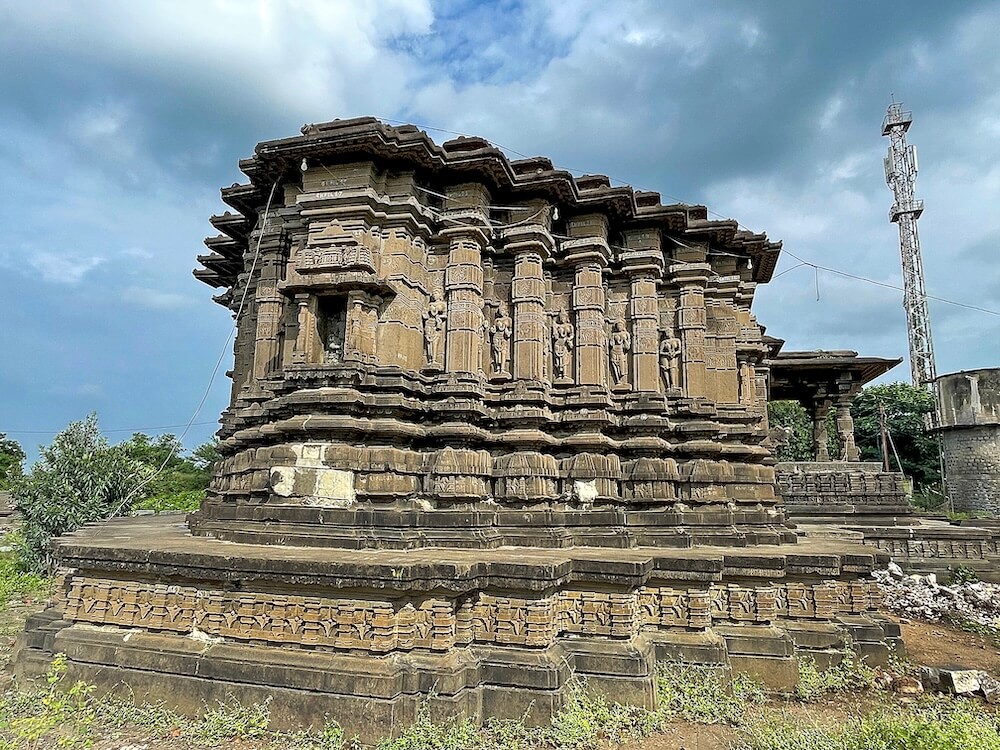
Shop Photo FramesThe village of Hottal, situated in the Degloor taluka of Nanded district, is a priceless treasure of Maharashtra’s ancient history and architecture. The ancient name of this village was ‘Potal’ or ‘Potalnagari’. In the 11th century, during the reign of the Kalyani Chalukya kings, it was an important city. According to historical records, it once housed grand palaces and numerous temples. The temples that still stand here today bear witness to this, which is why this village is famous as the ‘Village of Temples’. The Siddheshwar Temple here is an excellent example of architecture and sculpture. The sculptures of Ganesha in a dancing posture, various Apsaras, and Surasundaris on the outer walls of this temple still leave the viewer spellbound.
Many temples across the country bear witness to a rich ancient sculptural heritage. Examples include the Khajuraho temple group, the Sun Temple at Konark, the Ajanta Caves, the Kailasa Temple at Ellora, the Khidrapur Temple in Kolhapur, the Rath temples at Mahabalipuram, and the Hampi temple group. Among the temples that tell the story of a rich legacy of ancient sculpture, the Siddheshwar Temple at Hottal holds a special place. Devotees believe that the presence of Mahadeva here is vibrant and awakened.
Out of a total of 23 inscriptions found in the Degloor taluka related to the Chalukya dynasty, 3 inscriptions have been found in Hottal village. These contain references to donations made to the temples here. The first of these dates back to 1070 AD and the last to 1120 AD. This indicates that this temple is older than 1070 AD, meaning it is about a thousand years old. Experts believe that these temples were built by a revenue officer named ‘Dev’, who served under the kings of the Kalyani Chalukya dynasty or their feudatory kings.
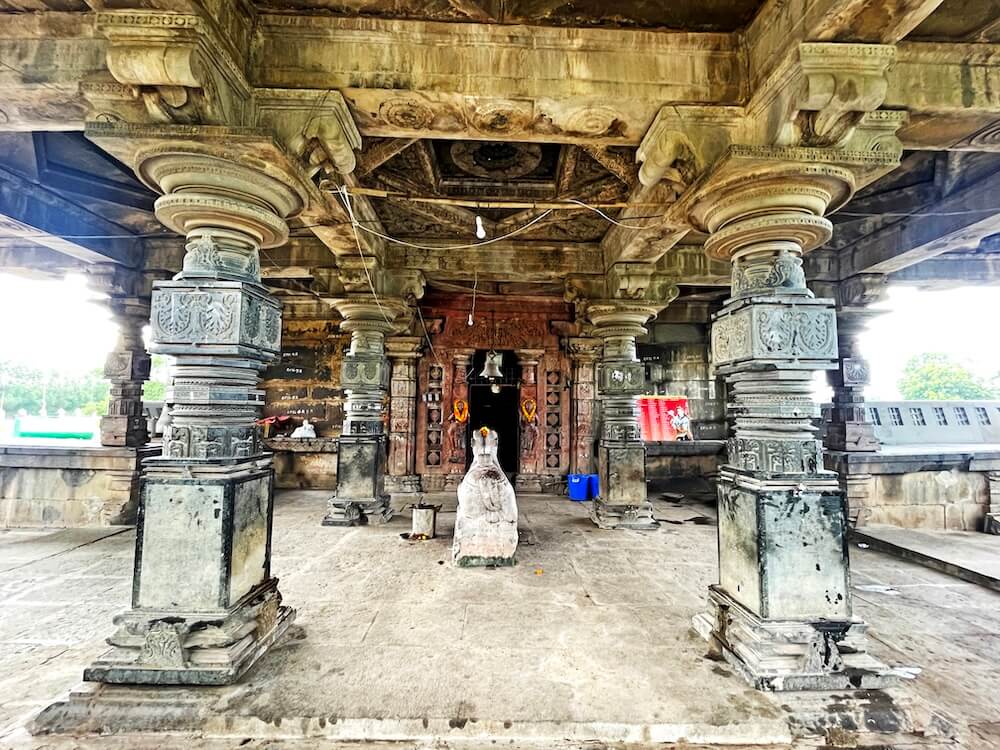
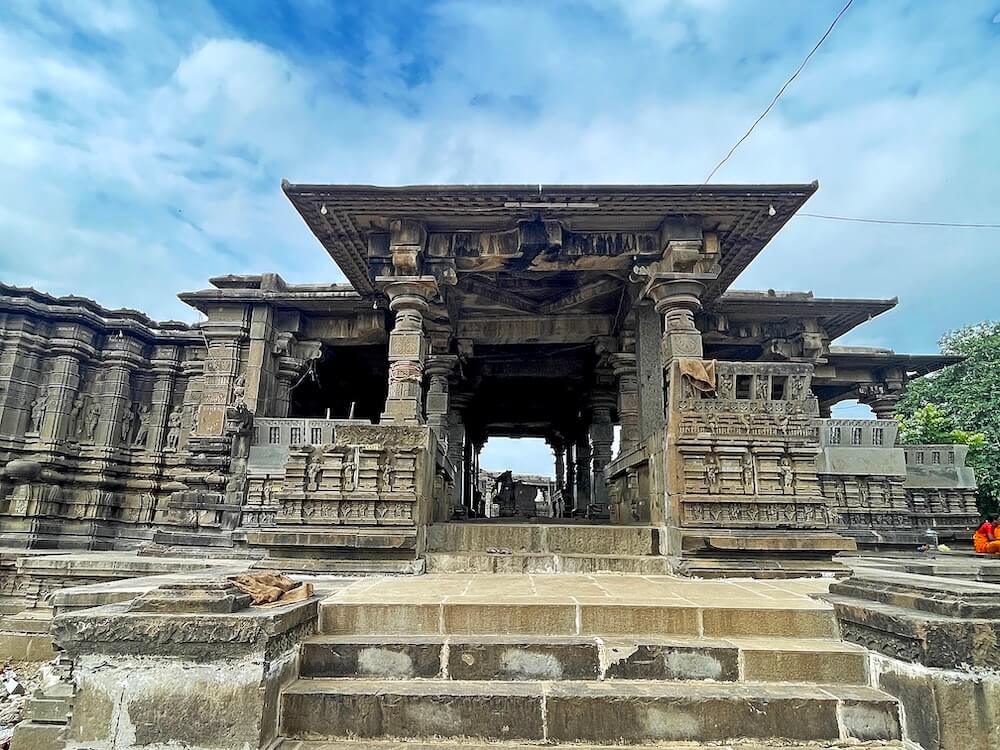
There is a spacious courtyard around the temple. The Siddheshwar Temple stands on a high plinth in this courtyard. The plinth consists of four layers: Adhahpada, Kani, Pushpathar, and Upan, upon which the temple is built. This star-shaped temple has entrances on three sides and Ardhamandapas in front of the entrances. There are five steps in front of each entrance. On both sides of the steps, there are sculptures of lions with armed warriors mounted on them. In the Ardhamandapa, there are Kakshasanas (stone benches) on both sides. On the outer side of these benches, there are two layers of Surasundari sculptures. The beauty of these Surasundari sculptures in various emotional expressions is unparalleled. It is said that when the stones of these benches are struck at specific points, they produce the seven musical notes (Saptaswaras). In the Ardhamandapa, there are two half-pillars on each side of the Kakshasanas. The bases of the pillars are square, while the shafts are in various geometric shapes such as square, hexagonal, octagonal, dodecagonal, and circular. At the top of the pillars, there are square moldings and brackets above them. The ceiling (Vitan) of the Ardhamandapa is carved with various intricate designs.
The Sabhamandapa has four rows of four ornate pillars each. The bases of these pillars are square and feature beautiful carvings on all four sides. The lower part of the pillar shaft, about two feet high, is square. The part above it appears in various geometric shapes such as circular, hexagonal, octagonal, dodecagonal, and square again. The pillar shafts are carved with fine, artistic designs. On the square panels of the pillar shafts, one can see Kirtimukhas, figurines, geometric patterns, and floral motifs. At the top of the pillars are square moldings, and beams rest on the brackets above them. The ceiling features a circular design. All brackets, beams, and corners of the ceiling are carved with various designs. In the semi-open Sabhamandapa, there are Kakshasanas for devotees to sit, and in the center, on a pedestal, is a Nandi idol carved from a single stone.
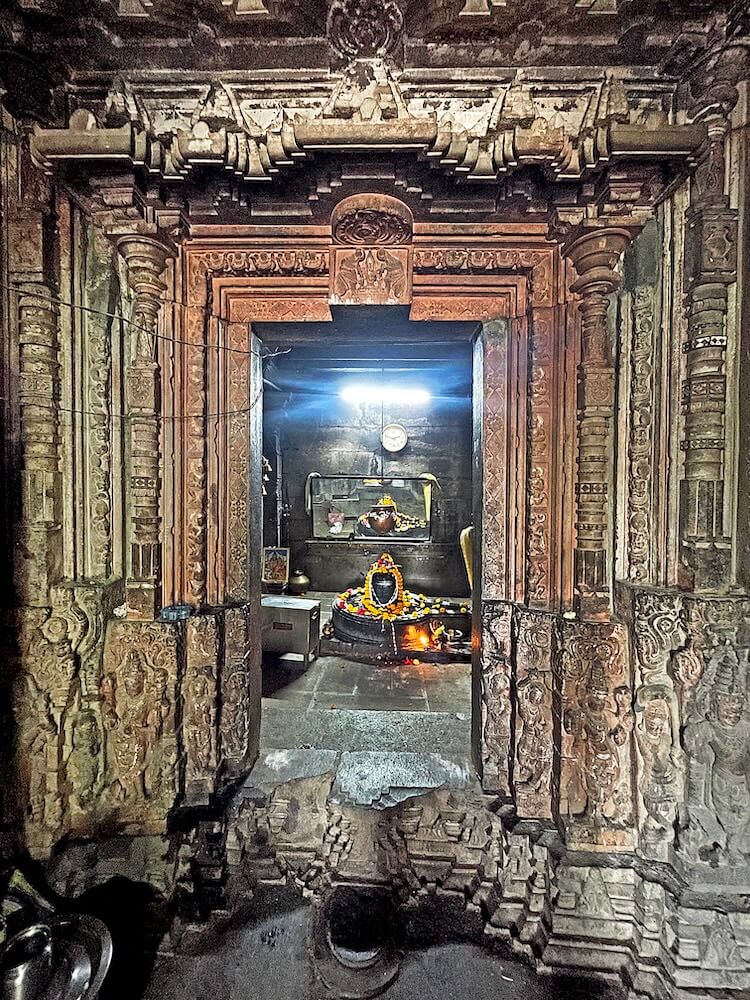
Further ahead, on both sides of the entrance to the Antarala, there are latticed windows and pillar figurines. The clothes and ornaments on these figurines are carved with extremely fine detail. The windows and pillars feature artistic carvings. The Antarala is a few inches higher than the Sabhamandapa, and there is a step to enter it. There is a Makara Torana on the upper part of the entrance. Next is the entrance to the Garbhagriha. The entrance has a total of seven door jambs, including two vine-scroll jambs, a lotus jamb, a human figure jamb, a Garuda jamb, and two pillar jambs. On the lower side of the door jambs are sculptures of Rudragana dwarapalas holding a human head and trident, dwarapalikas, and Ganga-Yamuna. On the lintel is a sculpture of Gajalakshmi, and the architrave is decorated with leaf and flower designs. Above the entrance is a Torana of temple spire sculptures. On the threshold, there is a Chandrashila and other designs.
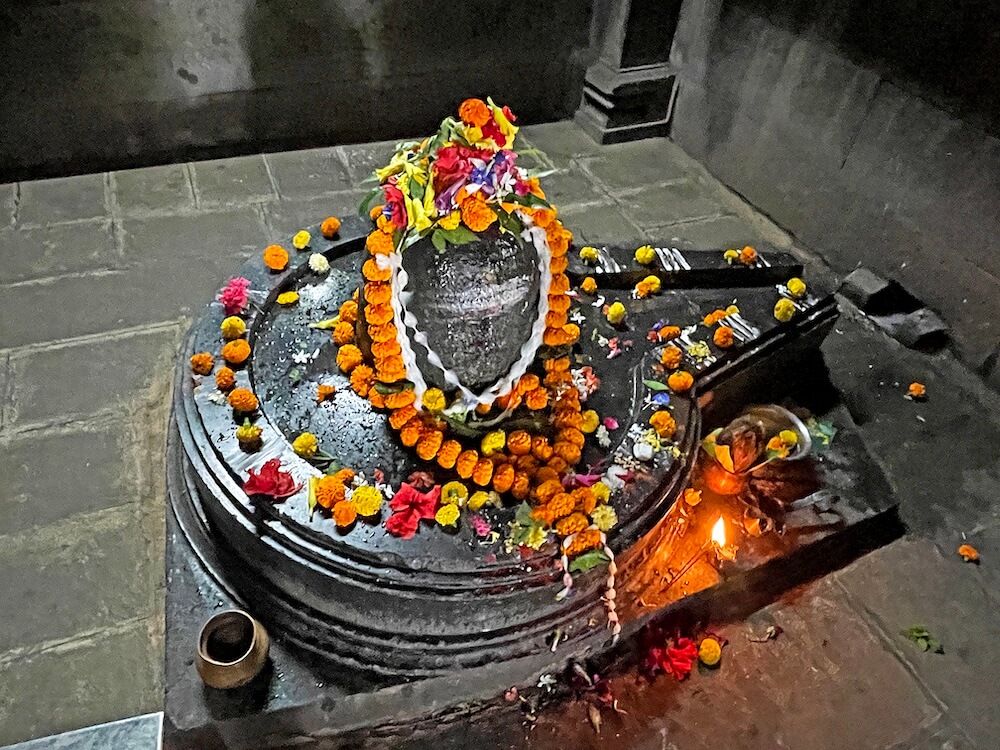
In the center of the Garbhagriha floor is the Shivlinga. A copper cobra holding a canopy hangs over the Shivlinga, and an Abhisheka vessel is suspended from the ceiling to drip water. A unique feature here is that water poured for Abhisheka from outside the temple flows through the wall and falls onto the Shivlinga inside. For this purpose, a stone basin is carved into the outer wall of the Garbhagriha. It is designed so that the water poured by devotees into that basin flows through a pipe in the wall of the Garbhagriha directly onto the Shivlinga. That stone basin is still in good condition on the outer wall of the temple today.
There are various sculptures on the outer walls of the temple. In the center is a dancing Ganesha, flanked by Surasundaris. These include a Mardala player, a Putravallabha (mother holding a child), Rati, a dancer, a woman with a mirror, a Veena player, a Vishakanya, a Shatrumardini, a letter writer, an archer, a parrot-bearer, and others, as well as a Harihara sculpture (half Shiva and half Vishnu). In the three niches on the back wall of the temple are sculptures of Nataraja performing the Tandava dance. Next to this temple is the Parvati Temple. The structure and size of both these temples are identical. In the Garbhagriha of the Parvati Temple, there is only the Shalunka (base) on the floor; there is no Linga stone.
A three-day dance, drama, and music festival known as the ‘Hottal Festival’ is famous in Marathwada. Many tourists attend this festival. On the last Monday of the month of Pausha, the ‘Butti Jatra’ is celebrated. At this time, devotees bring an offering of Puran Poli for the deity in a ‘Butti’, a basket made of bamboo. After offering this to the deity, food is distributed to other devotees present in the temple premises. This is called ‘Dasoha’. Thousands of devotees from Maharashtra as well as Karnataka, Andhra Pradesh, and Telangana come to visit the temple during Mahashivratri and on all Mondays of the month of Shravana. Along with devotees, many tourists and scholars also come here to appreciate the sculpture.
This sacred temple stands as a testament to deep spiritual devotion, ancient architectural grandeur, and rich local cultural traditions.
The sanctum sanctorum houses the divine idol consecrated according to ancient Vedic traditions, surrounded by serene courtyards and traditional temple architecture.
Navratri, Maha Shivratri, Annual Temple Jatra & Deepotsav
Compare and book flights, secure top-rated local hotels near the temple, hire reliable guides, and rent cars instantly.
Extend your pilgrimage by visiting other highly sacred temples located nearby.


Add ₹999 more to unlock FREE SHIPPING!
Your sacred cart is currently empty.
Shop Photo FramesFill in your delivery details below to place your order.
Add comment