
Add ₹999 more to unlock FREE SHIPPING!
Your sacred cart is currently empty.
Shop Photo FramesThe banks of great rivers, their confluences, and waterfalls are places adorned with natural beauty. They are considered special from a tourism perspective and extremely important religiously. In India, there is a large number of temples located near waterfalls. In Maharashtra, such ancient temples are more commonly found in the Konkan region. The Dhutpapeshwar and Kameshwar Temples in Dhopeshwar village of Ratnagiri district, the Tambdi Surla Temple in Goa, and the Marleshwar Temple near Devrukh are some special temples situated in the vicinity of waterfalls. Similarly, there is an ancient and famous temple in Nanded district. It is located near the Sahasrakund Waterfall in Islapur village, Kinwat Taluka. Devotees believe that the awakened Mahadev here responds to the calls of His devotees and grants their vows.
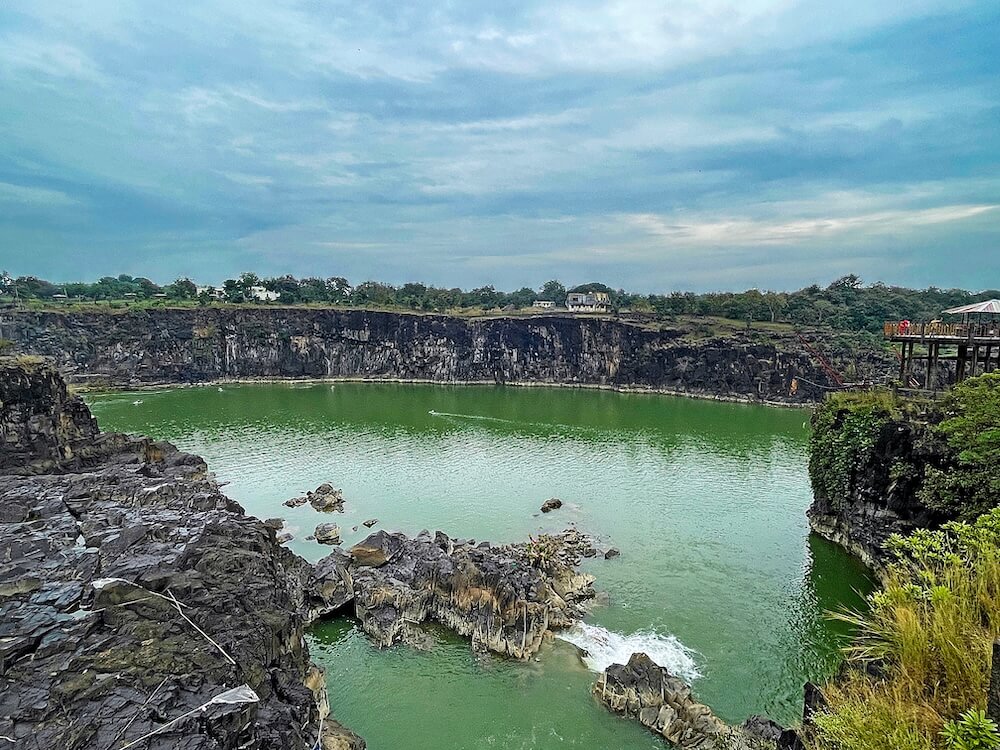
This ancient temple is said to be about 300 to 400 years old. Near the temple, in the bed of the Painganga River, is the Sahasrakund Waterfall. A legend prevails here that Lord Parashurama created these Sahasra Kunds by striking an arrow into the ground. Based on this, the local priests estimate that this holy place is thousands of years old. Here, streams of water cascade down from black rock cliffs, approximately 30 to 40 feet high. They appear like the Ganga descending from Lord Shankara’s matted locks. During the monsoon, the beauty of this waterfall is truly exceptional.
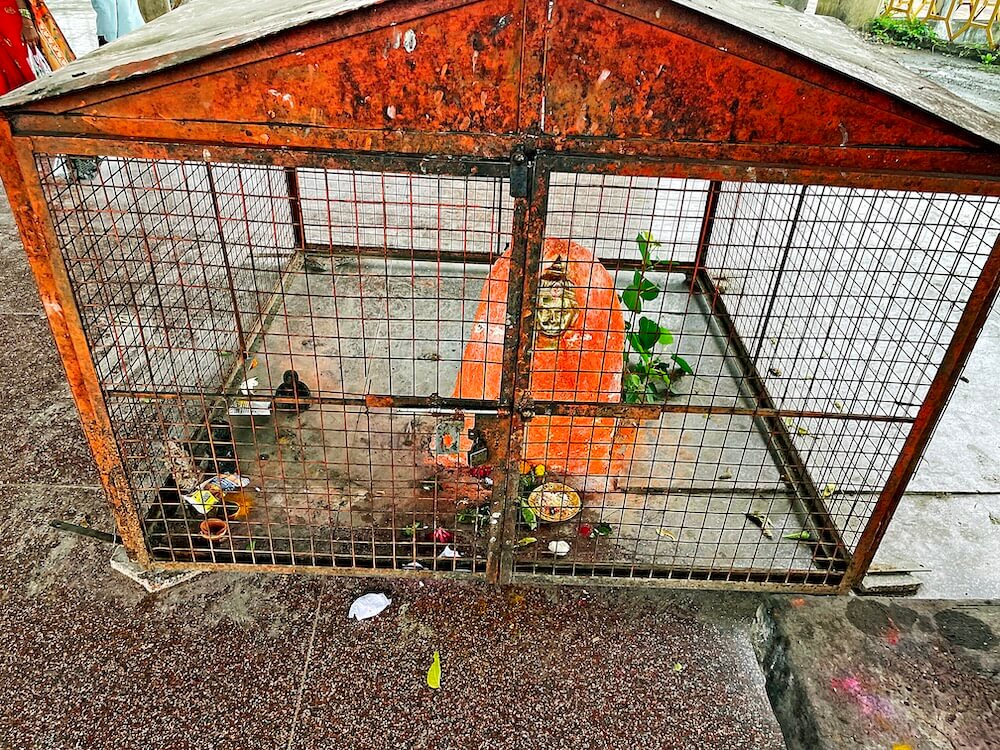
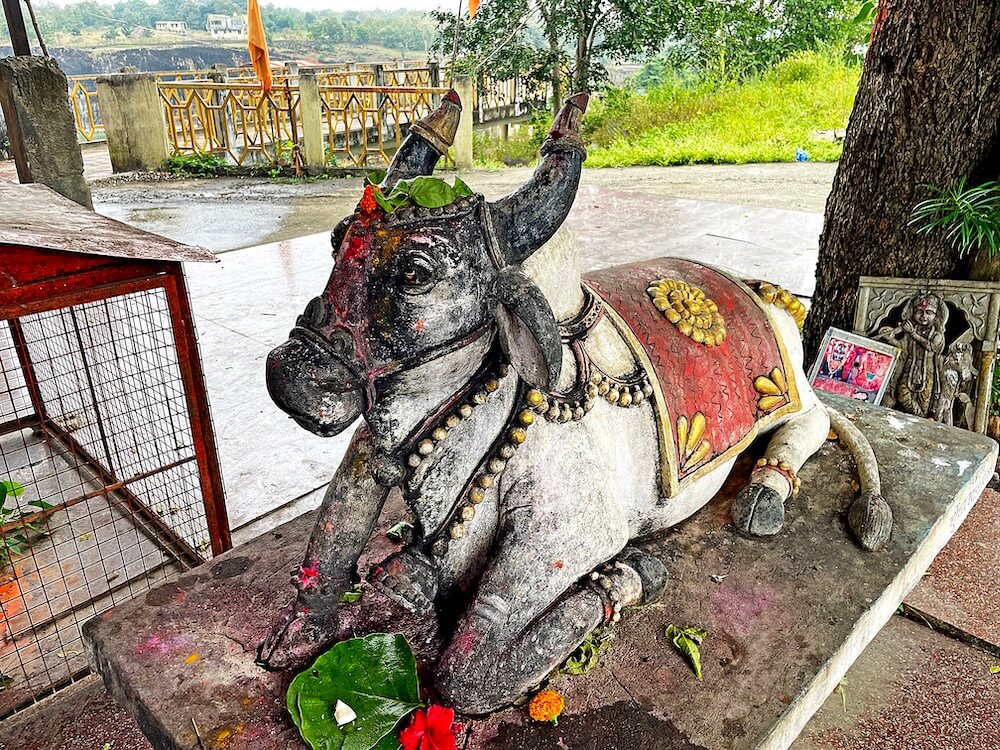
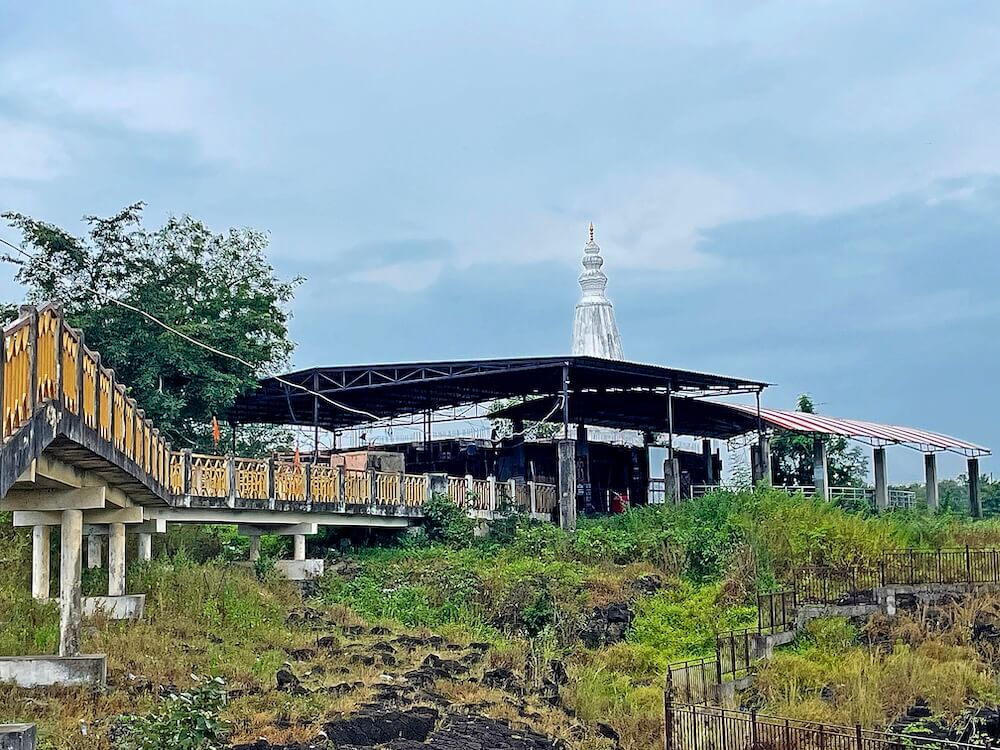
On the road from Himayatnagar towards Islapur, there is a welcome arch for the temple. The arch features pillars connected by smaller arched structures. Above them are balconies, and on the balconies are three circular spires. In the central spire, within a niche, there is an idol of Mahadev. Approximately five kilometers from the arch are the Sahasrakund Waterfall and the Shiva Temple. A paved road leads up to the parking area in front of the Shiva Temple. Around the parking area, there are shops selling food, puja items, and various other goods. The temple courtyard is covered with paver blocks. In the courtyard, there are some platforms with Shivlingas on them. It is said that these Shivlingas are ancient samadhis (tombs) of great saints. In front of the temple is a Darshan Mandap (viewing hall). It has a roof of cement sheets supported by iron pillars. Here too, there are some platforms with Shivlingas. On one of the platforms in the Darshan Mandap, there is an idol of Nandi.
Further ahead is the entrance to the Sabhamandap (assembly hall). The doorframes of this wooden entrance feature vertical ridge patterns. And on the lintel, there is a replica of a lotus flower. The wooden shutters of the entrance are intricately carved. The enclosed Sabhamandap has windows and small openings to allow air and light. In the center of the Sabhamandap, on a platform, there is a black stone idol of Nandi. The Sabhamandap has two rows, each with four intricately carved pillars. The pillar bases are square and wider.
The entrance to the Garbhagriha (sanctum sanctorum) is slightly elevated compared to the Sabhamandap. The construction of the Garbhagriha is ancient and made of black stone. The entrance has intricately carved doorframes. On its lintel, there is an idol of Ganapati. The threshold has a Chandrashila (moon-stone). In the center of the Garbhagriha, there is a Swayambhu Shivlinga (self-manifested Shivlinga). The Shivlinga is adorned with a brass mask. A coiled brass serpent (Naga) is placed around it. The serpent holds a canopy over the Shivlinga with its hood. A brass Abhishek Patra (vessel for ritual bathing) holding a continuous stream of water is suspended from the ceiling above the Shivlinga. There are two niches in the walls of the Garbhagriha. In one of them, there is a standing two-armed idol of Lord Parashurama holding a bow and arrow. The legend here states that Lord Parashurama created the Sahasrakund by striking an arrow into the ground. In the second niche, there is an idol of Mahadev. To exit the Garbhagriha, there are stairs and a door at the rear. On the outer side of the Garbhagriha, there is a circumambulatory path (ardha-pradakshina marga).
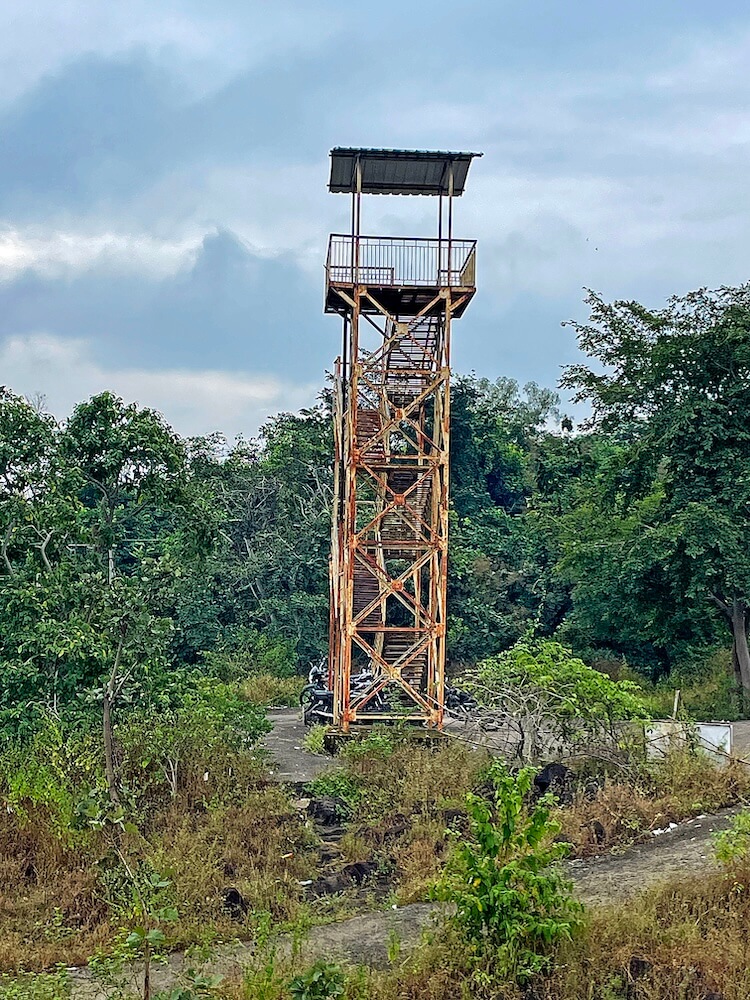
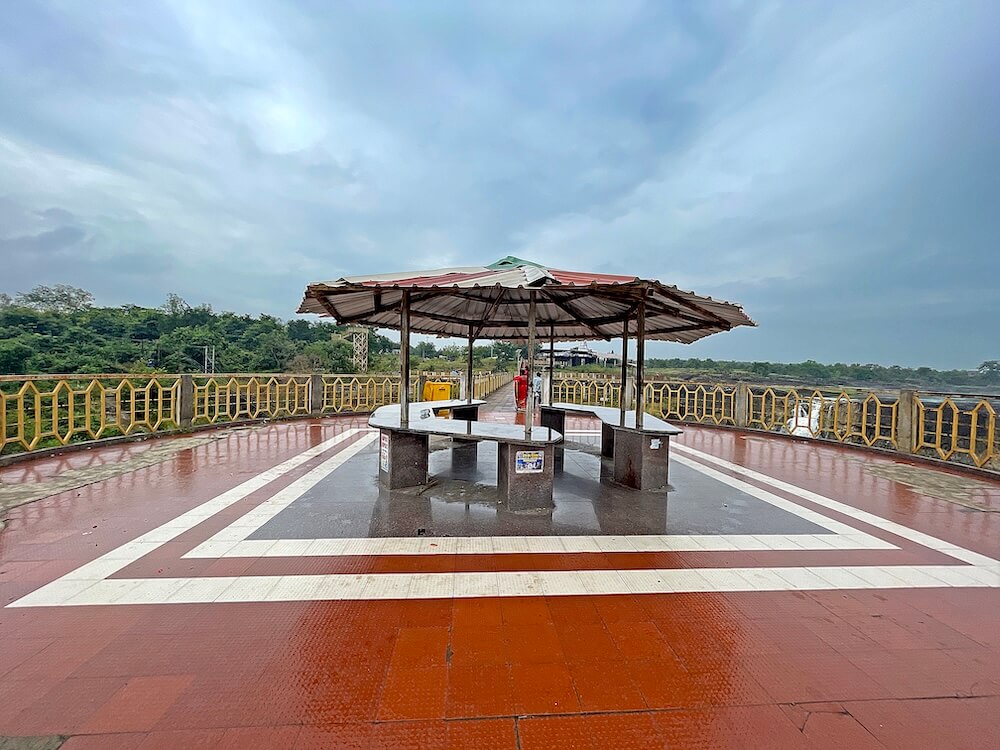
The Painganga River flows alongside the temple. As streams of water cascade down from the high cliffs in the riverbed, a beautiful waterfall has formed here. To allow tourists to properly admire the beauty of the waterfall, the Forest Department has constructed three observation towers here. From these, visitors can behold the enchanting form of the waterfall.
Festivals are celebrated at the temple during Mahashivratri and on all Mondays of Shravan. During this time, various religious programs such as Maha-Abhishek, Bhajan, Kirtan, and Pravachan are organized at the temple. Thousands of devotees from the surrounding areas come for Darshan of the Lord and to fulfill their vows. At this time, the area takes on the appearance of a fair (Yatra). Many devotees visit here on all Mondays, Pradosh, Purnima (full moon), and Amavasya (new moon) days. Additionally, thousands of tourists and devotees come here on Saturdays, Sundays, and holidays to witness the beautiful waterfall and have Darshan of the Lord.
This sacred temple stands as a testament to deep spiritual devotion, ancient architectural grandeur, and rich local cultural traditions.
The sanctum sanctorum houses the divine idol consecrated according to ancient Vedic traditions, surrounded by serene courtyards and traditional temple architecture.
Navratri, Maha Shivratri, Annual Temple Jatra & Deepotsav
Compare and book flights, secure top-rated local hotels near the temple, hire reliable guides, and rent cars instantly.
Extend your pilgrimage by visiting other highly sacred temples located nearby.


Add ₹999 more to unlock FREE SHIPPING!
Your sacred cart is currently empty.
Shop Photo FramesFill in your delivery details below to place your order.
Add comment