
Add ₹999 more to unlock FREE SHIPPING!
Your sacred cart is currently empty.
Shop Photo FramesThe cremation ground itself is considered the sacred land of penance (Tapoobhoomi) for Lord Mahadev. Therefore, temples dedicated to Mahadev are often found at cremation grounds and samadhi sites. Some temples were built at the Tapoobhoomi of yogis, and the samadhis (final resting places) of those great souls are also found within the temple or its premises. In some temples, there are samadhi sites of many saints, yogis, and ascetics belonging to the Guru-Shishya (master-disciple) tradition. Such is the Aparampar Mahadev Temple, located in Patnur (Lahan) village in Ardhapur Taluka, which houses numerous samadhis of ascetics from the Guru-Shishya tradition. Devotees believe that the awakened Mahadev here rushes to answer the calls of His devotees.
It is said that this temple dates back four to five hundred years. Within the temple, there are approximately ten to twelve samadhis of saints from the Guru-Shishya tradition. This was a significant center for saints and ascetics who brought about social change and propagated knowledge. The ancient stone idol of Mahadev inside the temple and the vibhuti (sacred ash) emanating from the bel tree behind the temple are unique features here.
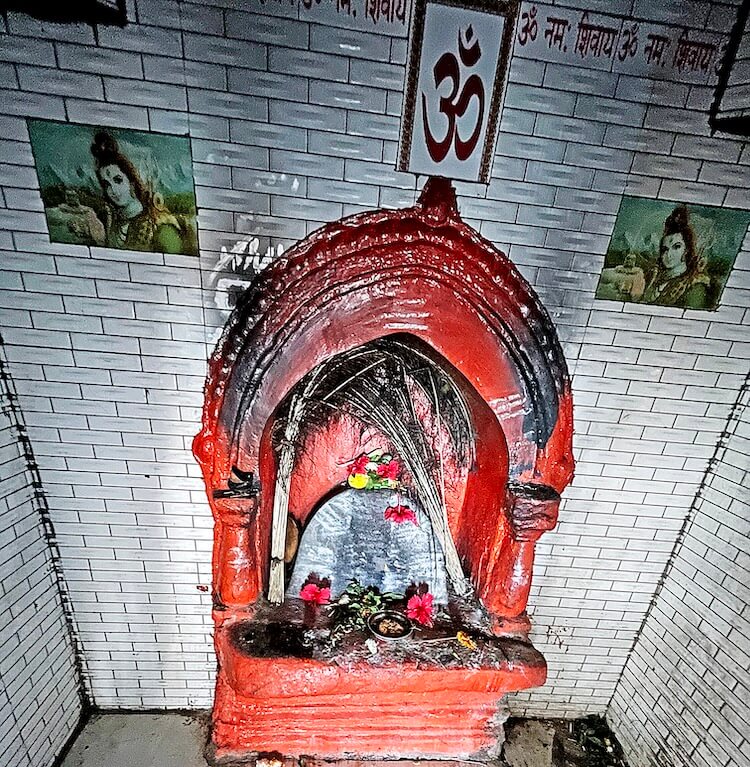
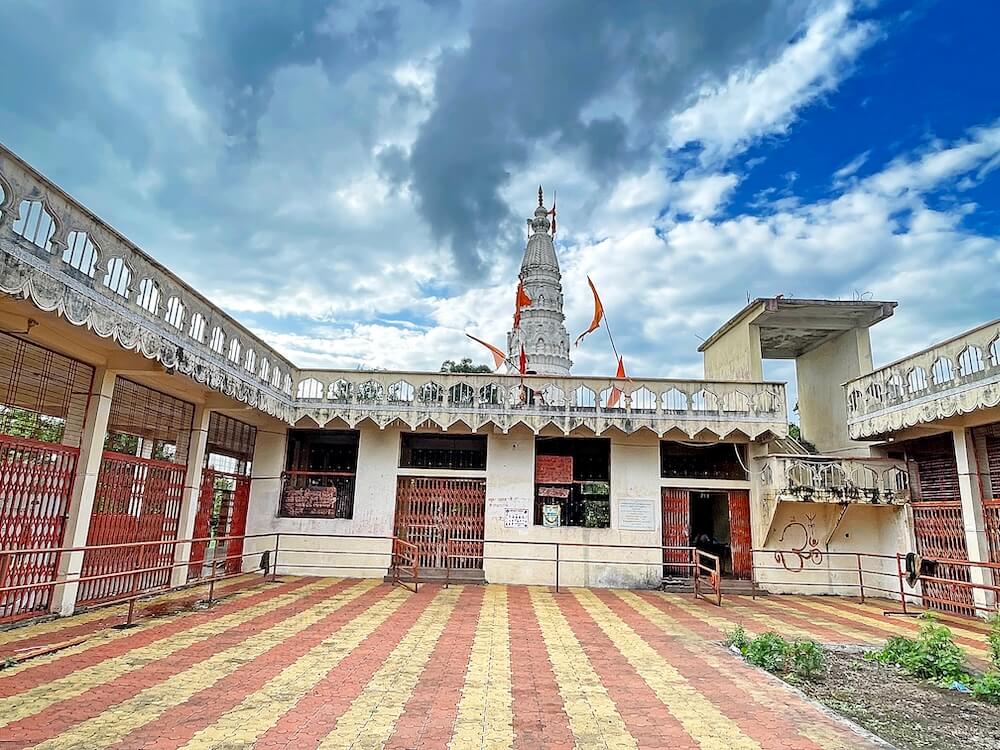
Four kilometers from Patnur (Lahan) village, at the foothills of the mountain, stands the temple’s first welcome arch. On both sides of the road are two square pillars, and on the beam above them is an arched ‘bashing’ (a decorative element). At the center of the ‘bashing’ is an amalak (a stone disc with ridges, typical of temple architecture) topped with a kalash (finial). Within a niche in the ‘bashing’ is a Shivpindi (a symbolic representation of Lord Shiva). The Mahadev temple is located on the hilltop, about one kilometer from this arch. In front of the temple, there is a spacious parking area. Further ahead is the temple’s second welcome arch. In the welcome arch, on both sides of the road, there are platforms (sajja) on pillars connected by arched gateways. On these platforms, on both sides, are two amalaks placed one above the other, topped with a kalash. In the central part, there is an arched ‘bashing’. In this ‘bashing’, at the center, is an image of Aparampar Mahadev.
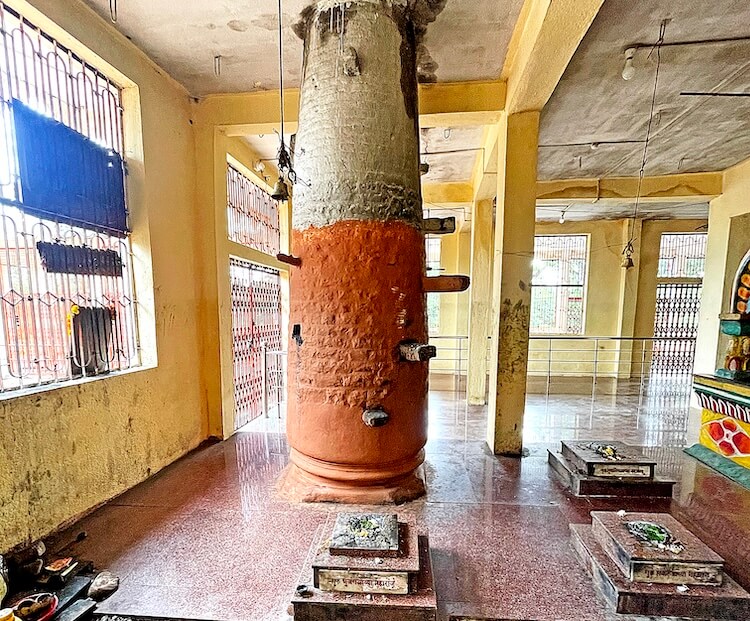
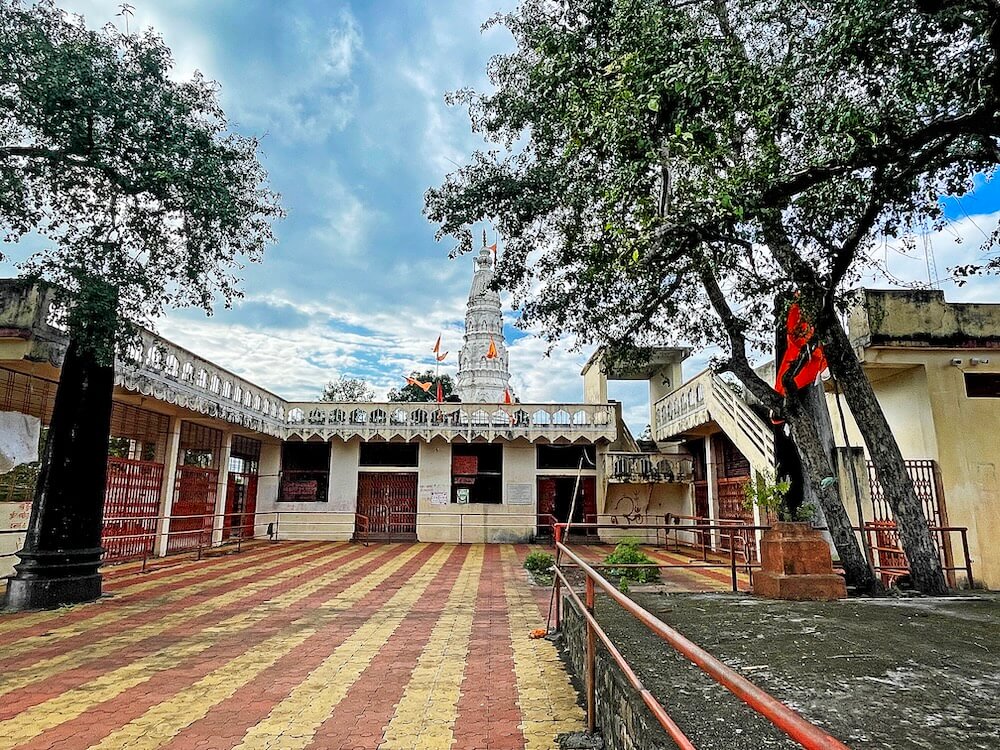
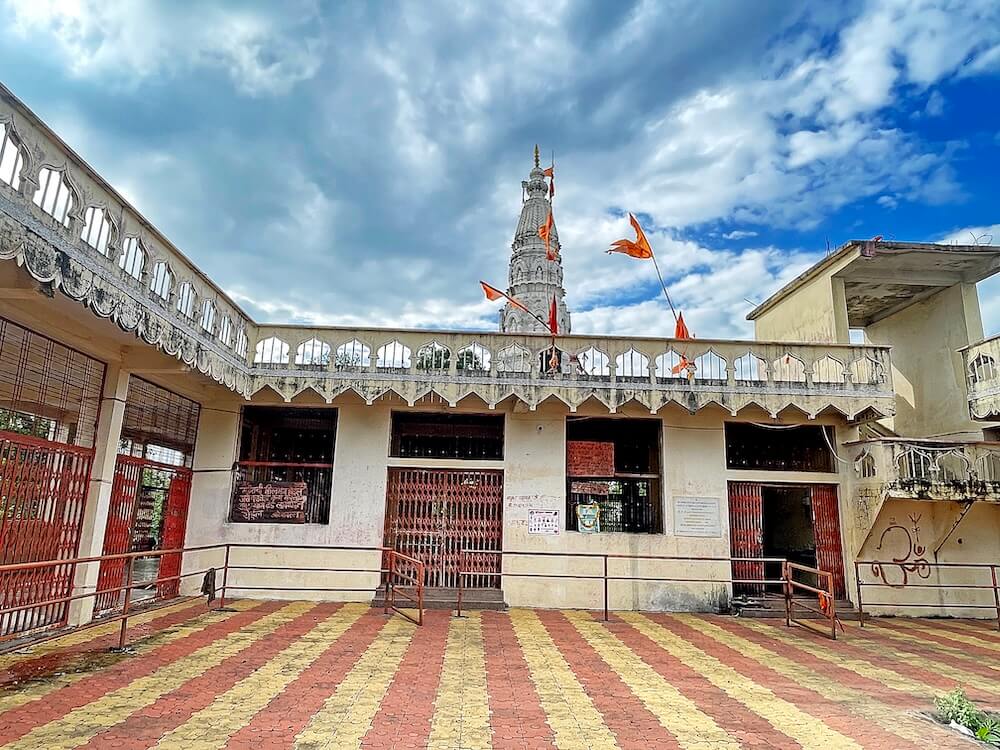
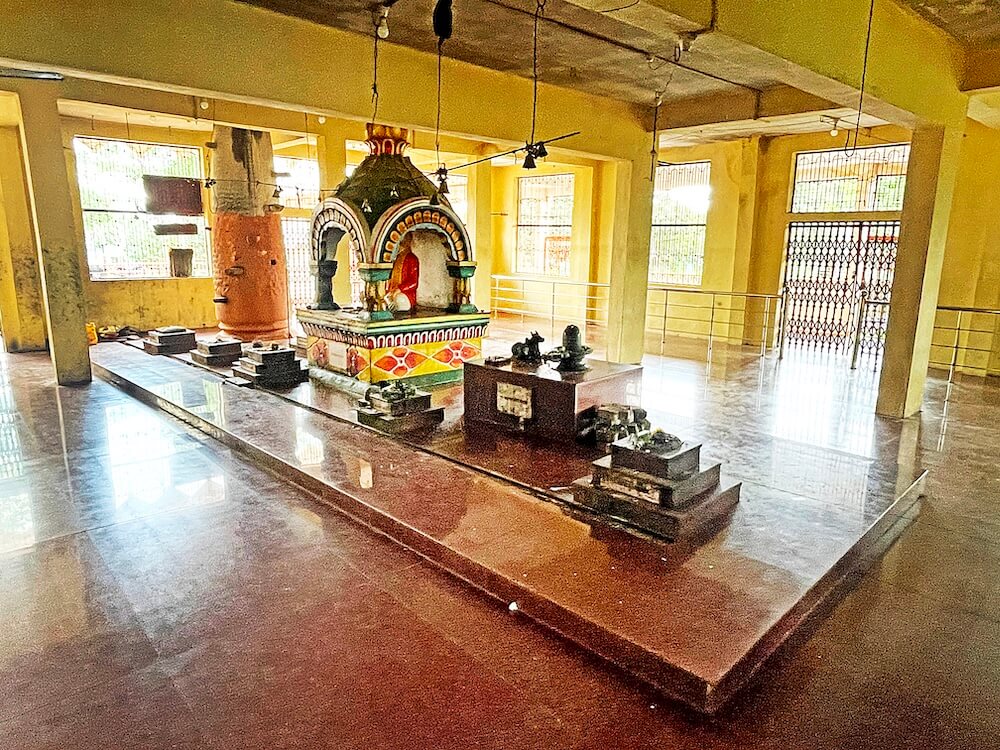
Further ahead is the temple’s paver-block-covered courtyard (prangan). In the courtyard, in front of the temple, there are two octagonal deepmalas (lamp towers). In the courtyard, there are large trees (mahavriksha) with built-up platforms (par) around them. On these platforms, beneath the large trees, are stone lamps and some sacred stones. The temple, structured with a Sabhamandap (assembly hall) and Garbhagriha (sanctum sanctorum), has two entrances to its Sabhamandap. The enclosed Sabhamandap has windows for air and light. The windows are fitted with iron grilles. Inside the Sabhamandap, there are four rows of four square pillars each. The outer pillars are integrated into the walls. The Sabhamandap has six doors in total: on the right and left sides, and two on each side of the Garbhagriha. In the Sabhamandap, a circular stone lamp pillar extends upwards through the roof. The floor of the Sabhamandap next to the lamp pillar is raised by a few inches, and on this elevated section is the samadhi of Guruvarya Aparampar Maharaj. On the samadhi are Nandi (Lord Shiva’s bull) and a Shivpindi. Adjacent to this samadhi are the samadhis of Guruvarya Mallikarjun Maharaj, Basavaling Maharaj, Shankar Arya Maharaj, and Guru Bhujang Arya Maharaj. On the day of Mahashivratri, the mask (mukhawata) of Mahadev, brought here in a palanquin from the village, is placed on Aparampar Maharaj’s samadhi and worshipped. Near the samadhi is an ornate platform, and on this platform is an idol of Guru Aparampar Maharaj. Surrounding the idol are four Vaman pillars with arches above them. The arches are topped with a dome-shaped roof.
In the center of the Sabhamandap, there is a platform raised by a few inches, upon which rests the Garbhagriha. The entrance to the Garbhagriha has an arched gateway. The walls of the Garbhagriha contain niches for deities (devkoshtake). Within the shrine (makhar) on the Vajra Peetha (diamond pedestal) is the ancient idol of Mahadev. To exit the Garbhagriha, there is a door on the right side. The temple roof has a safety railing on all four sides. On the roof of the Garbhagriha is a circular shikhara (spire) with four tiers. The lower three tiers of the shikhara each have eight niches for deities. The fourth, tapering tier of the shikhara features vertical ridge patterns, and each tier is separated by a band of lotus petal designs. At the apex of the shikhara is an amalak, topped with a kalash. Adjacent to the temple on both sides are buildings. These are used as a community kitchen (annachhatra) and a cultural hall. Next to the building on the right side is a staircase. From there, one can access the temple roof. Behind the temple is a bel tree. Beneath this tree is vibhuti. It is said that vibhuti spontaneously emerges from this bel tree. Devotees believe that applying this vibhuti to the forehead alleviates physical and mental ailments and sickness.
Mahashivratri is celebrated as the main annual festival at the temple with great enthusiasm. During this time, a fire is lit in the courtyard, in front of the temple, using dry wood. To fulfill their vows, devotees walk over this burning fire to enter the temple for the Lord’s darshan (sight). This ritual is known as ‘Ingalancha Navas’ (vow of embers). On this day, a palanquin procession (pradakshina) of Mahadev is carried out. Thousands of devotees from various parts of the state visit here at this time for the Lord’s darshan and to fulfill their vows. During this period, programs such as Maha-abhishek (grand anointing), bhajan (devotional singing), kirtan (devotional discourse), pravachan (spiritual lecture), and jagaran (all-night vigil) are organized in the temple. The temple sees a large crowd of devotees during the month of Shravan. Every day during Shravan, Mahaprasad (sacred food offering) is distributed here in the afternoon and evening. Additionally, there is a constant flow of devotees on Mondays, Thursdays, Purnima (full moon), and Amavasya (new moon) days.
This sacred temple stands as a testament to deep spiritual devotion, ancient architectural grandeur, and rich local cultural traditions.
The sanctum sanctorum houses the divine idol consecrated according to ancient Vedic traditions, surrounded by serene courtyards and traditional temple architecture.
Navratri, Maha Shivratri, Annual Temple Jatra & Deepotsav
Compare and book flights, secure top-rated local hotels near the temple, hire reliable guides, and rent cars instantly.
Extend your pilgrimage by visiting other highly sacred temples located nearby.


Add ₹999 more to unlock FREE SHIPPING!
Your sacred cart is currently empty.
Shop Photo FramesFill in your delivery details below to place your order.
Add comment