
Add ₹999 more to unlock FREE SHIPPING!
Your sacred cart is currently empty.
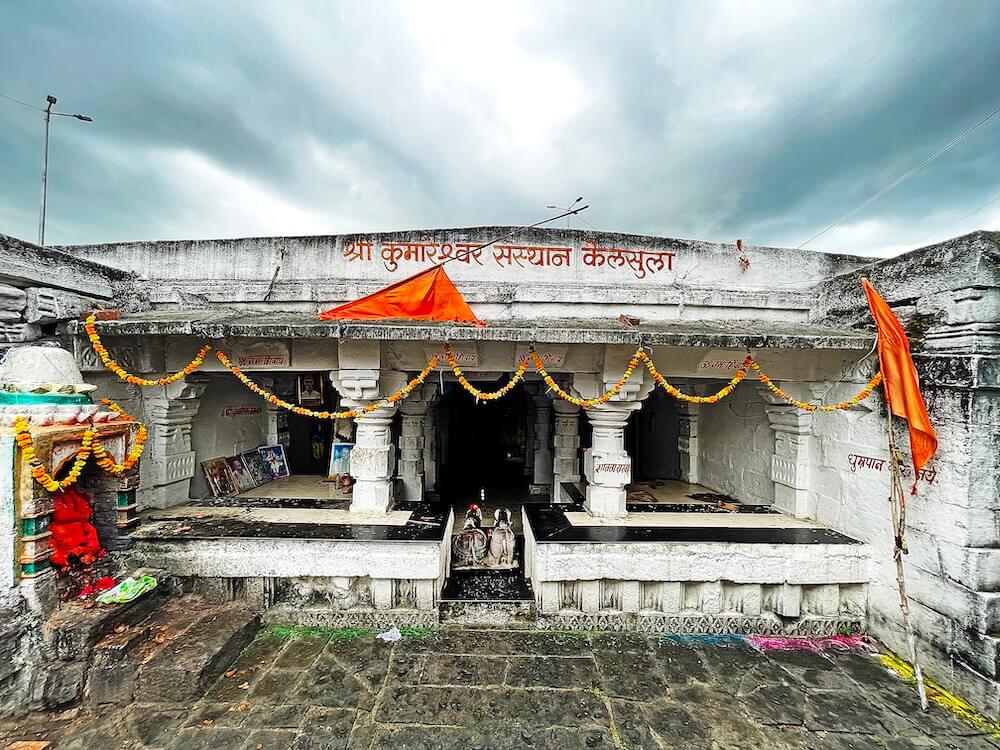
Shop Photo FramesThe Kumareshwar Mahadev Temple, which is one of the few ancient Shiva temples in the Hingoli district, is located at Kelsula in Sengaon taluka. This temple is also known as the ‘Kelsula Temple’. It is said that the temple here is about eight hundred years old. Devotees have a deep faith that the Shiva Linga in this temple, built in the Hemadpanti architectural style, is *jagrut* (awakened and divinely conscious). On Maha Shivaratri and during the holy month of Shravana, hundreds of devotees flock here amidst chants of ‘Har Har Mahadev’ to offer Bilva leaves and perform *abhishek* to Lord Shiva.
It is said that the old name of this village was Kailaspur, which gradually corrupted over time to become Kelsula. The region comprising Kelsula, Risod, and Uti is referred to as Umaranya. The text titled ‘Umaranya Mahatmya’, written in १८८२ by Sachidanand Swami of Lonar, narrates the legend of this temple as follows: To reduce the immense height of the Vindhya Mountains, Sage Agastya took up permanent residence in the Umaranya region. Around that time, two demons named Atapi and Vatapi were terrorising the region and causing immense suffering. To subdue them, Sage Agastya worshipped Lord Shiva. When Lord Shiva was pleased, the sage requested Him to wage war against these two demons. Lord Shiva Himself took the form of a *batu* (a young boy or ascetic, specifically Kumara) and joined the battle, slaying the demons. Following this victory, Sage Agastya requested Lord Shiva to reside here permanently. Acceding to the request, Lord Shiva agreed to stay here in the form of a Linga. To commemorate the event where this took place, the Shiva Linga here was named Kumareshwar.
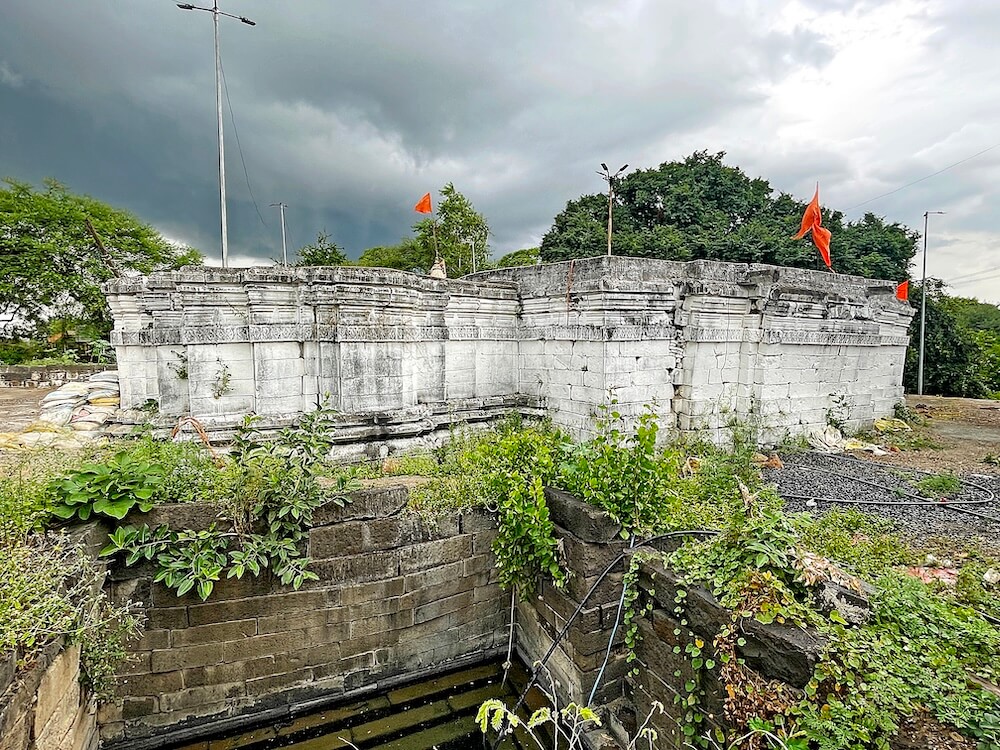
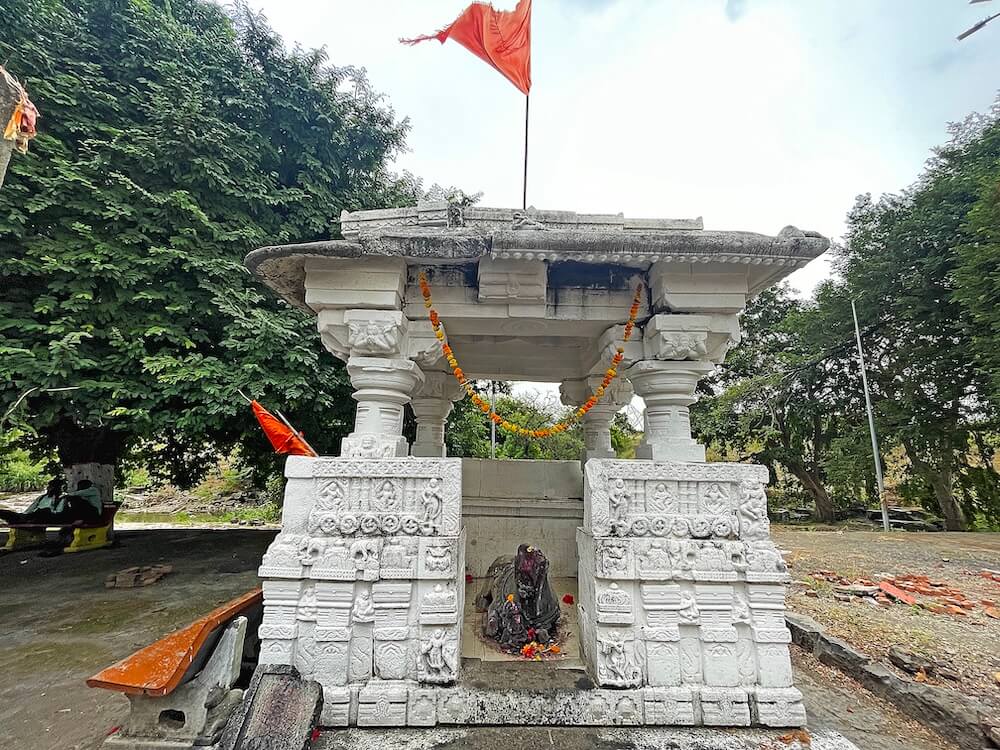
The temple is situated on the outskirts of Kelsula village on the bank of a stream. The path leading to the temple branches off from an archway by the road. The main entrance of the temple is situated within the boundary wall surrounding it. Climbing three steps, one enters the temple courtyard through this entrance, which resembles a *mukhamandapa* (front porch). This entrance features four pillars crowned by a *meghadambari* (domed canopy). The architectural layout of the temple consists of a detached Nandi Mandapa, a Sabha Mandapa, and the Garbhagriha (sanctum sanctorum). The semi-open Nandi Mandapa features low half-walls, four pillars, and a roof. The outer walls of the Nandi Mandapa are adorned with exquisite carvings depicting royal elephant processions (*gajastara*), dancers, deities, and the Saptamatrikas (seven divine mothers). In the centre of the Nandi Mandapa stands a monolithic black stone statue of Nandi, while stone benches (*kakshasanas*) are built into the half-walls on the sides for devotees to sit.
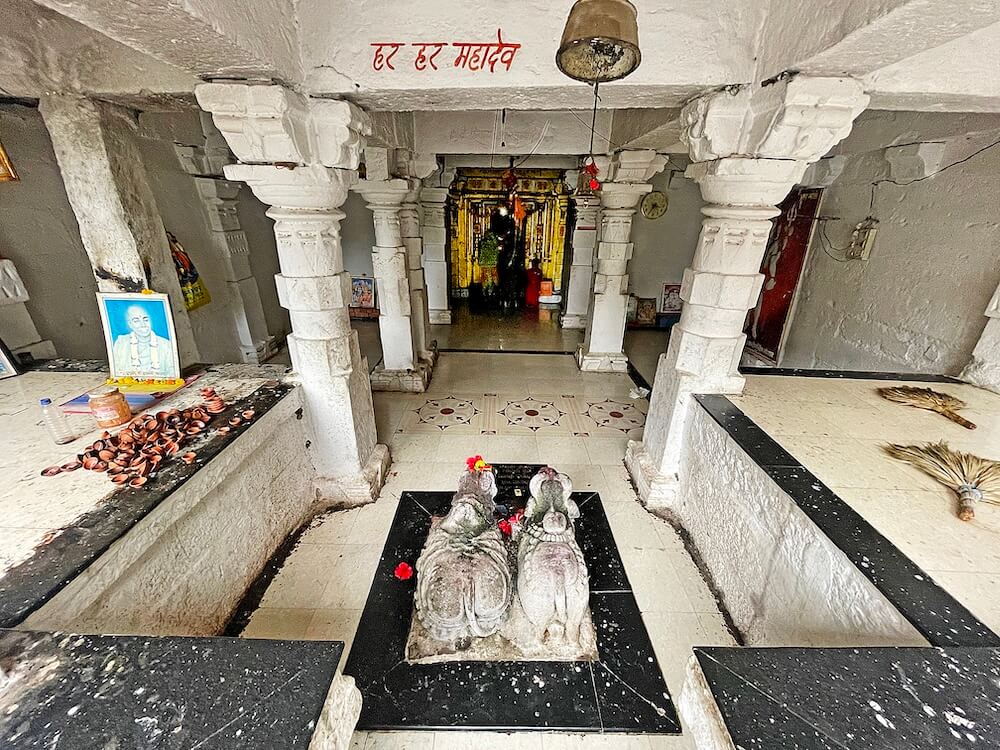
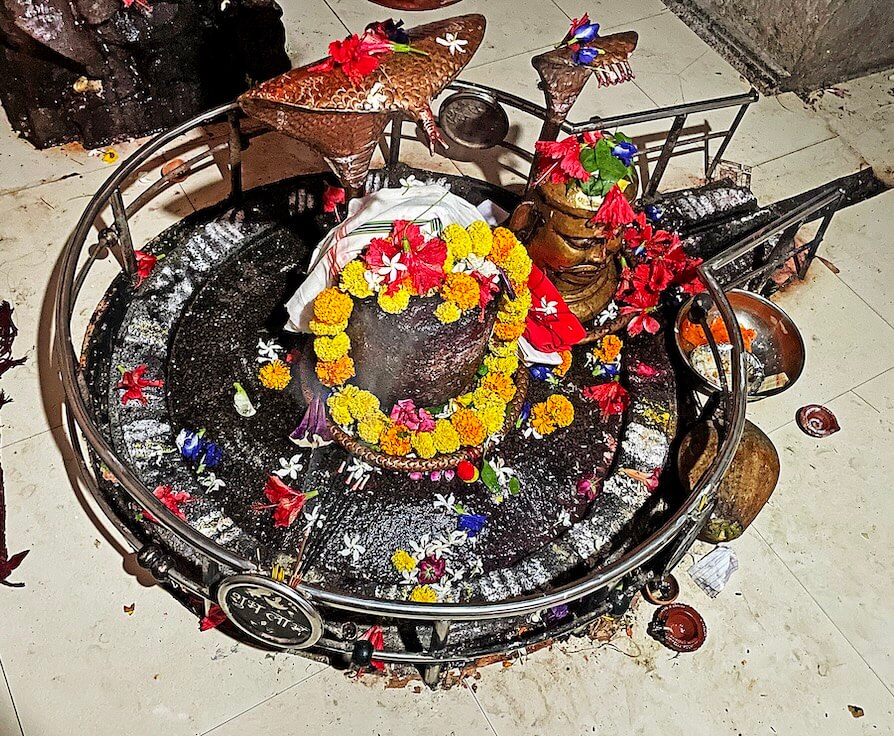
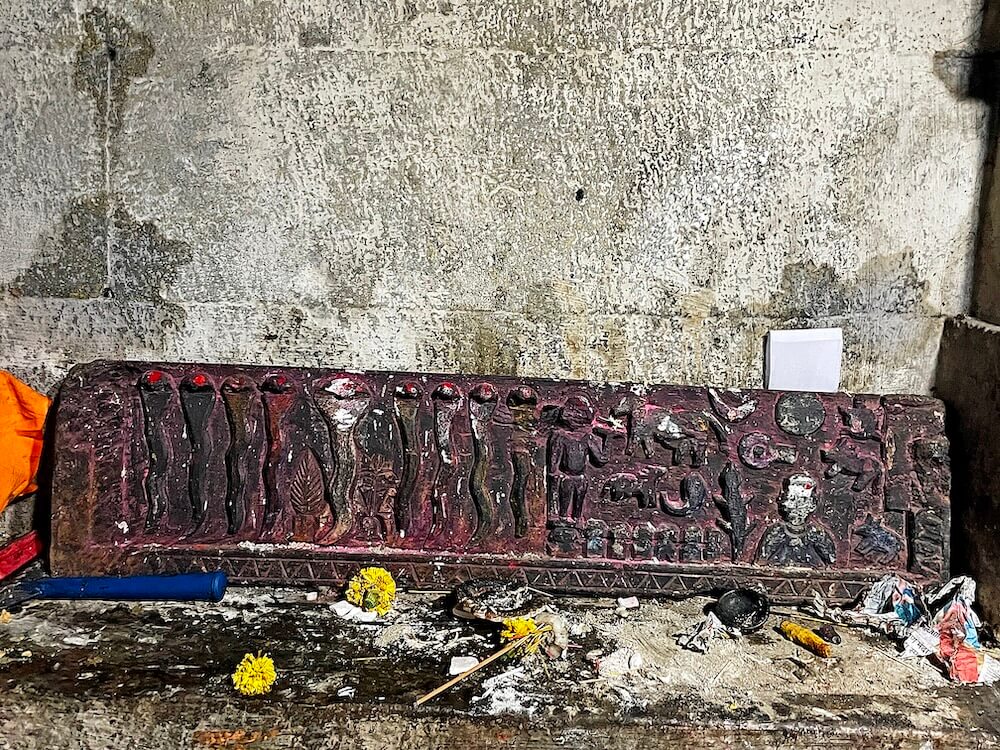
Opposite the Nandi Mandapa is the main temple. In front of this temple, which is constructed entirely of stone, stands an ancient idol of Lord Ganesha housed within a small stone shrine. A narrow passage leads from the courtyard into the Sabha Mandapa. The semi-open Sabha Mandapa features stone seating along the front and numerous stone pillars. Near the entrance inside the Sabha Mandapa are two ancient idols of Nandi, their backs adorned with carvings of anklet chains (*ghungurmalas*) and other ornaments. The stone pillars of the Sabha Mandapa are intricately carved with figures of Yakshas, floral motifs, elephants, and various geometric designs. The entrance to the sanctum sanctorum is uniquely striking, featuring a seven-layered doorjamb (*dwarashakha*) adorned with fine carvings. The lower portion of the entrance features ornate mouldings (*mandovara*), while the lintel bears an image of Lord Ganesha. A traditional decorative arch (*torana*) is carved above the doorway. In the centre of the sanctum floor rests an ancient monolithic Shiva Pindi, encircled by a metallic serpent deity. Next to the Shiva Pindi is a brass mask of Lord Mahadeva, behind which spreads a five-hooded canopy of the serpent deity cast in *panchaloha* (five-metal alloy). Directly behind the Shiva Pindi stands an ancient idol of Lord Mahadeva. An rectangular stone slab embedded in one of the sanctum walls bears carvings of human figures, a serpent deity, and various animals. The roof of the temple is flat and does not feature a *shikhara* (spire).
The temple courtyard houses several ancient stone sculptures, including a large Shiva Pindi. Some of the sculptures from this site have been preserved in the Chhatrapati Sambhajinagar Museum. Additionally, there are several *viragals* (hero stones) and *satishilas* (memorial stones for faithful widows). There is a sacred water tank (*kund*) within the temple premises. It is said that a short distance from the temple, a natural spring flows from the rocks of a nearby hill, and its water feeds into this built stone tank below through a sculpted cow’s mouth (*gomukha*).
The principal festival celebrated at this temple is Maha Shivaratri. On this auspicious occasion, sacred ablutions (*abhishek* and *rudrabhishek*) are performed on the Shiva Linga, accompanied by devotional singing (*bhajan*, *kirtan*) and *aarti*, drawing the participation of hundreds of devotees. On the Mondays of Shravana too, numerous devotees from the Hingoli district visit the temple for *darshan*. The sacred stone slab located inside the sanctum is worshipped on the occasion of Nag Panchami, during which a grand procession is also taken out through the village. Furthermore, the death anniversary (*punyatithi*) of Sant Tukdoji Maharaj is observed here annually on October ११, on which day *annadana* (free distribution of food) is organized.
This sacred temple stands as a testament to deep spiritual devotion, ancient architectural grandeur, and rich local cultural traditions.
The sanctum sanctorum houses the divine idol consecrated according to ancient Vedic traditions, surrounded by serene courtyards and traditional temple architecture.
Navratri, Maha Shivratri, Annual Temple Jatra & Deepotsav
Compare and book flights, secure top-rated local hotels near the temple, hire reliable guides, and rent cars instantly.
Extend your pilgrimage by visiting other highly sacred temples located nearby.


Add ₹999 more to unlock FREE SHIPPING!
Your sacred cart is currently empty.
Shop Photo FramesFill in your delivery details below to place your order.
Add comment