
Add ₹999 more to unlock FREE SHIPPING!
Your sacred cart is currently empty.
Shop Photo FramesDamodar is one of the names of Lord Krishna. ‘Dam’ means rope. Since Yashoda Mother tied a rope around the waist of naughty little Krishna, Lord Krishna came to be known as Damodar. Damodar is traditionally worshipped in the form of a Shaligram or an idol of Lord Krishna. However, in the Damodar Sal Temple in Margao, the deity Damodar is enshrined in the form of Lord Shiva. This temple is regarded as a symbol of the harmonious unity of Shaivism and Vaishnavism. Having been visited by the world-renowned philosopher Swami Vivekananda is another unique distinction of this sacred shrine.
According to the Goa Gazetteer, Margao was the site of the first Aryan settlement in Goa. The Aryans established their mathas (monasteries) here, owing to which it was known as Mathagrama. According to K. D. Naik’s book ‘Gomantakachi Sanskritik Ghadan’ (The Cultural Shaping of Goa), Margao was also known as Mhadgrama or Johargrama in ancient times. On April 3, 1778, it received royal recognition as a major town. This city has played a prominent role in Goa’s freedom struggle. It was in this very city that the first Satyagraha for Goa’s liberation took place under the leadership of the great socialist leader Dr. Ram Manohar Lohia. The Damodar Sal Temple is situated in this city, which holds an important place in the social and political history of Goa.
According to some experts, a temple had existed here since the Kadamba period, around the 12th century. In 1565 AD, Portuguese Captain Diogo Rodrigues destroyed this temple in Margao on the orders of Archbishop Dom Gaspar Leão Pereira. However, before that could happen, the local villagers had hidden the original idol of the temple. It was later shifted to the village of Zambaulim (Zambolim) in Quepem in 1567. The villagers there provided land and other amenities for this temple. According to the Goa Gazetteer, Damodar was worshipped there in the form of a sacred Kalash. In 1884 AD, a major plague epidemic broke out in Zambaulim. At that time, the sacred representation of Lord Damodar was brought back to Margao. In 1910 AD, this temple was renovated. Subsequently, between 1951 and 1972, it underwent periodic renovations. A grand temple of Lord Damodar exists in Zambaulim as well, and there are ‘Sasaay’ (sacred seats) dedicated to Him in Margao and Vasco as well.
Regarding the name of this temple, legend has it that it was previously known as Makhaji Damodar. Makhaji or Malkaji Damodar was a young man belonging to a family holding the Deshmukhi or Desaipan (hereditary lordship) of Margao. Due to his righteous deeds, he was dearly loved by the common people. He married a maiden from Kelshi village. While returning after the wedding, the bride and groom were slain by hired killers at the borders of Margao. The entire village mourned deeply. Later, a temple was constructed at the very site where the couple was killed as an act of atonement. It came to be known as the Damodar Temple.
There is also a popular belief that Damodar is the Gramadevata (presiding village deity). According to a legend associated with this, believing that Lord Damodar would grant liberation from the severe plague outbreak of 1884, the villagers of Margao went to Zambaulim to seek the Lord’s divine Prasad. The sacred coconut (Shrifal) from that Prasad was placed inside a silver Kalash at this site. A sacred mask of the deity was later placed upon this Kalash. Due to the plague epidemic, people had to lock their homes and move elsewhere. During that challenging time, they firmly believed that Lord Damodar was protecting their homes. The villagers hold the deep faith that Lord Damodar rides a horse at night to patrol Margao. It is said that in earlier times, the Palakhi (palanquin procession) of Lord Damodar moved along the main road. There was a tradition of lighting a traditional brass lamp (Samai) with five or seven wicks in the homes along the path to welcome Him. In keeping with this custom, the tradition of lighting such a lamp near the doorway every Monday continues in many old ancestral houses in Margao even today.
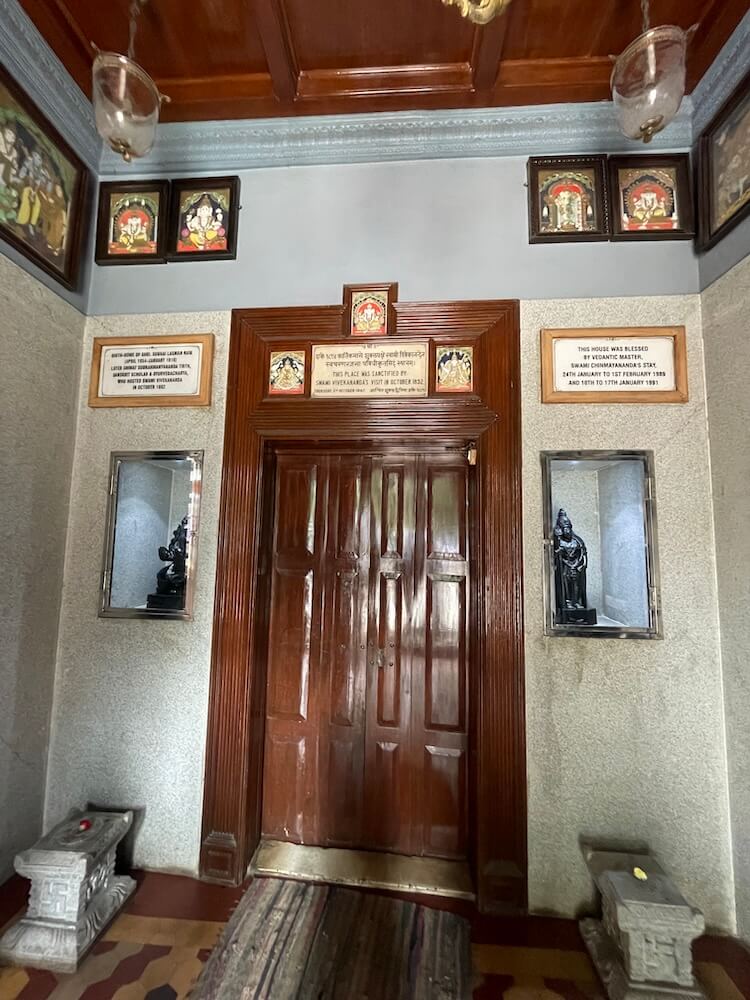
A monumental event in the history of this temple was the divine visit of Swami Vivekananda. Swami Vivekananda departed for America to participate in the Parliament of the World’s Religions held in Chicago in September 1893. Prior to that, he was travelling extensively across India. During this period, in October 1892, he arrived in Margao from Belgaum. In the book ‘Swami Vivekananda Jeevandarshan’, V. R. Karandikar writes about that historic visit: “When he reached there (Margao), many people gathered to welcome him, and Swamiji was taken in a grand procession to the residence of Subarai Naik. Swamiji experienced such a welcome for the very first time. Subarai was spiritually inclined. Swamiji’s company had a profound impact on him.” The family of Subarai Naik had safeguarded the original idol of the Damodar Temple during times of peril. Adjacent to their ancestral mansion (Wada) stands the Damodar Temple. Swami Vivekananda visited this temple during his stay. He also resided in a room adjoining the temple during this period. The room where he stayed has been reverently preserved to this day and is adorned with several photographs of Swami Vivekananda.
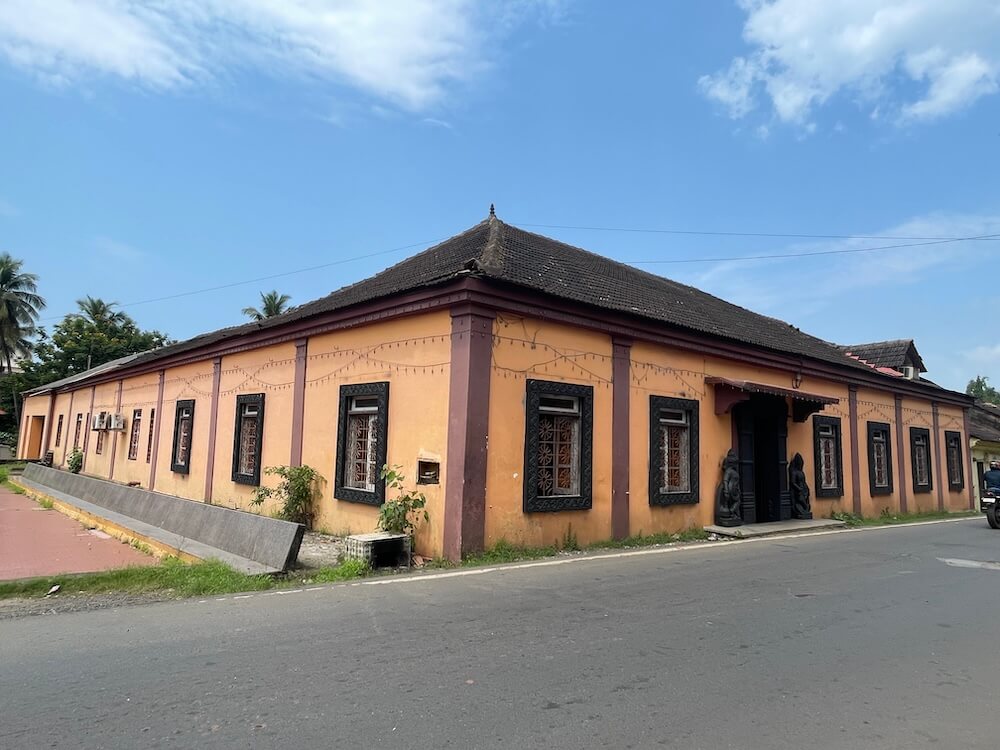
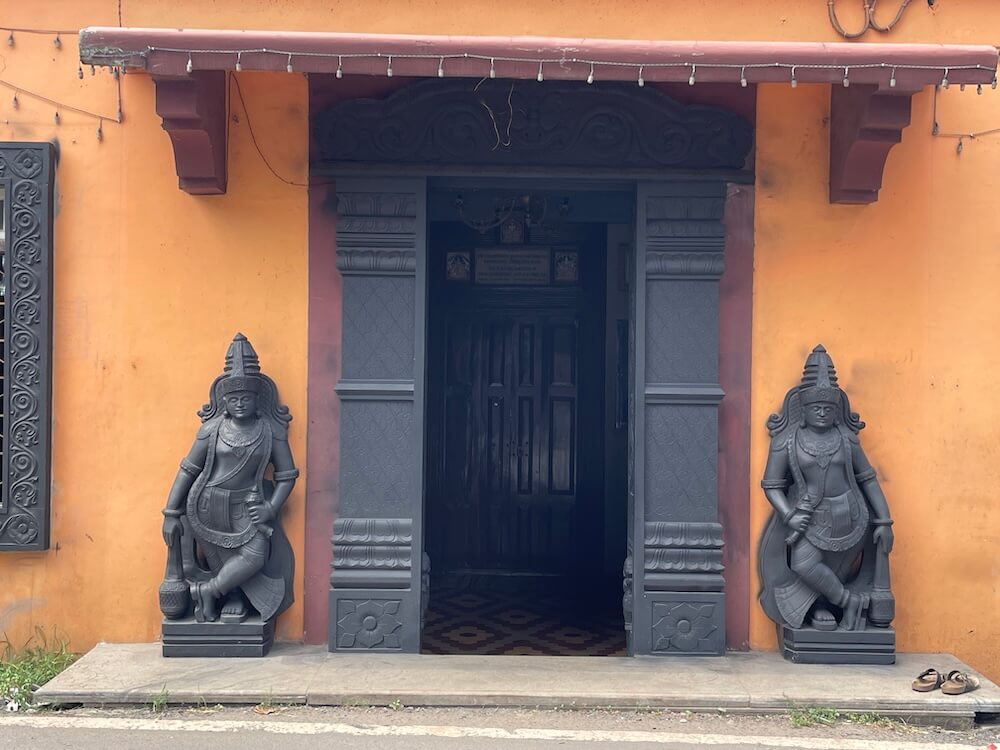
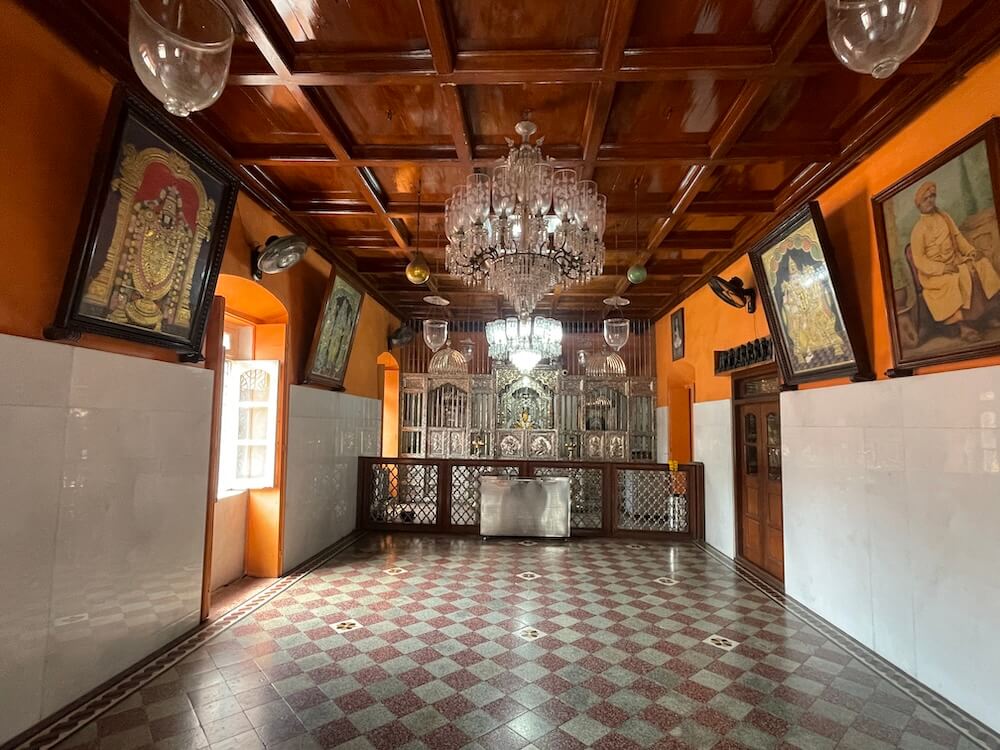
This temple stands proudly along the main road in Margao. Built in the style of a traditional Goan mansion (Wada), the temple features sloping tiled roofs on all four sides. On either side of the temple entrance stand two tall statues of Dwarapalas (gatekeepers). Upon entering, one sees a room right ahead. It was in this very room that Swami Vivekananda stayed, as commemorated on a marble plaque installed there. To the left lies the shrine of Damodar Sal. Relief sculptures of the Dashavatara (the ten incarnations of Lord Vishnu) are carved on both sides of the entrance to its Sabhamandapa (assembly hall). The hall is beautifully decorated with portraits of various deities and Swami Vivekananda, along with glass lamps and chandeliers hanging gracefully from the ceiling. In the center, on an elevated decorative pedestal, rests a finely sculpted stone idol of Nandi. The front wall of the Garbhagriha (sanctum sanctorum) is encased entirely in intricately carved silver plating. The sanctum sanctorum features three arched doorways adorned with sculptures of Garuda, Lord Hanuman, and the Dwarapalas. Inside, atop a high platform within a silver throne (Makhar), rests the revered idol of Lord Damodar adorned with the sacred mask.
Devotees can seek Darshan at this temple from 7:15 AM to 9:00 PM. The major festivals celebrated at the shrine include Ram Navami, Mahashivratri, Padwa, Akshaya Tritiya, Anant Vratotsav, Navratri, Dasara, Diwali, and Magh Utsav. During festivals, several religious and cultural programs are organized here. Just as the Warkaris affectionately call Lord Vitthal of Pandhari as ‘Vithu’, the residents of Madgaon fondly address their beloved deity as ‘Dambabab’. In Goa, ‘Bab’ is an affectionate and respectful term used for elders. Many devotees offer earnest prayers to their beloved Dambabab for important undertakings.
This sacred temple stands as a testament to deep spiritual devotion, ancient architectural grandeur, and rich local cultural traditions.
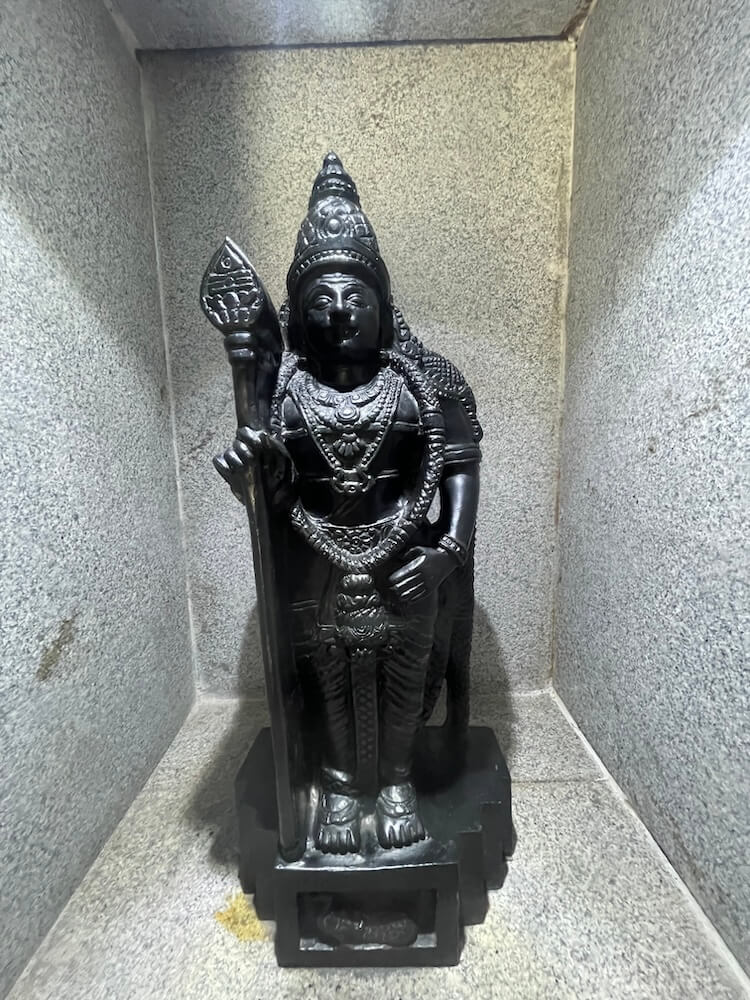
The sanctum sanctorum houses the divine idol consecrated according to ancient Vedic traditions, surrounded by serene courtyards and traditional temple architecture.
Navratri, Maha Shivratri, Annual Temple Jatra & Deepotsav
Compare and book flights, secure top-rated local hotels near the temple, hire reliable guides, and rent cars instantly.
Extend your pilgrimage by visiting other highly sacred temples located nearby.


Add ₹999 more to unlock FREE SHIPPING!
Your sacred cart is currently empty.
Shop Photo FramesFill in your delivery details below to place your order.
Add comment