
Add ₹999 more to unlock FREE SHIPPING!
Your sacred cart is currently empty.
Shop Photo FramesJust like Akkalkot, which is sanctified by the presence of Swami Samarth, Vairag in the Barshi taluka of Solapur district is also considered a holy place. Shri Santnath Maharaj is the presiding deity (Gramdaivat) of Vairag. Spirituality is the hallmark of India, and renunciation (Vairagya) holds a significant place in spirituality. It is said that since many individuals who had attained such renunciation lived in this village from ancient times, the village came to be known as Vairag. The five-day fair held here, which is one of the largest in the district, is also recorded in the Mumbai Gazetteer.
The legend of the temple states that about four hundred years ago, a religious and philanthropic gentleman named Ghongade lived in Vairag. He was well-known in the surrounding five villages. A boy named Santu worked for him as a cowherd. Once, Ghongade went to Kashi for a pilgrimage. There, he was surprised to see Santu the cowherd. He asked Santu about this and requested him to reveal his true form. Thereafter, Santnath Maharaj gave him a divine vision and promised that he would reside permanently in the village of Vairag. In later times, his disciples gathered in Vairag. Santnath Maharaj became the presiding deity of Vairag. The position of Santnath Maharaj is considered unique in the Nath tradition.
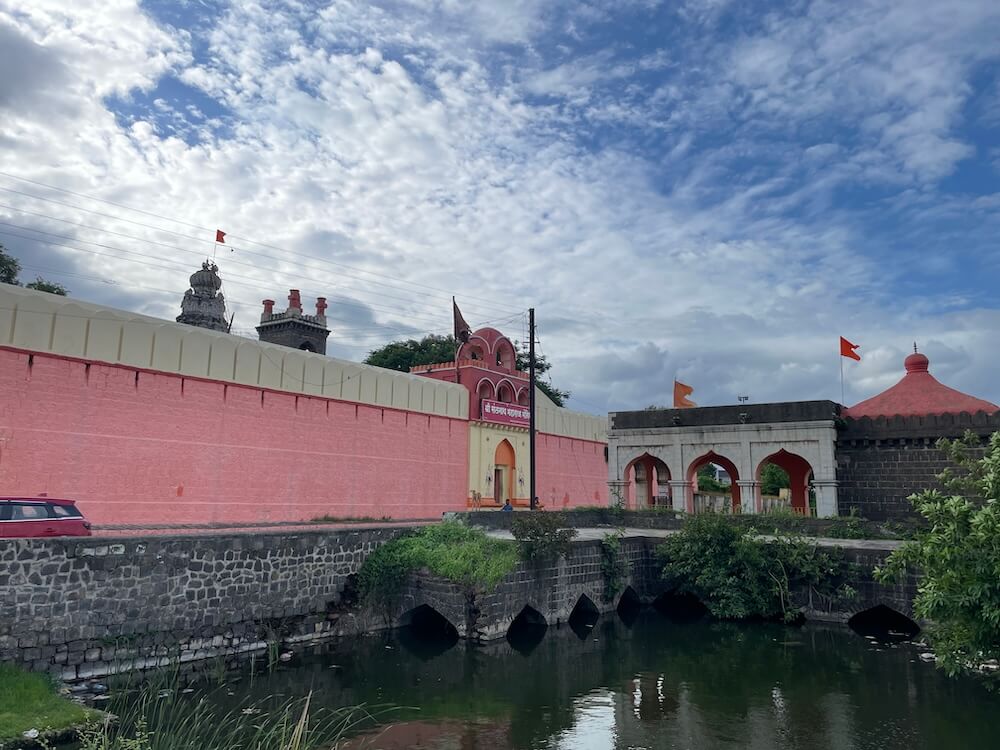
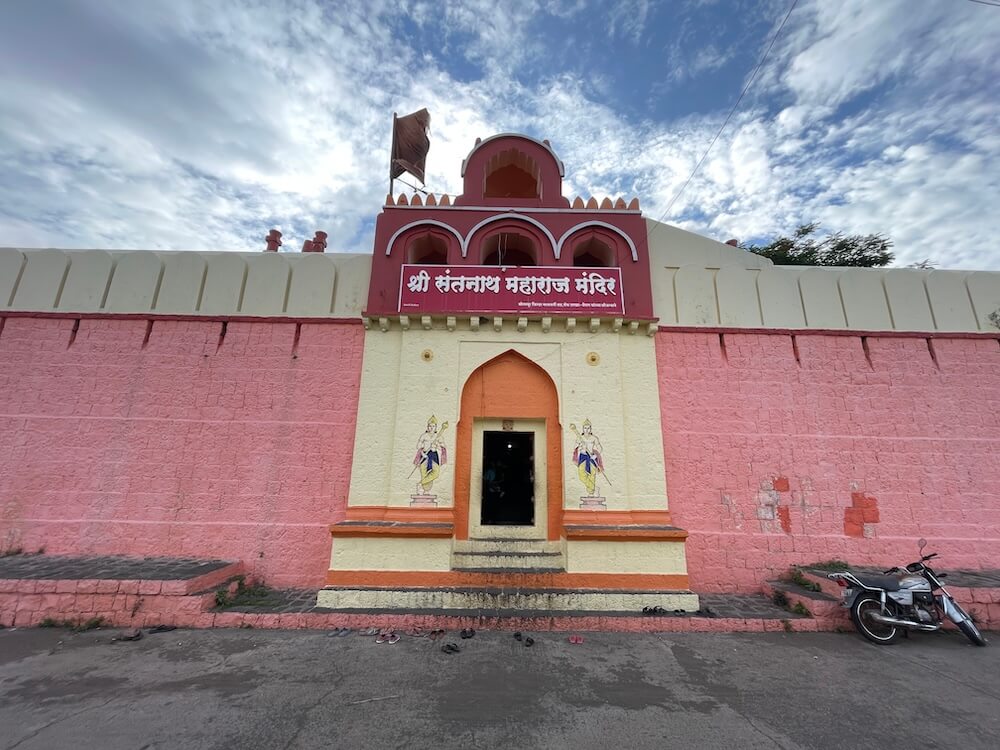
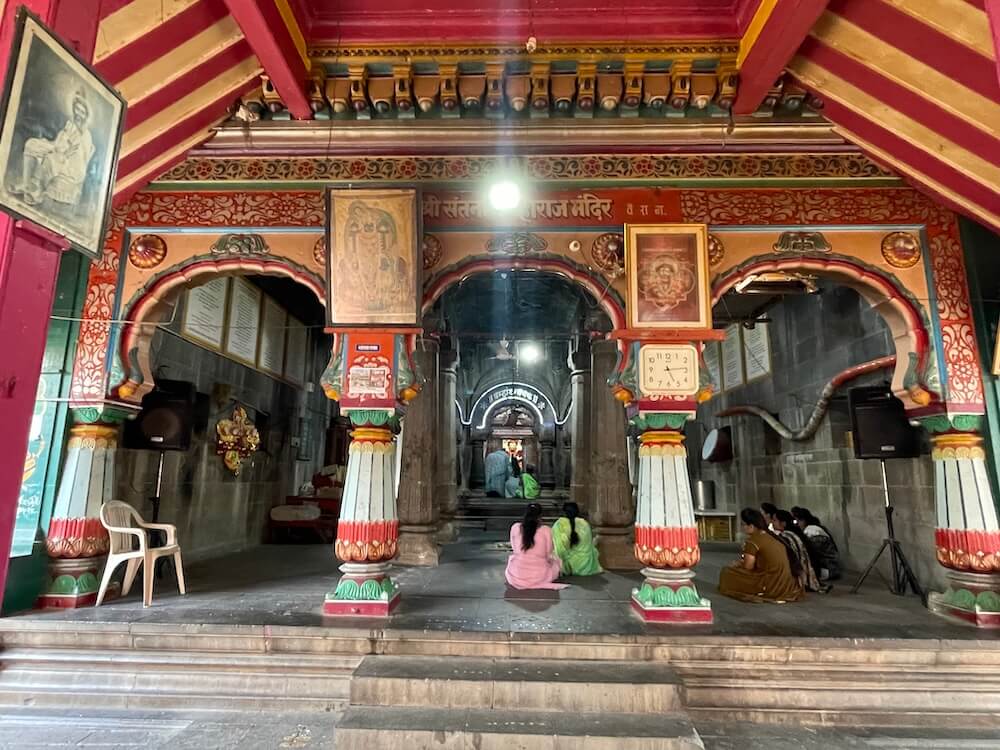
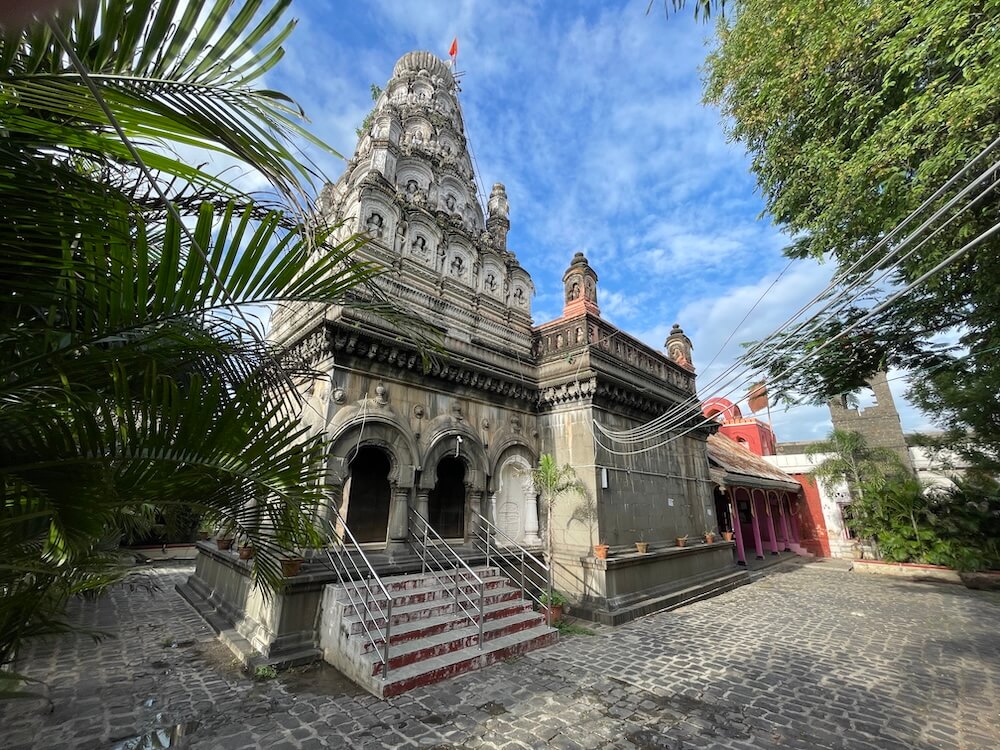
On the outskirts of Vairag village, by the side of a medium-sized lake, stands the magnificent temple of Santnath Maharaj. The temple is surrounded by stone ramparts that resemble a fortress. One enters the temple courtyard through a gateway after climbing six stone steps from the ground. There are paintings of gatekeepers (Dwarpal) on both sides of the entrance. There is a drum house (Nagarkhana) on the second floor of this gateway. In the courtyard, near the ramparts, there are two stone towers about 40 feet high. There are arched corridors (Ovya) along the inner side of the ramparts. The temple is structured with a Mandap, Sabhamandap, Antaral, and Garbhagriha. One can reach the temple from the main entrance through an elongated open Mandap. The entire structure of this Mandap is made of wood with a metal sheet roof. Attached to this is the semi-open Sabhamandap of the temple. The four ornate pillars at the front of the Sabhamandap are connected to each other by arched gateways.
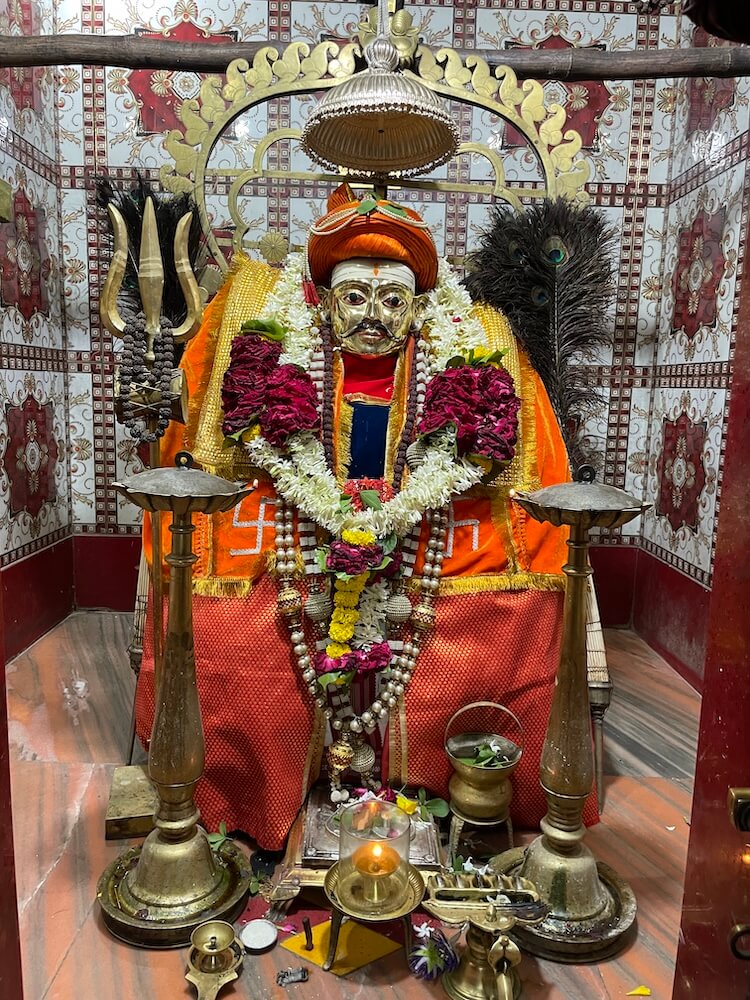
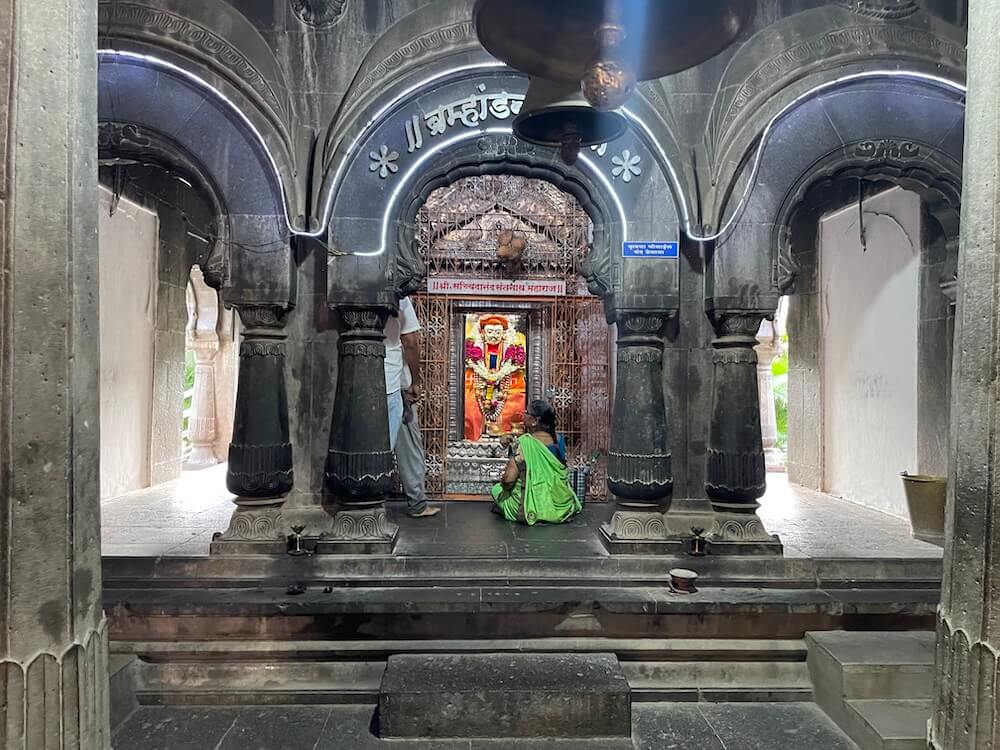
In the area ahead of the Sabhamandap, the Garbhagriha is constructed with an Antaral (vestibule) at a higher level, leaving space for a circumambulation path (Pradakshina Marg). The front of the Antaral has six ornate pillars with arched gateways above them. The entire temple is built of black stone. The small door of the Garbhagriha is covered with silver plating and features pillar motifs and intricate carvings. Inside the Garbhagriha, the idol of Santnath Maharaj is placed on a Vajrapitha. The idol is adorned with a silver mask and a turban. On the ceiling of the Sabhamandap, there are four small spires (Shikhara) at the corners, resembling a canopy (Meghdambari). The main spire above the Garbhagriha is decorated with unique carvings. This spire features numerous ornate niches containing idols of various deities. The spire has niches on four levels, and the fifth level features a dome-shaped Amalaka and a Kalash.
Opposite the Santnath Maharaj temple is the Teknath Baba temple. The pond (lake) in front of the temple is built down to the base and remains filled with water throughout the year. Along with Santnath Maharaj, many other realized souls like Shri Vyankobaba and Shri Dayanand Baba also resided in this village.
The main festival at the Santnath Maharaj temple is held during the month of Shravan on Narali Purnima. This festival begins four days prior, on Ekadashi, and continues until the full moon day. During this festival, the palanquin of Santnath Maharaj, accompanied by umbrellas, whisks (Chamars), dignitaries, and devotees, goes on a procession around the village. On the day of the full moon, the palanquin, accompanied by a Lezim troupe and a ceremonial procession, goes to the lakeside for the Dahi Handi. Fireworks, pyrotechnics, and physical demonstrations performed after the Dahi Handi are the highlights of this festival. In the past, there were many cowsheds (Goshala) in this area. Therefore, to pray for sufficient rainfall for the protection of cows, a Govardhan ritual is also performed in this temple during the month of Ashadh. These festivals have a tradition spanning hundreds of years. Additionally, an Akhand Harinam Saptah is celebrated here in the month of Margashirsha. Aarti is performed daily at 9 in the morning and 8 at night. Since Monday is the day dedicated to Santnath, hundreds of devotees come here for darshan on this day. Food Prasad is provided to the devotees who arrive every Monday.
This sacred temple stands as a testament to deep spiritual devotion, ancient architectural grandeur, and rich local cultural traditions.
The sanctum sanctorum houses the divine idol consecrated according to ancient Vedic traditions, surrounded by serene courtyards and traditional temple architecture.
Navratri, Maha Shivratri, Annual Temple Jatra & Deepotsav
Compare and book flights, secure top-rated local hotels near the temple, hire reliable guides, and rent cars instantly.
Extend your pilgrimage by visiting other highly sacred temples located nearby.


Add ₹999 more to unlock FREE SHIPPING!
Your sacred cart is currently empty.
Shop Photo FramesFill in your delivery details below to place your order.
Add comment