
Add ₹999 more to unlock FREE SHIPPING!
Your sacred cart is currently empty.
Shop Photo FramesThe Naik Nimbalkar dynasty of Phaltan were staunch devotees of Tulja Bhavani. They had undertaken the renovation and made several improvements to the temple at Tuljapur. Even while in the service of the Mughals, they never let their faith in God and religion waver. Within the jagir of ninety-six villages under their control—including Madha, Mohol, and Karmala—they renovated many temples and built several new ones. As a replica of their revered deity Tulja Bhavani, they constructed the Madheswari Devi Temple at Madha. Solapur’s Rupabhavani, Karmala’s Kamalabhavani, and Madha’s Madheshwari are renowned temples of the goddesses in Solapur district.
Built in the Hemadpanthi architectural style with stone masonry, this temple is considered religiously and historically significant. It is said that Rao Rambha Nimbalkar, the grandson of Jagirdar Babaji Naik-Nimbalkar, received the Phaltan jagir from the Nizam. This jagir included Naldurg, Bhum, and Tuljapur in Osmanabad (Dharashiv) district; Madha, Mohol, Karmala, Shendri, Ropale, Dahiwadi in Solapur district; as well as some villages in Parbhani and Ahilyanagar districts, along with a mansab of twenty-two thousand, and the privileges of a palanquin (palkhi) and ceremonial torches (mashal). Because Rao Rambha lived in Tuljapur for many years, he developed a deep devotion to Goddess Tulja Bhavani. He renovated the Tuljapur temple. Later, Rao Rambha Nimbalkar built the Kamala Bhavani Temple in Karmala and, in the latter half of the seventeenth century, renovated the Madheshwari Temple in Madha, constructing a grand temple in its place.
The legend behind this renovation is that Rao Rambha Nimbalkar, the jagirdar of the Madha and Karmala regions, was pursued by the Mughal army. While escaping from the Mughals, he sought refuge in the earlier, smaller Madheshwari Devi Temple at Madha. On this occasion, he earnestly prayed to the Goddess to save his life and took a vow to build a grand temple if he escaped the Mughals. Following this, Nimbalkar was saved, and he subsequently built this temple. Definite information regarding the exact period of the original temple, which was renovated in the seventeenth century, is not available.
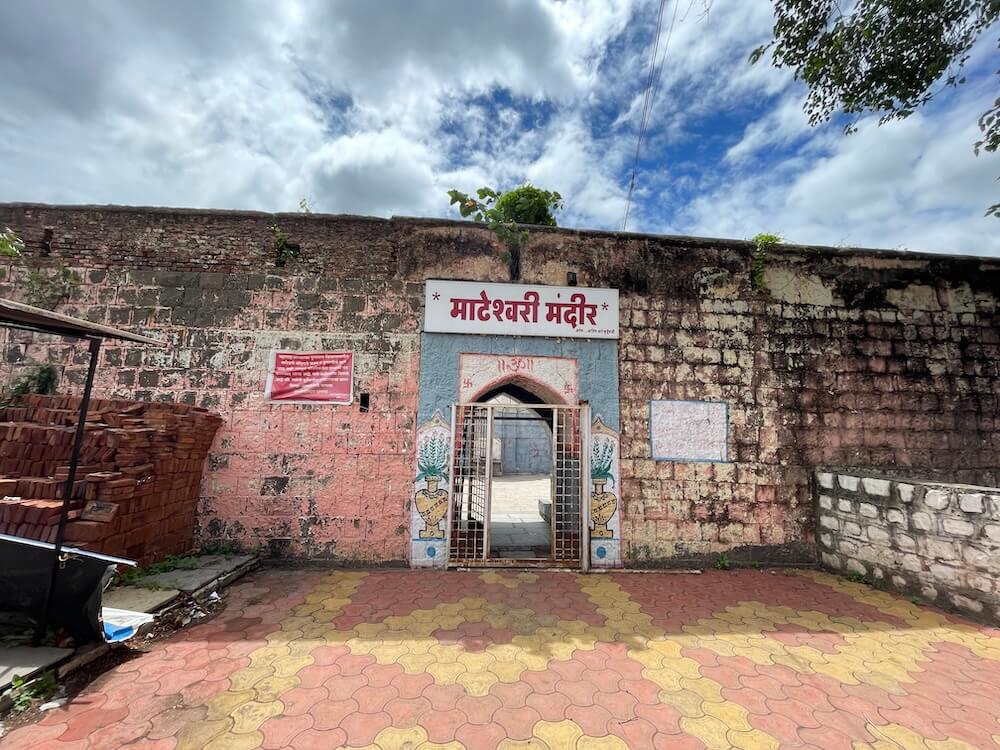
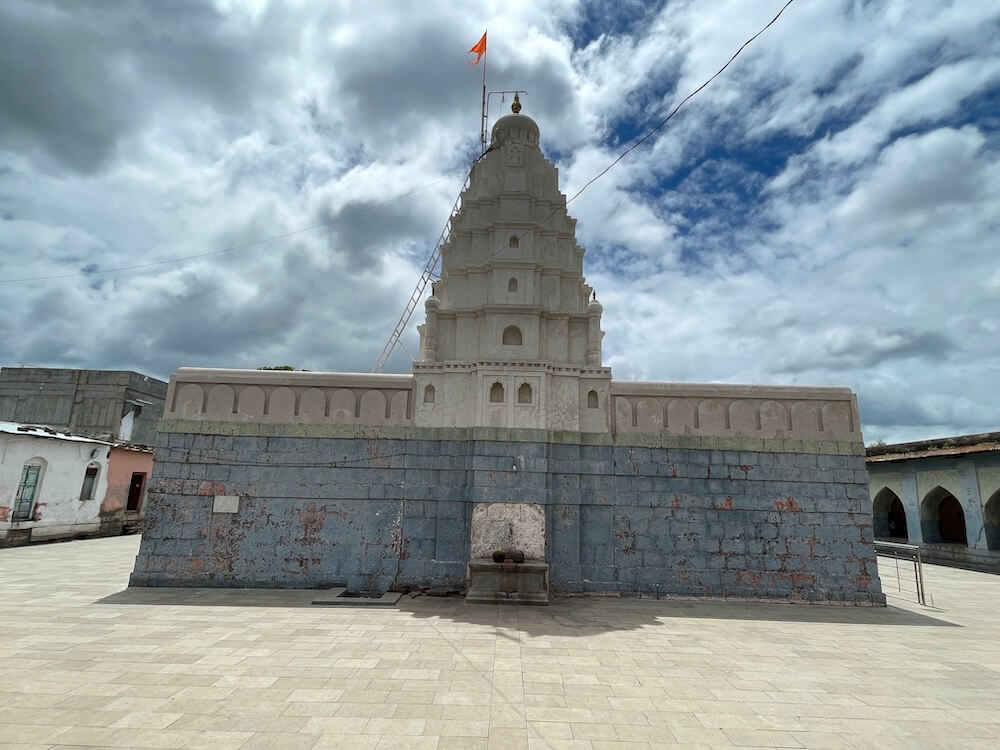
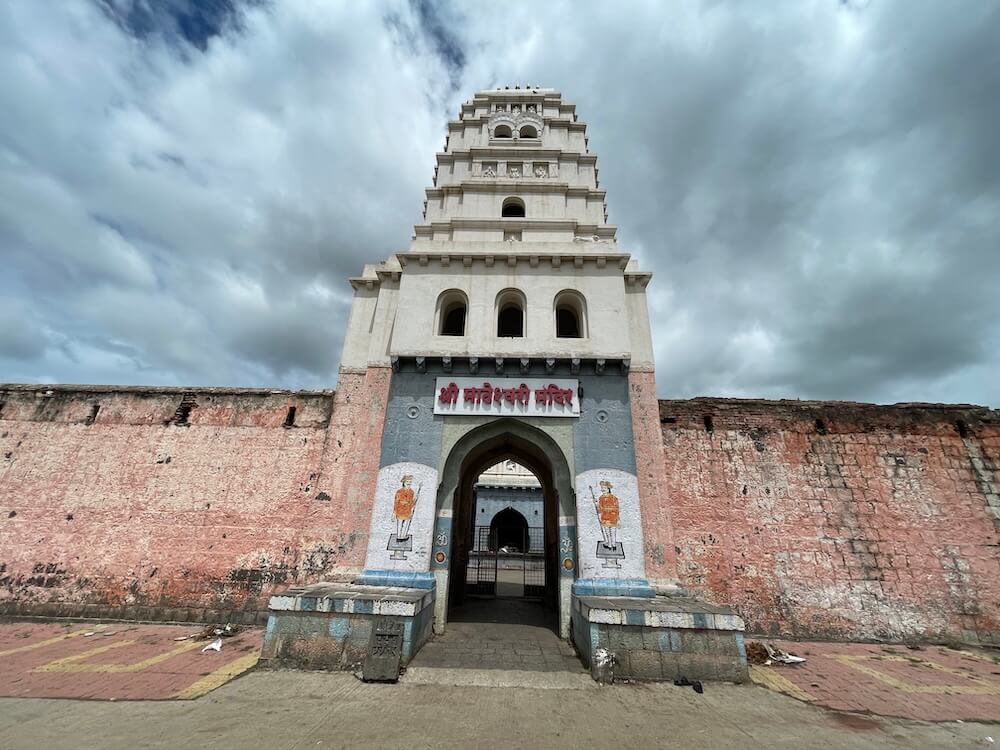
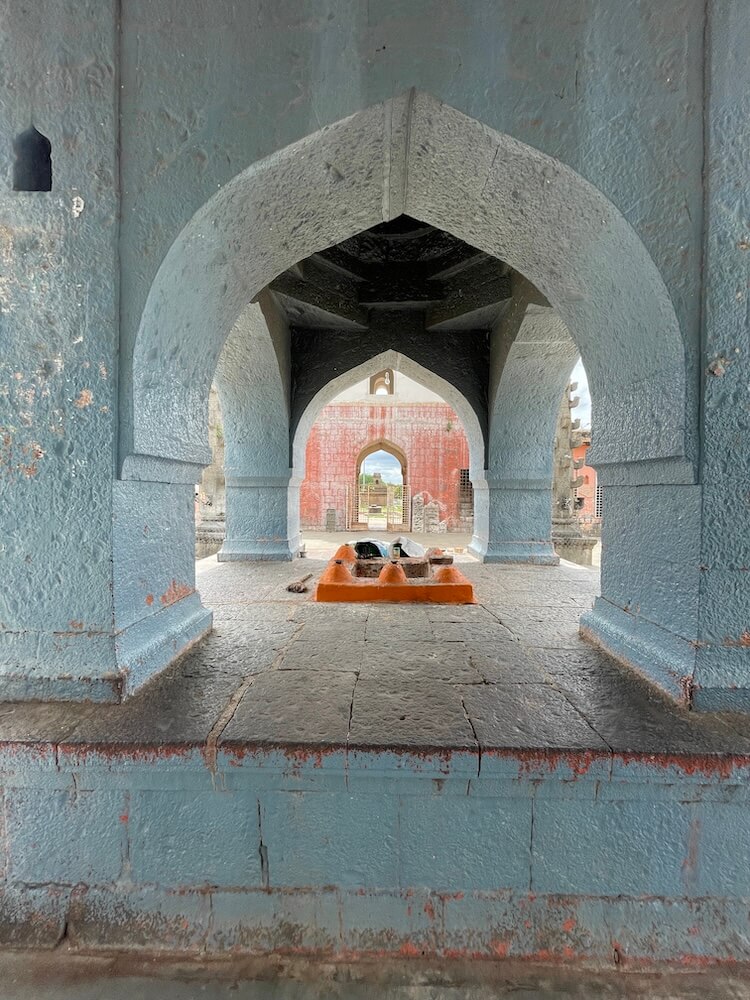
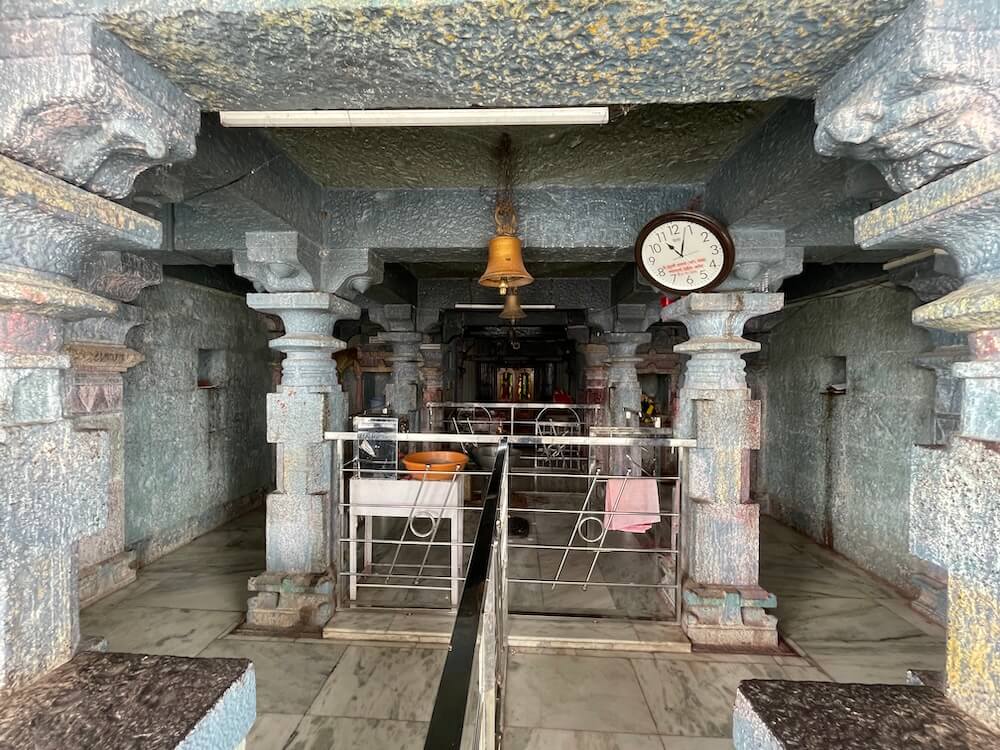
The Madheswari Devi Temple is situated in the central part of Madha town. The temple premises are enclosed by stone ramparts. One enters the temple courtyard through a multi-storeyed gateway set within these ramparts. Paintings of door-guardians (dwarapals) are depicted on the pillar jambs of this entrance. Above this arched gateway is the nagarkhana (drum house). The grandeur of this temple is evident from the shikhara atop this gateway. Cloisters (ovaryas) have been constructed along the inner side of the rampart walls. Devotees visiting for the darshan of the Goddess use these cloisters for rest, meals, and religious rituals. In the courtyard, facing the temple, there are three lamp pillars (deepmalas)—two on the left and one on the right. The stone-built havanmandapa in front of the main temple features a distinctive shikhara adorned with numerous small kalashas. The four stone pillars of the havanmandapa are connected to one another by cusped arches. At the center of the four pillars lies the havanakunda. The homahavan and other religious rites are performed here on the day of Dashara.
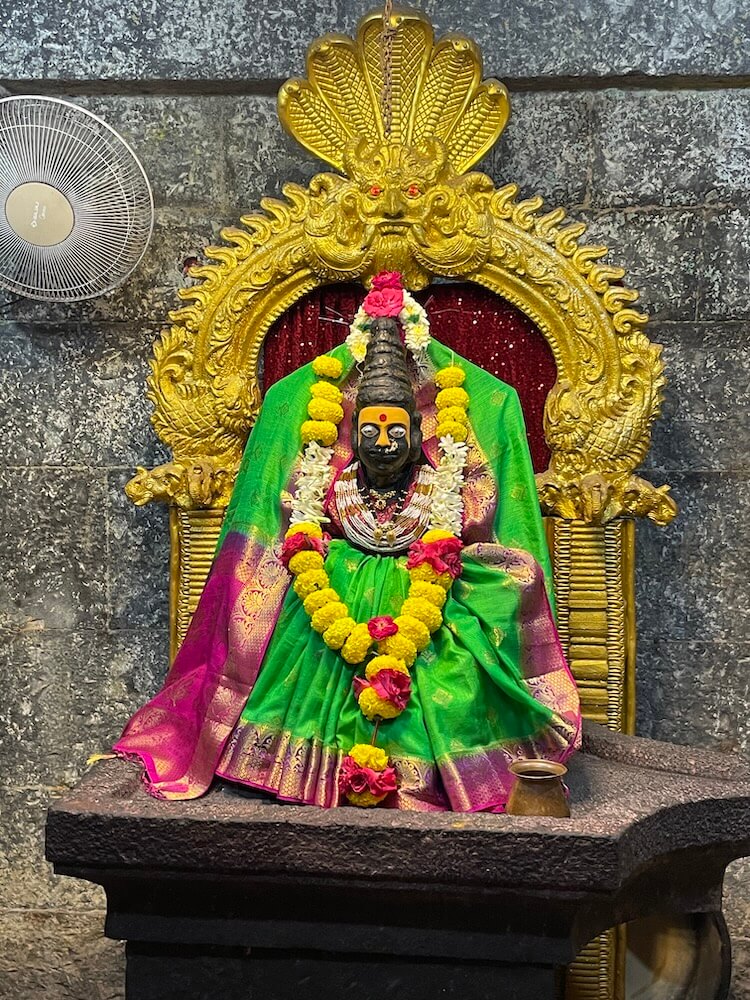
The temple structure comprises a sabhamandapa (assembly hall), an antarala (vestibule), and three garb grihas (sanctums). In the semi-open sabhamandapa, a designated darshan pathway has been arranged in the front for the convenience of devotees. This sabhamandapa was built at a later date in front of the original temple. The construction of the antarala and the garb griha here is entirely in stone. In the main sanctum, seated upon a throne, is the principal idol of Goddess Madheshwari, carved from sandstone. This four-armed idol holds a shield in one hand, a conch and discus (shankh-chakra) in the second, the head of Mahishasura in the third, and a trishula in the fourth. In the sub-sanctum to the right of this garb griha are Vitthal-Rukmini, and to the left is a Shiva linga. In addition to these, there are ancient idols of various deities and hero stones (viragals) in the temple complex.
Following the Navaratri fasts, the palanquin procession (palkhi sohala) of the Goddess takes place here on Dashara. After this palanquin celebration, the Goddess retires to sleep. A grand festival is held here on Kojagiri Purnima, accompanied by a large fair on the very same day. This temple follows a unique tradition. Nine out of the twelve balutedars (hereditary village artisans/servants) have been granted the privilege of the mounts (vahanas) of Goddess Madheshwari. Accordingly, the lion has been assigned as the mount to the Mane family, the peacock to the Kate family, the tiger to the Ranadive family, the garuda to the Jadhav family, the nandi to the Markad community, and the horse to the Bhange family. The ninth place of honor, the elephant, is bestowed upon the Mali community of the village. During the festival period, all the mounts of the Goddess gather together at the temple. Thereafter, the idols of the Goddess are seated upon these mounts, and at midnight a grand procession (chhabina) accompanied by music winds through the village, continuing until five o’clock in the morning. At this time, the temple and its surroundings are illuminated with attractive lights. Devotees hold a firm belief that the seat of Goddess Madheshwari is intensely awakened (jagrut). Consequently, before any wedding ceremony in the surrounding area begins, the very first offering (bhogi—thick jaggery and banana in dense curd) must be presented to the Goddess, without which wedding preparations cannot commence.
This sacred temple stands as a testament to deep spiritual devotion, ancient architectural grandeur, and rich local cultural traditions.
The sanctum sanctorum houses the divine idol consecrated according to ancient Vedic traditions, surrounded by serene courtyards and traditional temple architecture.
Navratri, Maha Shivratri, Annual Temple Jatra & Deepotsav
Compare and book flights, secure top-rated local hotels near the temple, hire reliable guides, and rent cars instantly.
Extend your pilgrimage by visiting other highly sacred temples located nearby.


Add ₹999 more to unlock FREE SHIPPING!
Your sacred cart is currently empty.
Shop Photo FramesFill in your delivery details below to place your order.
Add comment