
Add ₹999 more to unlock FREE SHIPPING!
Your sacred cart is currently empty.
Shop Photo FramesDevotees who revere Nagnath Maharaj are found in large numbers across Maharashtra. Nagnath Maharaj, who is one of the Navanaths, is believed to be an incarnation of Lord Shiva. Kurdu village in Madha taluka has been sanctified by the presence of Nagnath. The ancient Nagnath Temple here is a place of deep faith for the villagers. Thousands of devotees from across Maharashtra and other states flock here for the annual festival held in the month of Falgun. The antiquity of the temple is proven by features within the temple complex such as the Sasunichi Vihir (Mother-in-law and Daughter-in-law wells), the hollow lamp pillars (Deepmalas), and the thirteenth-century stone inscription.
There are many temples of Lord Nagnath in the Solapur region, towards which the local citizens hold a special devotion. The women of this region have a firm belief that Lord Nagnath considers every woman as his sister and constantly protects each and every sister of his. Every year on Nagpanchami, many women observe a fast in the name of Lord Nagnath, which is called the ‘Bhavacha Upvas’ (Brother’s Fast). Just as Warkaris undertake the pilgrimage to Pandharpur, a monthly pilgrimage of Lord Nagnath Maharaj on the Amavasya (new moon day) is undertaken in this region, in which thousands of devotees participate. It is said that this temple was established in the thirteenth century in Kurdu village, which is famous for milk production. A stone inscription found in this region a few years ago is cited as evidence for this.
The inscription found in the temple complex is actually a hero stone (gaddhegal). It is considered useful for the social history of that era. Along with the inscription, it also features some sculptures. The hero stone found at Kurdu is five feet high and two feet wide. It bears the figures of the sun and the moon, along with an inscription. There are nine lines carved on it. Swasti Shri Shaka 1183, meaning The time is recorded as the year 1261. This proves that this temple dates back to the thirteenth century. Cursing inscriptions were engraved at the end of such rules and decrees written on memorial stones so that the citizens would not break them and would follow them diligently.
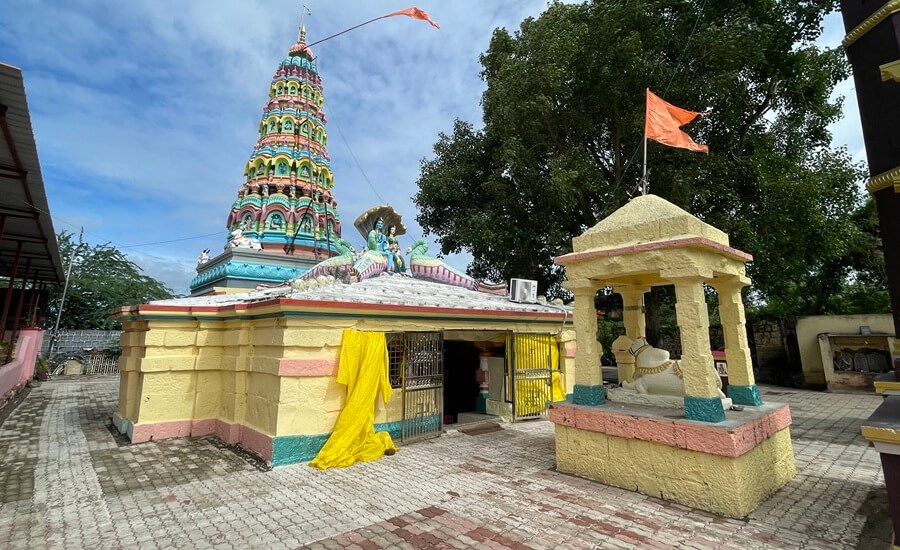
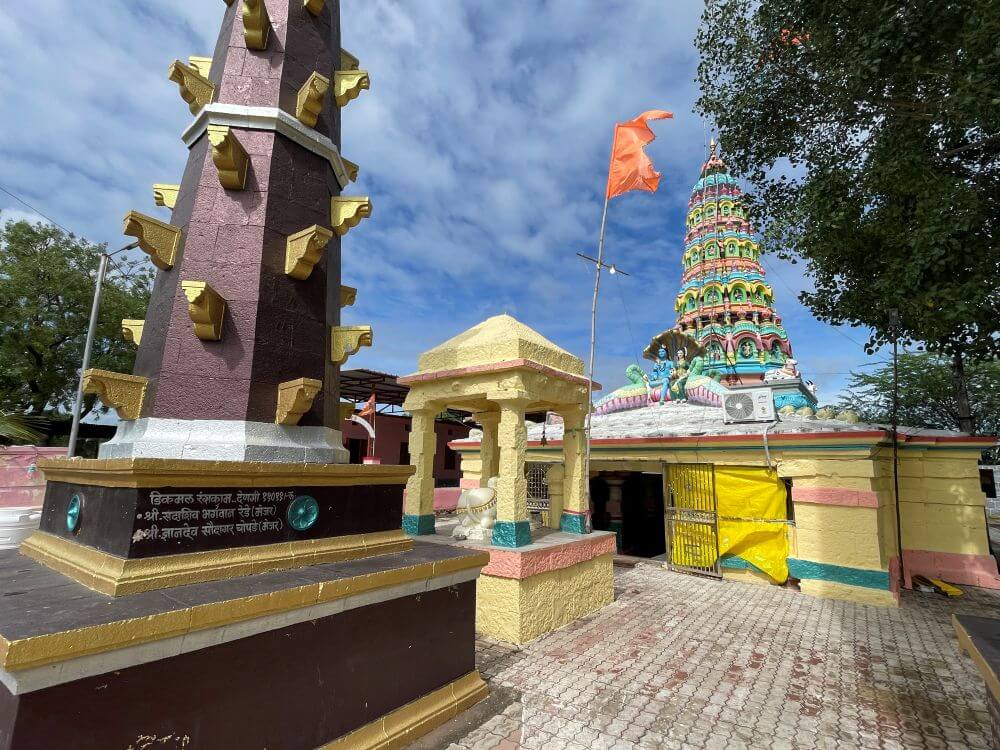
It is said that during his travels, Maharaj Nagnath arrived in this region. Seeing this scenic place, he rested here for some time. A temple was later built at this site, which was sanctified by his presence. There is a compound wall surrounding the temple. One enters the temple courtyard through its gateway. In the courtyard, in front of the temple, stand two Deepmalas (lamp towers). Both Deepmalas are made of stone masonry and are ancient. From inside these Deepmalas, there is a circular stairway leading up to the spire.
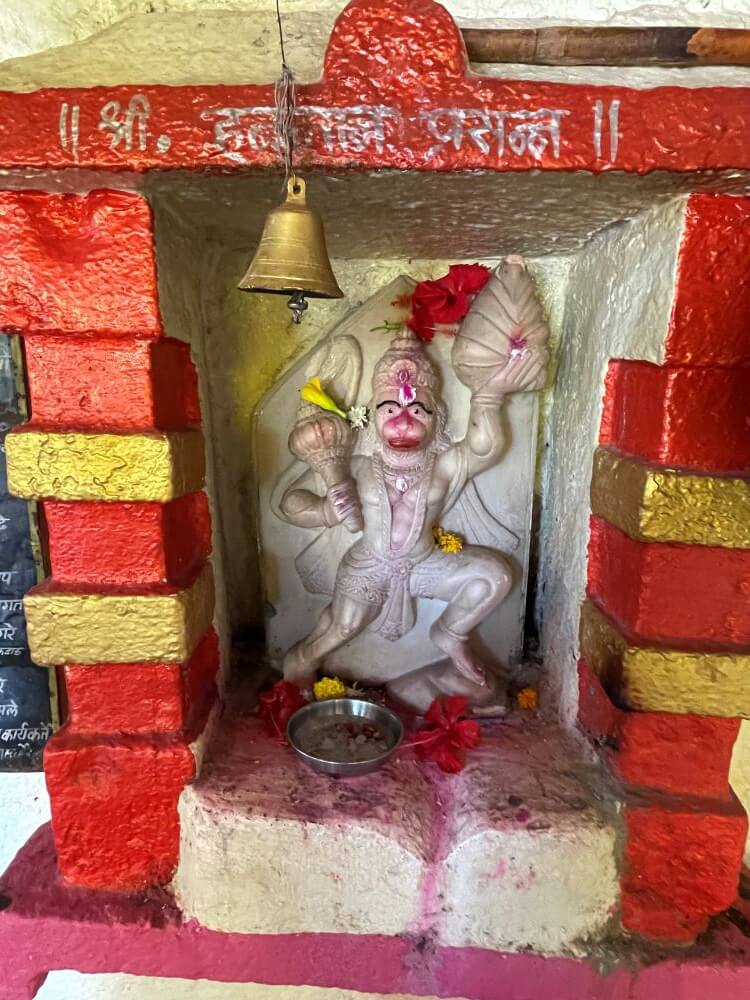
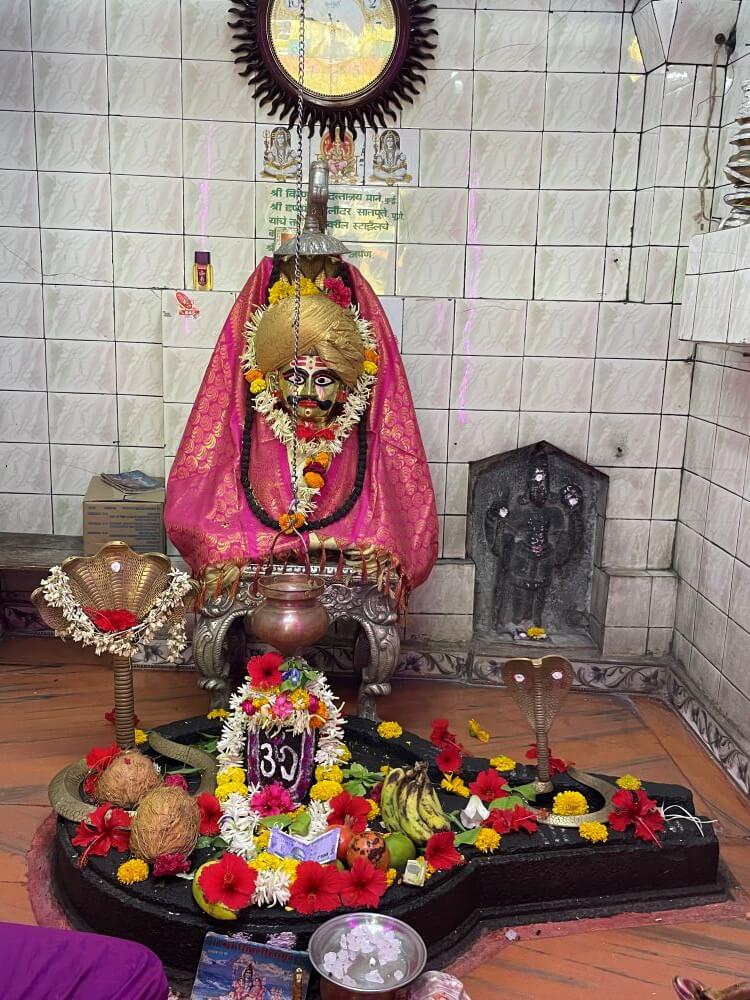
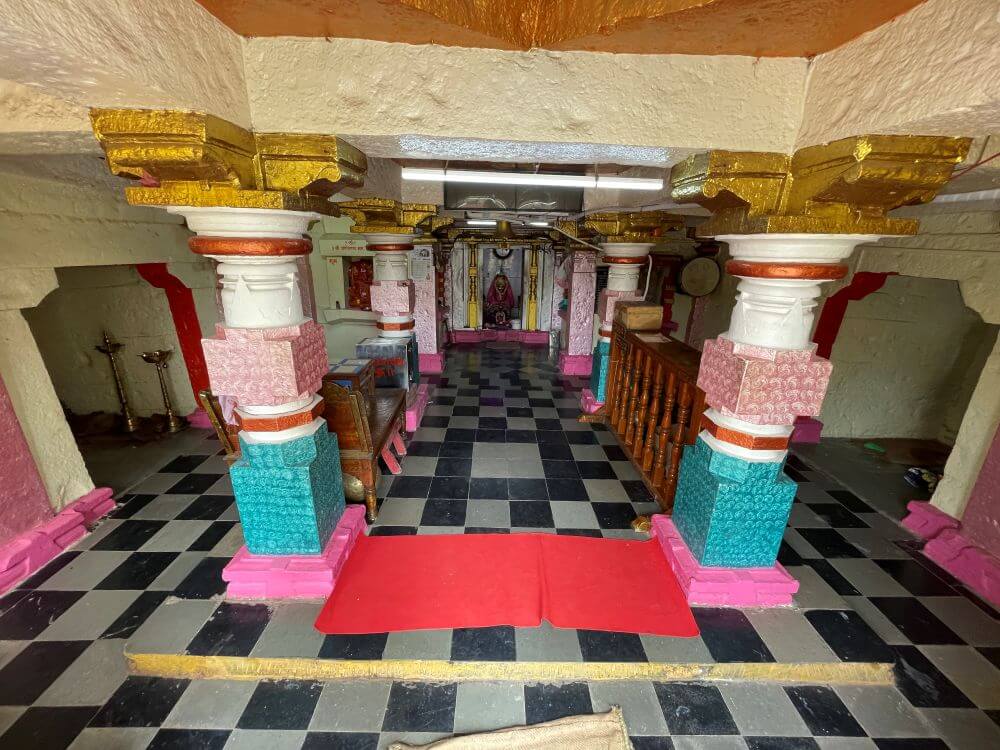
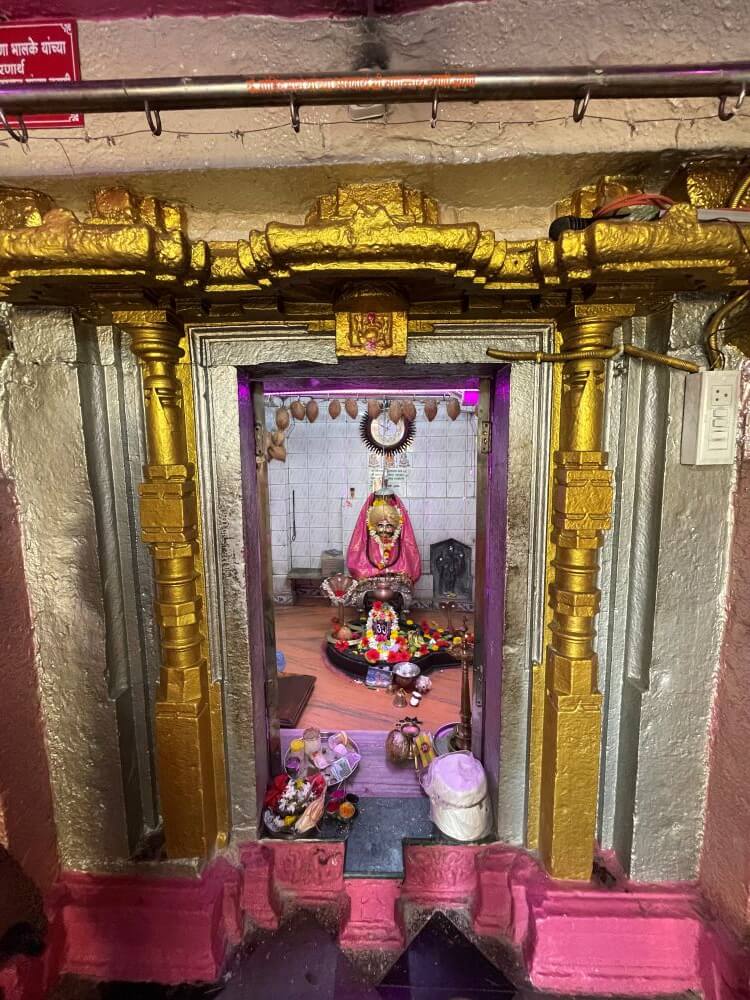
The architecture of this temple consists of the Nandi Mandapa, Sabha Mandapa, Antarala, and Garbhagriha. In the Nandi Mandapa, there is a large, beautifully white-painted idol of Nandi. In front of the Nandi Mandapa, On the sloping roof of the Sabhamandapa are the idols of Shiva and Parvati, sheltered by a five-headed stone serpent canopy. Alongside these central idols on the Sabhamandapa are carvings of swans. In the wall niches of the Sabhamandapa are the idols of Ganapati and Hanuman. Right here is an ancient idol of Lord Shiva with Parvati seated on his left side. Further ahead in the Antarala, on both sides of the entrance to the Garbhagriha, are pilaster jambs. While the threshold of many temples features a semi-circular Chandrashila, here it is square in shape. On the Lalatabimba is an idol of Ganapati. Inside the Garbhagriha lies a monolithic Shivalinga carved from black stone. At the back of this Linga is a metal mask of Nagnatha, depicted with a mustache and wearing a turban.
On the four corners of the sanctum sanctorum roof, there are four distinctive Nandi faces. In the small niches on the spire, along with deities, there are also idols of saints and sages. There are two amalakas on this spire, of which the lower amalaka is shaped like lotus petals, while the upper amalaka is shaped like a lotus bud. At the pinnacle of the spire is the kalasha. The Dattatreya temple adjacent to the main temple is also ancient. In the courtyard of this temple, there are slabs bearing some ancient sculptures. Besides these, there is a palanquin and a chariot here, which are used during festivals. In this courtyard, there are two wells known by the name of Sasu-Sunechya Vihiri (Mother-in-law and Daughter-in-law wells). The water of one of these wells is sweet while the other is saline. Both these wells are vast in scale. Designed like temple tanks (pushkarinis), these wells have steps to descend into them. It is said that there was an underground tunnel leading from these wells to the temple after taking a bath.
The Naganath Yatra is held for five days starting from the last Monday of the month of Falgun. The yatra begins in the morning with the Maha Aarti. After the Abhishekam, the Mahaprasad starts in the afternoon and continues throughout the day. On the first day, at around eleven o’clock at night, the Palkhi procession sets out. After taking one pradakshina around the temple, the deity is taken in a special chariot for the Nagar Pradakshina (tour of the town). This pradakshina goes on all night. Around five o’clock in the morning, the Palkhi returns to the temple. On the second day, a wrestling competition takes place. The village of Kurdu has a great tradition of wrestling. This wrestling competition held on the occasion of the festival is considered one of the most important competitions in the state. On the third day, there are Kirtan and Pravachan, and on the fourth day, entertainment and cultural programs are held. During all this time, the Deepmalas (lamp towers) of the temple are illuminated with hundreds of lamps. Apart from this, there is also a heavy rush of devotees at the temple during festivals like Mahashivratri, Somvati Amavasya, and Nagpanchami.
This sacred temple stands as a testament to deep spiritual devotion, ancient architectural grandeur, and rich local cultural traditions.
The sanctum sanctorum houses the divine idol consecrated according to ancient Vedic traditions, surrounded by serene courtyards and traditional temple architecture.
Navratri, Maha Shivratri, Annual Temple Jatra & Deepotsav
Compare and book flights, secure top-rated local hotels near the temple, hire reliable guides, and rent cars instantly.
Extend your pilgrimage by visiting other highly sacred temples located nearby.


Add ₹999 more to unlock FREE SHIPPING!
Your sacred cart is currently empty.
Shop Photo FramesFill in your delivery details below to place your order.
Add comment