
Add ₹999 more to unlock FREE SHIPPING!
Your sacred cart is currently empty.
Shop Photo FramesAccording to local legend, the village of Mana is the ancient Manipura established by King Babruhan. A beautiful temple of Ramkrishna is situated in this village, which is located on the banks of the Uma River. In this ancient village, near a fortress-like structure, an idol of Lord Ramchandra was discovered in the year 1935. Furthermore, in the year 1951, a farmer from the village found an idol of Shri Krishna while ploughing his field. Both these idols have been consecrated in this temple. It is said that the then British government had to bow down before the Satyagraha launched by the villagers, who insisted that the idol of Shri Ram must remain in the village itself.
The Akola Gazetteer contains a legend regarding the origin of the name of the village Mana. It states that an Asura king named Babruhan ruled here. At that time, Mana was so vast that it consisted of 13 palaces (divisions). The name of King Babruhan’s guru was Mankeshwar Maharaj. The village was named Mana after him. According to the story in the Gazetteer, a saint named Haji Rehman Sahib arrived here. Among his disciples were Shah Lal Sahib and 17 horsemen. This saint challenged King Babruhan to either accept Islam or prepare for battle. At that time, Mankeshwar Maharaj warned the King of the impending danger.
Mankeshwar Maharaj had a tunnel dug from Mana village to the village of Ranjanpur Khinkhini, seven miles away. It was so large that the King’s chariot and horsemen could pass through it. However, the King decided to face the Haji with his 70,000 soldiers. In that battle, many of the Haji’s soldiers were killed, and Shah Lal Sahib was wounded. Unfortunately, King Babruhan attained martyrdom. After this, Shah Lal was appointed as the king. All those Hindus who did not accept Islam were imprisoned in the old part of Mana. The history of the establishment of Islamic rule in this region has been preserved through this folk legend. In recent times, the name of King Babruhan has been linked to Babruvahana, the son of Arjuna and Chitrangada from the Mahabharata, and a legend has been constructed that he established this city.
In this village, which is situated on the banks of the Uma River and has about two thousand households, many ancient temples, gopurams, and remnants of broken idols are found. During the British rule, on 3 July 1935, villagers discovered a beautiful stone idol of Lord Ramchandra near the fortress-like structure in the village. The British government ordered the idol to be kept in the archaeological museum at Nagpur. At that time, the villagers launched a Satyagraha to ensure the idol remained in the village. Eventually, the British had to yield to the villagers. Later, on 8 May 1951, a farmer in the village found a stone idol of Shri Krishna while ploughing his field. Subsequently, a temple was built in the village, and both these idols were consecrated. Both these idols, carved from the extremely rare black basalt stone, feature intricate craftsmanship. A few years ago, an idol of Lord Vishnu was also found in the village. This idol has also been consecrated in this temple. Recently, three ancient idols were found in the village, one of which is of the 22nd Jain Tirthankara, Neminath. It is said that this village has been visited by Rashtrasant Tukdoji Maharaj, Sant Gadge Baba, Sant Pachlegaonkar, Jagadguru Shankaracharya, and Shivshahir Babasaheb Purandare.
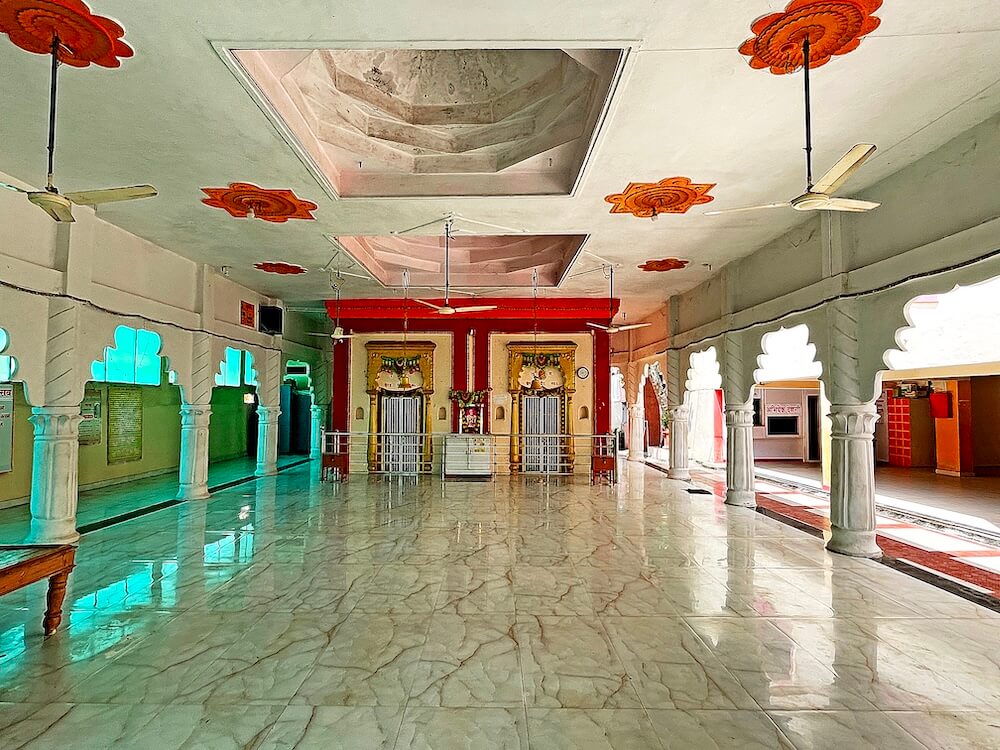
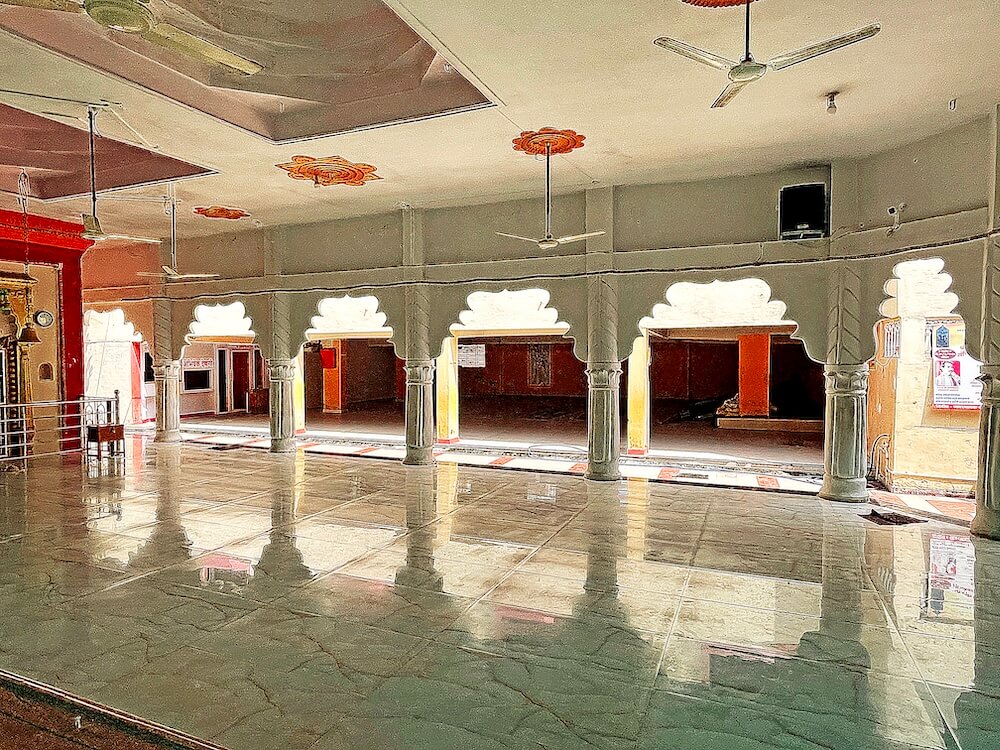
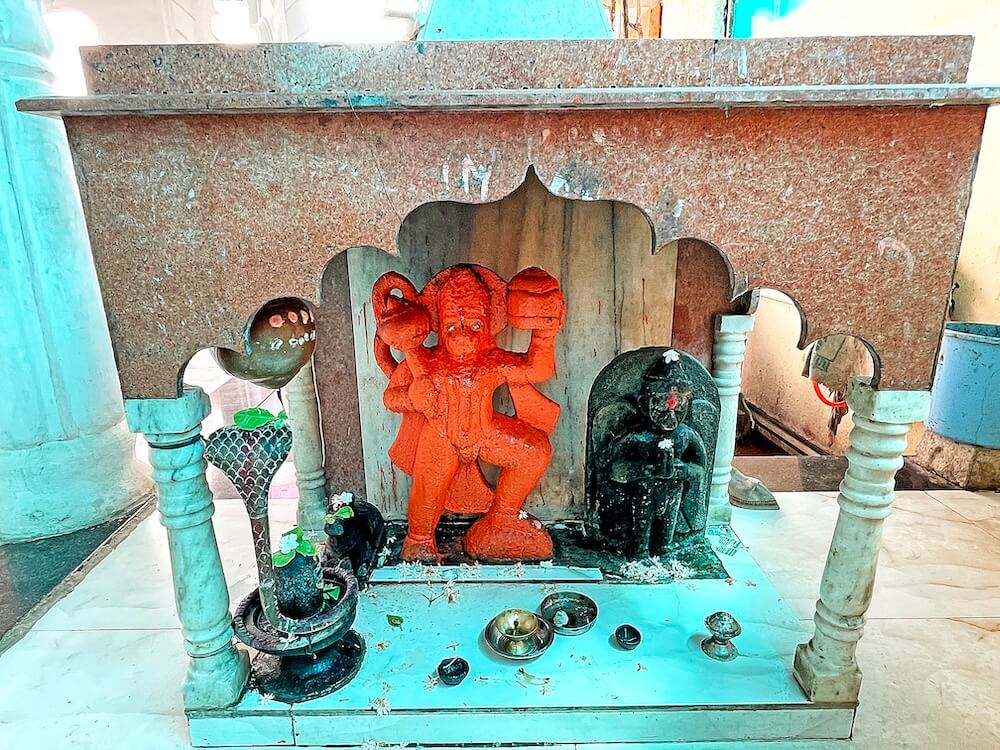
The Ramkrishna Mandir is located in the central part of Mana village. One enters the small courtyard of the temple through an entrance gate, which is fortified on all sides. In this courtyard, there is a large hall on the right and the temple on the left. Various programs are held in this hall during festivals. The structure of the temple consists of a Sabha Mandap (assembly hall) and two Garbhagrihas (sanctum sanctorum). Near the entrance of the temple, in a small niche, there are idols of Maruti and Garuda, along with a Shivlinga. All the pillars in the semi-open Sabha Mandap are connected to each other by arched designs at the top.
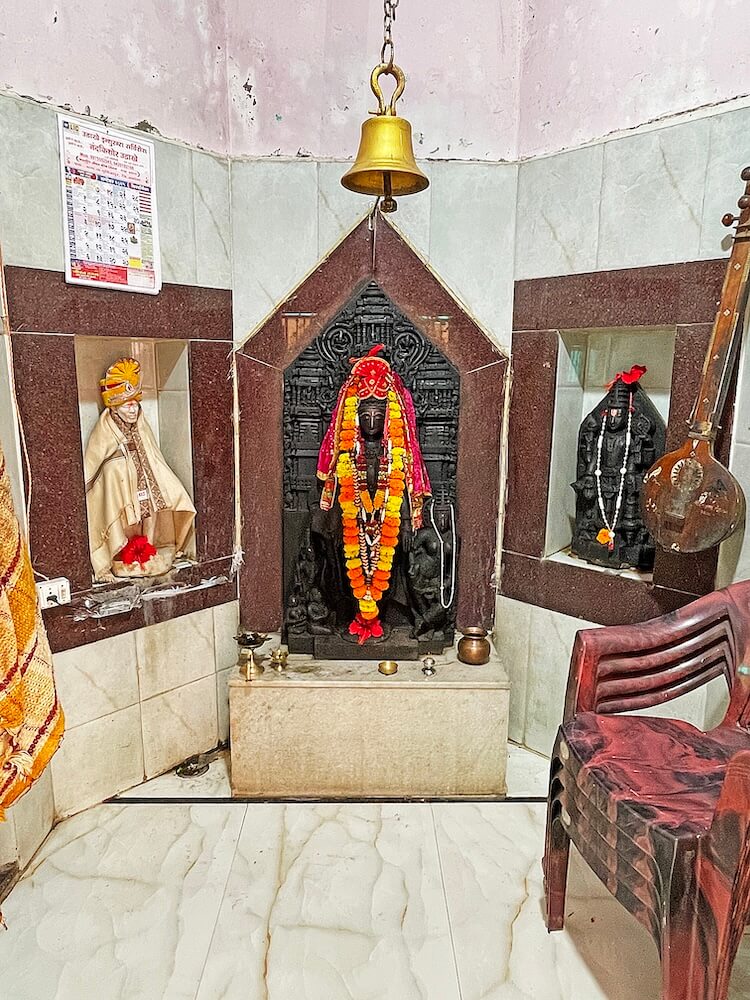
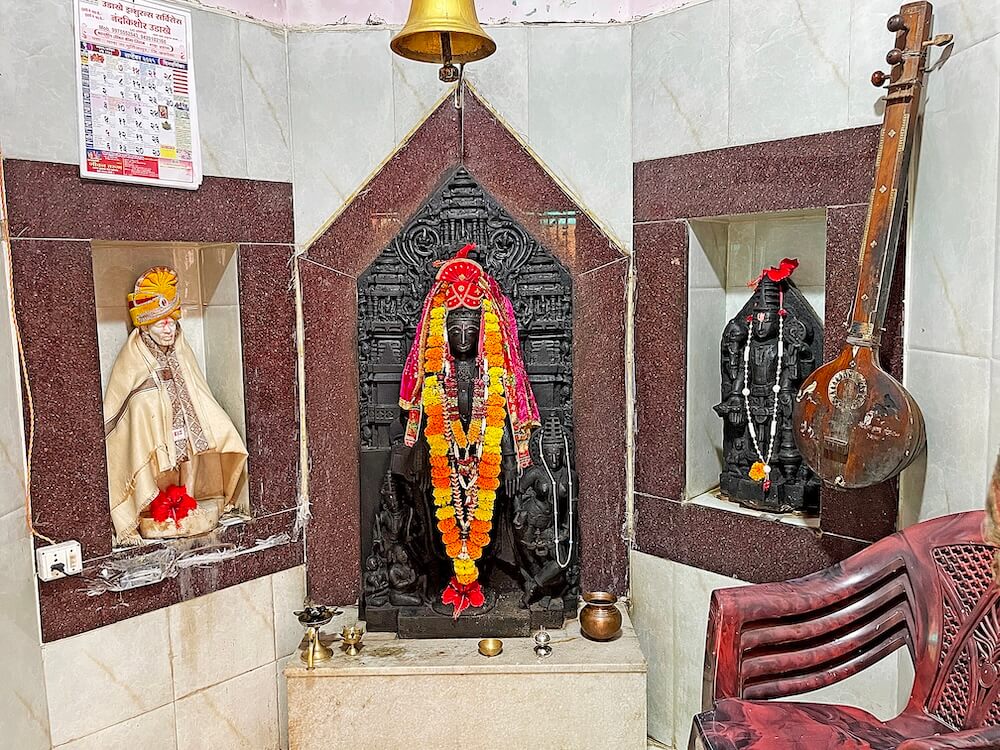
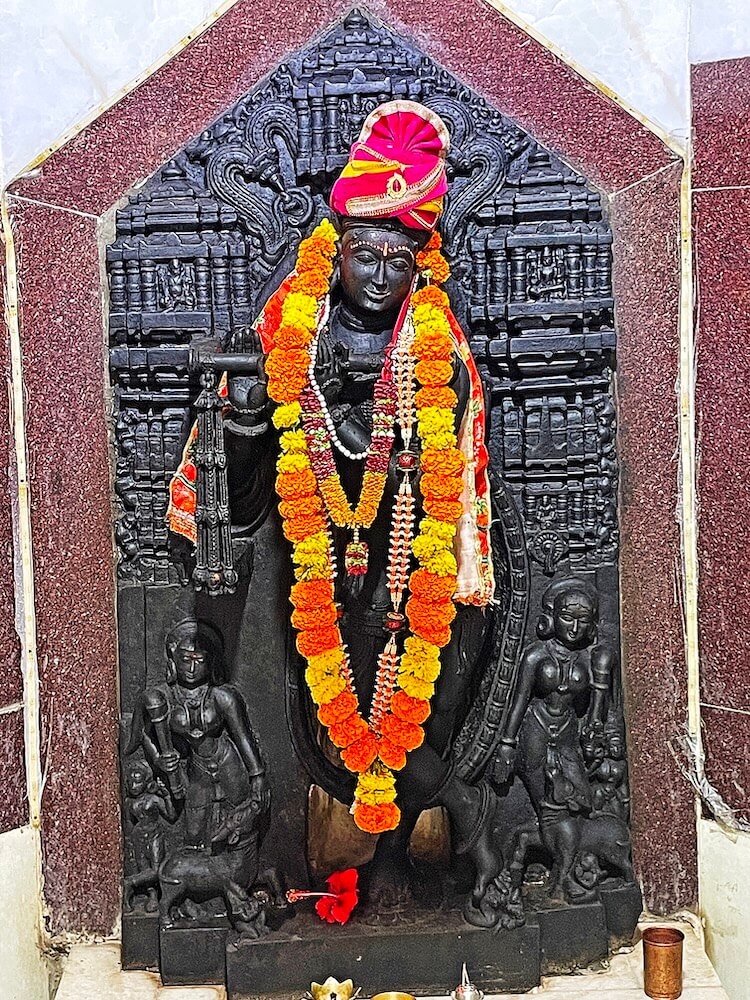
The Garbhagrihas are designed beyond the Sabha Mandap, leaving a circumambulation path. In these two adjacent sanctums, the sanctum on the right houses a unique, intricately carved idol of Shri Krishna in black stone, placed on a marble pedestal. The back slab of this idol also features carvings. Beside the feet of the Shri Krishna idol, who is holding a flute, are carvings of a female gatekeeper and cows. In the niche to the left of this idol, there is a vermilion-smeared idol of Ganesha, and to the right are images of Sant Tukaram and Sant Dnyaneshwar, along with two padukas (footprints). Adjacent to this sanctum, on the left, is the idol of Shri Ram on a marble pedestal. Like the Shri Krishna idol, this one also features intricate carvings. The uniqueness of this idol is that, unlike the usual depiction, Shri Ram is not holding a bow and arrow; instead, he holds a Ramphal (custard apple) in one hand. Carved on the back slab of this idol are the figures of Sita and Lakshmana. The Sita figure holds a Sitaphal (sugar apple). In the niche to the right of this idol is a marble idol of Gajanan Maharaj, and to the left is an intricately carved Vishnu idol made of solid black stone. Lord Vishnu holds attributes like the conch, discus, and mace in his hands. Instead of crowns, turbans are adorned on the idols of Shri Ram and Krishna.
Daily Kakad Aarti, Haripath, Aarti, and distribution of Prasad take place in this temple. Ram Navami and Gokul Ashtami festivals are celebrated here with great enthusiasm. On the occasion of Ram Navami, a seven-day Bhagwat Saptah is organized. Additionally, the Gajanan Maharaj Prakat Din festival is also celebrated here. During the festival period, thousands of devotees come here to seek the blessings of Shri Ram and Krishna.
This sacred temple stands as a testament to deep spiritual devotion, ancient architectural grandeur, and rich local cultural traditions.
The sanctum sanctorum houses the divine idol consecrated according to ancient Vedic traditions, surrounded by serene courtyards and traditional temple architecture.
Navratri, Maha Shivratri, Annual Temple Jatra & Deepotsav
Compare and book flights, secure top-rated local hotels near the temple, hire reliable guides, and rent cars instantly.
Extend your pilgrimage by visiting other highly sacred temples located nearby.


Add ₹999 more to unlock FREE SHIPPING!
Your sacred cart is currently empty.
Shop Photo FramesFill in your delivery details below to place your order.
Add comment