
Add ₹999 more to unlock FREE SHIPPING!
Your sacred cart is currently empty.
Shop Photo FramesIn India, there are many folk deities who originated from the primal faiths of indigenous communities and, through evolution over time, were integrated into higher religious traditions. These folk deities, who emerged to meet the physical and emotional needs of the agrarian and nature-connected lives of rural communities, are still worshipped today in various forms. Among the many folk deities of Maharashtra, female deities are worshipped as Gramdevatas (village deities) or Kulaswaminis (family patron goddesses). Hiramata of Jamthi is considered the Gramdevata of not only Jamthi but also of Akola. Devotees believe that Hiramata, the presiding deity of many families in Vidarbha, is a manifestation of Adi Shakti (the Primordial Power).
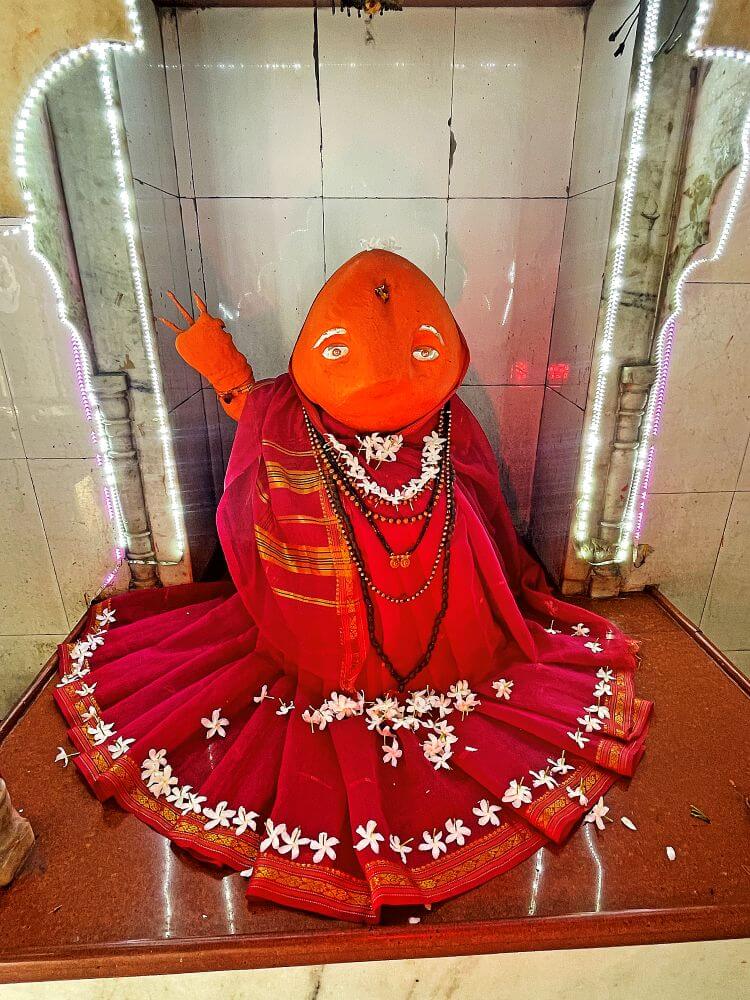
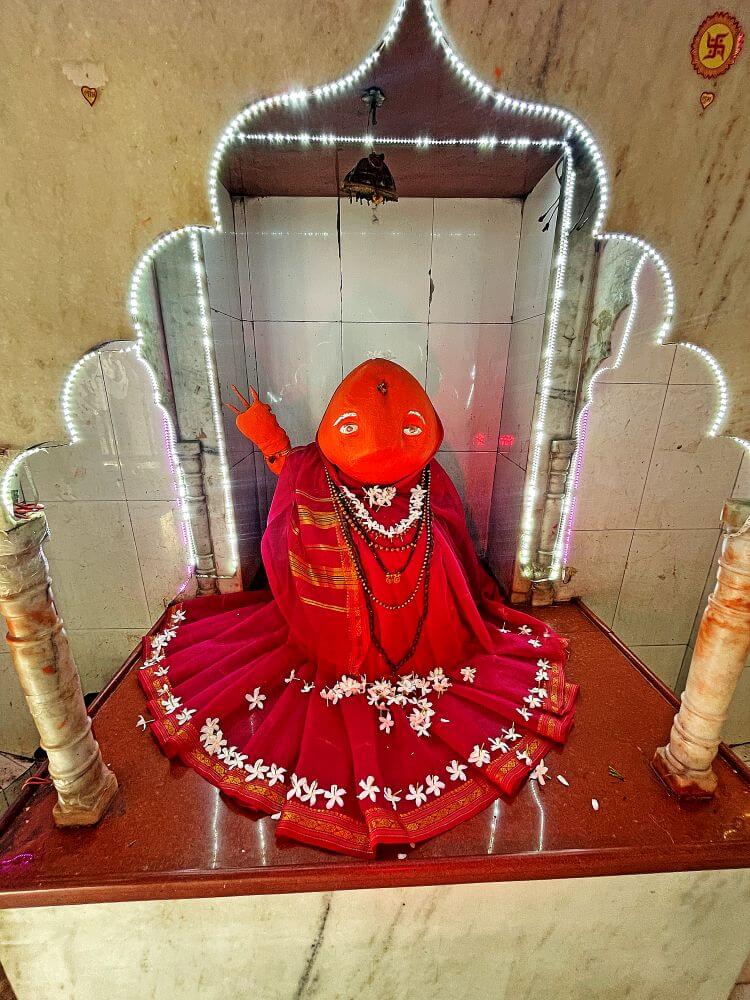
The village of Jamthi is known today because of this Hiramata temple. The ancient temple of Hiramata is situated in the scenic surroundings of this place. According to local belief, the deity’s presence here is ‘Jagrut’ (awakened/manifest). A legend associated with this is that in ancient times, the Goddess appeared in the form of an unhewn ‘Tandala’ (sacred stone) in the cremation ground outside the village. Based on this legend of her manifestation, experts surmise that the Goddess is fundamentally associated with the Tantric tradition of Devi worship. It is said that the Goddess in the temple changes her form three times a day: in the morning, she appears as a young girl; in the afternoon, as a maiden; and at night, as an elderly woman. Stories of the Goddess granting visions and appearing to many devotees are often recounted in this region.
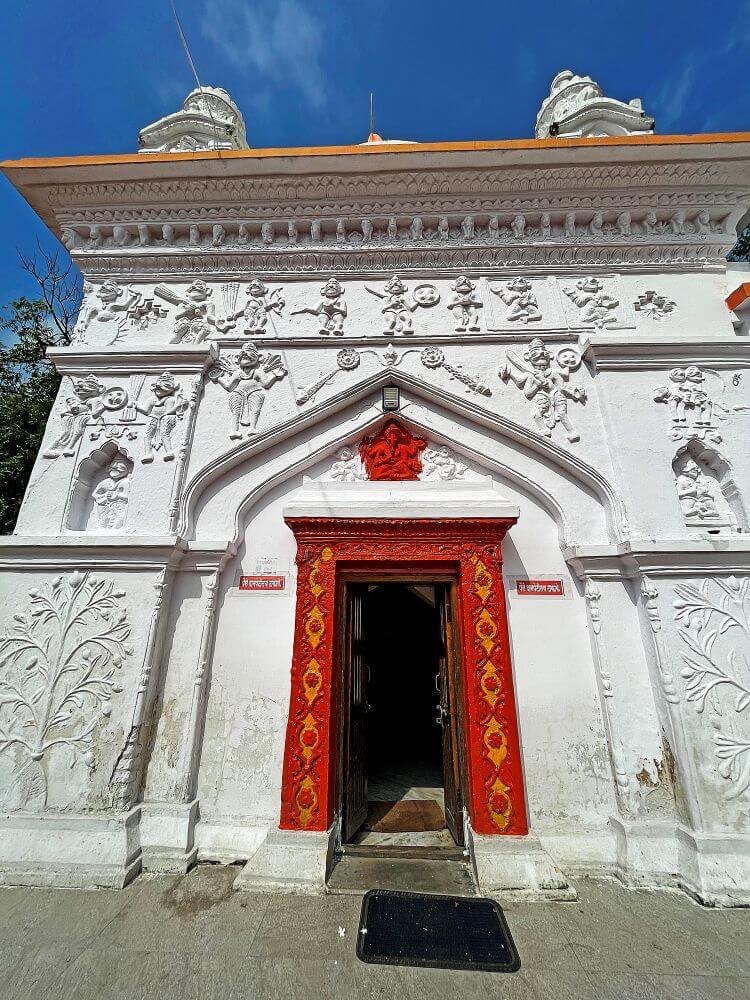
The concrete history of this Hiramata temple is unknown. However, it is said that the temple underwent renovations in different periods, eventually attaining its current form. The temple is situated on a hillock at the outskirts of Jamthi Budruk village. One enters the spacious courtyard of the temple after climbing 25 to 30 steps from the road. The paving in the courtyard and the greenery surrounding the temple make the area clean, beautiful, and pleasant. There are two lamp pillars (Deepstambhas) on the roadside of the temple. Situated on a high plinth, the temple structure consists of a Sabhamandap (assembly hall), Antarala (vestibule), and Garbhagriha (sanctum sanctorum). One can enter the temple through the eastern entrance of the Sabhamandap and Antarala. The entrance to the Sabhamandap is made of stone and is arched. On both sides of this entrance are pillar branches with niches for lamps. The door frames are intricately carved. The arched door frames of the Antarala are also carved, and there is an image of Lord Ganesha on the lintel.
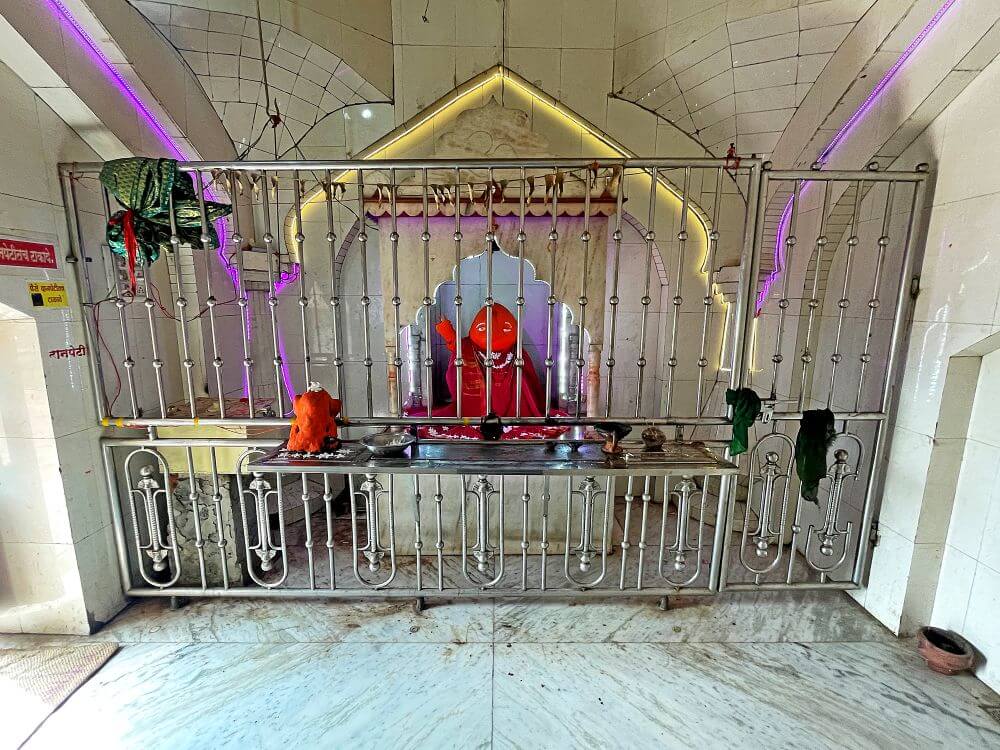
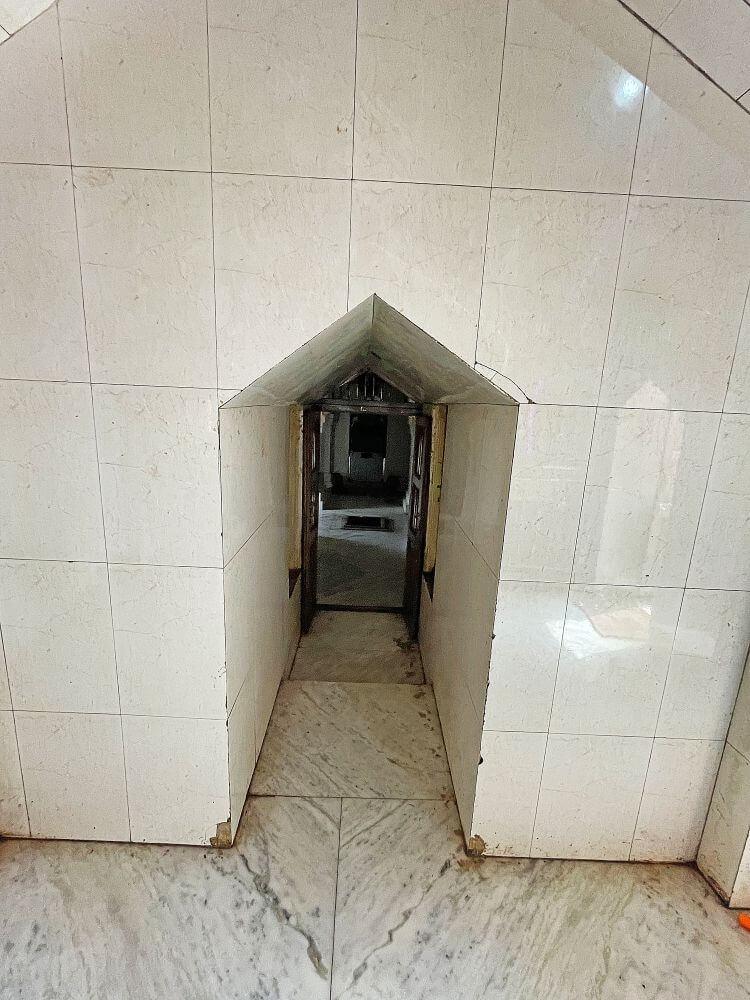
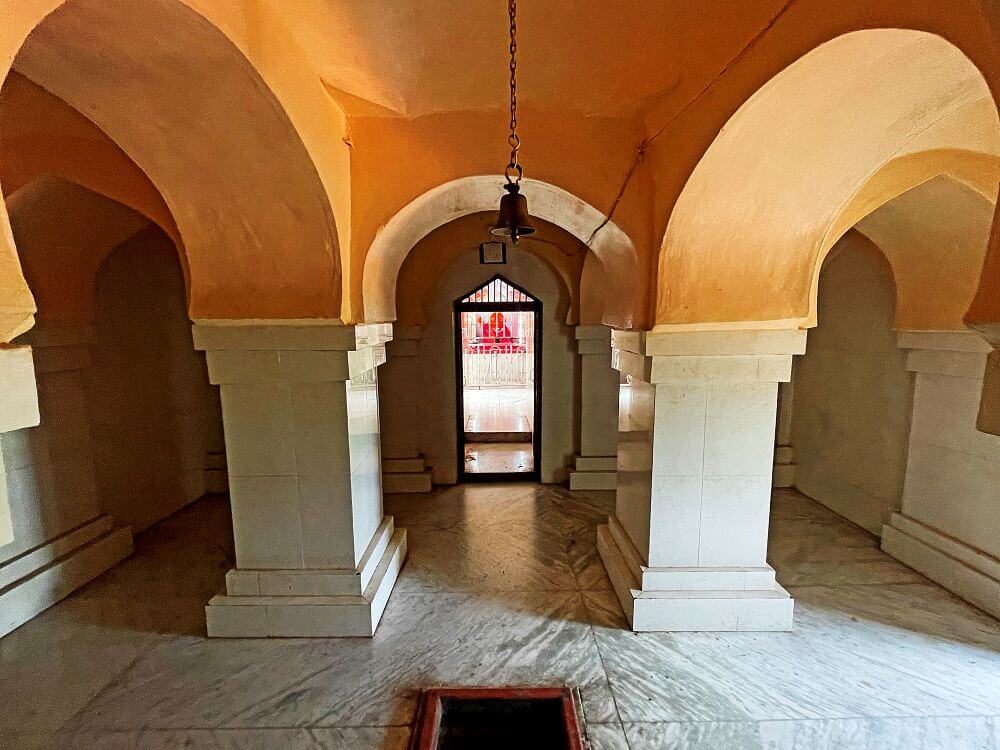
The somewhat small Sabhamandap of this temple has large stone pillars, all connected to each other by arched vaults. In the Sabhamandap, there is a Havan Kund (sacrificial fire pit) and two statues of lions, the vehicle of the Goddess. Between the Sabhamandap and the Antarala, there is a large stone wall about five feet wide. One enters the Antarala through a narrow passage in this wall. In the Antarala, a large stainless steel grill is installed in front of the Garbhagriha. From here, devotees can have a ‘Darshan’ of the idol of Hiramata in the sanctum. In the Garbhagriha, the self-manifested (Swayambhu) idol of the Goddess in the form of a stone is placed on a large pedestal within a shrine. The eyes and eyebrows of this idol are made of silver.
The outer walls of the Antarala and Garbhagriha are adorned with sculptures. These include depictions ranging from common citizens to soldiers and various deities. The roof of the temple features a parapet wall, topped by a dome-shaped main Shikhara (spire). At the apex of the Shikhara are two Amalakas and a Kalasha. There are smaller, intricately carved spires on all four sides of this main Shikhara. There are also shrines dedicated to Hanuman and Shiva in the temple premises.
Devotees believe that Hiramata is a goddess who fulfills vows and responds to the calls of her devotees. Because of this, hundreds of devotees from various parts of Akola, Amravati, and Washim districts come here for Darshan. During the Chaitra and Sharadiya Navratri festivals, the temple premises are bustling with crowds of devotees. A grand Homa (fire ritual) is performed here on Ashtami during the Sharadiya Navratri festival. Additionally, the Hanuman Jayanti festival is also celebrated here on a large scale. During this time, the area takes on the atmosphere of a fair. On this day, Mahaprasad is also distributed to the devotees.
This sacred temple stands as a testament to deep spiritual devotion, ancient architectural grandeur, and rich local cultural traditions.
The sanctum sanctorum houses the divine idol consecrated according to ancient Vedic traditions, surrounded by serene courtyards and traditional temple architecture.
Navratri, Maha Shivratri, Annual Temple Jatra & Deepotsav
Compare and book flights, secure top-rated local hotels near the temple, hire reliable guides, and rent cars instantly.
Extend your pilgrimage by visiting other highly sacred temples located nearby.


Add ₹999 more to unlock FREE SHIPPING!
Your sacred cart is currently empty.
Shop Photo FramesFill in your delivery details below to place your order.
Add comment