
Add ₹999 more to unlock FREE SHIPPING!
Your sacred cart is currently empty.
Shop Photo FramesThe beloved deity of all Maharashtra, Pandurang of Pandharpur, would sometimes leave His temple to travel to Degav and other areas in the Mohol region. He would return once foreign invasions and threats to the temple subsided. Amidst all this upheaval, there are differing opinions among scholars today as to where the original idol of Pandurang is located. Senior historian G. H. Khare believed that the Vitthal idol in Pandharpur might not be the original one. However, Dr. Sadanand More, a descendant of Tukaram Maharaj, strongly refutes the claims of such researchers. According to historian Ra. Chi. Dhere, the original idol of Vitthal is in the Vitthal Temple at Madha. Devotees have as much faith in the Pandurang at Madha as they do in the one at Pandharpur, and they believe that He rushes to answer their calls.
It is said that Mahadji, the son of Jagirdar Rambhaji alias Ravarambha Nimbalkar, built the Vitthal Temple in Madha between the years १७३० and १७६०. However, historian Ra. Chi. Dhere claims that during the invasion of Afzal Khan in the year १६५९, the idol from Pandharpur was moved to Madha, into the jagir of the Nimbalkars. By pointing out specific markings on the idol in the Madha Vitthal Temple, Shri Dhere claims that this is the original idol of Vitthal. However, Dr. Sadanand More states that Dhere’s claim regarding the original idol is incorrect. The inscription in the temple proves that this structure is at least ३०० years old. Experts do not seem to have a consensus regarding the antiquity of the idol or whether it is indeed the original idol from Pandharpur.
Professor Anne Feldhaus of Arizona State University, one of the world-renowned and largest universities in the United States, visited India to conduct research on this Vitthal idol. She translated Ra. Chi. Dhere’s book ‘Vitthal Ek Mahasamanvay’ into English, publishing it in २०१२ as ‘Rise of a Folk God: Vitthal of Pandharpur’. In her research paper ‘In search of original image of Vitthal’, Anne also published old photographs of the Vitthal idol and the temple here.
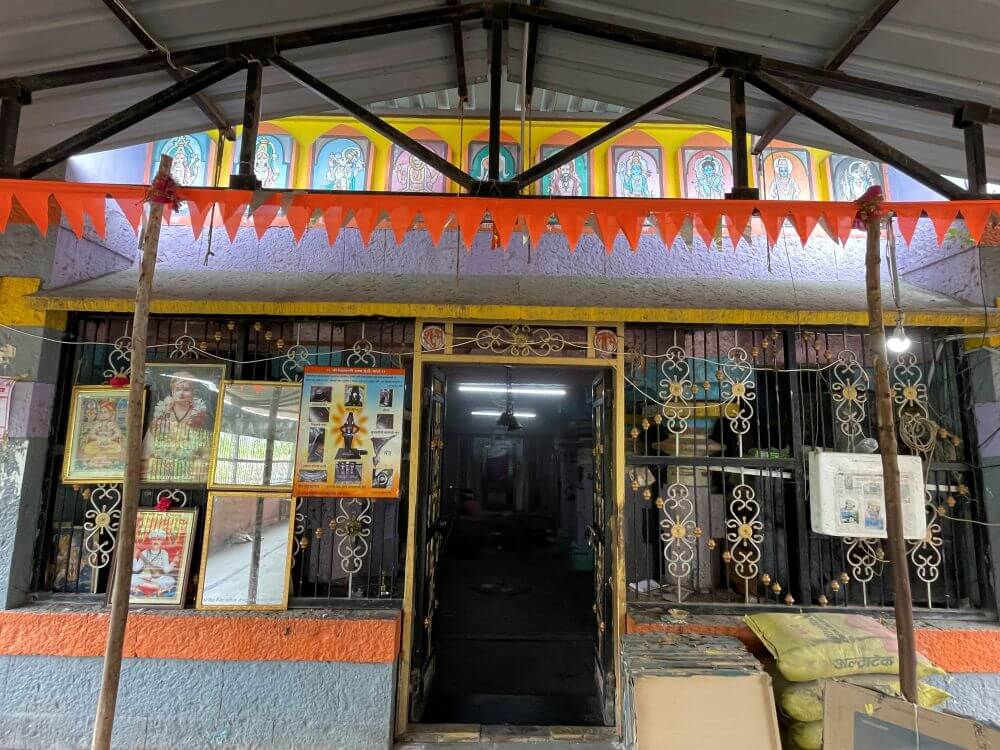
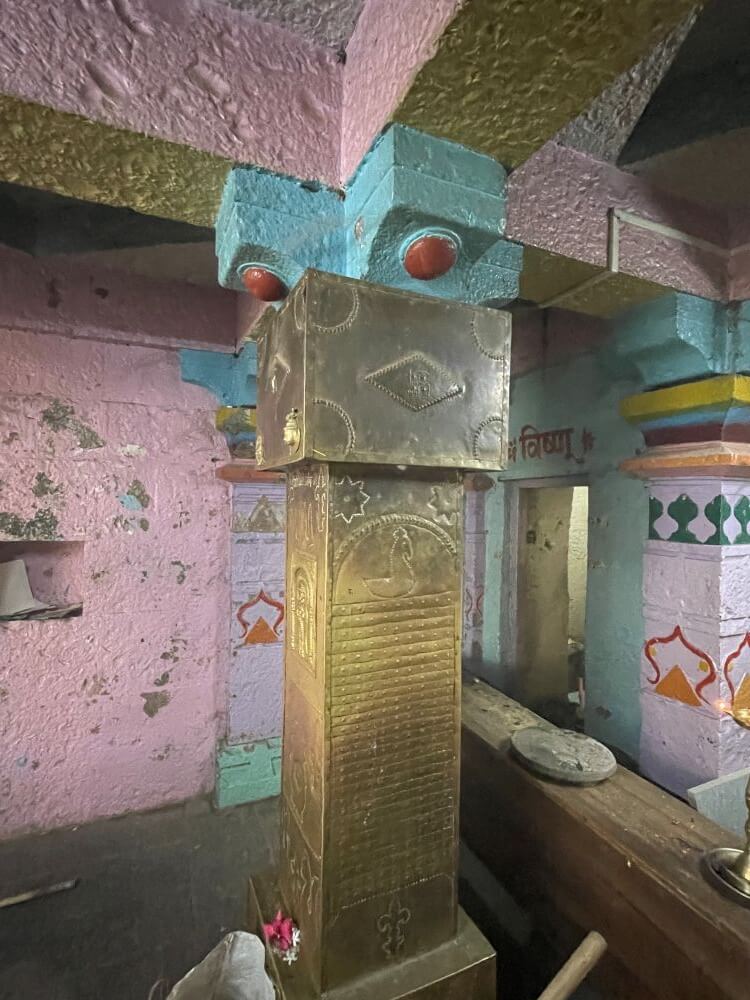
This temple is located along the road in the Kasba Peth of the village. The temple’s structure consists of a Rangamandapa (outer hall), Sabhamandapa (main hall), Antarala (vestibule), and Garbhagriha (sanctum sanctorum). The Rangamandapa has been newly constructed and features a tin roof supported by iron pillars. Beyond this lies the Sabhamandapa, Antarala, and Garbhagriha, which are built of stone in the Hemadpanti architectural style. There are stone benches (kakshasanas) on both sides of the entrance. The Sabhamandapa has four rows of four ornate pillars each. The outermost pillars are embedded in the walls. All pillars stand on square bases. Among the four central pillars, the shafts of three pillars feature various geometric shapes such as squares, hexagons, octagons, and circles. At the top of the pillars are brackets (kani) and above them are corbels (hasta). The corbels feature hooded serpent sculptures, and the carvings suggest that these serpents are bearing the weight of the ceiling on their heads. The ceiling between the four pillars is octagonal. Because a Garuda sculpture is carved on the pillar in the front left corner among these four, it is referred to as the Garuda Stambha. This pillar is covered in brass, and the original carvings from the pillar are replicated on the covering.
Except for the four central pillars in the Sabhamandapa, the other pillars have relatively less ornamentation. The floor of the Sabhamandapa is paved with stone. In the space between the four central pillars, there is a circular stone about one foot in size, with a chakra (wheel) carved in the center. In front of the Sabhamandapa is the Antarala, and in the floor of the Antarala, there is a tortoise sculpture carved into the stone. An inscription is carved on the floor in front of the entrance to the Garbhagriha in the Antarala. According to this inscription, Mahadji Nimbalkar built this temple.
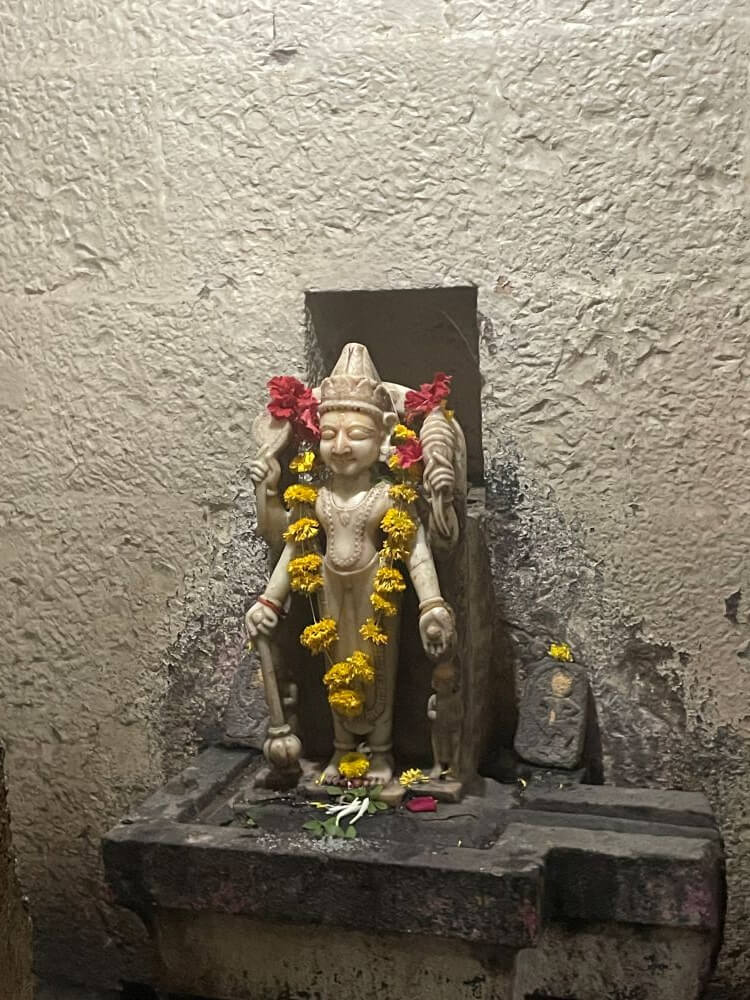
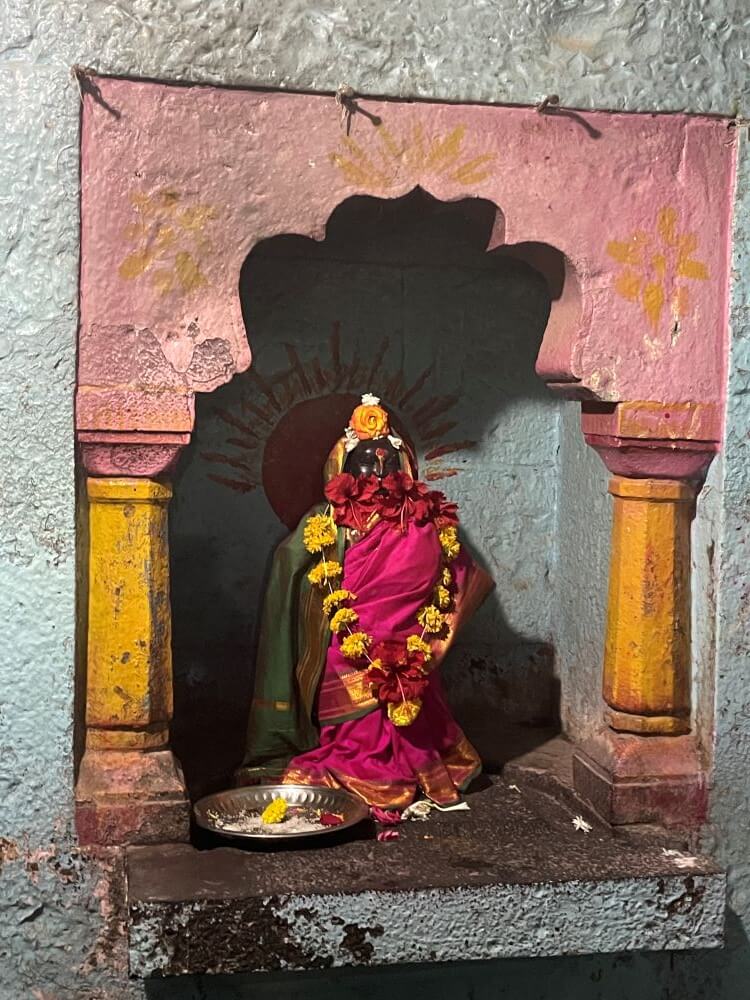
To the right of the Antarala is a small Garbhagriha for Goddess Rukmini. The door frame of this Garbhagriha is flat, and there is an idol of Ganpati on the lintel (lalatbimba). Inside the Garbhagriha, in a niche in the wall, is a black stone idol of Goddess Rukmini. The ceiling of this Garbhagriha rests on the walls and is octagonal. To the left of the Antarala is the Garbhagriha of Shri Vishnu. The structure of this Garbhagriha is similar to that of Rukmini’s. On a stone pedestal (vajrapitha) sits a four-armed marble idol of Vishnu. The deity holds a conch, discus, mace, and lotus in His hands. To the left of the Vishnu idol, on another pedestal, are two black stone idols of Ganpati and one Shiva Linga.
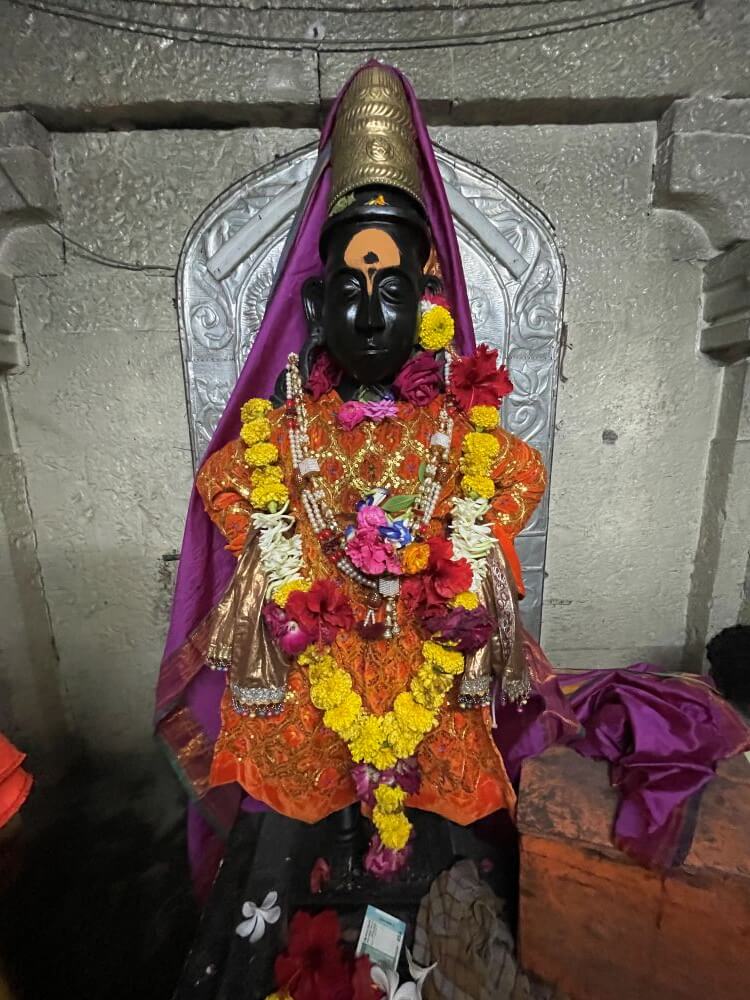
Beyond the Antarala is the entrance to the main Garbhagriha. The entrance is adorned with five door frames (panch dwarshakha), which include floral scrolls, leaf patterns, flower patterns, and pillar motifs. There is an idol of Ganpati on the lintel and floral designs on the architrave. The torana above features floral carvings and a moonstone (chandrashila) at the base. Inside the Garbhagriha, on a stone pedestal, is the black stone idol of Vitthal. A sacred mantra is inscribed on the chest of the idol. A peepal leaf is carved at the heart of the idol. The idol is in a nude (digambar) state. There is a waist belt, a necklace, anklets on the feet, and bangles on the wrists. The deity holds a staff in one hand and a conch in the other. There is a Shiva Linga on the head. The halo behind the idol features carvings of the sun, moon, a five-hooded serpent, leaves, and flowers. Ra. Chi. Dhere claimed that because all these characteristics are described in the abhangs of Savta Mali, this is indeed the original idol of Vitthal.
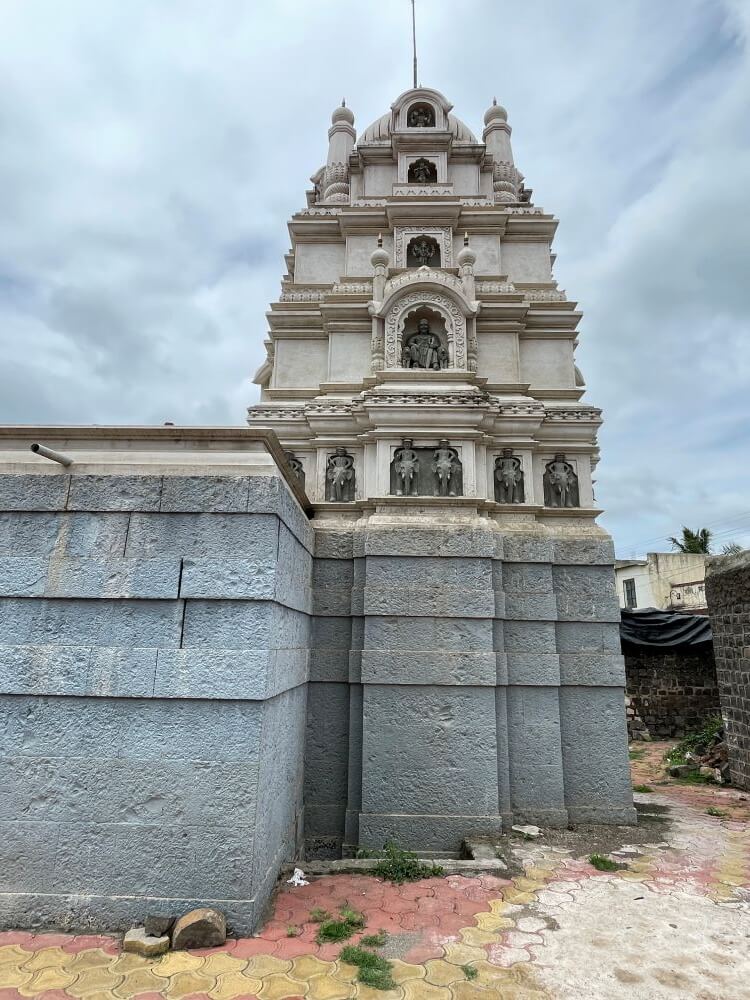
On the roof of the Garbhagriha is a newly constructed four-tiered square shikhara (spire). Each tier has one niche on all four sides. On the fourth tier of the shikhara, there are four small spires at the corners, topped with amalakas. The dome-shaped main shikhara is topped with a kalasha.
Ashadhi and Kartiki Ekadashi are the main annual festivals celebrated here with great enthusiasm. On these occasions, the deity’s padukas (footprints) are placed in a bullock cart and taken in a village procession amidst the sound of drums and the throwing of gulal. Thousands of devotees from the surrounding areas come for the darshan of the deity and participate in the procession. On these days, programs such as Maha-abhishek, bhajans, kirtans, discourses, and Maha-prasad are organized in the temple. All Ekadashi festivals and celebrations throughout the year are observed in the temple. Devotees can have the darshan of Vitthala Raya in this temple daily from ५:३० AM to ८:३० PM.
This sacred temple stands as a testament to deep spiritual devotion, ancient architectural grandeur, and rich local cultural traditions.
The sanctum sanctorum houses the divine idol consecrated according to ancient Vedic traditions, surrounded by serene courtyards and traditional temple architecture.
Navratri, Maha Shivratri, Annual Temple Jatra & Deepotsav
Compare and book flights, secure top-rated local hotels near the temple, hire reliable guides, and rent cars instantly.
Extend your pilgrimage by visiting other highly sacred temples located nearby.


Add ₹999 more to unlock FREE SHIPPING!
Your sacred cart is currently empty.
Shop Photo FramesFill in your delivery details below to place your order.
Add comment